Summer is short and precious. The long bright evenings, warm days, and the nature all around, there is no better time to explore the world with your baby.
But what can you actually do with a baby who can't walk yet? Or a toddler who wants to explore everything? More than you might think. Here are age-appropriate summer activities that create wonderful memories and stimulate development.
0–6 months: the senses awaken
A young baby doesn't need spectacular experiences. Everything is new and exciting, grass between the fingers, birdsong in the trees, the breeze on their skin.
Sensory play on a blanket
Spread a soft blanket in the shade and let your baby explore with all their senses:
- Touch: Grass, flower petals, soft moss, smooth stones
- Hear: Birds, trickling water, wind rustling through leaves
- See: Shadow patterns between leaves, swaying trees
Place your baby on their tummy (tummy time) for short periods to strengthen neck and core muscles. Nature offers new and interesting things to lift their head towards.
Shade strolling
Take your baby in a carrier or stroller for gentle walks in the shade. Parks, forest paths, and trails along water are perfect. Your baby experiences movement, sounds, and smells, all of which contribute to brain development.
Feet in the water
From a few months of age you can carefully dip your baby's feet in lukewarm water. A small baby pool or just a tub of water in the garden provides sensory stimulation. Many babies love the feeling of water between their toes.
Remember that babies under 6 months should not be in direct sunlight. Choose shaded spots and keep activities short. Always put a sun hat and light clothing on your baby.
6–12 months: the explorer awakens
Your baby can sit, maybe crawl, and wants to touch everything. Now outdoor play becomes really fun.
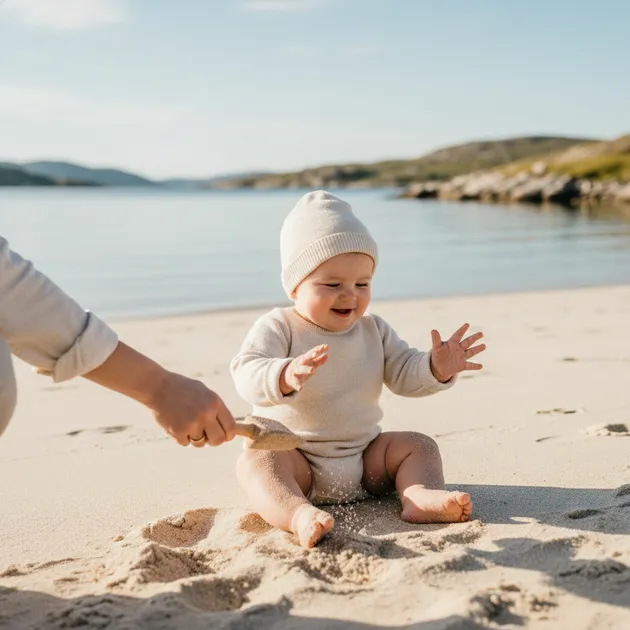
Sandbox play
The sandbox is a favourite from around 6–7 months of age:
- Let your baby dig, pour, and feel the sand
- Use cups, spoons, and buckets of different sizes
- Hide toys in the sand for your baby to find
- Wet sand is easier to shape and more interesting to play with
Make sure your baby doesn't eat too much sand (a little taste is inevitable and harmless).
Grass exploration
Sit your baby on a mat in the grass and let them explore:
- Feel grass with their hands
- Pick dandelions
- Watch ants and insects
- Dig in the soil (a little dirt strengthens the immune system!)
Baby swimming
Many pools offer baby swimming classes from around 4–6 months of age. In summer you can try gentle swimming in a lake or the sea (a temperature above 20 °C is recommended for the smallest babies). Hold your baby close to your body and let them gradually get used to the water.
Picnic in the park
Bring a blanket, food, and toys to the park. From 6 months your baby can try finger foods outdoors, pieces of fruit, bread, or vegetables. An outdoor picnic offers new sensory impressions and is fun for the whole family.
Always pack food in a cool bag in summer. Baby food is especially vulnerable to bacterial growth in the heat. Discard leftovers that have been out for more than an hour in the summer warmth.
1–3 years: the adventure begins
Now your child walks (or runs) on their own, and the whole world is a playground. Toddlers have energy to spare and need an outlet.
Water play
Water and children belong to summer:
- Water table: Fill a tub with water, cups, and funnels
- Garden hose: Let the child spray and play (with gentle pressure)
- Paddling pool: A small splash pool provides hours of entertainment
- Stream or beach: Build dams, throw stones, paddle
Children can drown in just a few centimetres of water. Always keep an adult within arm's reach when a child plays in or near water. Never leave a child unsupervised, not even for a moment.
Berry picking
Summer means berries! Berry picking is perfect for toddlers:
- Strawberries (from a farm or pick-your-own), from 6 months
- Blueberries, from 8–10 months (halve them for the youngest)
- Raspberries, from 6 months
Your child learns about nature, practises fine motor skills, and gets to taste fresh fruit. Most toddlers eat more than they pick, and that is perfectly fine.
Simple outdoor adventures
Nature offers many opportunities for outings with toddlers:
- Short forest walks where the child can walk themselves (and you can carry them when needed)
- A trip to a mountain cabin with easy access
- Fishing by a calm lake
- The beach with rock pools and crab spotting
- Visit a farm with animals the child can see and perhaps pet
Summer traditions
Introduce your child to summer traditions early:
- Midsummer bonfire (at a safe distance)
- Ice cream from a seaside stand
- Visit a lighthouse or fishing harbour
- Camping in the garden (a gentle introduction to outdoor life)
- Dinner outside
Packing list for a summer outing
Keep a ready-packed summer bag by the door:
Protection:
- Sunscreen SPF 30+ (children over 6 months)
- Sun hat
- Mosquito net for the stroller
- Insect repellent (on clothing, not skin, for the youngest)
- Spare change of clothes
Food and drink:
- Water bottle (children over 6 months)
- Snacks/finger foods in a cool bag
- Breast milk/formula for the youngest
- Ice packs
Equipment:
- Blanket/mat
- Shade (parasol or UV tent)
- Swim nappies
- Towels
- Simple toy bag (bucket, spade, cups)
- Nappy changing supplies
Food and meals outdoors
An outdoor lunch is fun but requires a little planning:
- Use a cool bag with ice packs for all food
- Pre-cut finger foods are easiest: cucumber sticks, bread pieces, banana chunks
- Avoid foods that melt quickly (chocolate) or attract wasps (sweet drinks in open cups)
- Wash hands or use wet wipes before eating
- Water from a bottle is safer than streams or springs for young children
Frequently asked questions
Can my baby play in the sandbox with other children?
Yes! Sandbox play is social and developmental. Make sure the sand is clean (covered when not in use) and that your child does not eat large amounts of sand. Wash hands after play.
How do I keep my baby cool during outdoor activities?
Stay in the shade, dress your baby lightly, offer frequent feeds or water (over 6 months), and take breaks indoors or in the shade. A damp muslin cloth on the head can gently cool your baby down.
Is it safe to let toddlers paddle in a stream or lake?
Yes, with supervision. Check that the bottom is stable and the water is not too cold. Children over 1 year can have great fun paddling, but stay within arm's reach. Avoid places with currents.
What should I do if my child is stung by a wasp?
Remove the sting gently (scrape with a fingernail, do not squeeze). Cool with cold water or an ice pack wrapped in a cloth. Give children's paracetamol for pain. Contact a doctor immediately if your child develops swelling of the face or throat, difficulty breathing, or a widespread rash, this may indicate an allergic reaction.
Read more
- Winter activities with baby
- Sunscreen and sun protection for children
- Summer with a newborn: sun, heat, and safety
- Baby clothes through the seasons
- Motor development in babies
Sources
🔧 Helpful Tools
- Baby Milestones Tracker. Track your baby's developmental milestones
- Development Leaps. Understand your baby's developmental leaps
- All Baby Tools. Browse all free tools for pregnancy and baby care
📖 Related Articles
- Spring Activities with Baby and Toddler: 20 Fun Things to Do, 20 fun spring activities for families with babies and toddlers. Outdoor play, nature experiences, and simple activities to enjoy the season together.
- Play for 2-Year-Olds: 20 Fun Activities, 20 fun activities for your 2-year-old that spark creativity, language, and motor skills. Easy ideas for home and outdoors, all year round.
- Play and Learning for Babies 0–6 Months. Simple play ideas and activities that stimulate your baby's development from birth to 6 months. Based on developmental research.