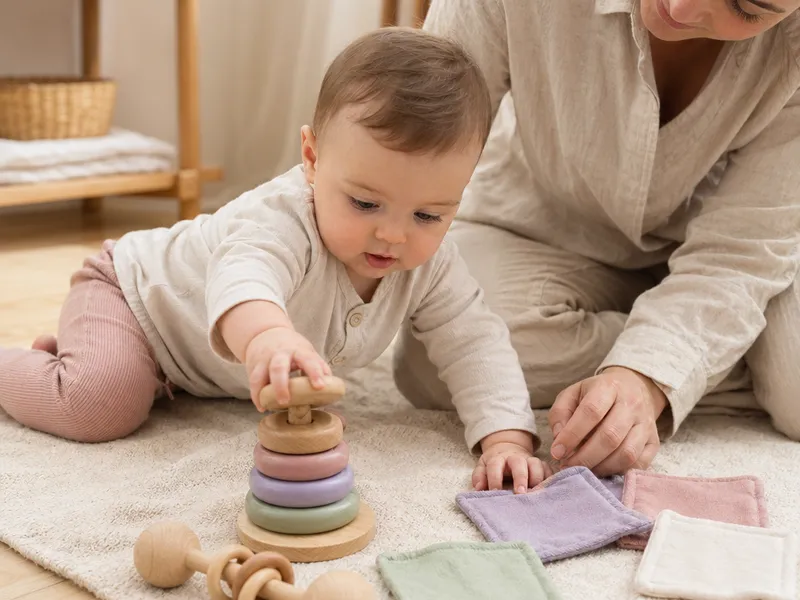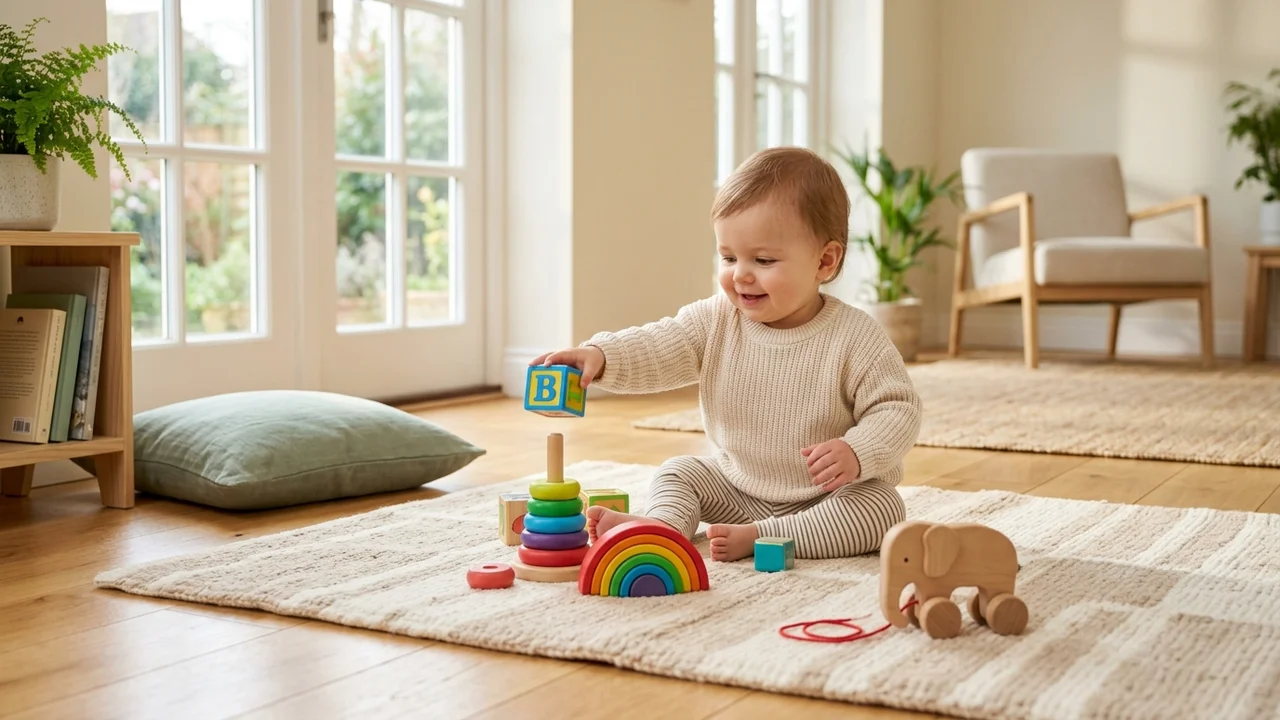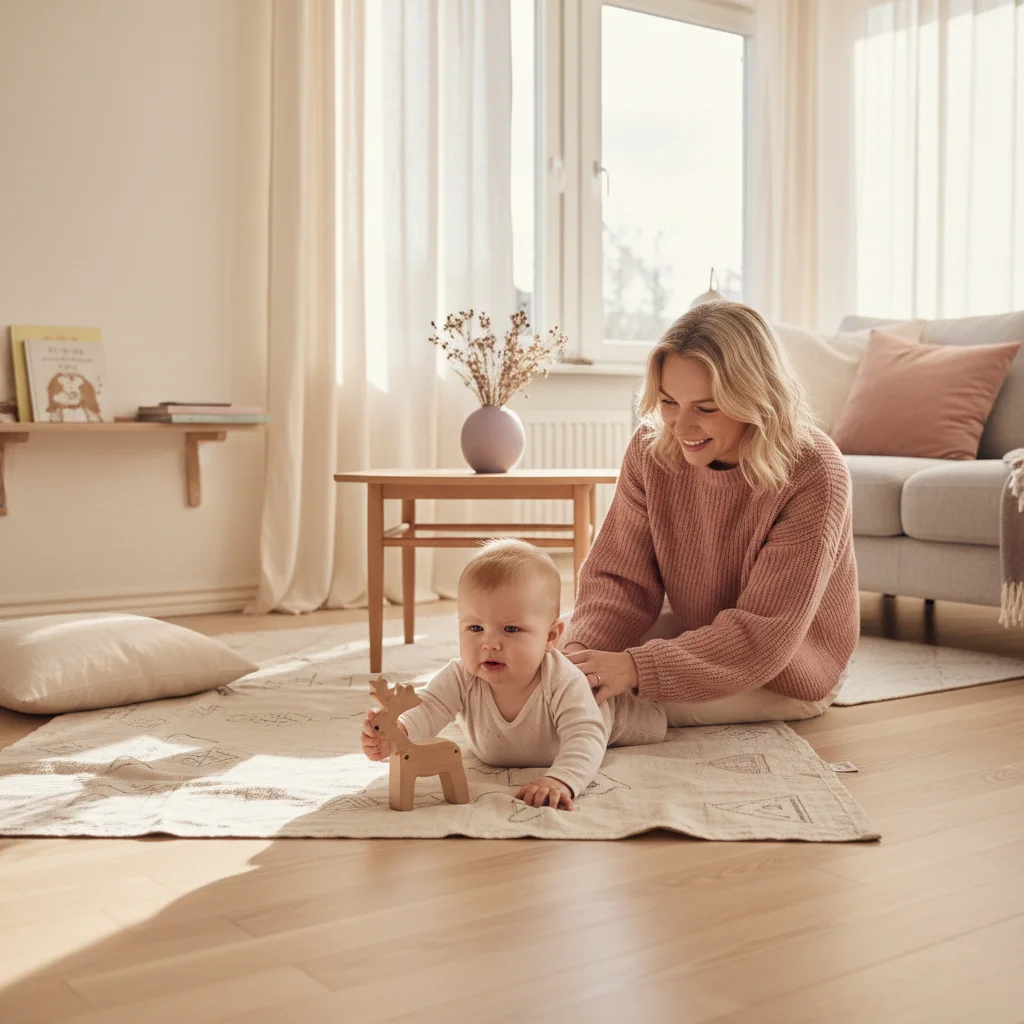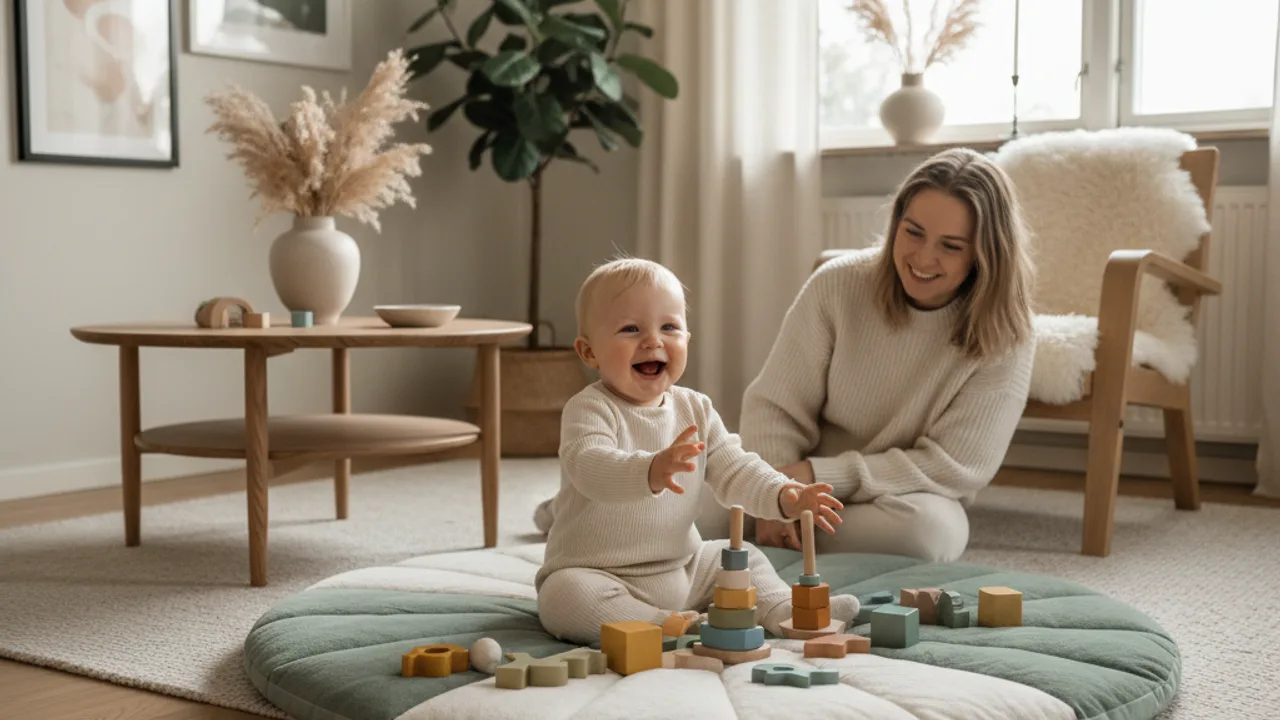
Between 6 and 12 months, an explosion of development happens. Your baby learns to sit, crawl, maybe pull up to stand, and becomes increasingly curious about the world around them. Play is the most important way a child learns.
Here are activities that support development and give you lovely moments together.
6-8 months, sitting, grasping, and exploring
At this age, most babies learn to sit with support, grasp objects, and transfer things between their hands.
Motor activities
- Pillow course: Place pillows and blankets on the floor and let your baby crawl and roll over them. Builds strength and balance
- Reaching play: Hold a toy slightly out of reach and encourage your baby to stretch toward it. Strengthens the back and arms
- Drum play: Give your baby a wooden spoon and a pot. Hitting and sound provide practice in coordination and cause and effect
- Rolling a ball: Sit opposite your baby and roll a soft ball back and forth. Trains hand-eye coordination
Sensory play
- Water play in the bathtub: Cups, strainers, and floating toys. Your baby explores water, temperature, and textures
- Sensory bag: Fill a ziplock bag with gel, glitter, or rice and tape it shut. Safe to squeeze and look at
- Texture books: Books with different surfaces (soft, hard, rough) stimulate the sense of touch
- Music play: Rattles, bells, and simple rhythm instruments. Sound stimulates hearing and sense of rhythm
Social play
- Peekaboo: The classic game. Your baby learns that things exist even when they are out of sight (object permanence)
- Mirror play: Place your baby in front of a mirror. Smile, point, and watch the reactions. Promotes self-awareness
- Sing songs: "Baa, Baa, Little Lamb", "Incy Wincy Spider", songs with movements strengthen language and motor skills
9-12 months, pulling up, pointing, and imitating
Now your baby becomes more mobile. Most babies crawl, many pull up using furniture, and some take their first steps.
Motor activities
🔧 Helpful Tools
- Baby Milestones Tracker. Track your baby's developmental milestones
- Development Leaps. Understand your baby's developmental leaps
- All Baby Tools. Browse all free tools for pregnancy and baby care
📖 Related Articles
- When Baby Gets Stuck: How to Help With Motor Development. Baby who rolls but can't roll back? Pulls to stand but can't get down? How to help your child through motor frustration without taking over.
- Creative Play at Home: 20 Activities for Toddlers, 20 simple and fun activities you can do at home with toddlers. Creative play that supports development without expensive equipment.
- Play for 1-Year-Olds: 20 Activities That Support Development, 20 fun activities for your 1-year-old that stimulate motor skills, language, and senses. Simple ideas you can do at home with what you already have.