The sun is finally out and your child wants to be outside. You want them to enjoy the warmth, but children's skin is far more vulnerable to UV radiation than adult skin, and sunburns in childhood increase the risk of skin cancer later in life.
Sun protection for children doesn't have to be complicated. With a few simple steps, the whole family can enjoy summer safely. Here's everything you need to know.
Key Takeaways
- The AAP and FDA advise no sunscreen on babies under 6 months, shade, clothing, and hats are the only safe sun protection for the very youngest.
- For babies 6 months and older, use mineral sunscreen (zinc oxide or titanium dioxide) with SPF 30 or higher, mineral formulas are gentler on sensitive skin than chemical filters.
- Reapply every 2 hours and immediately after swimming or sweating, even water-resistant sunscreen loses effectiveness.
- Avoid sun exposure between 10 a.m. and 4 p.m. during peak UV hours; UV radiation can cause skin damage even on cloudy days.
- Never cover a stroller with a blanket to block sun, it creates a greenhouse effect that can raise internal temperature to dangerously high levels within minutes.
Babies under 6 months: Avoid direct sun
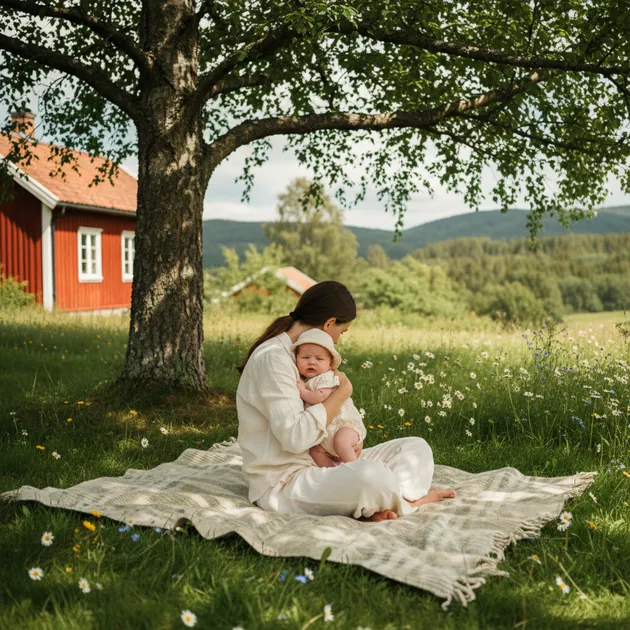
Babies under 6 months should be kept out of direct sunlight. Their skin is very thin, has little melanin (natural pigment), and is especially vulnerable to UV radiation.
Protective measures for the very youngest:
- Keep the baby in the shade, under an umbrella, a tree, or a stroller canopy
- Use clothing that covers arms and legs (light, breathable fabrics)
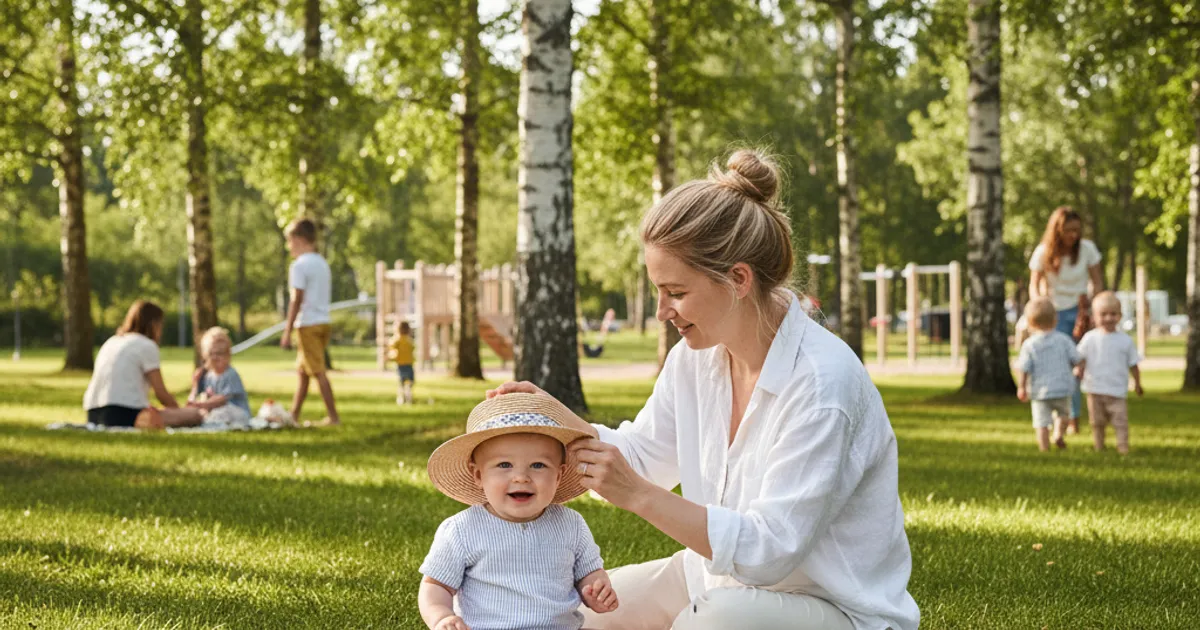
- Put on a sun hat with a brim that protects the face, ears, and neck
- Avoid being outside between 10 a.m. and 4 p.m. on sunny days
- Strollers can have a sun shade, but watch for ventilation, it can get dangerously hot under tight covers
Never cover a stroller with a blanket or cloth to block the sun. It can create a greenhouse effect where the temperature inside the stroller rises rapidly to dangerous levels. Use a breathable sun shade designed for strollers instead.
Sunscreen for babies under 6 months?
The AAP and FDA advise against using sunscreen on babies under 6 months. Baby skin is thin and absorbs substances more readily than older children's skin. Shade and clothing are the best protection.
If it is truly unavoidable to keep the baby out of direct sun, a thin layer of mineral sunscreen (zinc oxide or titanium dioxide) can be applied to exposed areas such as the face and hands. Consult your pediatrician or pharmacist for guidance.
Babies 6–12 months: Sunscreen on exposed skin
From 6 months of age, you can start using sunscreen on skin not covered by clothing.
Recommendations:
- SPF 50+ for babies, baby skin needs high protection
- Choose fragrance-free sunscreen formulated for children
- Mineral/physical filters (zinc oxide, titanium dioxide) are preferred, they sit on top of the skin rather than being absorbed
- Apply 15–20 minutes before going outside
- Reapply after sweating, swimming, or toweling off
- Clothing and shade remain the first line of defense
Mineral vs. chemical filters: Mineral sunscreen (with zinc oxide or titanium dioxide) reflects UV rays from the skin's surface. Chemical sunscreen absorbs UV rays within the skin. For babies and children with sensitive skin, mineral filters are the safest choice. They may leave a white cast, but many newer formulas are nearly invisible.
Children from 1 year: How to apply correctly
Older babies and toddlers are more active outdoors, and sun protection becomes a daily summer routine.
Choose the right sunscreen
- SPF minimum 30, ideally SPF 50+
- The sunscreen should protect against both UVA and UVB (look for the UVA circle on the packaging)
- Water-resistant is a plus for active children
- Fragrance-free and formulated for children
How much sunscreen is needed?
Most people use too little sunscreen. The rule of thumb is:
- 1 teaspoon per body part, face, each arm, each leg, chest, back
- For a small child, about 3–4 teaspoons are needed for the whole body
- For a larger child, about 5–6 teaspoons
- Apply an even, generous layer, a thin layer provides poor protection
When to reapply?
- Every 2 hours when spending time in the sun
- After swimming, even if the sunscreen is water-resistant
- After sweating or toweling off
- Water-resistant sunscreen holds up for about 40–80 minutes in water, but should be reapplied after that
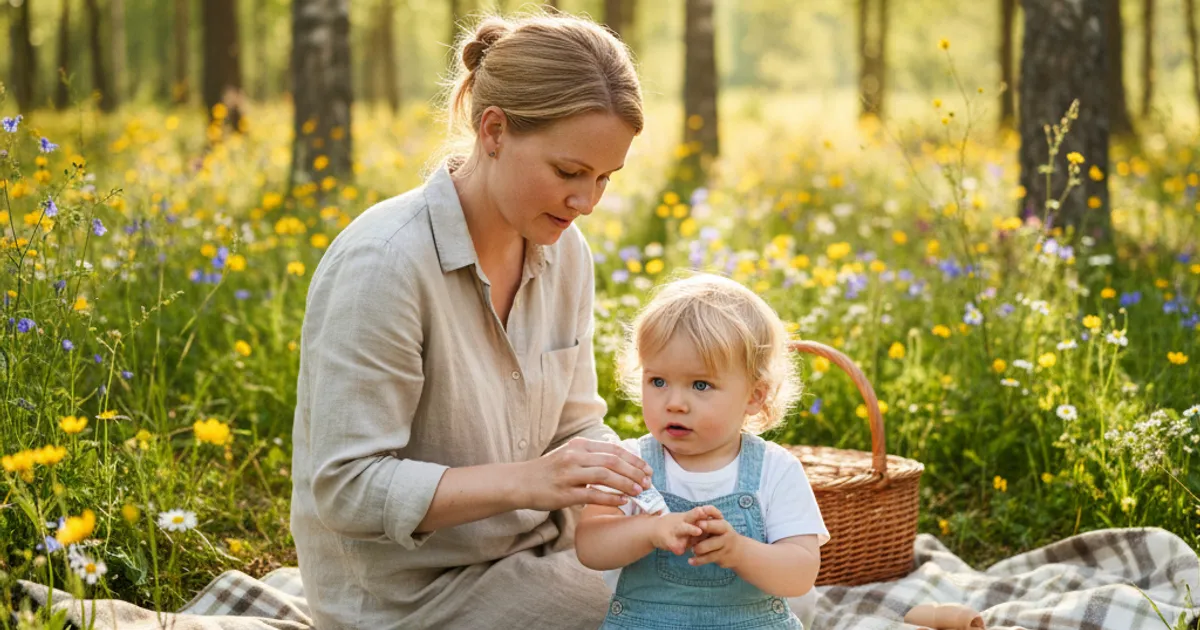
Tip for toddlers who won't stand still: Use sunscreen in spray or stick format for the face. Make it a game, let your child help "apply" to a doll or stuffed animal first. Some children enjoy tinted sunscreens that show where you've applied.
Sun protection beyond sunscreen
Sunscreen is just one part of sun protection. The AAP recommends a comprehensive approach.
Clothing is best
Clothing is the most effective sun protection. Choose:
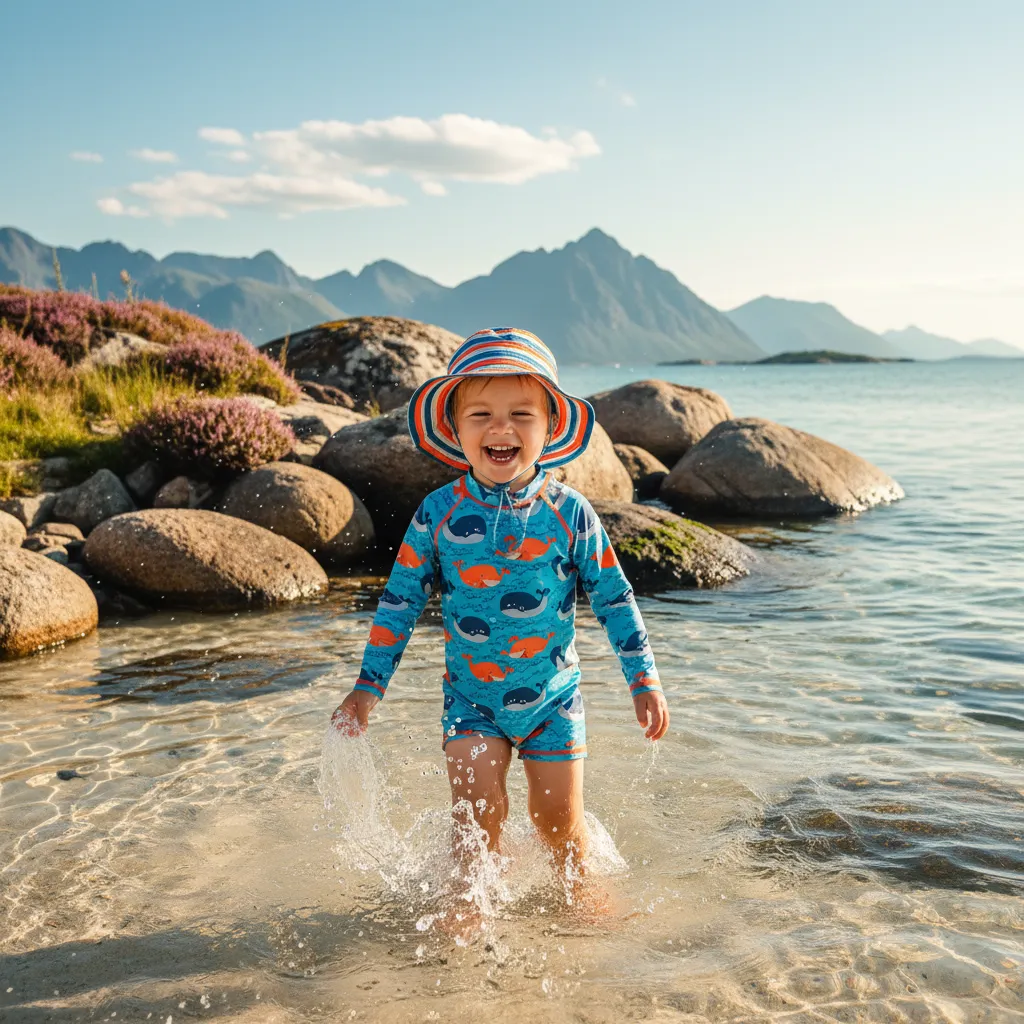
- Sun hat with a brim, protects face, ears, and neck. A legionnaire hat (with neck flap) is ideal
- Long-sleeved, lightweight tops in tightly woven fabric. Clothing with UPF (Ultraviolet Protection Factor) labeling provides documented protection
- Light, long pants for everyday use
- UV rash guard for swimming, covers shoulders, back, and thighs
Dark and tightly woven fabrics provide better UV protection than light, loosely woven ones. A regular white T-shirt offers only about SPF 5–7. Wet clothing provides even less protection. UV clothing rated UPF 50+ is a safe choice for swimming and beach play.
Shade during the strongest hours
- Seek shade between 10 a.m. and 4 p.m., that's when UV radiation is strongest
- Remember that clouds let through 50–80 percent of UV radiation. You can get sunburned on overcast days
- Use an umbrella, sun canopy, or natural shade from trees
Sunglasses for children
Children's eyes are more vulnerable to UV rays than adults'. Choose sunglasses that:
- Have UV400 or CE marking (blocks 99–100% of UV)
- Fit well and don't slip off
- Have a flexible frame and an elastic band around the head for the youngest
- Sunglasses can be used from about 6 months of age
Outdoor and water activities
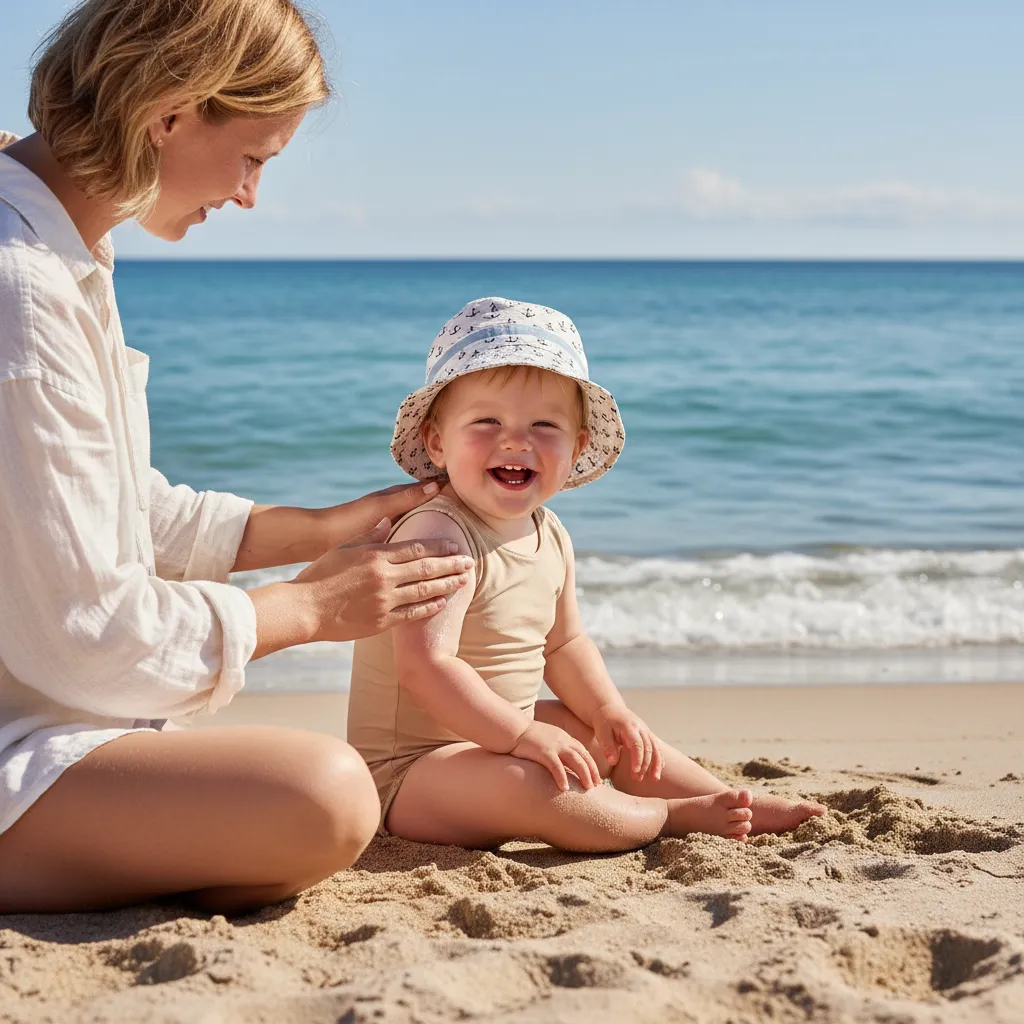
At beaches and pool visits, your child's skin is especially exposed because water reflects UV rays and wind can cool the skin so you don't notice the burning.
- Bring an umbrella or sun canopy to the beach
- Use a UV rash guard on your baby for swimming
- Reapply sunscreen after every swim
- Have plenty of drinking water available, children dehydrate faster in the heat
What to do about sunburn
Even with good protection, accidents happen. If your child has gotten sunburned:
- Cool the skin with lukewarm (not cold) water or cool, damp compresses
- Apply moisturizer, aloe vera or fragrance-free aftersun lotion
- Offer fluids, sunburn can cause fluid loss
- Children's acetaminophen or ibuprofen can be given for pain (age-appropriate dosing)
- Keep the child out of the sun for the following days until the skin has healed
- Loose, soft clothing that doesn't rub against the skin
Contact your pediatrician or seek medical care if your child: Is under 1 year and has gotten sunburned, has large blisters on the skin, has fever, chills, or nausea, seems dehydrated (little urine, dry lips), or has sunburn over large parts of the body.

Frequently asked questions
Can babies get vitamin D from sun exposure without sunscreen?
Breastfed infants are recommended to receive vitamin D drops (400 IU daily) from about the first few days of life through 12 months, regardless of sun exposure, per the AAP. Formula-fed babies who drink at least 32 oz / 1 liter of formula per day typically get enough vitamin D from the formula. You don't need to expose your baby to sun to ensure adequate vitamin D levels.
Is it safe to use adult sunscreen on children?
Children's skin is more sensitive. Children's sunscreens are formulated without fragrance and irritating ingredients. Sunscreen labeled for children is preferable, but in an emergency, adult sunscreen is better than none.
What about insect repellent and sunscreen, can both be used?
Yes, but apply sunscreen first and let it dry for 15–20 minutes. Then apply insect repellent on top. Never use combination products, they can make both less effective.
How long does sunscreen last?
Check the expiration date and the PAO symbol (open jar icon) on the packaging. Most sunscreens last 12 months after opening. Sunscreen from last summer may have reduced effectiveness. Store sunscreen in a cool place and avoid direct sun on the tube.
Does my child need sunscreen on cloudy days?
Yes. Clouds let through significant UV radiation. On days with a high UV index, you can get sunburned even when the sun is behind clouds. Use sunscreen when the UV index is 3 or higher, check a weather app for daily UV forecasts.
Read more
- Vitamin D for babies, everything you need to know
- Summer with a newborn
- Summer with babies and toddlers guide
- Best Swim Diapers for Babies and Toddlers. Packing for the pool? Start with the right swim diaper.
Sources
- AAP. Sun safety: Information for parents about sunburn and sunscreen
- FDA. Should you put sunscreen on infants?
- WHO. Radiation: UV radiation
🔧 Helpful Tools
- Baby Milestones Tracker. Track your baby's developmental milestones
- All Baby Tools. Browse all free tools for pregnancy and baby care
📖 Related Articles
- Summer with a Newborn: Sun, Heat, and Safety. Got a summer baby? Here's everything you need to know about sun protection, heat, clothing, and time outdoors with newborns.