Is the baby too warm or too cold? It's a question most parents ask themselves daily, especially in the first year. Babies don't regulate their body temperature as well as adults, and it can be hard to know if you've dressed them right.
The good news is that there's a simple rule of thumb and some practical tricks that make it easier. Here's a complete guide to dressing your baby through all seasons.
The Rule of Thumb
The classic rule is: dress your baby in one more layer than what you're comfortable in. This rule applies especially to newborns and young babies who aren't very active.
When your baby starts crawling and walking (from 8-12 months), this changes. Active babies may need the same, or even fewer, layers than you, because movement generates heat.
How to Check If Your Baby Is the Right Temperature
- Feel the neck or chest, the skin should feel warm and dry
- Clammy and sweaty? The baby has too many clothes
- Cold on the chest? The baby needs more
- Cold hands and feet are normal, this doesn't necessarily mean the baby is cold, especially in newborns
An overheated baby is more dangerous than a slightly cool one. Overheating is a known risk factor for SIDS. Never use a hat indoors (except for newborns in the hospital), and make sure the baby isn't sweating.
The Layering Principle
Layering is the smartest way to dress your baby, regardless of season. The principle is simple:
- Base layer (innermost): Soft, moisture-wicking fabric close to the skin
- Mid layer (insulation): Warm clothes that trap heat
- Outer layer (protection): Wind- and water-resistant layer
The advantage of layering is that you can easily add or remove a layer as needed.
Winter (November to March)
Winter can be bitterly cold, and babies are especially vulnerable because they sit still in a stroller or carrier.
Dressing for Winter
| Layer | Recommendation |
|---|---|
| Base layer | Merino wool or wool/silk onesie and pants |
| Mid layer | Wool sweater/fleece and wool pants |
| Outer layer | Bunting bag or winter snowsuit, windproof |
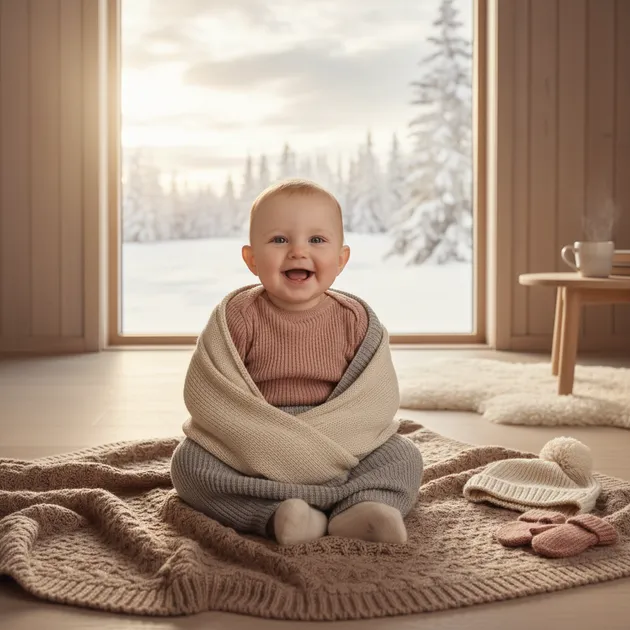
| Accessories | Wool hat, wool mittens, wool socks/booties |
Important Winter Tips
- Wool as a base layer is the gold standard. Wool regulates temperature, keeps warm even when damp, and is naturally antibacterial.
- Bunting bags are excellent for the smallest babies in strollers. Choose one with a windproof outer layer and soft lining.
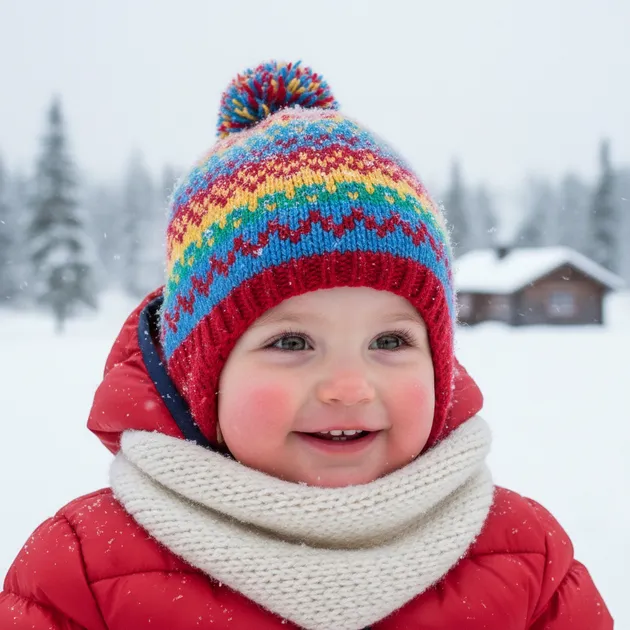
- Watch the face, rosy cheeks are normal in cold weather, but blue lips mean the baby is too cold.
- Check regularly, babies can get cold quickly when sitting still.
According to pediatric guidelines, babies can sleep outdoors down to about 14°F (-10°C), but combined with wind, increased attention to the child's body temperature is needed. The wind chill effect can make the perceived temperature much lower than what the thermometer shows.
Spring and Fall (April-May and September-October)
Transitional seasons are challenging because temperatures vary a lot throughout the day. Layering is especially important now.
Typical Spring/Fall Dressing
| Layer | Recommendation |
|---|---|
| Base layer | Wool or cotton onesie |
| Mid layer | Thin wool sweater or fleece |
| Outer layer | Light softshell or windbreaker |
| Accessories | Thin hat, optional rain hat |
Tips for Spring and Fall
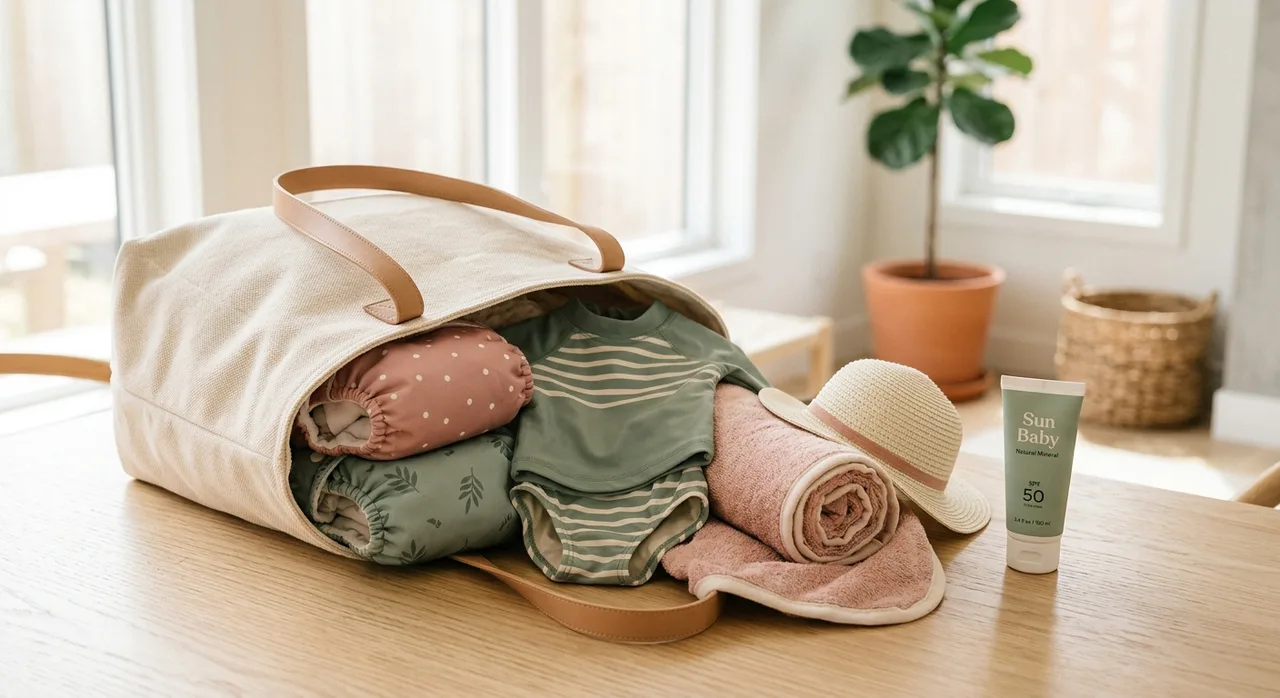
- Always have an extra layer in the diaper bag
- Rain gear is invaluable once the baby is old enough to sit up in the stroller
- Morning and evening can be much colder than midday
- Check the weather forecast, plan your baby's outfit accordingly
Summer (June to August)
In summer, the challenge is often the opposite, avoiding overheating. Overheating is more dangerous than being slightly cool.
Dressing for Summer
| Temperature | Recommendation |
|---|---|
| 68-77°F (20-25°C) | Thin onesie with short or long sleeves |
| Over 77°F (25°C) | Just a onesie or romper, or just a diaper in the shade |
| In sunlight | Light, covering clothes + sun hat with a wide brim |
Important Summer Tips
- Never let the baby sleep in direct sunlight, always place the stroller in the shade
- Infants under 1 year should not be exposed to direct sunlight, according to the AAP
- UV clothing provides good sun protection for active babies
- Sun hat with wide brim protects the face, ears, and neck
- Avoid dark colors, light clothes reflect heat better
- Check the temperature in the stroller, it can get surprisingly warm in the sun
Never cover the stroller with a blanket or cloth to block the sun. This creates a greenhouse effect and the temperature inside can rise to dangerous levels in a short time.
Sleep and Nighttime Clothing
TOG Rating for Sleep Sacks
Sleep sacks are a safe alternative to blankets for babies. They have a TOG rating that indicates the warmth level:
| TOG | Room Temperature | Clothing Underneath |
|---|---|---|
| 0.5 | Over 75°F (24°C) | Just a onesie or just a diaper |
| 1.0 | 70-75°F (21-24°C) | Short-sleeved onesie |
| 2.5 | 61-68°F (16-20°C) | Long-sleeved onesie, optional pajamas |
| 3.5 | Under 61°F (16°C) | Pajamas and onesie |
Recommended room temperature for baby sleep is 65-68°F (16-20°C). A cool bedroom is safer than a warm one. The baby doesn't need a hat indoors.
Car Seats and Bulky Clothing
This is important to be aware of: bulky winter clothes in the car seat are a safety risk.
Thick jackets and snowsuits compress during a collision, and the harness becomes too loose to hold the child safely. In the worst case, the child can slip out of the harness.
Safe Practice
- Remove thick jackets/snowsuits before placing the baby in the car seat
- Fasten the harness snugly over thin clothes
- Place a blanket or jacket over the child after the harness is fastened
- Special car seat covers that attach under the harness are a good alternative
Frequently Asked Questions
Does the baby always need a hat outside?
Newborns lose a lot of heat through their heads and need a hat outside in cold weather. As the baby grows, a hat is most necessary below about 50°F (10°C). Indoors, the baby never needs a hat (except the first hours after birth).
Can the baby wear cotton in winter?
Cotton doesn't keep warm when wet and dries slowly. Wool is a much better choice as a base layer in winter. Cotton works well in summer when it's warm.
How many clothes does the baby need for nighttime?
It depends on room temperature and the type of sleep sack. At 65-68°F (18-20°C) with a 2.5 TOG sleep sack, a long-sleeved onesie is usually sufficient. Feel the baby's neck to check if they're the right temperature.
Is wool difficult to wash?
Modern merino wool can be machine-washed on a wool cycle. Use wool detergent and dry flat. Wool needs less frequent washing than cotton because it's naturally self-cleaning.
Sources
🔧 Helpful Tools
- All Baby Tools. Browse all free tools for pregnancy and baby care
📖 Related Articles
- Baby and Child Hats: A Complete Guide for All Seasons. Complete guide to hats for babies and children. Wool hats, balaclavas, sun hats, and UV hats. Sizes, materials, and tips for every season.
- Dressing Your Baby for Winter: The Complete Layering Guide. How to dress your baby for cold weather. A complete guide to the layering system, the right materials, and how to check if your baby is the right temperature.
- Wool Clothing for Children. Complete Guide to Wool for Babies and Toddlers. Everything about wool clothing for children. Merino wool vs regular wool, brands, layering, washing, and care. Complete guide to wool sweaters, pants, and underwear.