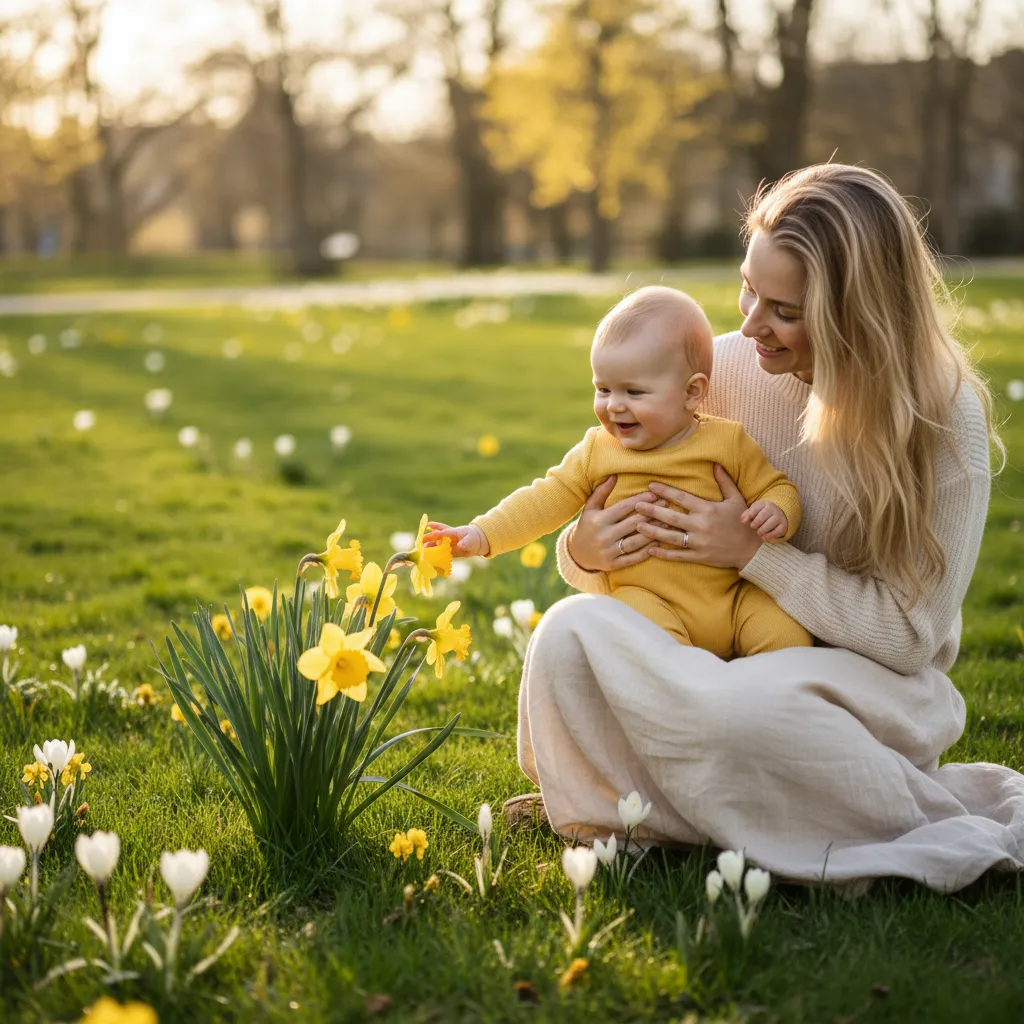
After a long winter, few things feel better than heading outside with your baby for the first warm days of spring. The light comes back, the world wakes up, and everything is suddenly full of things to see, hear, and touch. For little ones, spring is a feast for the senses.
Here are 15 activities suited to babies and toddlers, from newborns in the stroller to three-year-olds who want to explore everything.
Why outdoor time is good for your baby
Time outside isn't just about fresh air. For a baby, the whole body is a sensory instrument, and nature provides stimulation that no toy can replicate.
- Natural light supports circadian rhythms and promotes vitamin D production
- Fresh air improves sleep quality, many parents notice their baby sleeps longer after time outdoors
- Sensory stimulation from wind, sounds, smells, and movement supports brain development
- Motor development, uneven terrain challenges balance and coordination in older babies
- Good for parents too, outdoor activity reduces stress and helps prevent postpartum mood dips
Vitamin D: The WHO and AAP recommend vitamin D supplementation for breastfed infants from around 1 week of age (400–1000 IU daily). Time outside in spring sun is a lovely complement, but doesn't replace supplements. Check with your pediatrician for the recommendation that applies to your baby.
0–6 months: Experiencing the world from the stroller and carrier
The youngest babies experience spring through their senses, light, sounds, touch, and movement. You don't need a plan. Just being outside is enough.
1. Outdoor napping in the stroller
A beloved tradition in many families. Babies often sleep longer and more deeply in fresh outdoor air.
- Dress baby for the temperature, layers with a breathable base layer
- Use a stroller sleeping bag rated for the current temperature
- Check that baby isn't too warm (feel the chest or neck, not the hands or feet)
- Position the stroller sheltered from wind but with good airflow
- Keep a baby monitor nearby or stay close
Use a Sleep Tracker to log outdoor naps and see whether they affect your baby's sleep patterns.
2. Sensory walks in the carrier
A baby carrier gives you close contact and keeps your hands free, perfect for a gentle spring walk.
- Walk slowly and narrate what you see: birds, trees, water
- Stop at flowers and let baby look and smell
- Different surfaces (gravel, grass, pavement) create varied movements that stimulate the vestibular system
- Keep trips as long as baby's mood allows, 20 minutes is plenty for the youngest
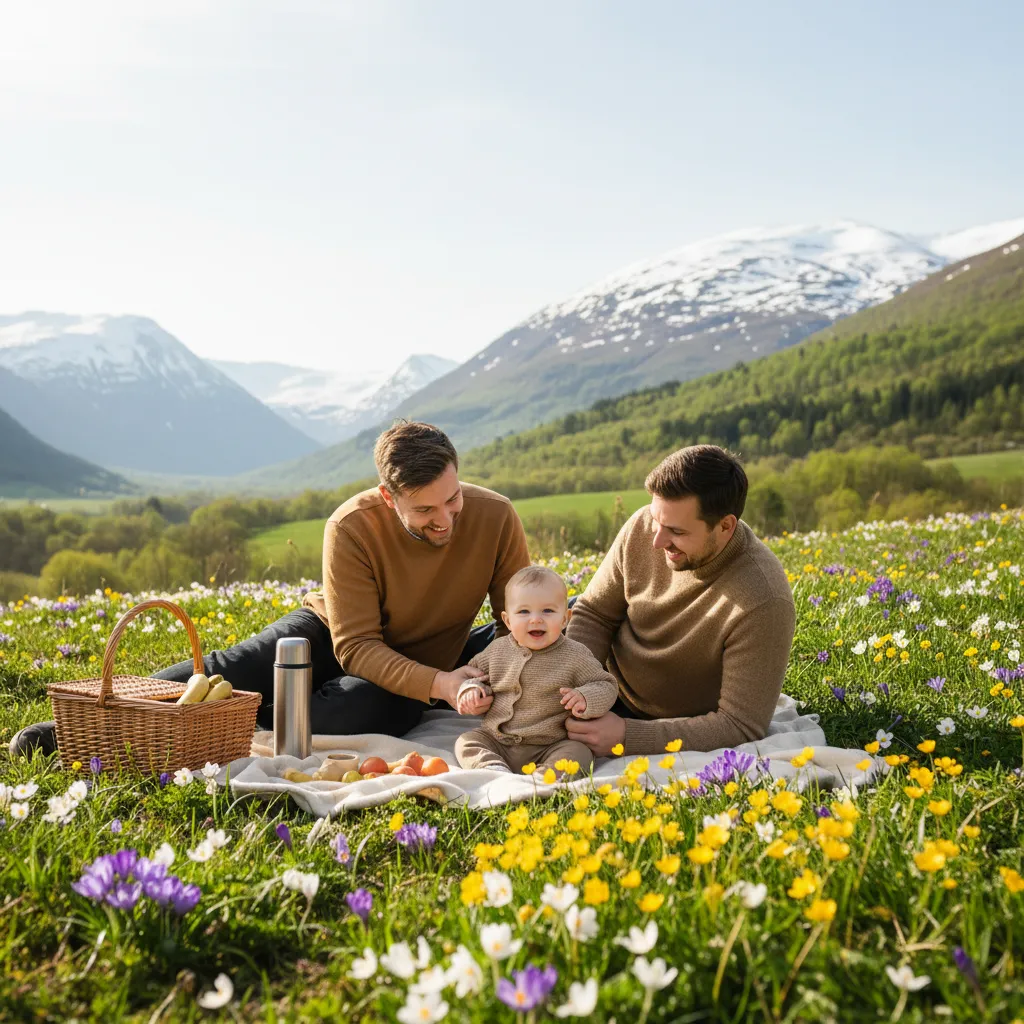
3. Picnic on a blanket
Spread a large blanket in the garden or park and let baby lie and experience the world.
- Baby can lie on their back and gaze up at the trees, moving leaves are endlessly fascinating
- Put baby on their tummy for some tummy time with a view
- Bring a book and enjoy the fact that baby is perfectly happy just observing
- Nature sounds (birds, wind, a nearby stream) provide soothing stimulation
4. Stroller walks with stops
Turn the daily outing into an experience rather than just getting from A to B.
- Stop by a stream and let baby listen to the water
- Park under a tree and watch the leaves sway
- Pass a playground and let baby observe other children
- Vary your routes, new sights and sounds are stimulating
5. Gardening with baby
Baby can join in while you work in the garden.
- Set baby in a bouncy chair or on a blanket nearby
- Let baby touch soil, grass, and flowers (supervised)
- Talk about what you're doing, baby loves your voice regardless of the topic
- Keep sessions short, 15–20 minutes is plenty
6–12 months: The explorer awakens
Baby can sit, crawl, grasp, and is curious about everything. Spring offers perfect opportunities for exploration.
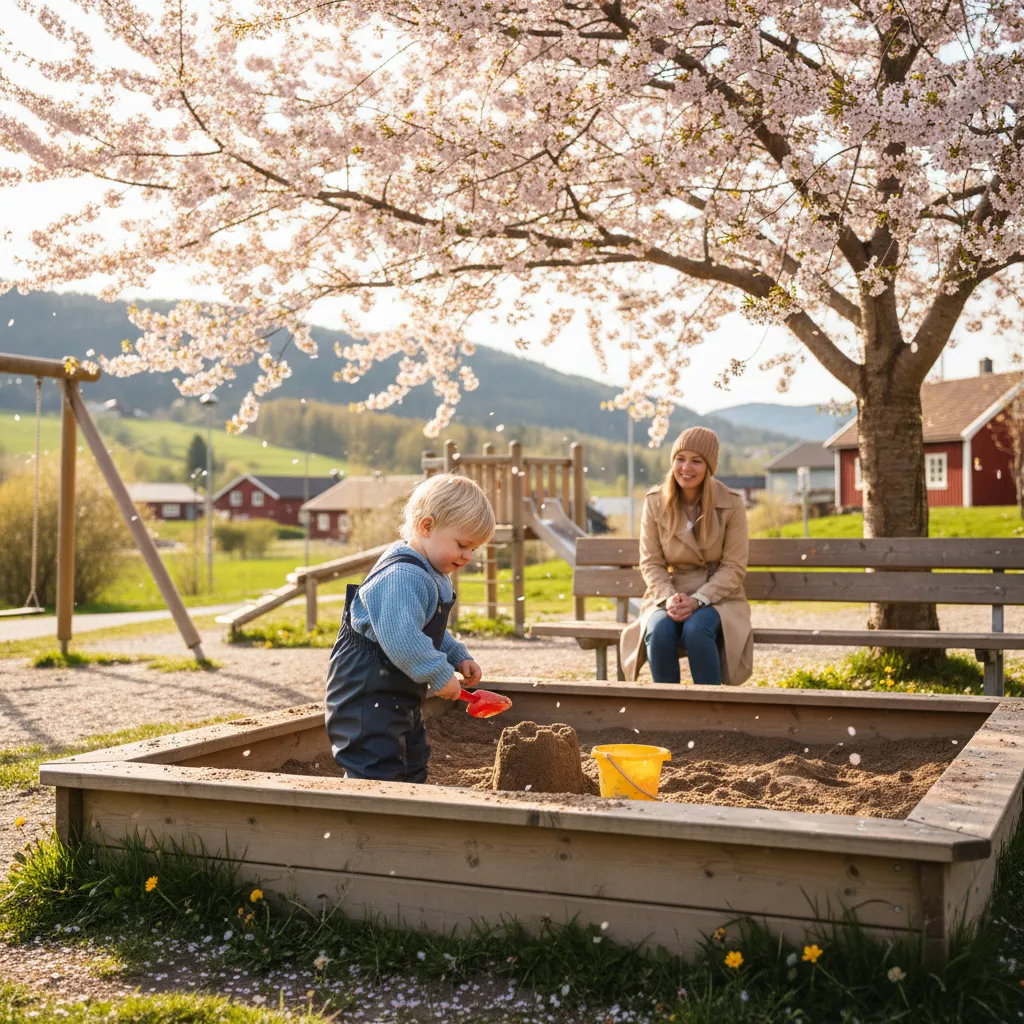
6. Sandpit adventures
The sandpit is a sensory paradise for babies who can sit up.
- Let baby feel the sand with hands and feet
- Show how to use a bucket and spade
- Sand play strengthens fine motor skills
- Bring wet wipes, sand gets everywhere (including in mouths)
7. Swings
Most playgrounds have baby swings. Swinging provides vestibular stimulation that supports balance development.
- Start gently at a slow pace
- Baby bucket swings with side support are suitable from around 6 months
- Eye contact and chatting while swinging makes it a social activity
8. Crawling on grass
Grass is a completely different surface from the floor at home, soft, uneven, and full of interesting things.
- Clear stones and sticks from the area first
- Let baby crawl freely and explore
- Baby will pick up and examine everything, keep an eye on what goes into the mouth
- Crawling on uneven ground strengthens muscles and coordination
9. Discovering flowers and insects
Spring is full of things to point at, talk about, and explore together.
- Show baby a dandelion and let them touch it
- Point out bumblebees, butterflies, and ants
- Smelling flowers is a new sensory experience
- Use simple words: "Look! Flower. Yellow flower."
10. Water play
Babies love water. Spring is the perfect time for safe outdoor water play.
- Fill a small tub with lukewarm water and set it outside
- Let baby splash, pour, and play with cups and bowls
- A garden hose on a gentle setting is fascinating
- Always supervise, children can drown in just a few centimeters of water
Water safety: Never leave a child unattended near water, not even for a moment. Children can drown silently in very shallow water. Empty paddling pools and buckets after use.
1–3 years: Little adventurers in action
Toddlers want to do, try, and discover, preferably by themselves. Spring is a giant outdoor laboratory.
11. Nature trail and treasure hunt
Create a simple scavenger hunt suited to your child's age.
- Find: a stone, a stick, a leaf, something yellow, something that smells nice
- Collect treasures in a bucket
- Older toddlers can have a simple picture list of things to find
- Talk about everything you discover, this is language development at its finest
12. Planting and garden play
Watching something grow gives children a magical connection to nature.
- Let your child plant seeds in a small pot or in the garden
- Cress and sunflowers grow quickly and produce results children can see
- A watering can is a fun tool in itself
- Digging in soil with bare hands is great fine motor training
13. Bug hunting
Toddlers are naturally fascinated by small creatures.
- Gently lift stones and see what lives underneath
- Watch ants at work, children can sit surprisingly still and observe
- A magnifying glass adds extra excitement
- Teach your child to handle insects carefully
14. Playground hopping
New playgrounds bring new challenges. Rotate between different playgrounds in your area.
- Climbing, sliding, balancing, all of it builds motor skills
- Let your child try things at their own pace, without rushing
- Other children at the playground provide great social experience
15. Walks with a purpose
Give the walk a goal your child can understand.
- "We're going to the stream to throw stones"
- "We're looking for spring flowers"
- "Let's see if the ducks are back"
- A clear goal provides motivation, and makes it easier to get small children out the door
Dressing for unpredictable spring weather
Spring can shift between sunshine, rain, wind, and cold, sometimes all in the same day. Layering is the key.
Base layer: Merino wool or a wool blend. Keeps warmth even when damp. Soft against baby's skin.
Middle layer: A wool sweater or fleece. Adjust for temperature, skip the middle layer on warm days.
Outer layer: Wind- and waterproof jacket or suit. Babies in strollers need a weather-appropriate footmuff on cool days.
Head, hands, feet:
- A light hat on cool days for infants
- Mittens in cold and windy conditions
- Thick wool socks in the stroller; waterproof shoes for crawlers and walkers
Rule of thumb for babies in strollers: One layer more than you're wearing. Check whether baby is warm enough by feeling the chest or neck, not the hands and feet (they're often cool even when baby is perfectly warm).
Outdoor safety in spring
Sun protection
- Babies under 6 months should be kept in the shade, avoid direct sun
- From 6 months: SPF 30+ sunscreen on exposed skin, a sun hat, and sunglasses
- Avoid the midday sun (11am–3pm) on the hottest days
Ticks
Ticks become active as temperatures rise, especially in wooded and grassy areas.
- Check baby and yourself after walks through tall grass or brush
- Dress in long sleeves and pants, ticks crawl upward
- Remove ticks with fine-tipped tweezers as soon as possible
- Contact your doctor if redness develops around the bite or if fever follows
Allergies
Spring brings pollen season for those who react to it.
- Children can develop pollen allergies from around age 2–3
- Symptoms include runny nose, itchy eyes, and sneezing
- Check your local pollen forecast
- Speak with your pediatrician or pharmacist about antihistamines for young children
Frequently asked questions
What spring activities are suitable for babies?
For the youngest (0–6 months), stroller walks, outdoor napping, and sensory experiences outside are ideal. From 6–12 months, babies can explore grass, leaves, and the sandpit. Toddlers from 1 year love water play, planting, bug hunting, and nature walks. Adapt activities to your child's age and mood.
When can I take my baby outside in spring?
Your baby can go outside from day one, as long as they're dressed appropriately. Add one layer more than you're wearing yourself, use breathable layers at the base and waterproof protection on the outside. Keep babies under 6 months out of direct sun, and check warmth by feeling the chest or neck.
What should I watch out for with ticks and sun?
Ticks are active once temperatures warm up, especially in wooded or grassy areas. Check your baby and yourself after outdoor time. Babies under 6 months should be kept in the shade. From 6 months, use SPF 30+ sunscreen, a sun hat, and avoid the midday sun.
Summary
Spring is the perfect season to explore the world with your baby. Adapt activities to your child's age and energy levels, and remember that the simplest outings are often the best. A walk around the block with a stop to look at a cat is an adventure for a one-year-old.
Key reminders:
- Get outside every day, whatever the weather
- Let your child explore at their own pace, no rushing
- Dress in layers, breathable base, waterproof outer
- Be mindful of sun, ticks, and water, simple precautions go a long way
Further reading
- Outdoor sleeping with baby - Complete guide to outdoor napping
- Baby carrier guide - Choosing the right carrier
- Flying with a baby - Travel tips with young children
- Sleep Tracker - Log sleep and spot patterns
- Motor development in babies - Milestones and stimulation
Sources
🔧 Helpful Tools
- Baby Sleep Tracker. Track and optimize your baby's sleep
- Baby Food Guide. Safe foods and introduction schedule for your baby
- All Baby Tools. Browse all free tools for pregnancy and baby care
📖 Related Articles
- Outdoor Play with Toddlers: Outside Fun All Year Round. Ideas for outdoor play with toddlers in every season. Activities for 1-3 year olds that stimulate development and provide fresh air.
- Spring Activities with Baby and Toddler: 20 Fun Things to Do, 20 fun spring activities for families with babies and toddlers. Outdoor play, nature experiences, and simple activities to enjoy the season together.
- Spring and Easter with Your Baby: Activities and Tips. Easter with your baby or toddler. Activities, outing ideas, seasonal fun, and tips for a wonderful holiday.