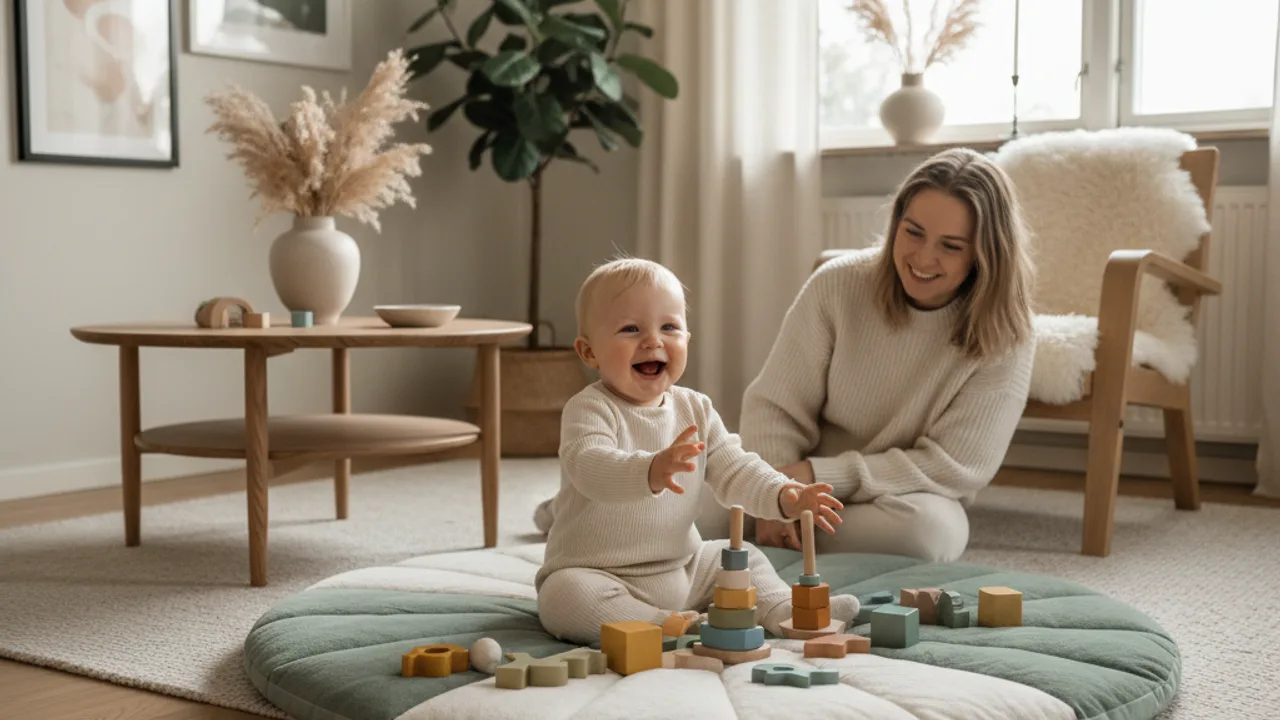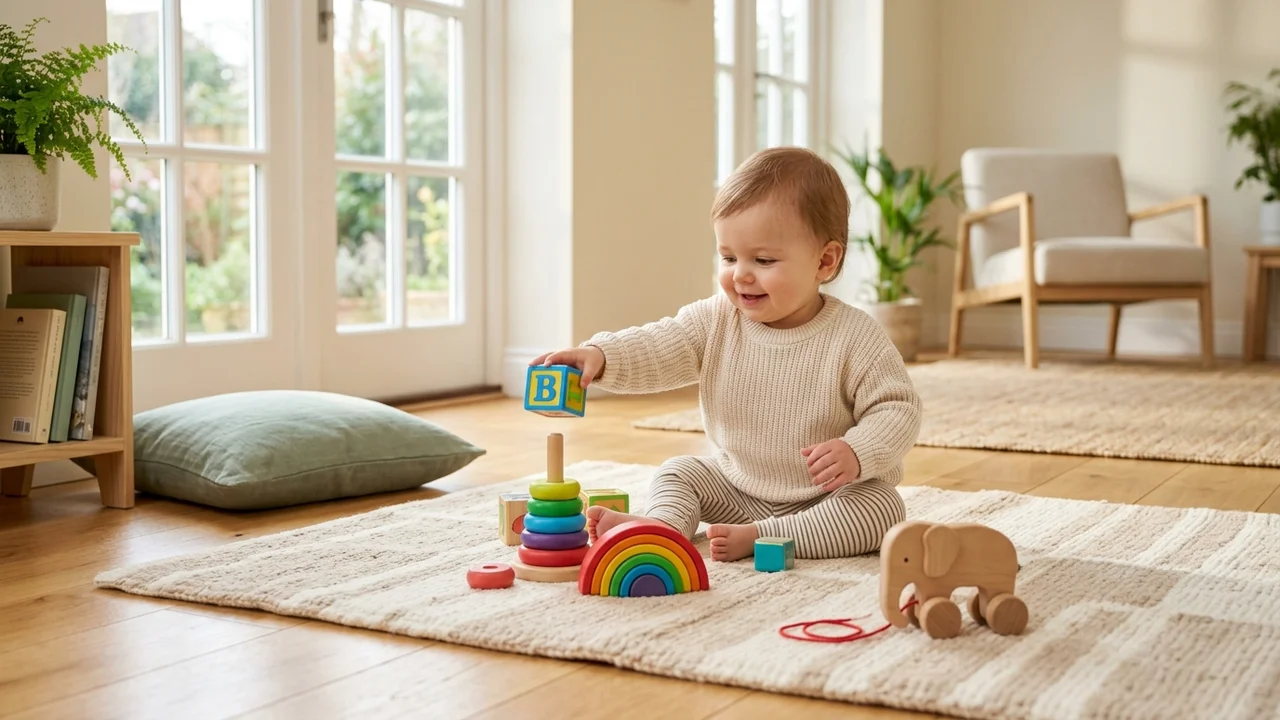
A two-year-old is a whirlwind of energy, curiosity, and strong opinions. Words come faster and faster, imagination is in full bloom, and suddenly a banana is a phone and a cardboard box is a spaceship. Pretend play begins in earnest.
Play is a toddler's most important learning arena. Through play, children develop motor skills, language, social skills, and creativity. Here are 20 concrete activities that are perfect for this age.
Two-year-olds often have strong preferences. Some days everything is fun; other days nothing is right. That's completely normal. Offer activities without pressure, and be prepared for their favorite play to shift from day to day.
Pretend Play and Imaginative Play (5 Activities)
From age 2, imaginative play explodes. Children start pretending, and it's an important developmental step that builds empathy, language, and problem-solving.
1. Play Kitchen
A simple play kitchen (or just pots, spoons, and plastic food) lets a toddler imitate cooking. "We're making soup! What should we add?" This play builds vocabulary, sequencing, and social roles.
Tip: Use real vegetables like cucumber and carrot, two-year-olds love "cooking" with real ingredients.
2. Doctor's Kit
The teddy bear is sick! Give your child a toy bandage, a toy stethoscope, and a plaster. Let them examine and "treat" the stuffed animals. This play helps process experiences from doctor and pediatrician visits and builds empathy.
3. Shop Play
Set up a "store" with toys or items from the kitchen. Your child can "pay" with buttons or play money. "Can I have an apple, please?" practices polite phrases and turn-taking.
4. Baby Doll Play
Many two-year-olds love playing with a doll or stuffed animal as a baby, feeding, putting to bed, changing, and comforting. Especially valuable if the family is expecting a new sibling; it helps your child prepare.
5. Dress-Up Box
Collect old clothes, shoes, hats, and bags in a box. Let your child dress up and "become" someone else. An old tie, an apron, or a pair of sunglasses can spark an entire performance.
Creative Play (5 Activities)
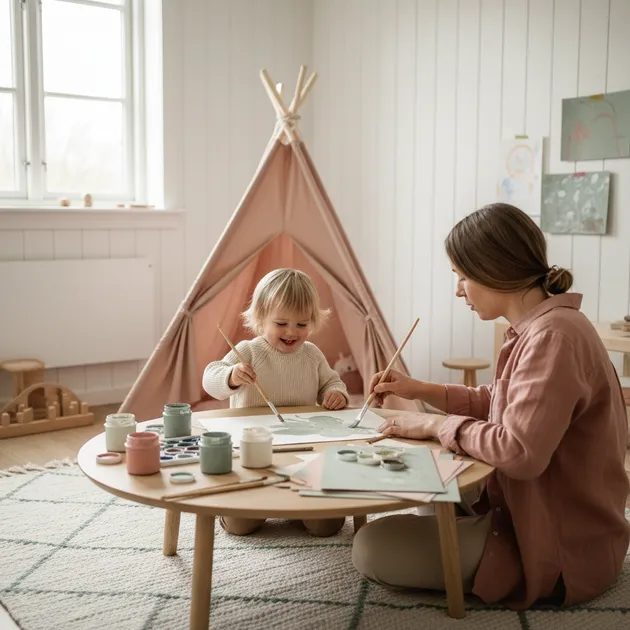
Two-year-olds are ready for more advanced creative exploration than one-year-olds. They begin to draw with intention and can follow simple creative processes.
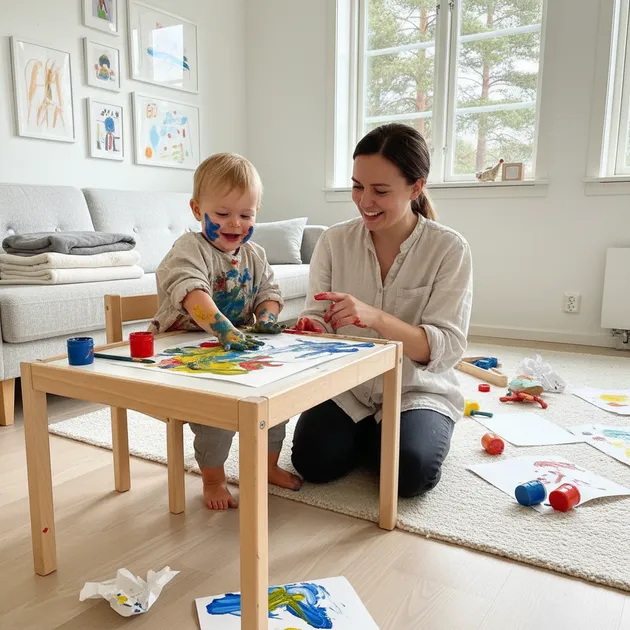
6. Finger Painting
Cover the table with plastic and let your child paint freely with their fingers. Use large sheets of paper, and try the floor rather than a table. Two-year-olds paint with their whole body, and that's perfectly fine.
Homemade finger paint: mix cornstarch, water, and food coloring. Completely safe if your child puts their fingers in their mouth, and cheap enough to use generously.
7. Playdough and Clay
Let your child squeeze, roll, shape, and use cutters. Playdough trains hand strength (important for future writing) and provides sensory stimulation. Show your child how to make simple shapes, sausages, balls, flat cakes.
8. Cutting and Gluing
With child-safe scissors (rounded tips), two-year-olds can start cutting. Begin by snipping the edge of paper. Glue the pieces onto a sheet to make a collage. This trains fine motor skills and coordination.
9. Stamping
Dip halved potatoes, corks, sponges, or LEGO Duplo bricks in paint and press onto paper. Two-year-olds love seeing the patterns that appear. Use different colors to explore color mixing.
10. Chalk Drawing Outside
Sidewalk chalk on pavement is perfect for two-year-olds. They can draw freely, you can draw shapes for them to name, or you can trace hands and feet together. It all washes away in the rain, no mess to worry about.
Motor Play (5 Activities)
Two-year-olds run, climb, and jump. They need plenty of physical activity to develop coordination and strength.
11. Obstacle Course
Create a course in the living room or garden: climb over cushions, crawl under a table, jump over a line, balance on a plank on the ground. Keep it simple at first and build it out over time.
12. Ball Toss into a Bucket
Place a bucket or basket a few meters away and let your child throw balls in. Start close and increase the distance. This trains eye-hand coordination and gives a wonderful sense of achievement.
13. Balance Bike or Tricycle
Many two-year-olds are ready for a tricycle or balance bike. Balance bikes (without pedals) train balance and are a natural step toward a regular bike later. Start indoors or on flat pavement.
14. Jumping
Two-year-olds are learning to jump with both feet. Make "stepping stones" from cushions on the floor and hop from stone to stone. Jump in puddles outside. Jump from the bottom step (with you ready to catch).
15. Carrying Play
Give your child something to carry, a basket of toys, a small bucket of sand, a shopping bag. Carrying something while walking trains balance and coordination in a different way than walking empty-handed.
Language and Learning (5 Activities)
By age 2, most children have 50–200 words, and two-word combinations like "more milk" and "daddy gone" are common. These activities support the rapid pace of language development.
16. Storytelling from Books
Look at picture books and let your child "tell" what's happening in the pictures. Ask open-ended questions: "What is the dog doing?" "Where is the cat?" Don't correct, confirm and expand. Your child says "fower", you respond "yes, the flower! A red flower!"
17. Singing with New Verses
Make up new verses to familiar tunes. "Baa, baa, black sheep" can become "baa, baa, black cat, have you any mice?" Two-year-olds find it funny when familiar things get turned upside down, and it builds creative language understanding.
18. Color Hunt
"Can you find something red?" Send your child on a hunt for colors around the room or outside. Extend to shapes: "Can you find something round?" This builds categorization and vocabulary.
19. Puzzle Time
Simple puzzles with 2–6 pieces and knobs are perfect for two-year-olds. Animal puzzles where your child can name the animals connect fine motor skills with language. Gradually increase the difficulty.
20. Everyday Storytelling
Tell your child what's about to happen: "Now we're going to the store. We need to buy milk and bread. Then we'll go to the park." This builds understanding of sequences and time, and gives your child security through predictability.
At the 2-year pediatric checkup, it's expected that your child has at least 50 words and is starting to combine two words together. Talk to your pediatrician if your child has fewer words or isn't combining them by age 2. Read more about speech delays in toddlers.
Two-Year-Olds and Other Children
Two-year-olds mostly play in parallel, next to each other, not necessarily together. That's completely normal. True cooperative play gradually emerges from around 2.5–3 years.
How to Support Social Play
- Stay close. Sit nearby and help navigate conflicts
- Name feelings, "You got sad because he took your car. Shall we ask if you can have it back?"
- Model taking turns, "Now it's your turn with the shovel. Then it's his turn"
- Don't force sharing. Two-year-olds haven't yet developed the cognitive capacity to fully understand sharing
Tips for Difficult Days
Some days everything is "no" and tantrums are around every corner. Here's how play can help:
- Sensory play calms things down. Water play, playdough, or rice in a bowl can have a soothing effect
- Outdoor play always helps. Fresh air and movement shift the mood
- Let your child choose. Offer two options instead of one: "Do you want to paint or play with playdough?"
- Lower expectations. Some days it's enough to be outside picking up rocks
Tip: Looking for more play inspiration? Check out our activity guide with 250+ ideas tailored to your child's age!
Frequently Asked Questions
How much screen time is okay for a two-year-old?
The American Academy of Pediatrics (AAP) recommends limiting screen time for children under 2, and keeping it to around 1 hour per day of high-quality content for children aged 2–5. Physical play and interaction are more important for development.
Should two-year-olds play with other children?
Yes, but don't expect cooperation. Parallel play (side by side) is the norm. Short playdates of 1–2 hours are plenty. Longer gatherings can become overwhelming.
What do I do when my child never wants to play alone?
Many two-year-olds want an adult present at all times. Start by sitting next to your child and gradually move further away. Give them access to materials they can explore independently, and check in from a distance: "I see you're building a tower!"
Do two-year-olds need organized activities?
No, but some children enjoy them. Music classes, swimming, or a parent-and-child group can provide great social experiences. But free play at home and outside is equally valuable.
Useful Tools on Babysential
- Milestones, track your child's development
- Sleep Tracker, ensure enough rest
- Play for 1-Year-Olds: 20 Activities
- Speech Delay, when to seek help?
Sources
- CDC. Developmental Milestones: 2 Years
- AAP. Screen Time and Children
- Zero to Three. Toddler Play
- WHO. Physical Activity for Under 5s
🔧 Helpful Tools
- Baby Milestones Tracker. Track your baby's developmental milestones
- Development Leaps. Understand your baby's developmental leaps
- All Baby Tools. Browse all free tools for pregnancy and baby care
📖 Related Articles
- Spring Activities with Baby and Toddler: 20 Fun Things to Do, 20 fun spring activities for families with babies and toddlers. Outdoor play, nature experiences, and simple activities to enjoy the season together.
- Creative Play at Home: 20 Activities for Toddlers, 20 simple and fun activities you can do at home with toddlers. Creative play that supports development without expensive equipment.
- Play for 1-Year-Olds: 20 Activities That Support Development, 20 fun activities for your 1-year-old that stimulate motor skills, language, and senses. Simple ideas you can do at home with what you already have.