You have a summer baby. The sun is shining, the temperature is climbing, and you're wondering: how do we enjoy summer safely with a newborn?
Newborns have thinner skin, an immature temperature regulation system, and no pigmentation whatsoever. That means you need to think a little more carefully about protection. The good news is that with a few simple steps, you can fully enjoy the summer without worry.
Sun protection for infants
The rule is simple: avoid direct sun
According to the AAP, infants under 6 months should not be exposed to direct sunlight. A baby's skin has very little pigment and is much thinner than adult skin. Sunburn in infancy can increase the risk of skin cancer later in life.
How to protect your baby:
- Always keep the stroller in the shade
- Use a sun hat or bonnet with a brim
- Dress your baby in light, covering clothing
- Avoid being outside between 10 a.m. and 4 p.m. on sunny days
- Check the UV index in a weather app before heading out
Sunscreen for the youngest
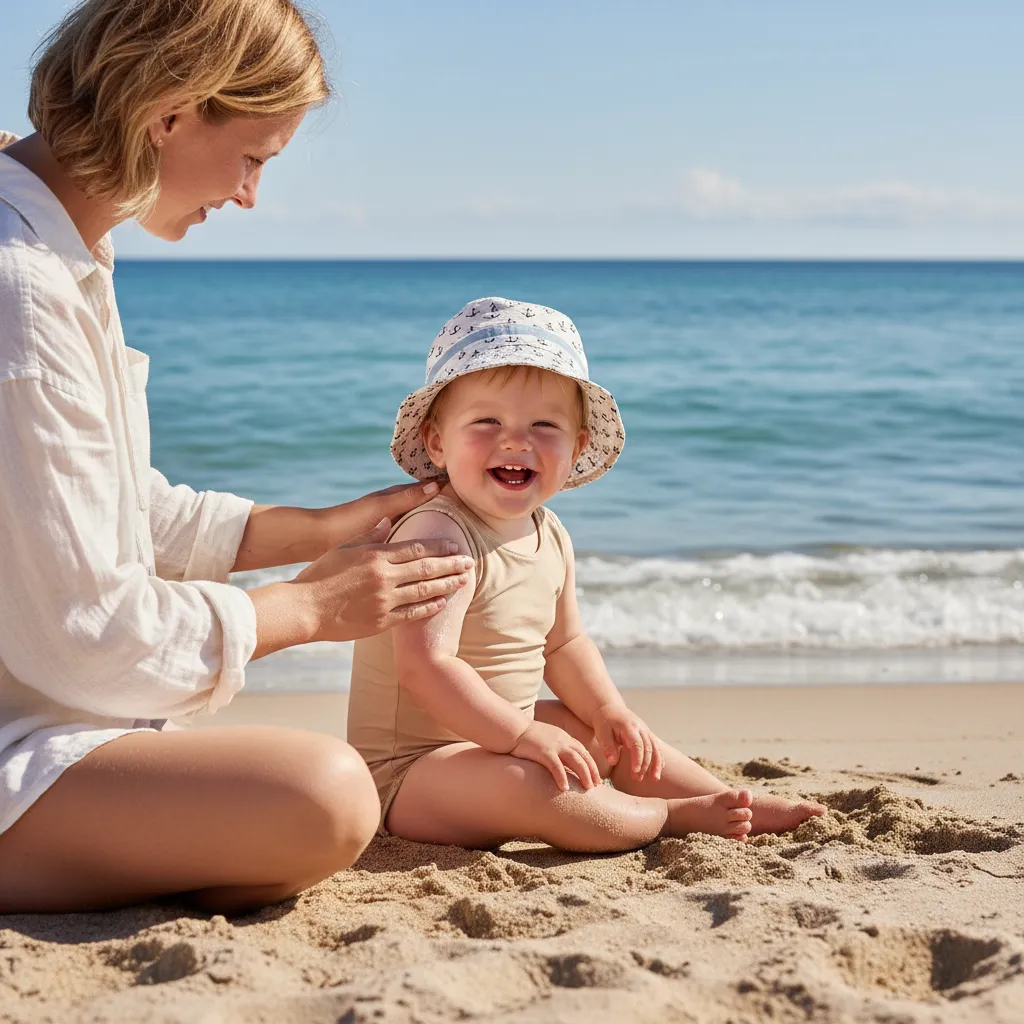
Babies under 6 months generally don't need sunscreen because they should be kept completely out of direct sun. If it's truly impossible to avoid sun exposure, you can apply a small amount of fragrance-free mineral sunscreen (SPF 50) to exposed areas such as hands and face.
From 6 months, you can use sunscreen formulated for children with at least SPF 30 and UVA protection. Apply generously 15–30 minutes before going outside.
Never drape a blanket or muslin cloth over the stroller to shield it from the sun. It can create a greenhouse effect and make the temperature inside dangerously hot. Instead, use the stroller's canopy, an umbrella, or a UV tent designed for strollers.
Clothing in summer heat
Newborns don't regulate temperature as well as adults. Both overheating and chilling can happen quickly.
Rule of thumb: Your baby needs roughly the same number of layers as you. If it's warm enough for you to wear a tank top and shorts, one layer of thin, breathable fabric is enough for the baby.
Good summer clothing for newborns
- Short-sleeved onesie in cotton or bamboo
- Thin pants in natural fiber
- Sun hat with a wide brim covering the neck and ears
- Light socks (or bare feet in the shade)
- Thin merino wool layer for cooler evenings (wool regulates temperature)
Choose light colors that reflect sunlight. Avoid synthetic materials like polyester, they trap heat and don't breathe.
How to check temperature
Feel the baby's neck and chest with your hand:
- Sweaty or clammy = too hot, remove a layer
- Comfortably warm = right temperature
- Cool = add a layer
Don't rely on hands or feet, they're often cool on newborns without the baby actually being cold.
Signs of overheating
Overheating is a real risk for newborns in summer. Young infants have immature breathing regulation, and overheating can in the worst case be life-threatening.
Warning signs you need to know:
- Red, hot skin
- Sweating (newborns rarely sweat, so this is a serious sign)
- Rapid breathing
- Restlessness or extreme irritability
- Lethargy and poor responsiveness
- Baby is feeding poorly
Contact your pediatrician or emergency services immediately if your baby is lethargic and unresponsive, or if your baby has rapid breathing and seems distressed in the heat.
How to prevent overheating:
- Avoid keeping the baby in a carrier for extended periods in intense heat (your body heat adds to the effect)
- Keep the stroller in the shade with good air circulation
- Dress your baby lightly
- Stay indoors or in the shade during midday
Fluids and feeding in summer
Babies under 6 months
Infants who are fully breastfed or formula-fed do not need extra water, not even on warm days. Breast milk and formula meet fluid needs entirely. The AAP recommends that babies under 6 months should only receive breast milk or infant formula.
Your baby may, however, need to feed more frequently in the heat. Offer the breast more often and watch that your baby is producing wet diapers.
Signs that your baby is getting enough fluids:
- 6 or more wet diapers per day
- Urine is pale yellow
- The baby seems content after feeding
- The fontanelle (soft spot on the head) is flat, not sunken
Babies over 6 months
From 6 months, your baby can have water as a thirst drink with meals, in addition to breast milk or formula. Offer water from an open cup or sippy cup.
Sleep in summer heat
Warm summer nights can make it difficult for your baby to sleep. Remember that overheating during sleep is a risk factor for SIDS.
Tips for safe summer sleep:
- Room temperature: Ideally between 65–68°F / 18–20°C. Use a fan (not pointed directly at the baby) or ventilate well
- Lightweight sleep sack: A thin cotton or bamboo summer sleep sack is enough
- No duvet: Never use an adult duvet over the baby in warm weather
- Clothing: An onesie or just a diaper in very hot weather
- Outdoor stroller naps: Always in the shade, with good air circulation. Check the temperature regularly
Air conditioning can be used in the room, but avoid cold air blowing directly on the baby. Set the temperature to 68–72°F / 20–22°C and let the room cool down before putting the baby down. You may want to add a thin blanket.
Mosquitoes and ticks
Mosquitoes
Babies are magnets for mosquitoes, and the bites can itch and swell more than in adults.
- Mosquito net over the stroller and crib is the safest option for the youngest
- Insect repellent should be used with caution on children under 2 years, apply to clothing rather than skin, and choose products with no more than 10% DEET or use picaridin alternatives labeled for children
- After a bite: A cooling gel or hydrocortisone cream can relieve itching
Ticks
Ticks are active from spring through fall and can transmit Lyme disease. Check your baby thoroughly after time in grass and brush.
- Use covering clothing in nature
- Check the whole body daily (don't forget the scalp, behind the ears, groin)
- Remove ticks with tweezers, grasp as close to the skin as possible and pull straight out
- Contact your pediatrician if a red rash develops around the bite site
Car travel
Children should never be left in a parked car, even "just for a moment." The temperature in a car can rise to over 120°F / 50°C within minutes, even when it's only 68°F / 20°C outside.
Other tips for car travel:
- Use window sun shades
- Cool the car down with air conditioning before placing your baby in the car seat
- Check that the car seat's buckles haven't become burning hot in the sun
- Take breaks and offer the baby food and drink on longer trips
Frequently asked questions
Can I take a newborn swimming?
Most healthcare providers recommend waiting to bathe in the sea or a pool until the umbilical cord stump has fallen off and healed (usually 1–2 weeks). After that, your baby can be in lukewarm water. Remember that newborns cool down quickly, keep swim sessions short and dry your baby thoroughly afterward.
Does my baby need sunglasses?
Yes, a baby's eyes are more light-sensitive than adults'. From a few months of age, you can use sunglasses designed for infants with UV protection. The simplest solution is to keep your baby in the shade.
Can newborns sleep outside in a stroller in summer?
Yes, outdoor naps are perfectly fine in summer, as long as the stroller is in the shade and there is good air circulation. Check the temperature in the stroller regularly. Never cover the stroller with a blanket or cloth.
How much vitamin D does my baby need in summer?
The AAP recommends 400 IU of vitamin D daily for breastfed infants starting in the first few days of life, through the first year. Even if your baby gets daylight, vitamin D drops are necessary because babies should not be exposed to direct sun. Formula-fed babies who drink at least 32 oz / 1 liter of formula per day typically get adequate vitamin D from the formula.
Read more
- Sunscreen and sun protection for children
- Safe sleep for babies
- Summer with babies and toddlers guide
Sources
🔧 Helpful Tools
- Baby Milestones Tracker. Track your baby's developmental milestones
- All Baby Tools. Browse all free tools for pregnancy and baby care
📖 Related Articles
- Baby Skincare: Everything You Need to Know. Baby skin is delicate and needs gentle care. Learn about bathing, moisturizing, sun protection, and common skin conditions in babies.
- Sunscreen and Sun Protection for Babies and Children. How to protect your baby and child from the sun. Sunscreen recommendations, SPF guide, and practical tips for a safe summer.
- Baby Nest: Safety and Recommendations. Are baby nests safe? Read about safety advice, recommendations from health authorities, proper use, and alternatives to baby nests for newborns.