Did you know your baby learns something new every single day? From the moment they're born, the brain is developing at full speed, and play is the most important tool for learning.
You don't need fancy toys or elaborate setups. What matters most is closeness, eye contact, and following your baby's pace.
Why Is Play So Important for Babies?
During the first six months, your baby's brain develops at a remarkable rate. Billions of neural connections form, and they're strengthened through repeated stimulation.
Play isn't just entertainment, it's how your baby explores the world. Through play, babies develop:
- Motor skills, control over their body
- Senses, sight, hearing, touch, taste, and smell
- Social skills, interaction with other people
- Language, the foundation for speech and communication
- Attachment, security and trust in caregivers
0–3 Months: Closeness and Senses
Newborns see best at a distance of about 8–12 inches, roughly the distance to your face when you hold them. Use this!
Eye Contact and Faces
Your face is the most fascinating "toy" for a newborn. Look at your baby, smile, make expressions, and let them study you. Babies prefer faces above everything else.
Try this: Hold your baby in your arms and alternate between smiling, raising your eyebrows, and sticking out your tongue. Many babies try to imitate these expressions within the first few weeks.
Talk and Sing
Babies love voices, especially mom's and dad's. Talk to your baby throughout the day: tell them what you're doing, what you're seeing, what's happening around you.
Singing is especially effective. It doesn't matter if you're off-key, your baby loves your voice regardless. Lullabies, nursery rhymes, and songs all stimulate language development.
Tummy Time
Tummy time is one of the most important activities you can do with your baby. It strengthens the neck, back, and arm muscles your baby needs to lift their head, roll over, and eventually crawl.
Start gently:
- Begin with just a few minutes at a time
- Start by placing your baby on your chest
- Use a play mat with contrasting colors
- Get down to your baby's level and make eye contact
Many babies protest tummy time at first. That's completely normal! Start with very short sessions (1–2 minutes) and gradually increase. It gets easier as they get stronger.
High-Contrast Images
Newborns see high-contrast patterns best. Black-and-white images and patterns capture attention and stimulate visual development.
You can hang contrast images near the changing table, in the stroller, or hold them in front of your baby during tummy time.
3–6 Months: Exploration and Grasping
Around three months, a lot changes. Your baby begins reaching for things, tracks objects with their eyes, and laughs out loud for the first time.
Rattles and Grasping Toys
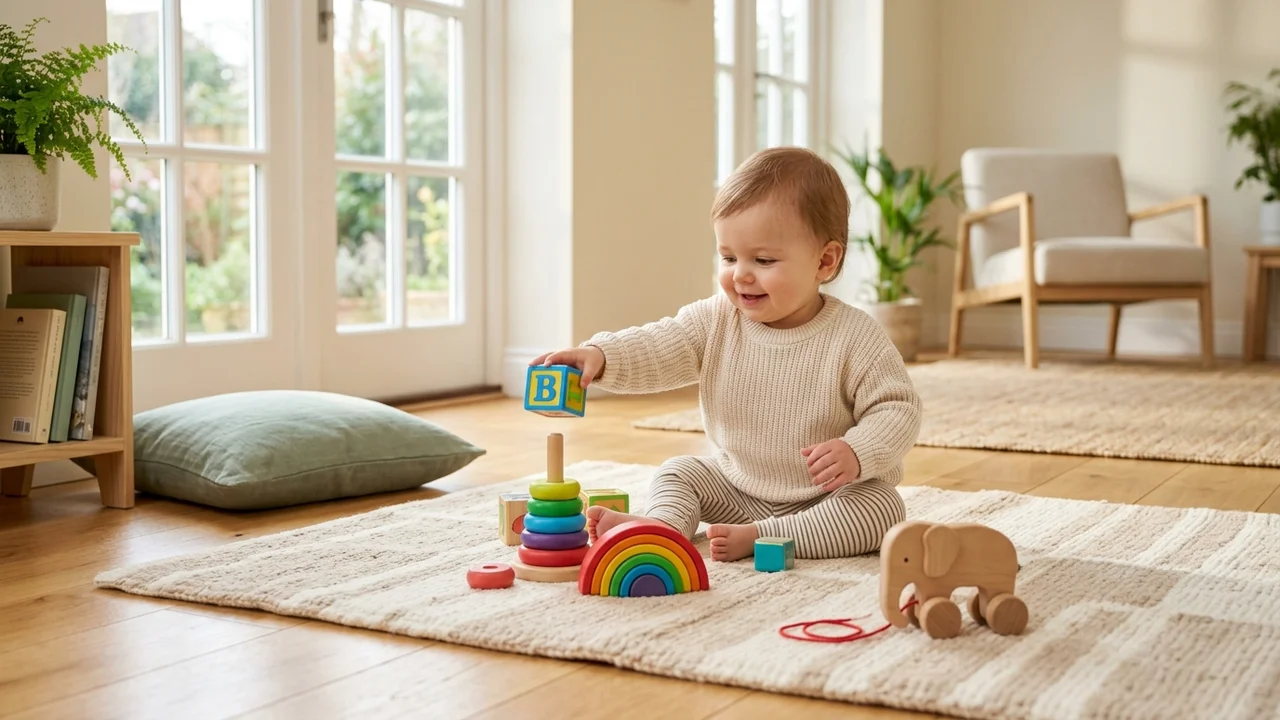
Your baby is practicing gripping and holding objects. Lightweight rattles in different materials are ideal.
Tips for grasp play:
- Hold a rattle in front of your baby and let them try to grab it
- Switch sides to stimulate both hands
- Choose rattles with different sounds and textures
- Let your baby explore at their own pace
Mirror Play
Babies love looking at themselves in a mirror! They don't yet understand it's their own reflection, but it fascinates them completely.
Use a baby-safe plastic mirror during tummy time. It motivates your baby to lift their head and hold themselves up longer.
Textures and Sensory Play
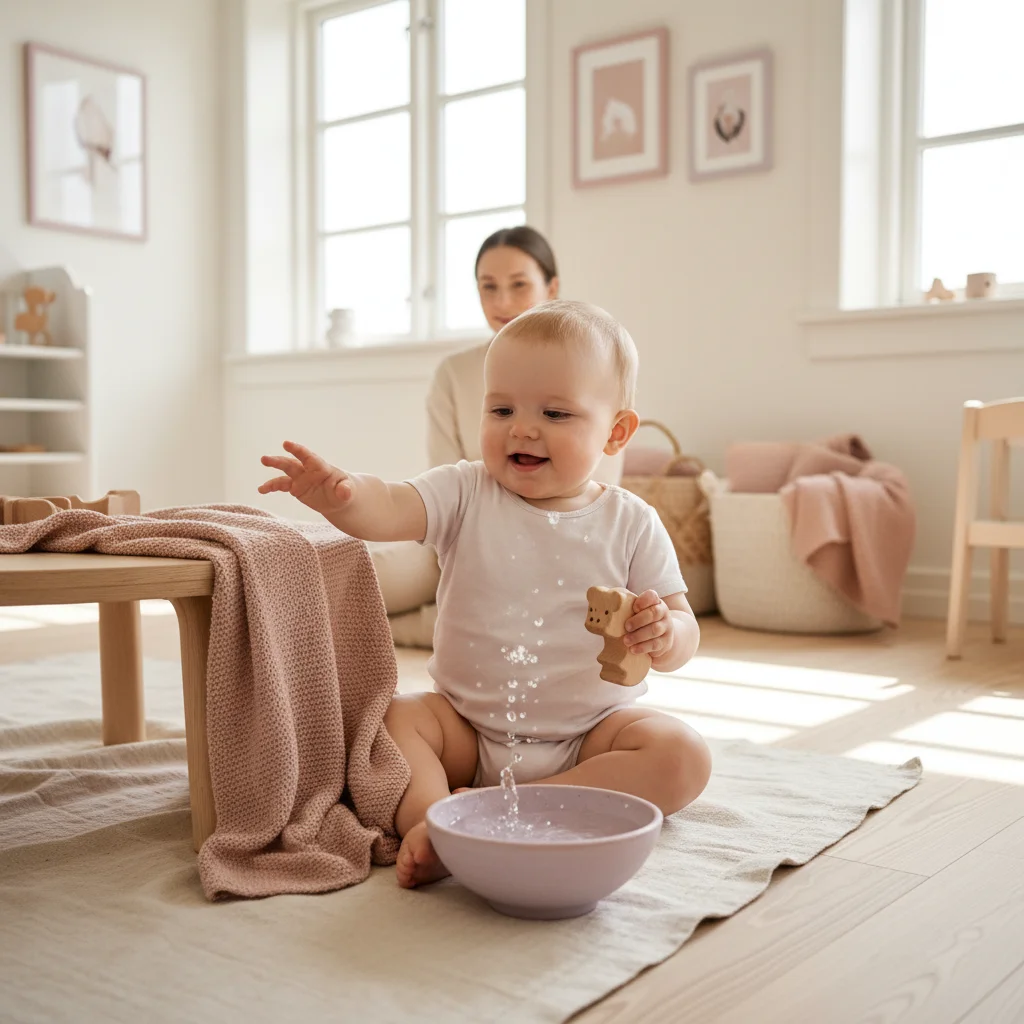
Let your baby feel different materials, soft fabric, smooth wooden rings, rough textures, cool objects. This kind of sensory play builds neural connections and helps your baby understand the world.
Make a simple sensory basket:
- A wooden ring
- A silk scarf
- A soft ball
- A cool metal spoon
- A piece of felt
Always check that toys are large enough that your baby can't swallow them and have no loose parts. Babies put everything in their mouth from around four months.
Read Aloud
It's never too early to read to your baby. Board books with large images and bold colors capture their attention. Your baby follows your voice and learns the rhythm of language.
You don't need to read the words exactly, point at pictures, make sounds, and let your baby touch the book.
Floor Time Is Golden
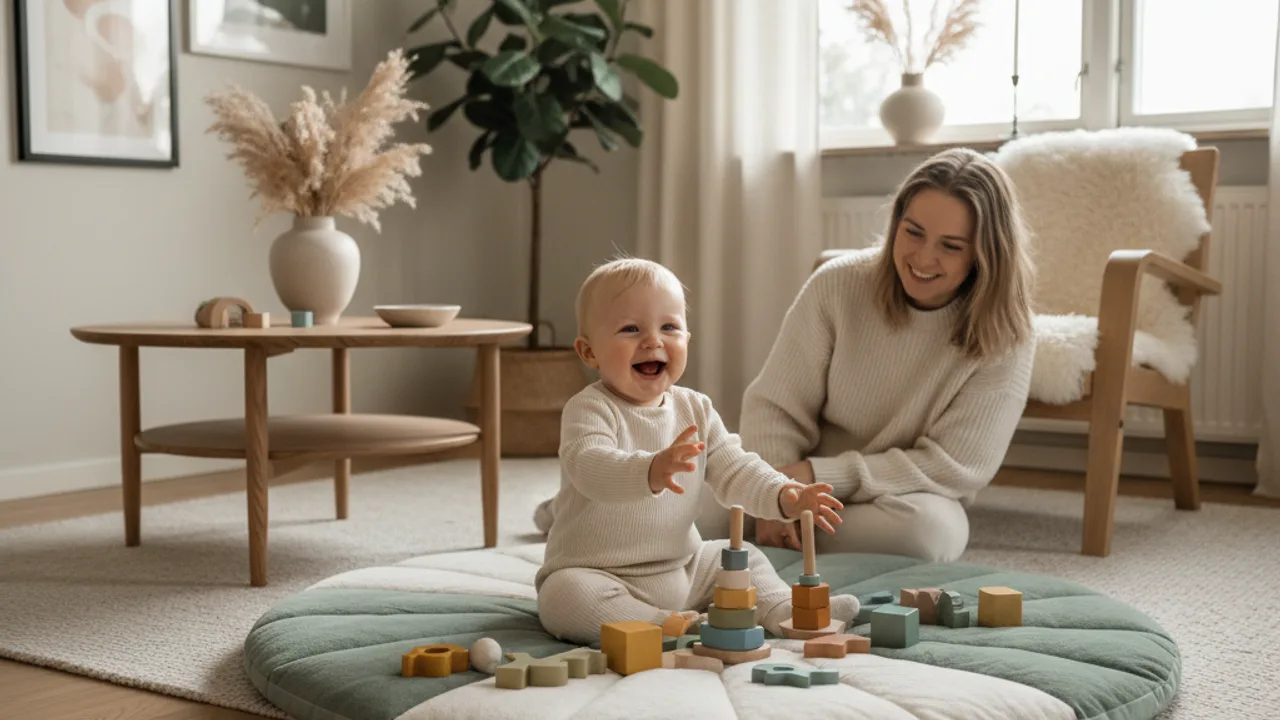
One of the best things you can do is lay your baby on the floor (on a soft mat) and give them time for free exploration.
Benefits of floor time:
- Your baby can move freely
- Stimulates motor development
- Your baby learns to roll, reach, and eventually crawl
- You can place toys just out of reach to encourage movement
Avoid keeping your baby in a bouncer seat or swing for extended periods. Free movement on the floor is better for motor development.
Signs of Overstimulation
Babies can't say "that's enough," but they show it with their body.
Signs your baby needs a break:
- Turning their head away
- Yawning or becoming fussy
- Crying or whimpering
- Clenching their fists
- Hiccuping
When you notice these signals, take a calm break. Your baby may need to lie quietly for a moment, be held close, or simply gaze out a window.
What matters most isn't the amount of stimulation, but the quality. Short, calm moments with your full attention mean more than long sessions packed with stimuli.
Frequently Asked Questions
How much should I play with my baby?
There's no fixed rule. Follow your baby's signals. Some babies are content with short play sessions of a few minutes, while others can go longer. Remember that everyday activities like diaper changes, feeding, and being carried are also play and learning for your baby.
Do I need expensive toys?
Absolutely not. The best "toys" for a baby under six months are your face, your voice, and your hands. Everyday objects like wooden spoons, silk scarves, and plastic cups are often more interesting than expensive toys.
When should I be concerned about development?
Most babies develop at their own pace, and there's wide variation in what's normal. Talk to your pediatrician if your baby isn't tracking objects with their eyes by three months, isn't responding to sounds, or isn't reaching for objects or attempting to roll by six months.
Can I overstimulate my baby?
Yes, it's possible. Babies also need rest and quiet time. Pay attention to the signals your baby gives and take breaks. A calm moment with soft lighting and minimal noise is just as important as active play.
Read More
- Age-by-age tips for parents. Practical advice tailored to your baby's age
- Tummy time for babies. How to get started
- Sensory development in babies. How the senses develop
- Music and baby development. Why singing and music matter
- Language development in children. From babbling to first words
- Reading with your baby. Tips for reading aloud from the start
- Fine motor activities. Exercises for little hands
- Track your baby's milestones. Keep track of development
Sources
🔧 Helpful Tools
- Baby Milestones Tracker. Track your baby's developmental milestones
- Development Leaps. Understand your baby's developmental leaps
- All Baby Tools. Browse all free tools for pregnancy and baby care
📖 Related Articles
- Your Baby's Five Senses: How Sight, Hearing, Touch, Taste, and Smell Develop. How your baby's five senses develop from birth to one year. Age-appropriate tips for stimulating sight, hearing, touch, taste, and smell.
- When Baby Gets Stuck: How to Help With Motor Development. Baby who rolls but can't roll back? Pulls to stand but can't get down? How to help your child through motor frustration without taking over.
- Concentration in Toddlers. How to Support It. Learn how to strengthen concentration in toddlers. Normal attention spans by age, activities, and tips for better focus in children 1–3 years.