Your baby reaches for everything within range. They rub food in their hair, press their fingers into the grass, and taste everything from their toes to a building block. Congratulations, your child is doing sensory play.
Sensory exploration is not mess and chaos (even if it looks that way). It is brain-building. Every texture your baby feels, every sound they hear, and every taste they discover creates new neural connections in the brain.
Here are 20 simple activities you can do at home, organized by your baby's age and the senses being stimulated.
Why Sensory Play Matters
Babies learn about the world through their senses. They cannot read, they cannot ask questions, they feel, taste, see, hear, and smell their way to knowledge.
Sensory play:
- Builds neural connections in the brain during a critical developmental window
- Strengthens fine motor skills through grasping, pinching, and manipulating objects
- Develops language when you put words to what your baby is experiencing
- Promotes problem-solving, what happens if I squeeze this?
- Regulates emotions, many babies calm down through sensory experiences
The AAP and WHO both emphasize that play is a child's most important learning environment. Sensory play is a natural part of exploration and healthy development.
0–3 Months: The First Senses
At this age, vision is limited (babies see best at 8–12 inches away), but hearing, touch, and smell are well developed.
1. High-Contrast Images
Show your baby black-and-white pictures or patterns. Newborns see contrast best. Hold the images 8–12 inches from their face and let them study the shapes.
2. Tactile Touch
Gently stroke your baby's body with different materials, a soft cloth, a silk scarf, a fleece blanket. Describe what you are doing: "Feel the soft cloth on your arm."
3. Baby Massage
Use baby-safe oil and massage gently. Baby massage stimulates the sense of touch, promotes bonding, and can help with colic and fussiness.
4. Song and Voice
Sing, talk, and hum. Babies love your voice. Vary pitch, rhythm, and volume. Nursery rhymes with movements give both auditory and tactile stimulation.
Track your baby's milestones in the Milestones tracker as you notice new development. Is your baby following contrast images with their eyes? That is a milestone worth celebrating!
3–6 Months: Grasp and Explore
Your baby is beginning to reach for objects, rolling, and putting things in their mouth. Everything is exciting.
5. Sensory Bottle
Fill a clear plastic bottle with water, glitter, beads, or rice. Secure the lid tightly. Your baby can shake, roll, and study it.
6. Texture Board
Glue different fabric swatches to a piece of cardboard, felt, silk, sandpaper, fleece, corduroy. Let your baby feel each one with their hands during tummy time.
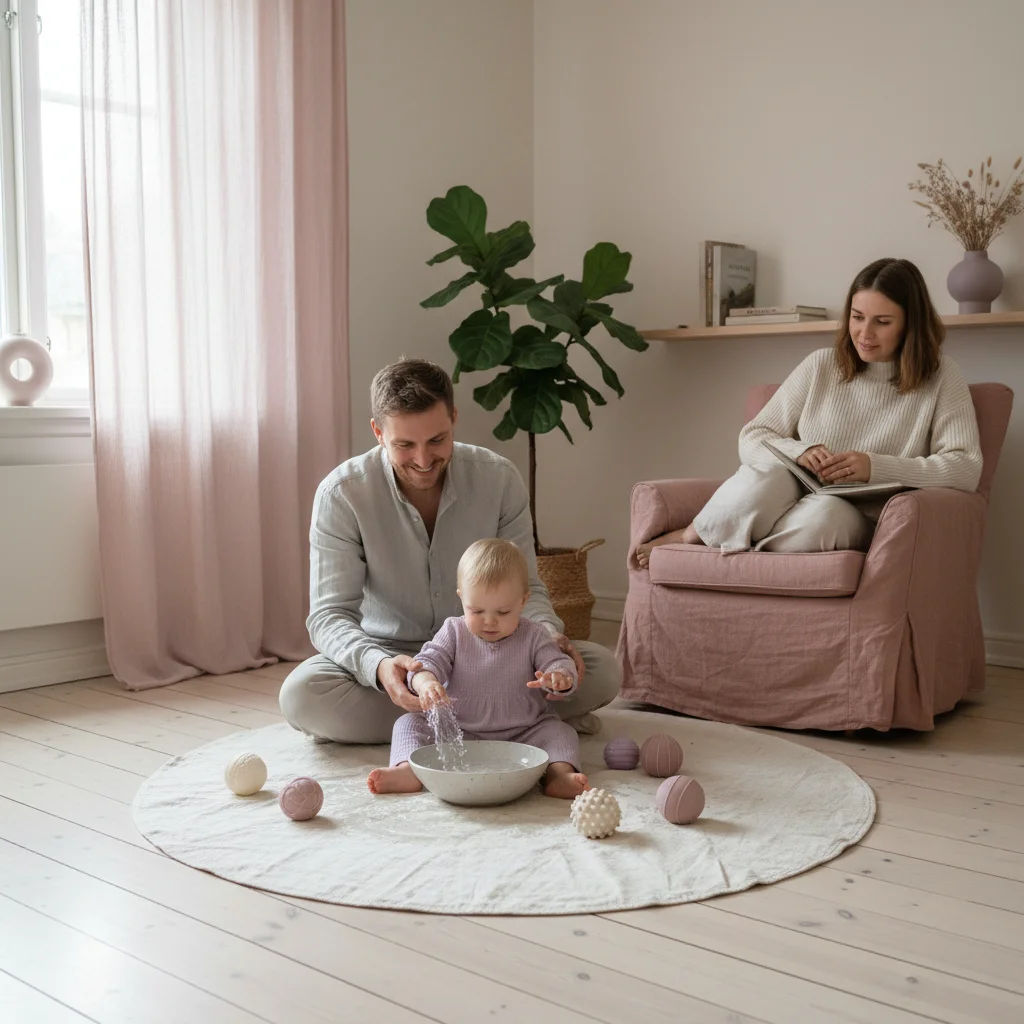
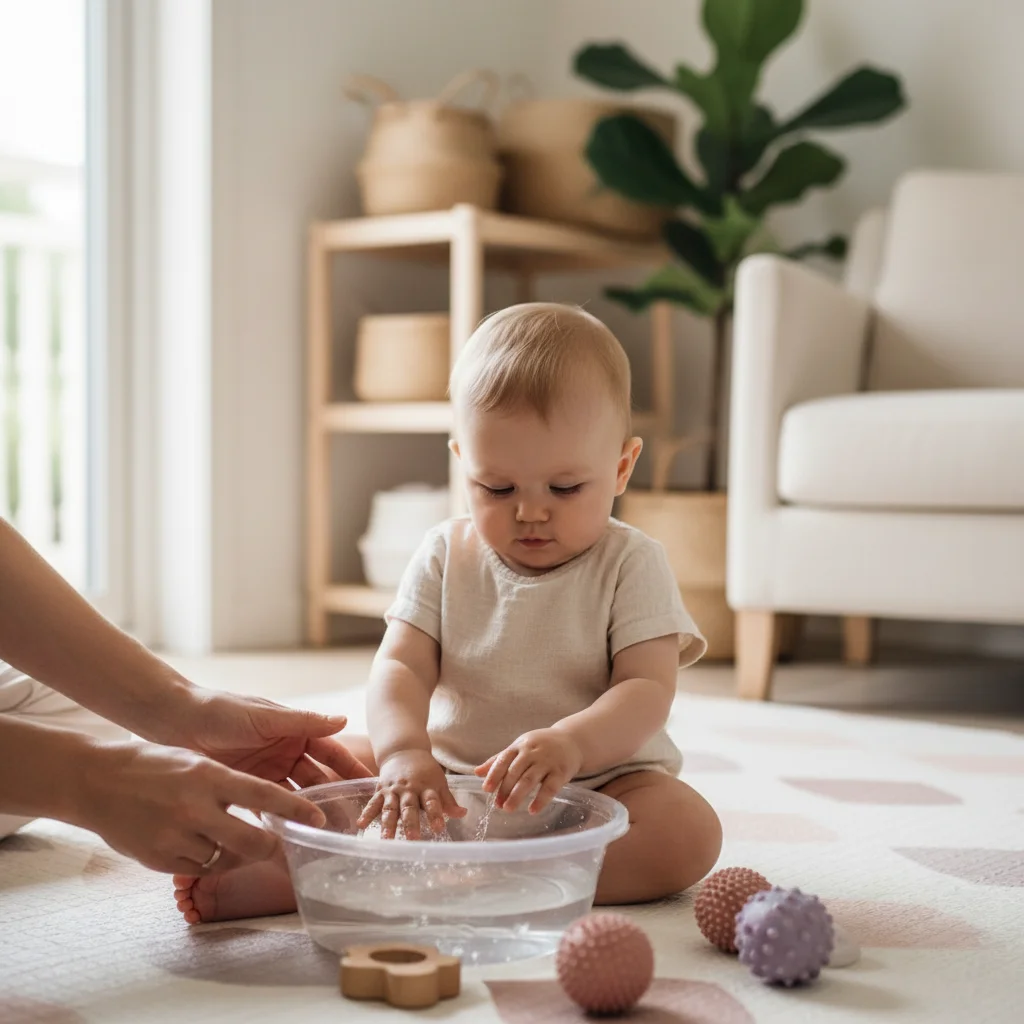
7. Water Play in a Tub
Fill a small baby tub with a little lukewarm water and let your baby splash. Simple cups and scoops to play with. Always supervised.
8. Crinkle Book or Crinkle Toy
Babies love crinkle sounds. Cloth books with crinkly pages or homemade crinkle toys (place bubble wrap inside a piece of fabric) are perfect.
9. Mirror Play
Hold an unbreakable mirror in front of your baby. Reflections are fascinating and support the development of self-awareness. Point and say: "There you are! And there's Mama!"
10. Frozen Fruit in a Mesh Feeder
For babies who have started solids: Place frozen raspberries or banana slices in a mesh feeder. Your baby sucks, chews, and experiences cold, taste, and texture all at once.
6–9 Months: Everything Goes in the Mouth
Your baby is sitting, possibly crawling, and using their mouth actively to explore. Sensory play with food is ideal at this stage.
11. Spaghetti Dig
Cook pasta and let it cool. Let your baby dig, squeeze, and pull at the spaghetti. Messy, but fantastic for tactile stimulation and fine motor skills.
12. Gelatin Play
Make gelatin (no sugar, use fruit juice) in a shallow dish. Let your baby poke their fingers in, squeeze, and taste. The gelatin is cold, slippery, and completely new to them.
13. Surprise Containers
Fill small boxes or baskets with different objects, a wooden block, a fabric ball, a rattle egg, a ribbon. Your baby practices grasping, lifting, and comparing.
14. Nature Exploration
Let your baby sit barefoot in the grass. Pick up leaves, sticks (large enough to be safe), and stones to examine. Nature's own textures are unbeatable.
15. Music Play
Give your baby a wooden spoon and a pot. Or a rattle, a bell, and a drum. Let them explore the sounds different materials make. A sense of rhythm develops early.
Safety first: Keep away any small objects that can be swallowed (under 1.5 inches in diameter), plastic bags, soft objects that can cover the face, and anything with sharp edges. Sensory play always happens under supervision.
9–12 Months: Exploring Independently
Your baby is crawling, pulling up to stand, and maybe taking first steps. Their hands have become skilled tools. Sensory play gets more complex.
16. Finger Painting with Yogurt
Use plain yogurt (or add a little food coloring) and let your baby paint on a tray or directly on the high chair tray. Creative, tactile, and edible.
17. Water Play with Cups
Set your baby in a shallow bath or use a plastic tub outdoors. Cups, scoops, strainers, and funnels provide hours of exploration, pouring, filling, and splashing.
18. Rice or Oat Sensory Bin
Fill a shallow plastic container with dry rice or oats. Hide small toys inside. Let your baby dig, sift, and discover. Place a sheet underneath for easier cleanup.
19. Ice Cubes with Surprises
Freeze small toys, flowers, or fruit pieces in ice cubes. Let your baby hold them, feel the cold, and watch the objects slowly appear as the ice melts.
20. Stacking with Different Materials
Gather boxes, cups, and blocks in different sizes and materials, wood, plastic, fabric, cardboard. Stack and knock over, stack and knock over. Different sounds, weights, and textures each round.
How to Keep It Simple
You do not need to buy expensive equipment. The best sensory play materials come from the kitchen drawer.
Great everyday items for sensory play:
- Wooden spoon, whisk, plastic bowls
- Dry beans, rice, oats (6 months and up, supervised)
- Fabric in different textures
- Ice cube trays, strainers, funnels
- Cardboard boxes in different sizes
- Natural objects (pine cones, smooth stones, leaves)
Time tip: You do not need to set aside an hour. 10–15 minutes of focused sensory play is enough for a baby. Follow your baby's interest and stop when they lose focus.
Combine sensory play with language. Describe what your baby is doing: "You are squeezing the soft ball. It is round and blue." Sensory exploration combined with words creates double the learning effect.
When to Pay Attention
Most children love sensory play. But some babies react strongly and negatively to certain sensory input, crying when touched by certain textures, refusing all food with lumps, or covering their ears at ordinary sounds.
If your child consistently avoids or reacts extremely to sensory stimuli, it is worth mentioning to your pediatrician at the next well-child visit. Sensory sensitivity is most common in premature babies and can in some cases need follow-up from an occupational therapist.
Looking for more ideas? Check out our activity guide with over 250 activities tailored to your baby's age!
Frequently Asked Questions
From what age can my baby start sensory play?
From birth. High-contrast images, song, and gentle touch are sensory play for newborns. More active exploration with the hands develops from around 3–4 months.
Is it dangerous that my baby puts everything in their mouth?
No, it is a completely normal part of development. The mouth has more sensory receptors than the hands. Just make sure that what your baby can reach is safe to taste, no small objects, no toxic materials.
What should I do if my baby does not like sensory play?
Start gently. Some children need time. Try one texture at a time, let your baby observe before participating, and never force it. Dry materials (rice, oats) are often easier to accept than wet ones (gelatin, paint).
Read More
- Sensory Development in Babies, how the senses develop month by month
- Play and Learning for Babies, more play ideas for the first year
- Fine Motor Activities for Babies, strengthen those little hands
- Milestones. Track Your Baby's Development
Sources
- American Academy of Pediatrics. The Power of Play
- CDC. Important Milestones
- Zero to Three. Brain Development
🔧 Helpful Tools
- Baby Milestones Tracker. Track your baby's developmental milestones
- Development Leaps. Understand your baby's developmental leaps
- All Baby Tools. Browse all free tools for pregnancy and baby care
📖 Related Articles
- Baby Gym: Activities, Benefits, and Tips for Motor Development. Everything about baby gyms, activities for motor development, DIY baby gym vs store-bought, age-appropriate exercises from 0-12 months, and tips for stimulating your baby at home.
- Concentration in Toddlers. How to Support It. Learn how to strengthen concentration in toddlers. Normal attention spans by age, activities, and tips for better focus in children 1–3 years.
- Creative Play at Home: 20 Activities for Toddlers, 20 simple and fun activities you can do at home with toddlers. Creative play that supports development without expensive equipment.