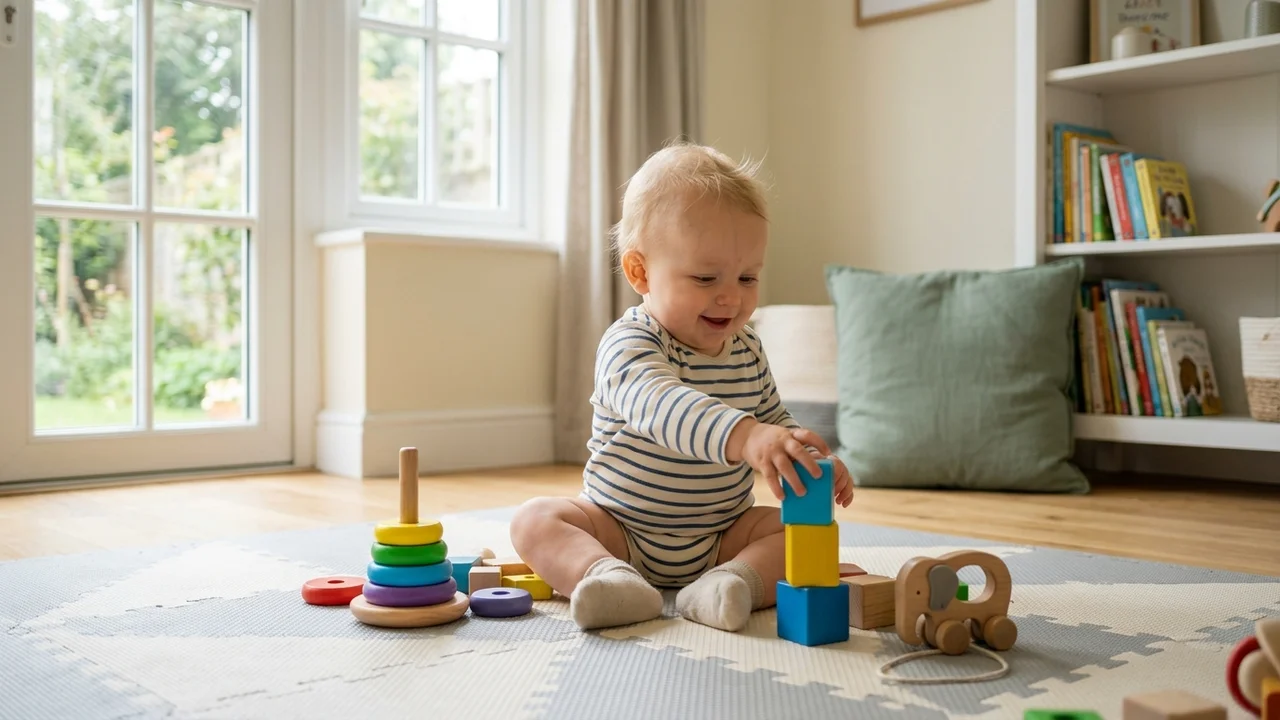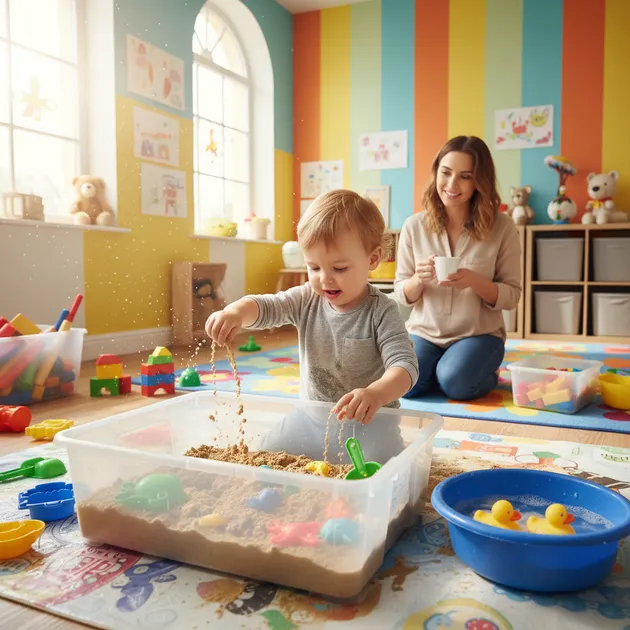
Every child experiences the world through their senses. Sight, hearing, touch, smell, taste, plus two senses many people don't think about: the vestibular sense (balance and movement) and proprioception (body awareness). The brain receives millions of sensory signals and has to sort, interpret, and respond to them. This process is called sensory integration.
For most children, this happens automatically. But for some, this process is challenging. A child may be overwhelmed by perfectly ordinary sensory input, or may seek an unusually high amount of stimulation. This can affect daily life, play, mealtimes, getting dressed, and social situations.
Sensory integration difficulties are not a formal medical diagnosis, but a description of challenges that can occur on their own or alongside other developmental conditions such as autism or ADHD.
The Seven Senses
We have more than the five classic senses. To understand sensory integration, it helps to know all seven:
The Five Well-Known Senses
- Sight, perceiving light, colors, shapes, and movement
- Hearing, perceiving sounds, voices, and music
- Touch (tactile), feeling pressure, temperature, pain, and texture
- Smell, perceiving scents and odors
- Taste, perceiving flavors (sweet, salty, sour, bitter, umami)
The Two "Hidden" Senses
- The vestibular sense, registers the head's position and movement in space. Gives us balance and tells us whether we are moving, spinning, or still.
- Proprioception, registers the position of muscles and joints. Tells us where our body is in space without needing to look.
These two senses are critical for motor development, coordination, and body awareness, and they are often where sensory integration difficulties show up most clearly.
What Are Sensory Integration Difficulties?
When the brain struggles to process and organize sensory input, a child may react in one of two ways:
Oversensitivity (Hypersensitivity)
The child reacts more strongly than expected to sensory input:
- Touch: Refuses certain clothing (labels, seams, wool), dislikes being touched, reacts intensely to hair washing or tooth brushing
- Sound: Covers ears near vacuum cleaners, blenders, or crowds. Reacts to sounds others barely notice
- Sight: Discomfort from bright lights, becomes unsettled in visually busy rooms
- Taste/smell: Extremely picky with food, reacts to smells others don't notice
- Movement: Anxious about swings, slides, climbing, or being lifted
Undersensitivity (Hyposensitivity)
The child seeks more stimulation than usual:
- Touch: Doesn't notice wet clothing, high pain tolerance, seeks intense physical contact
- Sound: Speaks loudly, seeks strong sounds, seems not to hear normal speech
- Movement: In constant motion, loves spinning, swinging, and extreme climbing
- Proprioception: Uses too much force (bangs things hard, hugs too tight), crashes into objects and people
Mixed Pattern
Many children have a combination, oversensitive in some areas and undersensitive in others. A child might, for example, hate being touched but love swinging on a swing.
All children have preferences. Some children dislike sand between their toes; others love it. That doesn't mean they have sensory integration difficulties. It's when reactions are so intense that they affect everyday functioning that it's worth looking more closely.
Signs to Watch for at Different Ages
Baby (0–12 months)
- Very unsettled, difficult to soothe
- Reacts strongly to routine handling (diaper changes, bathing)
- Dislikes tummy time entirely
- Little interest in exploring toys with hands
- Very selective about food textures when starting solids
1–2 years
- Walks on tiptoe for extended periods (after normal walking is established)
- Strong reactions to new food textures
- Becomes very unsettled in new environments
- Seeks constant movement, climbs, spins, jumps without stopping
- Reacts intensely to hair washing, nail cutting, or tooth brushing
- Avoids specific toys or activities
2–3 years
- Difficulty participating in group activities at daycare
- Extreme pickiness, only a very small number of foods are acceptable
- Frequent conflicts around clothing and getting dressed
- Easily overwhelmed at playgrounds, birthday parties, or shops
- Difficulty with fine motor tasks (drawing, cutting)
- Prefers to play alone or with adults rather than other children
How to Support Your Child at Home
You can do a great deal to help a child with sensory challenges, without professional support.
For the Oversensitive Child
Prepare: Tell the child what is about to happen. "Now we're going to wash your hair. I'll pour the water gently."
Adapt the environment:
- Cut out labels and choose soft clothing without seams
- Reduce noise and light levels where possible
- Give the child a quiet place to retreat to
Introduce gradually: New sensory experiences should come slowly and on the child's terms. Let the child look at the sand first, touch it with one finger, then with a whole hand.
For the Sensory-Seeking Child
Offer plenty of movement:
- Trampolines (with safety nets) or jumping cushions
- Swings, both standard and wrapped-blanket style
- Climbing, running, crawling through tunnels
Heavy activities (proprioceptive input):
- Let the child carry heavy things (shopping bags, books)
- Play with heavy dough or clay
- Deep hugs or a "burrito" roll in a blanket
- Push and pull furniture, play with large balls
Sensory breaks throughout the day:
- Before demanding situations (shops, visits), give the child plenty of movement
- Between activities, let the child jump, squeeze a stress ball, or chew on something
Sensory needs are not something a child does to be difficult. It's the brain's way of regulating itself. When a child crashes into things, it may be because the brain needs intense proprioceptive input in order to feel calm.
Sensory Play That Helps
Sensory play is good for all children, but especially helpful for children with sensory challenges:
- Water play, cups, funnels, sponges in a tub
- Sandbox, digging, filling, pouring
- Playdough and clay, squeezing, shaping, rolling
- Bubble wrap, pressing, stomping on it
- Rice or beans in a tub, digging, sorting, pouring
- Finger painting, try with yogurt and food coloring for children who put things in their mouth
Professional Support
When Should You Seek Help?
Contact your pediatrician if your child's sensory reactions:
- Significantly disrupt daily life (mealtimes, getting dressed, daycare)
- Make it difficult for the child to participate in social activities
- Cause the child to consistently avoid ordinary situations
- Affect the child's development (motor skills, language, social functioning)
Who Can Help?
Pediatrician. Your first point of contact. A pediatrician or family doctor can observe your child and refer you onward if needed.
Occupational therapist. A specialist in sensory integration. Occupational therapists can map your child's sensory profile and create a tailored program.
Educational psychologist. Can observe the child in daycare settings and recommend adjustments.
Physical therapist. If motor difficulties are part of the picture.
Child and adolescent mental health services. If sensory difficulties occur alongside other developmental conditions.
Accommodations at Daycare
Daycare settings can do a great deal:
- Provide the child with a quiet corner to retreat to
- Prepare the child for transitions and changes
- Adapt activities (alternative materials, smaller groups)
- Build in extra movement breaks
- Use a visual daily schedule
Sensory Integration and Other Diagnoses
Sensory challenges often co-occur with:
- Autism. Many children on the autism spectrum have pronounced sensory difficulties. Learn more about early signs of autism.
- ADHD. Sensory-seeking behavior can resemble ADHD, and many children with ADHD also have sensory challenges. Learn more about ADHD signs in toddlers.
- Motor difficulties (DCD). Poor proprioception and vestibular processing can lead to coordination difficulties.
- Language delay. Sensory overwhelm can affect language development. See language-delayed child.
Frequently Asked Questions
Do children grow out of sensory integration difficulties?
Many children learn to manage their sensory challenges over time, especially with the right support. The brain is plastic and adapts. But some children retain challenges into adulthood, they learn strategies for coping with them.
Can too much screen time cause sensory difficulties?
Screen time does not cause sensory integration difficulties, but it can amplify them. Screen activities provide limited sensory input compared to physical play. Children with sensory needs benefit especially from lots of physically rich, sensory play.
Is my child just picky, or is it sensory?
Many children are picky with food without it being related to sensory integration. But if a child consistently rejects specific textures (not just flavors), gags at the sight of certain foods, or only eats a very small number of foods, it may be worth exploring the sensory component.
Does occupational therapy help?
Yes, occupational therapy with a sensory integration focus has shown effectiveness in studies. The occupational therapist creates an individual program based on the child's sensory profile and works with gradual exposure and adjustment.
Useful Tools on Babysential
- Milestones, track your child's development
- Journal, log your observations
- Food Guide, age-appropriate nutrition
- Sleep Tracker
- ADHD signs in toddlers
- Autism, early signs
Sources
- WHO. Child Development
- American Occupational Therapy Association. Sensory Integration
- AAP. Developmental Surveillance
- CDC. Child Development
- NIH. Sensory Processing
🔧 Helpful Tools
- Baby Milestones Tracker. Track your baby's developmental milestones
- Development Leaps. Understand your baby's developmental leaps
- All Baby Tools. Browse all free tools for pregnancy and baby care