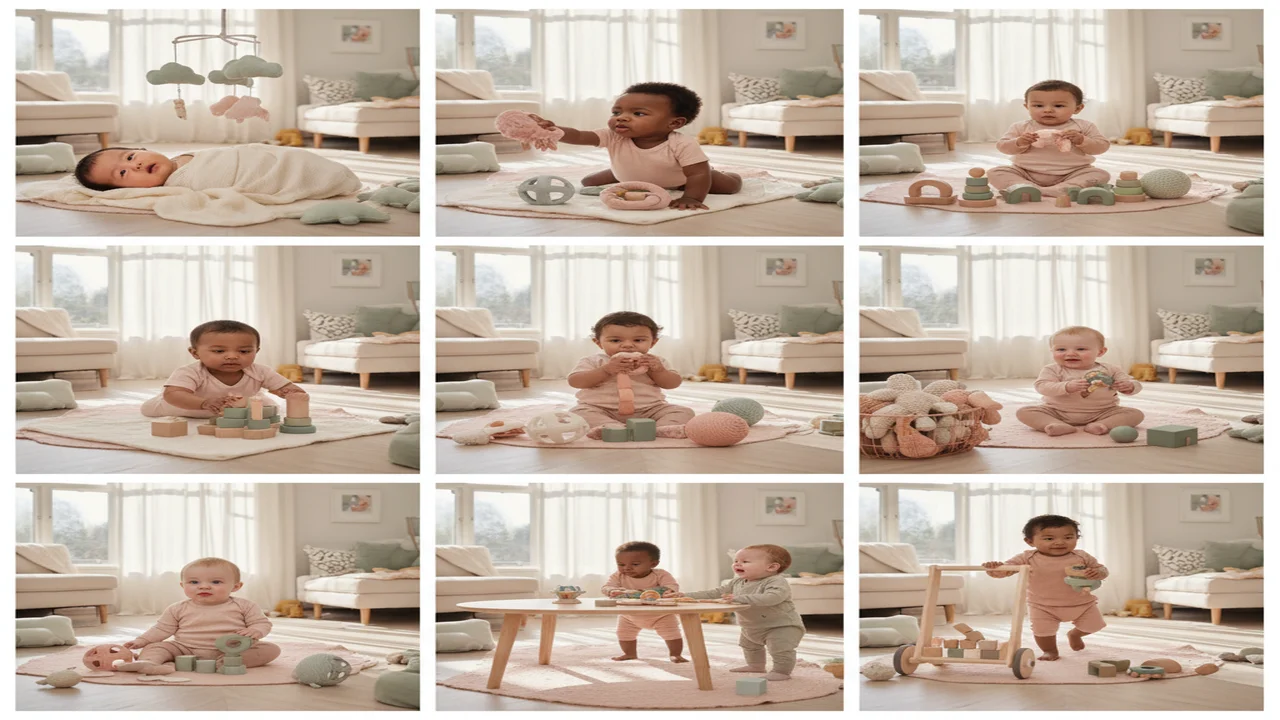
From the very moment of birth, your baby's senses are in full swing. Some senses are well developed from day one, while others need time and stimulation to mature. Understanding how the senses develop helps you give your baby exactly what they need.
Here is a complete overview of how sight, hearing, touch, taste, and smell develop during the first year of life, and what you can do to support that development.
All children develop at their own pace. This guide shows what is typical, but variation is completely normal. Talk to your pediatrician if you have any concerns about your baby's senses.
Which Sense Develops First in Babies?
Touch is the first sense to develop, it begins forming as early as week 8 of pregnancy and is well established at birth. Hearing follows closely, with babies recognizing their parents' voices from inside the womb in the final months of pregnancy. Taste and smell are also strong from birth. Vision is the last to mature: newborns see best at 8–12 inches and in high-contrast black and white, but it develops rapidly in the first three months.
Vision, the Sense That Develops the Most
Vision is the least developed sense at birth, but it develops rapidly in the first months. Babies are born nearsighted and see most clearly at a distance of 8–12 inches, exactly the distance between your face and your baby's when you hold them close.
Newborn to 2 Months
A newborn primarily sees strong contrasts in black and white. Visual acuity is just a fraction of an adult's, and everything appears slightly "fuzzy." But within just one week, a baby can recognize their mother's face.
Color vision begins to develop around 2 months of age. By then, a baby can distinguish between clear, bold colors that provide good contrast.
3–4 Months
Vision is now nearly as sharp as an adult's. The baby can see the full color spectrum and tracks objects with smooth, fluid eye movements. Depth perception also begins to develop.
6–12 Months
The baby now has good hand-eye coordination and can reach for objects with precision. By around 7 months, most babies have nearly fully developed vision with good depth perception.
How to Stimulate Vision
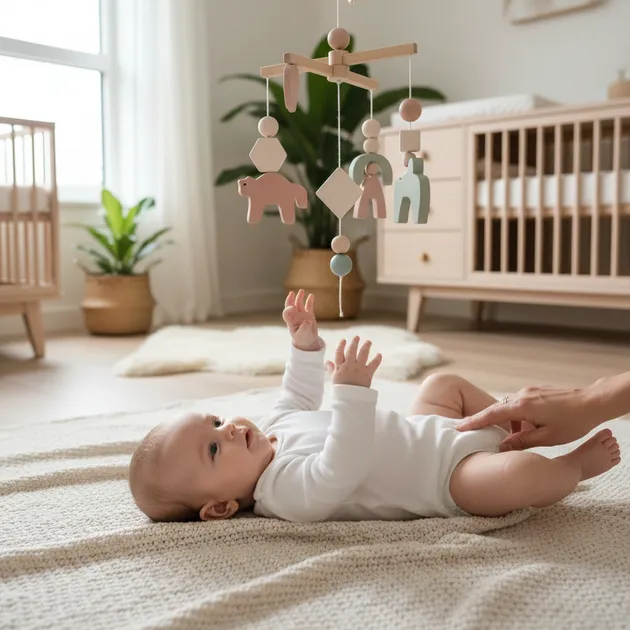
- 0–2 months: Use high-contrast black-and-white toys. Hold your face close to your baby's, 8–12 inches is ideal.
- 3–6 months: Introduce colorful toys. Let the baby track objects with their gaze.
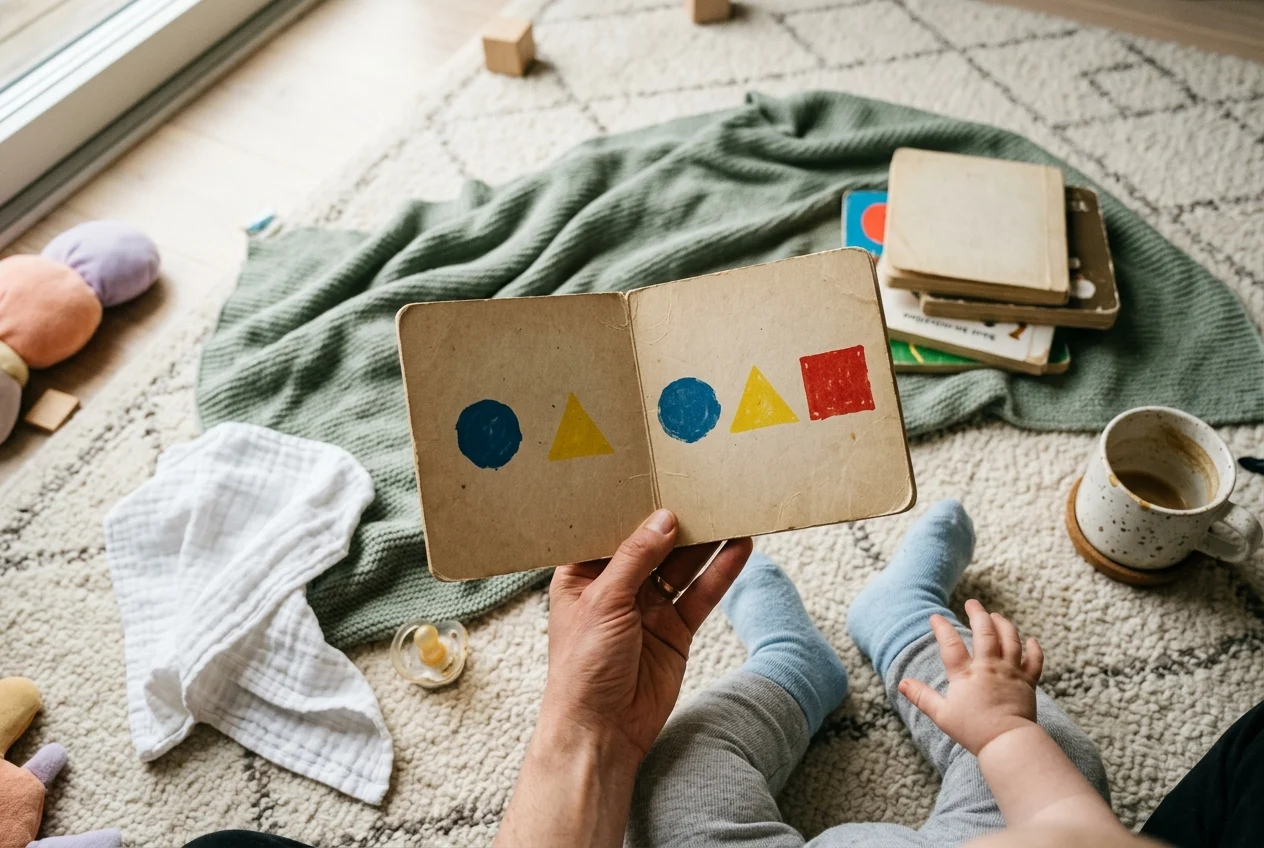
- 6–12 months: Play with objects at varying distances. Picture books with clear images are perfect.
Hearing. Well Developed from the Start
Hearing is one of the most well-developed senses at birth. Babies have been listening to voices and sounds in the womb during the final months of pregnancy and recognize their parents' voices from day one.
Newborn
The baby turns their head toward sounds and prefers human voices over other sounds. Within just a few days, a baby can distinguish their mother's voice from a stranger's.
2–4 Months
The baby begins to localize sounds more precisely and turns toward them. They respond to different tones of voice, a soothing voice calms, while loud sounds may startle.
6–12 Months
The baby understands more and more words and responds to their own name. Toward the end of the first year, many begin to respond to simple instructions like "no" and "come here."
How to Stimulate Hearing
- Talk to your baby often, describe what you're doing and seeing together.
- Sing songs and read books using varied voices and tones.
- Let the baby explore sound-making toys, such as rattles and bells.
- Avoid constant background noise, babies also need quiet periods to distinguish sounds.
If your baby doesn't turn toward sounds by 4–6 months, or doesn't respond to their name by 9 months, mention it to your pediatrician.
The Sense of Touch, the First Sense
Touch is the very first sense to develop, beginning as early as week 8 of pregnancy. By birth, the sense of touch is well developed, and physical contact is essential for a baby's security and development.
Why Touch Matters So Much
Skin-to-skin contact between parent and baby releases oxytocin, the "love hormone", which strengthens attachment. Premature babies who receive a great deal of skin contact (the kangaroo method) show better weight gain and development.
Babies explore the world through touch long before their vision is developed enough to take over. The mouth is especially sensitive, which is why babies put everything in their mouth, it's how they investigate objects.
How to Stimulate the Sense of Touch
- Skin-to-skin contact: Hold your baby skin-to-skin as much as possible, especially in the early weeks.
- Baby massage: Gentle strokes along the back, tummy, arms, and legs strengthen the bond and calm the baby.
- Different textures: Let the baby feel soft, rough, smooth, and bumpy surfaces.
- Water play: Bathing and water play provide rich sensory experiences.
Taste and Smell. Strong from Birth
The senses of taste and smell are among the most developed senses at birth. Babies can recognize their mother's scent from the very first moment and prefer the sweet taste of breast milk.
The Sense of Smell
A newborn can identify their mother by scent alone. This sense is one of the primary senses in the early weeks, before vision is well developed. Research shows that if a newborn is placed on the mother's chest, the baby will crawl toward the nipple, guided by the scent of colostrum.
The Sense of Taste
Babies can distinguish between sweet, sour, salty, and bitter at birth. They naturally prefer sweet flavors (such as breast milk) and show clear facial expressions in response to bitter tastes. When starting solid foods around 6 months, it's important to introduce a variety of flavors early on.
According to the American Academy of Pediatrics (AAP), children who are exposed to a variety of textures and flavors early on tend to be less picky eaters later in childhood. Keep offering foods even if your baby rejects them the first few times.
Sensory Development Month by Month. Overview
| Age | Vision | Hearing | Touch | Taste/Smell |
|---|---|---|---|---|
| Newborn | Sees 8–12 in., black and white | Recognizes voices | Well developed, needs skin contact | Recognizes mother's scent |
| 1–2 months | Fixes gaze, begins to see colors | Localizes sounds better | Enjoys gentle strokes | Prefers sweet tastes |
| 3–4 months | Near-adult sharpness, full color vision | Turns toward sounds, responds to tone | Reaches purposefully for objects | Explores tastes through mouth |
| 5–6 months | Good hand-eye coordination | Responds to own name | Puts everything in mouth | Ready to try solid foods |
| 7–9 months | Depth perception developed | Understands simple words | Pincer grasp developing | Explores different textures |
| 10–12 months | Nearly fully developed vision | Follows simple instructions | Fine motor skills improving | Adjusting to varied foods |
When Should You Contact Your Pediatrician?
There is normally a great deal of variation in babies' sensory development, but some signs are worth following up:
- Vision: The baby doesn't fix their gaze by 2–3 months, or the eyes cross constantly after 4 months.
- Hearing: The baby doesn't react to loud sounds as a newborn, or doesn't turn toward sounds by 6 months.
- Touch: The baby reacts extremely strongly or extremely little to touch compared to peers.
- In general: You have a gut feeling that something isn't quite right.
Pediatricians carry out regular vision and hearing checks throughout the first year of life. Don't hesitate to bring up concerns between scheduled appointments.
Frequently Asked Questions
When can babies see colors?
Color vision begins to develop around 2 months of age. By 3 months, most babies can see the full color spectrum. Before this, babies see most clearly in strong black-and-white contrasts.
Why do babies put everything in their mouth?
The mouth is one of the most sensitive parts of the body, and babies use it to explore objects. This is completely normal and an important part of sensory development. Make sure toys are safe to put in the mouth.
Can too much stimulation harm a baby's senses?
Babies are good at showing when they've had enough, they turn their head away, close their eyes, or start crying. Follow your baby's cues and allow breaks between activities. Quiet moments are just as important as stimulation.
When does a baby hear best?
Hearing is well developed from birth. Babies hear best in the frequency range of human voices. Talk and sing to your baby from day one, it's the best stimulation you can give.
Read More
- Complete Milestone Guide. See all sensory and motor milestones by age
- Baby Development Month by Month. Full overview of your baby's development in the first year
- Baby Massage. How to Do It. Stimulate the sense of touch with gentle strokes
- Tummy Time. Important for motor skills and sensory development
- Toys for Baby 0–6 Months. Age-appropriate toys that stimulate the senses
- Track Your Baby's Milestones. Log and follow development on Babysential
- Baby Timeline. See what's typical for your baby's age
Read also: Motor Development in Babies | Baby Development Month by Month | Reading with Your Baby | Creative Play at Home
Sources
🔧 Helpful Tools
- Baby Milestones Tracker. Track your baby's developmental milestones
- Development Leaps. Understand your baby's developmental leaps
- All Baby Tools. Browse all free tools for pregnancy and baby care