Your 2-year-old has emptied the drawer of pots and pans for the third time today. It looks chaotic, but behind the noise something important is happening: your child is learning. Through play, toddlers develop language, motor skills, creativity, and social abilities.
Play is not just a way to pass the time, it is your child's most important arena for learning. Here is an overview of age-appropriate play for children from 1 to 3 years, with concrete ideas you can use right away.
Why is play so important?
For toddlers, play and learning are the same thing. When a child stacks blocks, they are practicing fine motor skills and problem-solving. When they play with others, they are learning to share, wait, and cooperate.
According to child development research and organizations like the AAP and UNICEF, play is essential for children's development across all areas. Through play, children process impressions, try out roles, and learn to understand the world around them.
Through play, children develop:
- Motor skills: Both fine motor (drawing, stacking) and gross motor (climbing, running)
- Language: New words and concepts come naturally through play
- Social skills: Sharing, taking turns, cooperating
- Creativity: Imagination flourishes in free play
- Problem-solving: How do I get the block to stand? How do I build a tower?
Children do not need expensive toys or elaborate activities. A cardboard box, a spoon, and a bucket of water can provide hours of play and learning.
Play for 1-year-olds
Around 1 year, your child is in full exploration mode. Everything must be touched, tasted, and thrown on the floor. This sensorimotor play is important, the child is learning about the world through their senses.
What characterizes play at this age?
One-year-olds mostly play alone (solitary play) and explore objects with their whole body. They love putting things into and taking them out of boxes, stacking and knocking down, and repeating the same actions over and over again.
Good play activities for 1-year-olds:
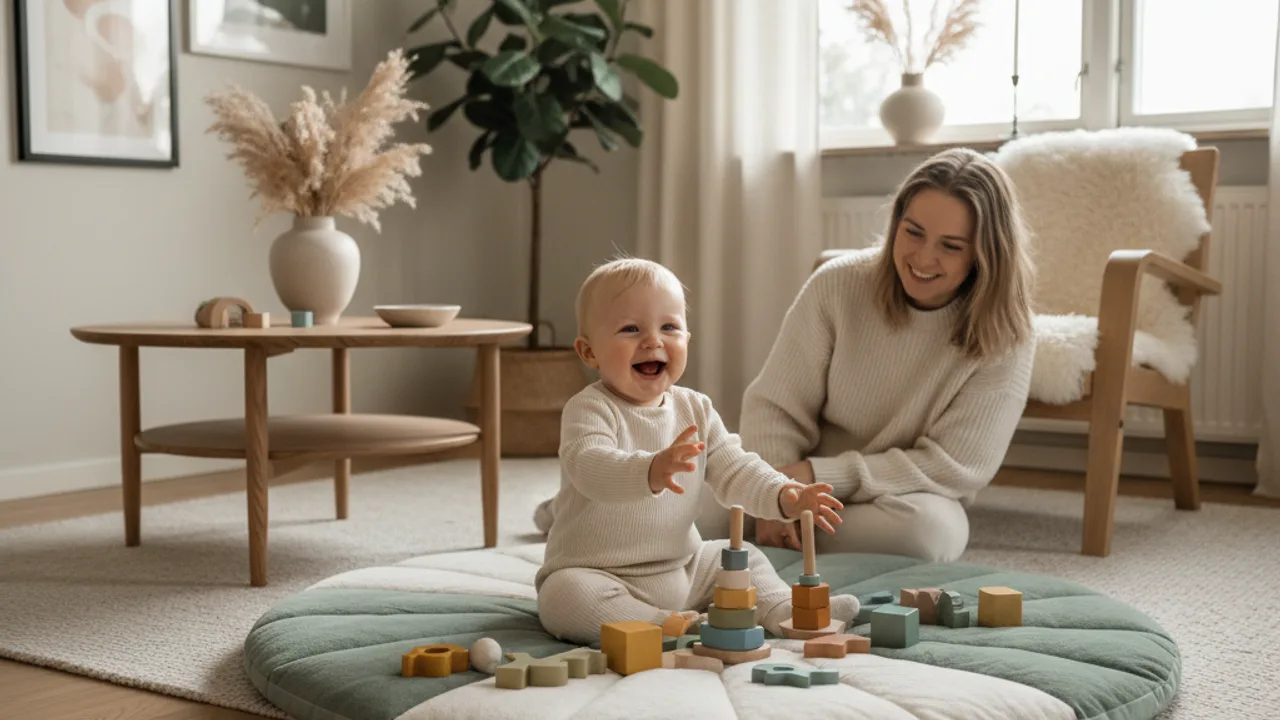
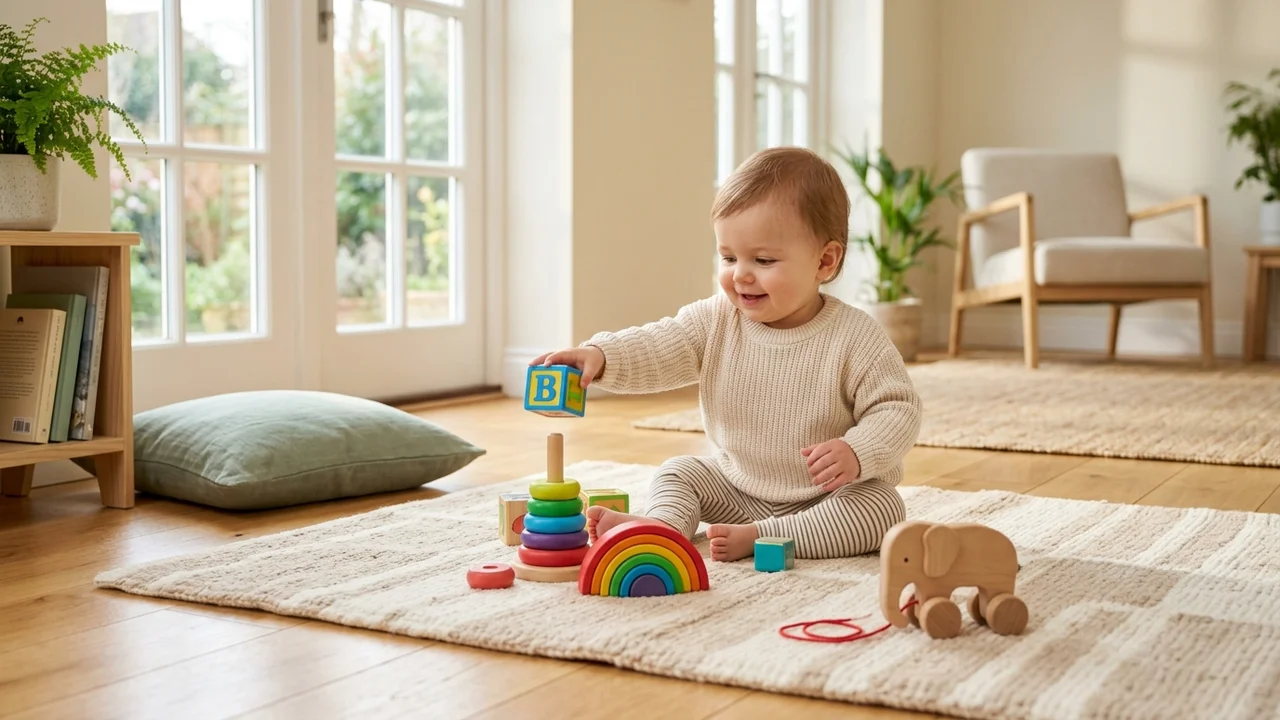
- Stacking and knocking down: Blocks, cups, or boxes that can be stacked and knocked over
- Filling and emptying: Buckets with objects to empty and fill
- Water play: Pouring water from one bucket to another in the bath or outside
- Music and movement: Dance together, shake rattles, sing songs with movements
- Peekaboo: Hiding behind hands or a blanket, children this age still love it
- Sensory play: Feeling different textures, grass, sand, playdough, fabric
Let the 1-year-old explore at their own pace. Avoid "correcting" the play. If your child wants to use a spoon as a drum instead of eating with it, let it happen. That is play, and play has no right answer.
Important for this age
Around 18 months, children begin imitating what you do. They "talk" on a toy phone, "read" the newspaper, and "clean" the floor with a cloth. According to child development research, it is important to help your child master situations and praise the effort, not just the result.
Play for 2-year-olds
At 2, a major developmental leap occurs. Children begin symbolic play, a banana becomes a phone, a pillow becomes a boat. Imagination really comes alive.
What characterizes play at this age?
Two-year-olds often play alongside other children (parallel play) but not necessarily with them. They want to "do it themselves" and protest loudly if you help too much.
Good play activities for 2-year-olds:
- Pretend play: Play kitchen, toy cars, stuffed animal picnic
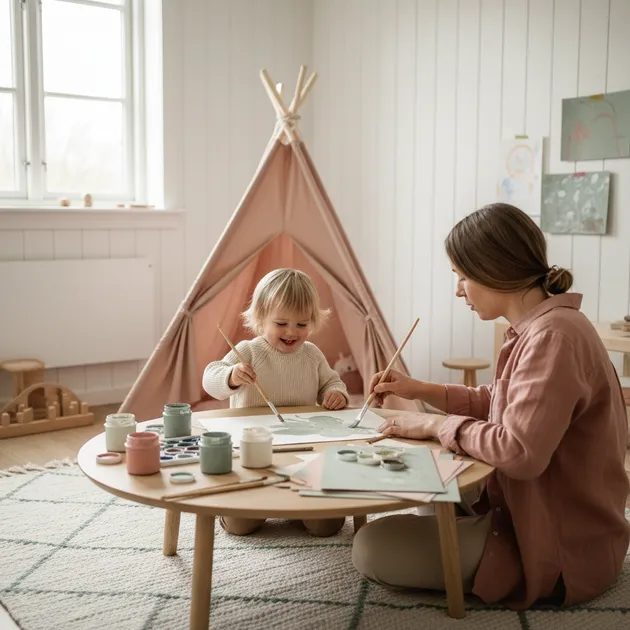
- Drawing and painting: Large crayons, finger painting, chalk drawing outside
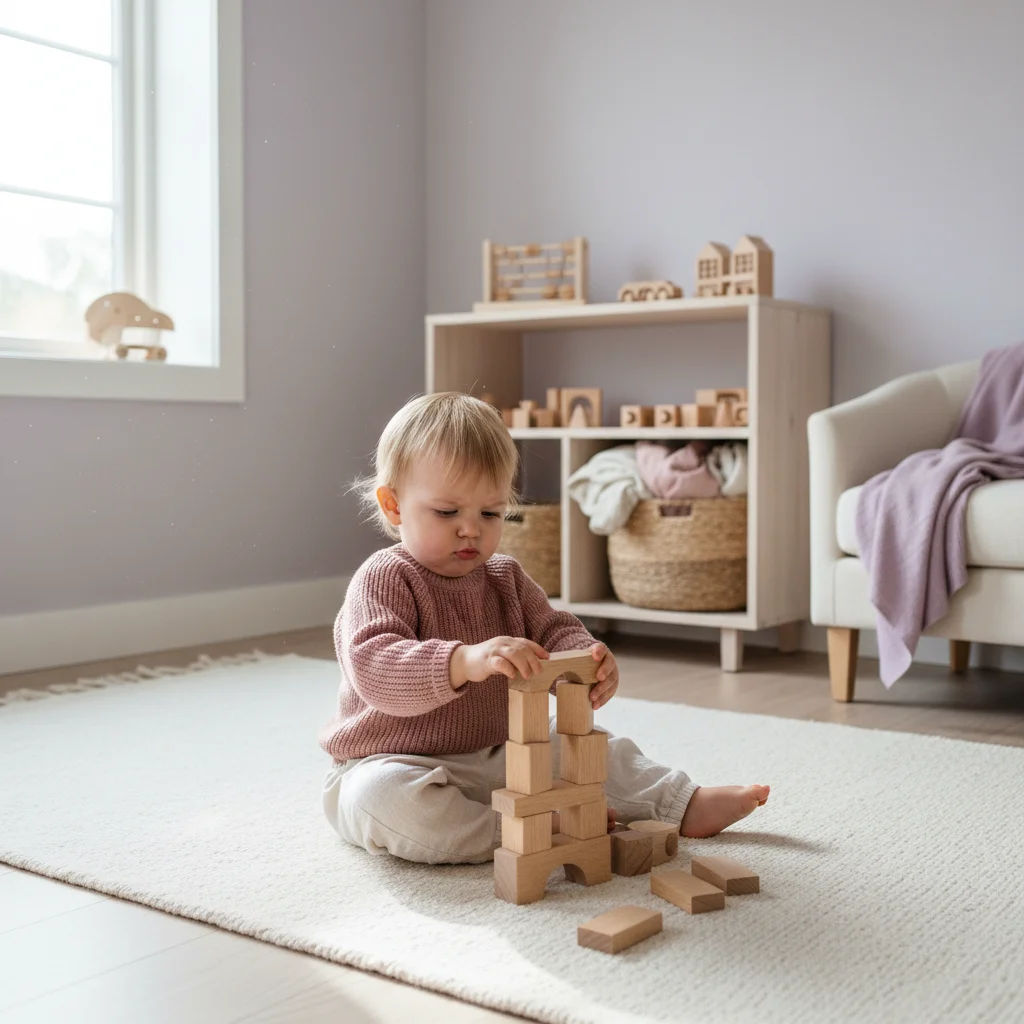
- Building: LEGO Duplo, blocks, train tracks
- Sensory materials: Playdough, kinetic sand, water beads
- Outdoor play: Sandbox, swings, climbing, picking flowers
- Simple puzzles: 2–6 pieces with large, clear images
Important for this age
Two-year-olds want to manage things on their own. It is tempting to take over when your child spends five minutes putting on their shoes, but resist the urge. When children succeed at something independently, they build self-confidence that carries them forward.
Two-year-olds love to "help" with everyday tasks. Let them carry plastic utensils to the table, wipe up with a cloth, or stir the dough. That is play for them, and it stimulates both motor skills and language.

Play for 3-year-olds
At 3, social play begins to take shape. Children play with other children, not just alongside them. Role play becomes sophisticated, and simple game rules begin to make sense.
What characterizes play at this age?
Three-year-olds can engage in cooperative play with other children. Role play with assigned roles appears: "You are the dog and I am the owner." They can follow simple game rules and wait for their turn, at least sometimes.
Good play activities for 3-year-olds:
- Role play: Playing doctor, shopping in a store, playing at the zoo
- Simple board games: Bingo, memory, color games
- Drawing and cutting: Children can start with child-safe scissors at this age
- Building projects: Larger constructions with blocks, train track with scenery
- Early sports: Kicking a ball, jumping, balancing, riding a tricycle
- Creative crafts: Gluing, cutting, making simple things from natural materials
Important for this age
Three-year-olds have more advanced language and can explain what they are playing and why. Ask open-ended questions: "What are you building?" and "What's happening in the game?" This stimulates language development and shows your child that you are interested.
Outdoor play
Children develop best with a mix of indoor and outdoor play. The outdoors provides stimulation that is difficult to replicate indoors, uneven terrain that trains balance, natural materials to explore, and space to run, climb, and shout.
Outdoor play in all seasons:
- Winter: Sledding, making snow angels, building snow lanterns
- Spring: Picking flowers, looking at insects, jumping in puddles
- Summer: Water play, sandbox, picking berries, picnics
- Autumn: Collecting leaves and chestnuts, jumping in leaf piles, looking for mushrooms
The key to good outdoor play is appropriate clothing. A spare pair of mittens, a good rain suit, and sturdy shoes make the difference between a failed and a fantastic outdoor day. Always keep an extra change of clothes in your bag.
Nature as a playground
You do not need an expensive playground. An ordinary wooded area offers endless possibilities. Sticks become swords, rocks become tables, and pine cones become food in a play restaurant.
Research shows that children who play a lot outdoors in nature develop better motor skills, concentration, and immune function. Let children climb, get dirty, and explore, that is how they learn best.
Screen time and play: Finding the balance
Screen time is a topic many parents feel conflicted about. It is easy to feel guilty, but it is more about quality than counting minutes.
WHO and AAP recommendations:
- Under 2 years: Limit screen time as much as possible (video calls with family are an exception)
- 2–5 years: Maximum 1 hour per day, with quality content
What your child watches and how they watch it matters more than the exact number of minutes. A child who watches an age-appropriate video together with a parent who comments and engages has a very different experience from a child sitting alone with a tablet.
Tips for good screen use:
- Watch together and talk about what you are seeing
- Choose age-appropriate content with a calm pace
- Avoid screens right before bedtime
- Do not let screen time replace active play, outdoor play, or reading
Do not stress about being perfect. Sometimes you need ten minutes to make dinner in peace, and it is fine for your child to watch a cartoon. Balance over time matters more than individual episodes.
10 play ideas you can do today
Need inspiration? Here are ten activities that require little preparation and work for children between 1 and 3 years.
- Cup tower: Stack plastic cups and let your child knock them down. Again and again.
- Painting with water: Give your child a brush and a bucket of water, and let them "paint" on the fence, patio, or sidewalk.
- Indoor obstacle course: Use cushions, chairs, and blankets to create a course to climb over and crawl under.
- Sorting game: Collect buttons, rocks, or objects in different sizes and colors. Let your child sort them into cups.
- Playdough: Make homemade salt dough together (flour, salt, water) and shape figures, animals, or letters.
- Kitchen concert: Give your child pots, pans, and ladles. Let them make their own concert.
- Nature treasure hunt: Give your child a bucket and ask them to find three rocks, two sticks, and one leaf.
- Bubble chase: Blow soap bubbles and let your child chase and pop them.
- Reading together: Choose a favorite book and read it with expression. Use voices and point at the pictures.
- Dance party: Put on music and dance! Your child loves dancing with you. Use scarves or ribbons for extra fun.
The best play is the kind where you are truly present. You do not need to entertain your child every minute, but a few minutes of focused play each day strengthens your bond and gives your child security.

Frequently asked questions
How much should I play with my child?
There is no fixed answer. Quality matters more than quantity. A few minutes of full attention is more valuable than hours where you are half-present. Also give your child time for free play alone, this teaches them to entertain themselves.
My child wants to play the same thing over and over. Is that normal?
Yes, repetition is very important for toddlers. Each time a child repeats an activity, they learn something new. They master the movements better, discover new details, and build confidence. Let your child repeat as much as they want.
Should I guide the play or let my child take the lead?
Both have value. Free play lets children explore creatively and make their own choices. Guided play (where you introduce new concepts or challenges) stimulates development. A good mix gives the best results.
My child is not playing with other children yet. Should I be concerned?
It depends on the age. One-year-olds typically play alone, 2-year-olds alongside others (parallel play), and 3-year-olds begin playing together. If your child is under 3 and prefers to play independently, that is completely normal.
What toys are best for development?
The simplest toys are often the best. Blocks, balls, crayons, sand, and water stimulate more creativity than sophisticated electronic toys. Open-ended toys, things that can be used in many different ways, provide the most developmental value.
Further reading
- Setting limits for toddlers: loving and age-appropriate
- Language development in children: from babbling to full sentences
- Toys by age, a guide for parents
Sources
- American Academy of Pediatrics (AAP). Play and Child Development
- UNICEF. Play and Learning
- WHO. Physical activity guidelines for children under 5
- Zero to Three. Developmental milestones
🔧 Helpful Tools
- Baby Milestones Tracker. Track your baby's developmental milestones
- Development Leaps. Understand your baby's developmental leaps
- All Baby Tools. Browse all free tools for pregnancy and baby care
📖 Related Articles
- Creative Play at Home: 20 Activities for Toddlers, 20 simple and fun activities you can do at home with toddlers. Creative play that supports development without expensive equipment.
- 15 Indoor Activities for Toddlers on Rainy Days, 15 simple and creative indoor activities for toddlers when it's raining outside. Play that stimulates development without screens.
- Concentration in Toddlers. How to Support It. Learn how to strengthen concentration in toddlers. Normal attention spans by age, activities, and tips for better focus in children 1–3 years.