"Baa, baa, black sheep, have you any wool?" Have you sung that a hundred times today? Then you're doing something right.
Songs and rhymes are not just pleasant ways to pass the time. They are one of the most effective tools for language development available to you as a parent. Every rhyme, every melody, every movement builds the neural connections your child needs in order to speak, read, and understand language.
Here are 15 classic and new favorites, plus everything you need to know about why singing is so good for toddlers.
Why Songs and Rhymes Are Gold for Development
Research on children's language development shows that singing activates more parts of the brain simultaneously than ordinary speech. When a child sings, they use:
- The language center, words and sounds
- Motor areas, movements and clapping
- Memory, learning the words by heart
- The emotional center, joy and a sense of belonging
Concrete Benefits
Vocabulary: Songs often contain words the child doesn't hear in everyday speech. "Goldilocks and the Three Bears" gives words like porridge, chair, bed, just right, big, and small, all within a connected story.
Rhythm and rhyme: Rhymes help children hear similarities between words. "Cat, hat, bat" teaches the child that words can sound alike. This is the foundation for learning to read later on.
Pronunciation: Melody makes it easier to produce difficult sounds. Many children say words more clearly when they sing than when they speak.
Memory: Songs are easier to remember than sentences. That's why we use the ABC song to learn the alphabet.
Research from child development institutions shows that children who sing frequently develop a larger vocabulary and better phonological awareness, the ability to distinguish between speech sounds. Read more about language development in children.
Classic Nursery Rhymes and Children's Songs
These songs have delighted children for generations. Most parents know the melodies, even if the words might need a quick refresher.
Everyday Songs
Baa, Baa, Black Sheep. Perfect for the very youngest. Simple melody, few words, easy to learn. Use your fingers to mime "shearing wool" as you sing.
The Wheels on the Bus. Action song with endless verses. The wheels go round and round, the doors open and shut, the babies go wah wah wah. Fantastic for motor skills and understanding sequences.
Head, Shoulders, Knees and Toes. Body parts song that teaches children to recognize and name their body. Start slowly and gradually speed up.
Itsy Bitsy Spider. Finger play song that trains fine motor skills. Fingers climb up and the rain washes them down.
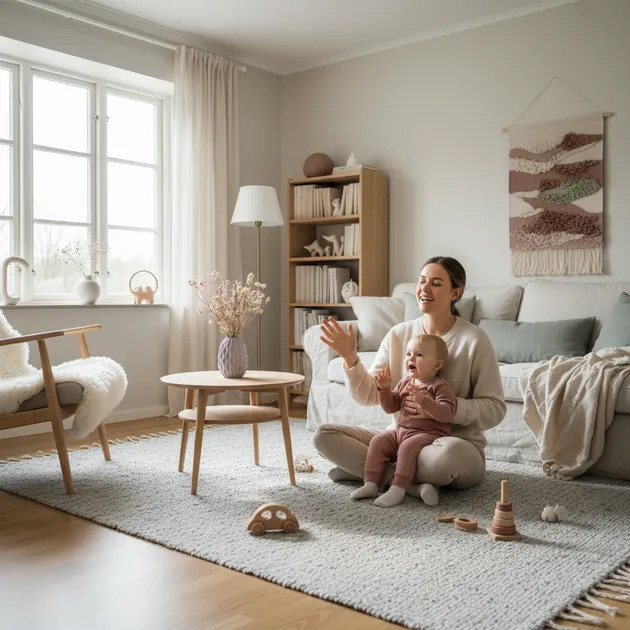
Row, Row, Row Your Boat. Classic sitting song. Sit facing the child, hold hands, and "row" back and forth. The rocking motion is soothing and rhythmic.
Action Songs
If You're Happy and You Know It. Children love to clap, stomp, and shout. Great for gross motor skills, body awareness, and following instructions.
Old MacDonald Had a Farm. Rich in vocabulary and animal sounds. Expands language well beyond everyday speech.
Singing "wrong"? It doesn't matter at all. Your child is not judging your vocal ability. Researchers have found that parents who sing to their children, regardless of quality, strengthen attachment and give children positive associations with singing and music.
Fingerplays and Clapping Games
Fingerplays combine words and movement. They are perfect for waiting rooms, car rides, and quiet moments.
Where Is Thumbkin?
Where is Thumbkin? Where is Thumbkin? Here I am! Here I am! How are you today, sir? Very well, I thank you. Run away, run away.
Repeat with Pointer, Tall Man, Ring Man, and Pinky. The child learns finger names and practices fine motor skills.
Pat-a-Cake
Pat-a-cake, pat-a-cake, baker's man Bake me a cake as fast as you can Roll it, and pat it, and mark it with B And put it in the oven for baby and me
Use actions: roll the dough, pat it, mark the letter, place it in the oven. Fun all year round, not just during the holidays.
This Little Piggy
This little piggy went to market (wiggle the big toe) This little piggy stayed home (wiggle the next toe) This little piggy had roast beef This little piggy had none And this little piggy went wee wee wee all the way home! (tickle up the leg)
Incy Wincy Spider
Incy Wincy Spider climbed up the water spout (walk fingers upward) Down came the rain and washed the spider out (wiggle fingers downward) Out came the sun and dried up all the rain (make a circle with arms) And Incy Wincy Spider climbed up the spout again (walk fingers upward)
For daycare transition: Many of these songs and fingerplays are used daily in early childhood settings. When children know them from home, they feel more confident and settled at group time. Read more about preparing for daycare.
Songs for Daily Routines
Make everyday routines fun with song:
The Tidy-Up Song
Make up a tidy-up song to a familiar tune. For example, to the tune of "Here We Go Looby Loo":
Tidy up, tidy up, let's put the toys away Books go on the shelf, cars go in the box Now we're all done, hooray!
Handwashing Song
Sing "Happy Birthday" twice while washing hands. The song takes about 20 seconds, which is the recommended handwashing time.
Morning Song
Start the day with a set song. The child learns that when the morning song comes, it's time to get up. Predictability through song.
How to Use Songs and Rhymes in Daily Life
You don't need to set aside special "singing time." Build singing into what you're already doing:
- In the car. Sing favorites on the way to daycare
- During diaper changes. Rhymes and fingerplays while changing
- At mealtimes. A little song before eating
- In the bath. Water play with singing
- At bedtime. Lullabies calm the body and mind
- On walks. Count things you see and make rhymes from them
Music and Instruments
Give your child simple instruments to play:
- Drum. A pot and a wooden spoon work perfectly
- Maracas. Fill a plastic bottle with rice or beans (seal the lid securely)
- Bells. Jingle bells on a wristband
- Xylophone. A great first instrument with colorful bars
Music play is more than singing: Making sounds with instruments develops a sense of rhythm, coordination, and listening skills. Read more about music play and baby development.
Digital Resources for Children's Songs
- YouTube. Search for "nursery rhymes" or your favorite songs for lyrics and melodies
- Spotify/Apple Music. Playlists with children's songs and lullabies
- PBS Kids / BBC CBeebies. Curated children's content including songs
- Your local library. Borrow songbooks and CDs with sheet music
Remember that children learn best by singing together with you, not by watching a screen. Use digital resources to learn melodies you've forgotten, then sing them yourself. For more on digital balance, see managing screen time for toddlers.
Useful tools on Babysential:
- My Baby. Track your baby's development, health, and milestones
- Checklists. Practical checklists for parents
Frequently Asked Questions
My child wants to hear the same song over and over. Is that normal?
Completely normal. Repetition is how young children learn. Each time the child hears the song again, they pick up new words, new nuances, and new details. Your patience is your child's best learning tool.
What if I can't sing?
Your child doesn't care whether you sing in tune. They care that you sing to them. Your voice is the safest and most comforting sound your child knows. Sing without shame.
From what age should I start singing to my baby?
From birth, or even before. Babies can hear sounds from around 18 weeks of pregnancy. Newborns recognize songs they heard in the womb. It is never too early to start.
Can singing help children with delayed language development?
Yes. Music therapy and singing are actively used in supporting children with delayed language development. The melody provides a "frame" that makes it easier to produce sounds and words. Speak to your pediatrician if you are concerned about your child's language development.
Are there songs that are especially good for language development?
Songs with movement (Head, Shoulders, Knees and Toes), repetition (Baa, Baa, Black Sheep), and rhyme are especially beneficial. But all singing is good singing.
Read More
- Language Development in Children. Complete Guide
- Music Play and Baby Development
- Play and Development for Toddlers
Sources
- Research on children's language development and music, university and pediatric research institutions.
- AAP (American Academy of Pediatrics). "Music and Your Baby." healthychildren.org
- WHO. "Early Childhood Development." who.int
🔧 Helpful Tools
- Baby Milestones Tracker. Track your baby's developmental milestones
- Development Leaps. Understand your baby's developmental leaps
- All Baby Tools. Browse all free tools for pregnancy and baby care