Your baby grips your finger with their whole hand. Your one-year-old picks up raisins from the plate with two fingers. Your two-year-old draws lines with a crayon. This progression, from a broad grip to precise finger movements, is fine motor skills in action.
Fine motor skills are one of the most important abilities children develop in their first years of life. Here is an overview of the milestones and over ten activities you can do at home to stimulate development.
What Are Fine Motor Skills?
Fine motor skills are about small, precise movements. They involve the hands, fingers, wrists, and eyes working together to perform tasks requiring accuracy.
While gross motor skills involve large movements (crawling, walking, running), fine motor skills are what make it possible to:
- Grasp and hold objects
- Pick up small items
- Eat with a spoon and fork
- Draw and paint
- Dress oneself
- Build with blocks
Fine motor skills develop gradually and build on gross motor skills. A child needs stable core muscles and shoulder strength to control the small movements in the hands and fingers.
Did you know? Fine motor skills and gross motor skills develop in parallel. Tummy time that strengthens the shoulders and upper body lays the foundation for good finger dexterity later on.
Milestones in Fine Motor Development
Your child follows a natural developmental pattern where each skill builds on the previous one. Here are the most common milestones:
| Age | Fine Motor Milestone |
|---|---|
| 0–2 months | Grasp reflex, automatically squeezes around your finger |
| 2–3 months | Opens and closes hands intentionally, discovers their hands |
| 3–4 months | Reaches toward objects, bats at hanging toys |
| 4–6 months | Grasps toys with a whole-hand grip, brings things to mouth |
| 6–8 months | Transfers objects between hands, holds a bottle or cup |
| 8–10 months | Begins using thumb and index finger (emerging pincer grasp) |
| 10–12 months | Pincer grasp, picks up small things between thumb and index finger |
| 12–18 months | Stacks 2–3 blocks, begins using a spoon, points with index finger |
| 18–24 months | Draws lines, unscrews lids, turns book pages |
| 2–3 years | Cuts with scissors, draws circles, strings large beads |
Remember: Every child develops at their own pace. The table shows average ages, not requirements. Some babies develop the pincer grasp early, others take more time, both are normal.
0–6 Months: Grasp Reflex and Discovery
The first months are about the transition from reflex to intentional movement. Your baby discovers that hands exist and can be used.
What Happens?
The grasp reflex is present from birth. Place your finger in your baby's hand, and they squeeze it automatically. This reflex gradually fades between 3 and 6 months, replaced by intentional grasping.
Around 3 months, many babies discover their hands. They lie and study them, stretch out their fingers, and bring them to their mouth. This is the beginning of a lifelong exploration.
Activities 0–6 Months
1. Finger play. Hold your baby's hands gently and play with their fingers. Sing nursery rhymes or let your baby grasp your fingers.
2. Rattles and sensory toys. Give your baby light rattles they can grip around. Different textures (soft, rough, smooth) stimulate the senses and motivate exploration.
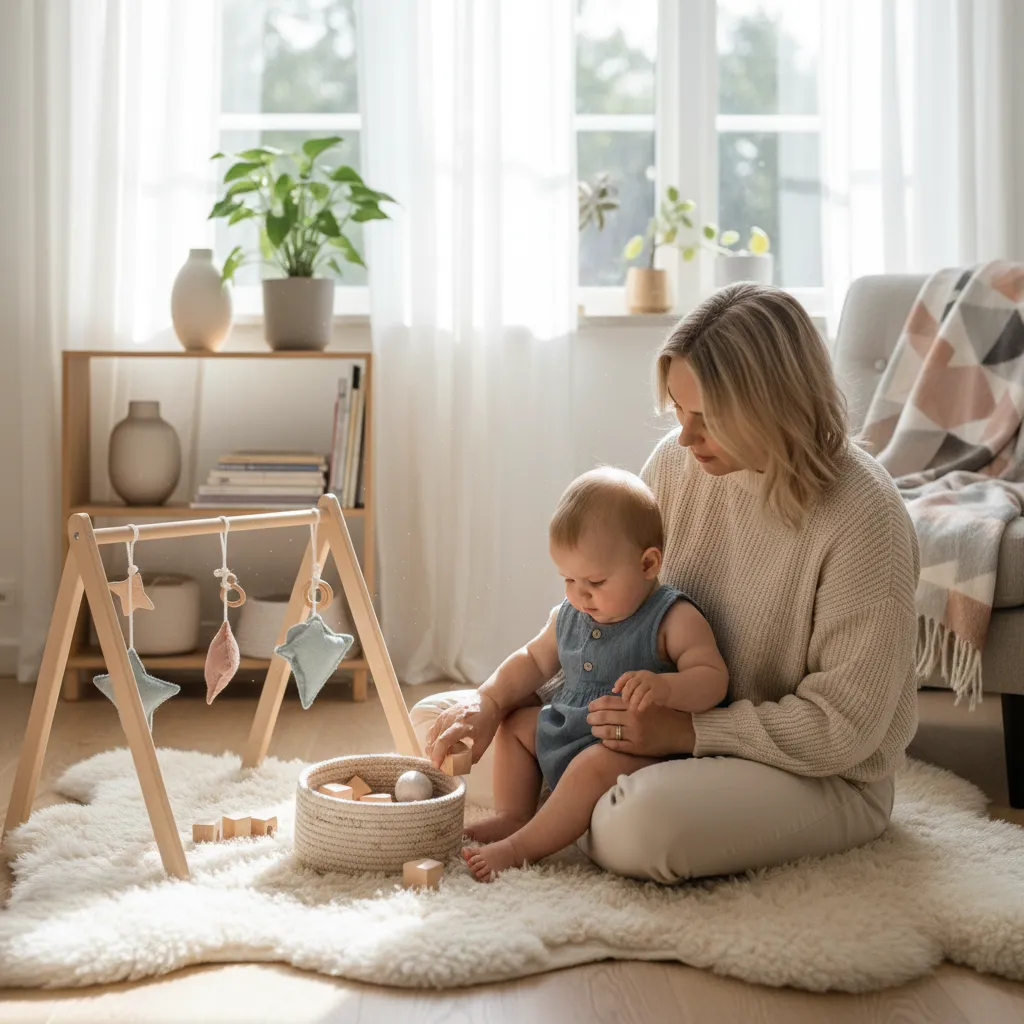
3. Hanging toys. Attach toys above your baby that they can swat at and eventually grasp. A baby gym is perfect for this.
4. Soft ball. Place a small, soft ball in your baby's hand. The round shape trains the grip and is easy to hold.
Note: Babies explore the world with their mouth. It is completely safe to let your baby suck and bite on toys, just make sure they are large enough that the baby cannot swallow them.
6–12 Months: The Grip Develops
This period is a golden time for fine motor skills. Your child goes from grasping with a whole hand to picking up small items with two fingers.
What Happens?
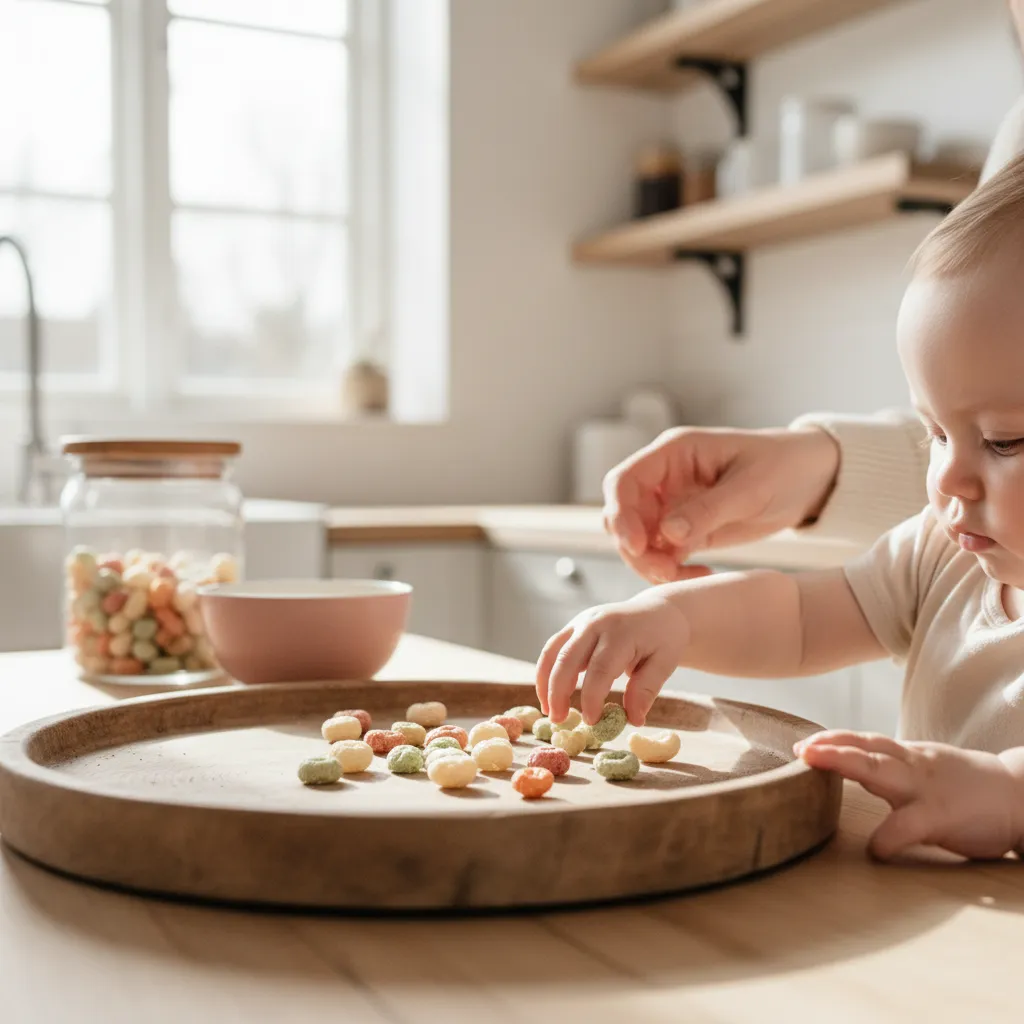
Between 6 and 12 months, your child develops the precise pincer grasp. It starts with an immature grip where the thumb and several fingers work together, and ends with a fine pincer grasp where thumb and index finger can pick up a small pea from the plate.
This development is closely linked to feeding. A baby who starts solid foods around 6 months trains fine motor skills every single time they pick up a piece of food.
Activities 6–12 Months
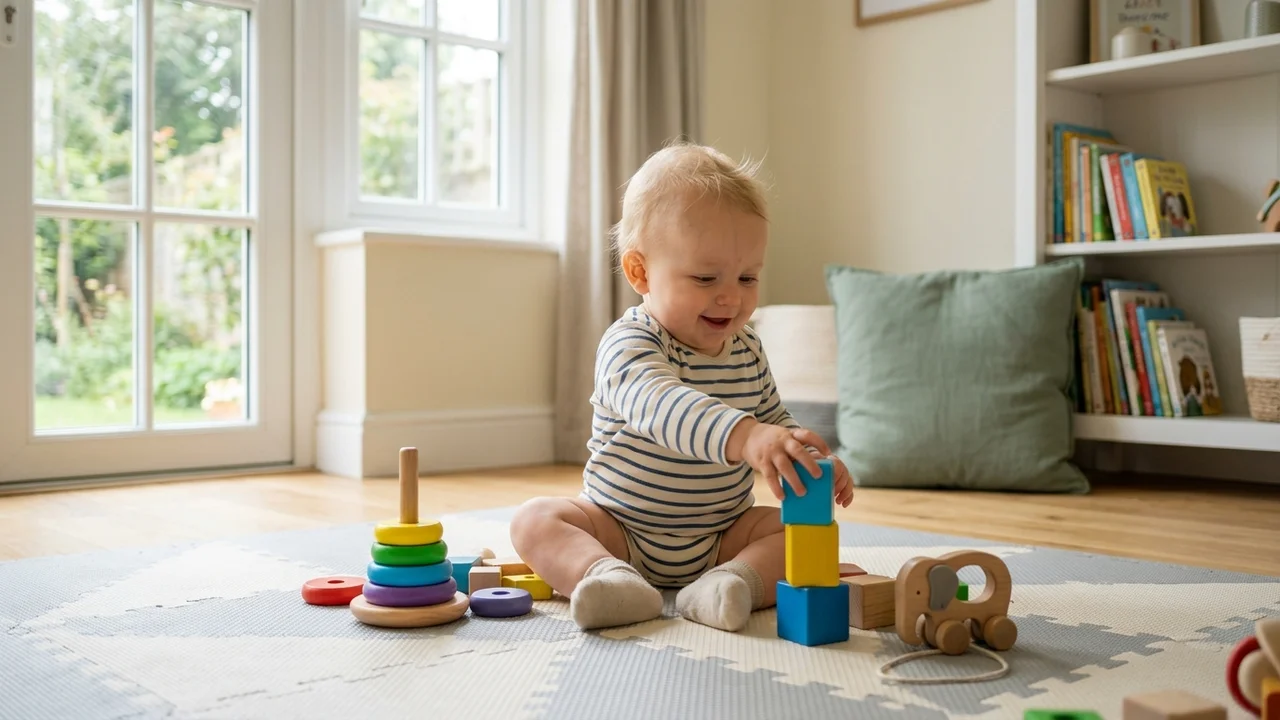
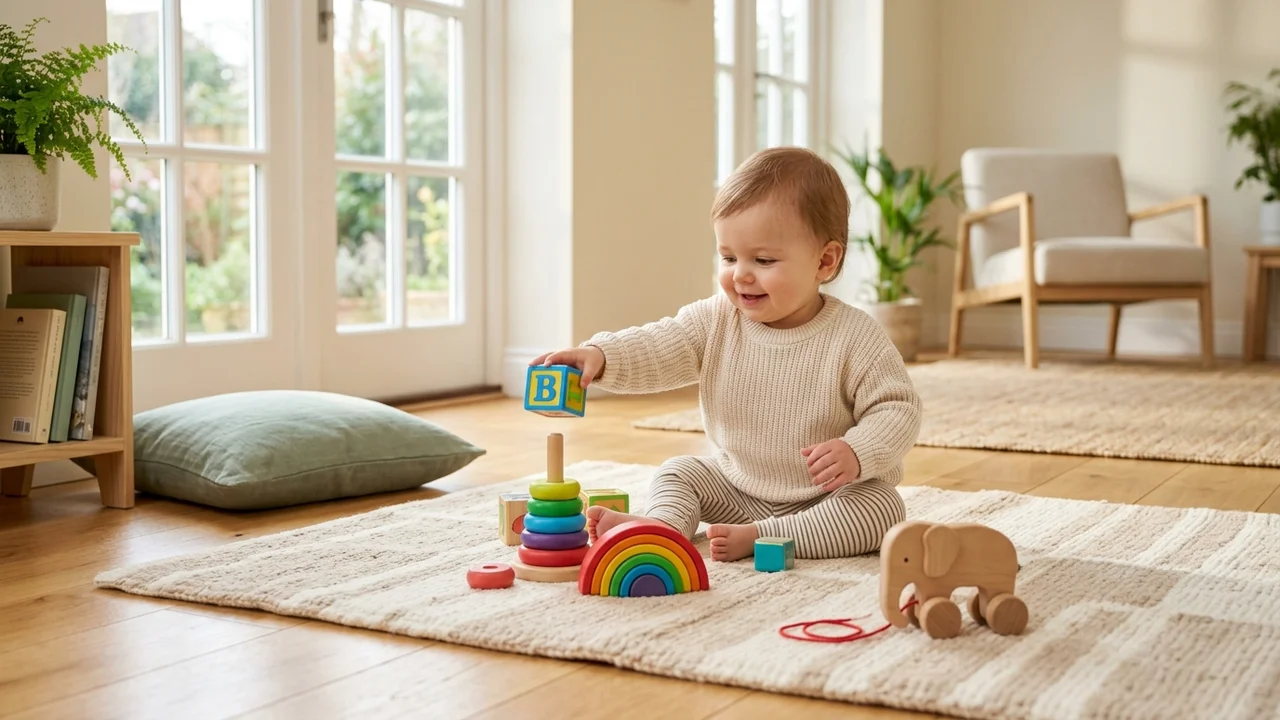
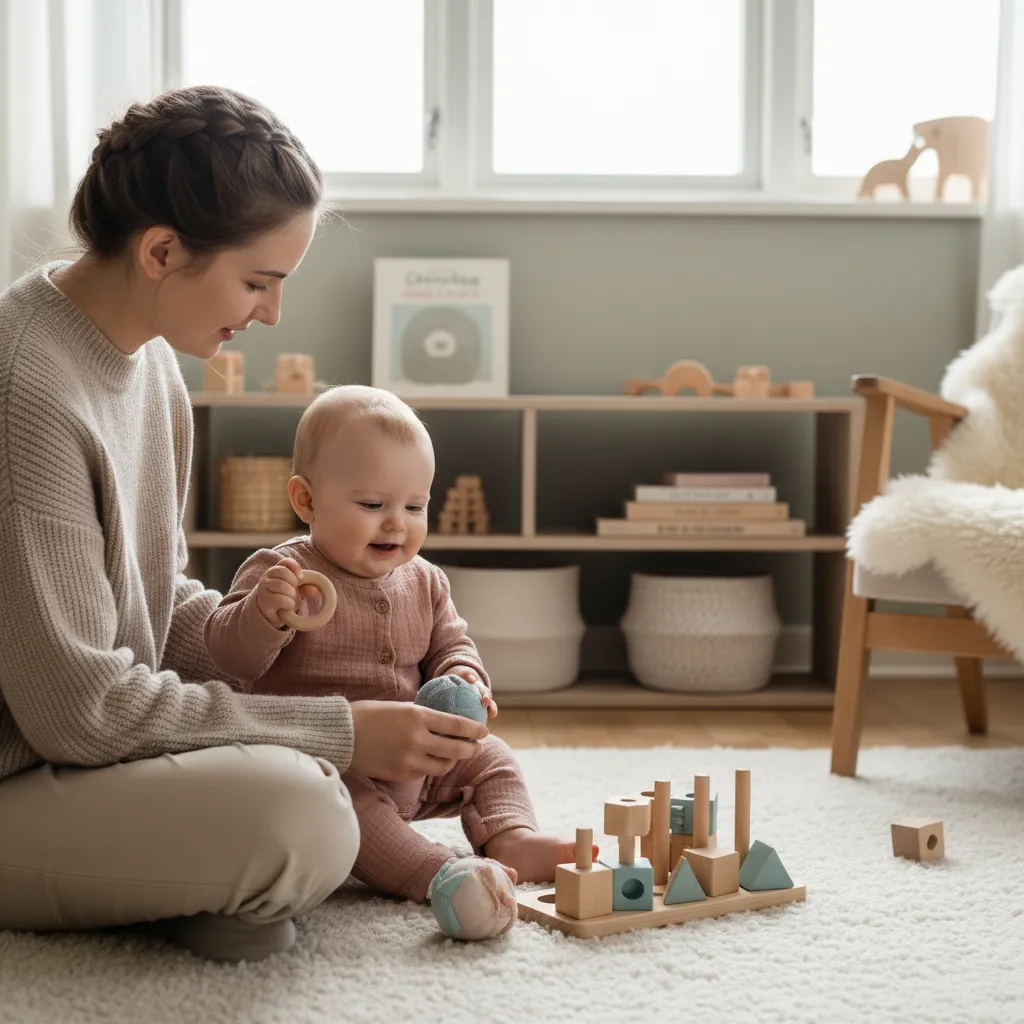
5. Stacking. Give your child large, lightweight blocks or stacking cups. At first they'll knock over what you've built, but eventually they'll try to stack themselves. Two blocks on top of each other is a major achievement.
6. Self-feeding (baby-led weaning). Let your child pick up pieces of food with their fingers. Banana, avocado, cooked vegetables cut into pieces, all of it trains the grip.
7. Pressing and pointing. Toys with buttons that light up or make sounds motivate your child to use the index finger in isolation. Books with "press here" surfaces work well.
8. Tearing paper. Give your child a piece of soft paper. Tearing it into pieces trains grip and coordination, and is great fun.
Baby-led weaning and fine motor skills: Babies who eat with their fingers from 6 months train the pincer grasp daily. Messy mealtimes are training in disguise.
1–2 Years: Drawing and Exploration
The one-year-old is a little explorer who uses their hands for everything. Fine motor skills become increasingly precise, and your child begins using tools, spoon, crayons, and cups.
What Happens?
Your child holds objects with increasing control. They can stack several blocks, place rings on a peg, and begin making the first lines with crayons. The spoon reaches the mouth (almost) every time.
Hand dominance begins to emerge but is not yet established. It is completely normal for your child to alternate between right and left hand.
Activities 1–2 Years
9. Drawing with thick crayons. Give your child chunky wax crayons or triangular crayons that are easy to hold. Large paper on the floor works perfectly. Don't correct the grip, your child will find their own way.
10. Play dough. Kneading, rolling, and shaping dough trains hand strength and coordination. You can make safe play dough at home with flour, salt, water, and a little cooking oil.
11. Shape sorters. Shape sorting boxes where your child puts the correct shape in the correct hole are excellent practice. Start with large shapes and few options.
12. Stacking and knocking down. Large Duplo bricks, stacking cups, or cardboard boxes. Building towers and knocking them down trains both fine motor skills and cause-and-effect understanding.
2–3 Years: Precision and Independence
The two-year-old wants to do everything themselves. Get dressed, eat with a fork, draw, and build. Fine motor skills are now developed enough for your child to manage increasingly complex tasks.
What Happens?
Your child draws circles and lines with intention. They use scissors for the first time (with help), thread large beads onto a string, and begin to fasten large buttons. The pencil grip gradually develops toward the mature three-point grip.
Activities 2–3 Years
13. Cutting with scissors. Start with child-safe scissors and let your child cut freely into paper. Cutting along a straight line comes later. The actual cutting motion, opening and closing the scissors, is the training.
14. Threading beads. Start with large wooden beads and thick string. This requires good hand-eye coordination and patience. Make it a game, "Now we're making a beautiful bracelet."
15. Buttons and dressing. Let your child practice with large buttons, zippers, and velcro. It takes time, but it builds independence and fine motor precision. Morning routines become training sessions.
16. Drawing and painting. Give your child access to a variety of drawing and painting tools. Finger paint, sponges, thick brushes, and crayons all provide different training. Let your child explore freely without templates or requirements.
Let it take time. When your two-year-old insists on buttoning their own jacket, it can be tempting to take over. But these minutes are valuable training. Start getting dressed a little earlier in the morning so there's room for practice.
Everyday Activities That Train Fine Motor Skills
You don't need special toys or organized activities. Daily life is full of fine motor training:
- Self-feeding, picking up food, holding a spoon and cup
- Water play, pouring from one cup to another, using a sponge
- Helping in the kitchen, kneading dough, stirring in a bowl, picking berries
- Getting dressed, pulling up a zipper, putting on socks
- Turning book pages, one page at a time trains finger dexterity
- Sandbox play, filling and emptying buckets, digging with a shovel
What If You Are Concerned?
Fine motor development varies greatly between children. Some grasp early, others take more time. That is normal.
Contact your child's pediatrician if:
- Your child does not reach for objects at 5–6 months
- Your child does not use a pincer grasp at 12–14 months
- You see a clear difference in use of right and left hand before 18 months
- Your child seems uninterested in exploring objects with their hands
- You notice your child struggling with tasks that peers handle easily
Your pediatrician can assess whether your child needs further evaluation or a referral to an occupational therapist. Early intervention gives the best results.
Pediatric checkups: During regular well-child visits, your child's fine motor skills will be observed. Speak with your pediatrician if you have questions between checkups, that is exactly what they are there for.
Frequently Asked Questions
When do babies develop a pincer grasp?
Most babies develop an emerging pincer grasp between 8 and 10 months, and a mature pincer grasp around 12 months. At that point, your child can pick up small objects between thumb and index finger.
Can I train my baby's fine motor skills?
Yes, but not as a drill. Give your child opportunities to explore with their hands through play and everyday activities. Rattles, stacking toys, self-feeding, and drawing tools are all great options. The best training happens when your child is having fun.
Should my child draw with their right hand?
Never force a child to use a particular hand. Hand dominance is typically established between 3 and 5 years. Let your child experiment with both hands. Forcing hand dominance can create unnecessary frustration.
Is it dangerous that my baby puts everything in their mouth?
No, it is normal and necessary. The mouth is a baby's most important sensory tool in the first months. Make sure toys are large enough that the baby cannot swallow them, and that they are free from harmful substances.
What is the difference between fine and gross motor skills?
Gross motor skills involve large movements using large muscle groups, crawling, walking, running, climbing. Fine motor skills are small, precise movements, grasping, drawing, cutting, fastening buttons. Both develop in parallel and influence each other.
Read More
- Complete Milestone Guide. All motor and fine motor milestones in one place
- Baby Motor Development. Milestones 0–12 Months
- Baby-Led Weaning Guide
- Toys for Babies 6–12 Months
Sources
- CDC. Developmental Milestones
- AAP. Caring for Your Baby and Young Child
- Zero to Three. Fine Motor Skills
🔧 Helpful Tools
- Baby Milestones Tracker. Track your baby's developmental milestones
- Development Leaps. Understand your baby's developmental leaps
- All Baby Tools. Browse all free tools for pregnancy and baby care
📖 Related Articles
- 15 Indoor Activities for Toddlers on Rainy Days, 15 simple and creative indoor activities for toddlers when it's raining outside. Play that stimulates development without screens.
- Baby Gym: Activities, Benefits, and Tips for Motor Development. Everything about baby gyms, activities for motor development, DIY baby gym vs store-bought, age-appropriate exercises from 0-12 months, and tips for stimulating your baby at home.
- Baby Not Rolling at 6 Months: Should You Worry?. Baby not rolling at 6 months? Learn about normal variation, when to contact your pediatrician, and exercises that encourage rolling.