Your baby lies on their back, flailing their arms. Tiny hands try to grasp a toy dangling above their head. Every attempt trains coordination, strength, and brain development, without the baby even knowing it.
A baby gym is one of the simplest and most effective ways to stimulate your baby's motor development. Whether you use a store-bought gym frame or create activities yourself, a baby gym provides valuable play and learning from the very first weeks.
What Is a Baby Gym?
A baby gym can mean two things:
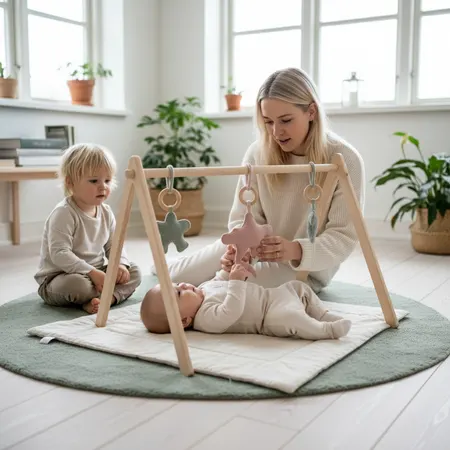
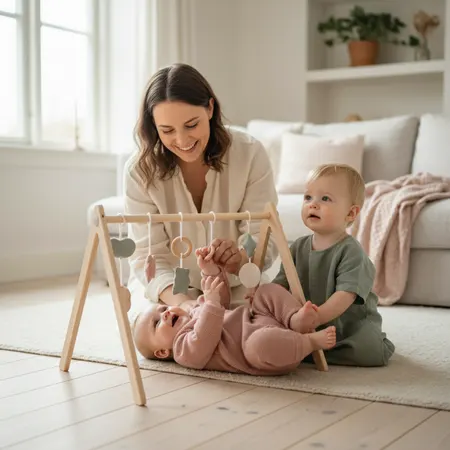
- Baby gym frame, a frame with dangling toys that the baby can lie under and reach for
- Baby gym activities, exercises and play that stimulate the baby's motor development
Both are about giving your baby opportunities to move, explore, and develop their body through play. This article covers both.
Benefits of Baby Gym
A baby gym isn't just entertainment. Research shows that early motor stimulation has many benefits:
Motor Development
- Gross motor skills, strengthens neck, back, arms, and legs through reaching, grasping, and kicking
- Fine motor skills, trains grip and hand-eye coordination when the baby tries to grab toys
- Balance, tummy time and side-lying build core muscles for later sitting and standing
Sensory Development
- Vision, the baby learns to focus and follow movements by watching dangling toys
- Hearing, toys with bells and rattling sounds stimulate hearing
- Touch, different materials and textures provide tactile stimulation
Cognitive Development
- Cause and effect, the baby discovers that hitting a toy makes it produce sound
- Spatial awareness, reaching for toys teaches the baby about distance and depth
- Problem-solving, figuring out how to grasp a toy is an early form of problem-solving
The AAP recommends: Babies need daily physical activity and movement for healthy motor development. Floor time, both on their back and tummy, is the most important form of physical activity in the first months.
Baby Gym Frames: Store-Bought vs. DIY
Store-Bought Baby Gyms
Store-bought baby gym frames come in many varieties. Here's what to look for:
Materials:
- Wood, durable, attractive, natural. Popular brands include Lovevery, Skip Hop, and Pottery Barn Kids
- Plastic, easier to clean, often with more features (lights, sounds)
- Fabric, soft gym frames with arches and hanging toys, like Skip Hop and Fisher-Price
What to look for:
- Stable construction that can't tip over
- Adjustable height so toys are within reach
- Interchangeable toys for variety
- Safety certification (ASTM or CPSC approved)
- No loose small parts that can come off
Price range: From about $25 for a simple plastic gym to $100-200 for wooden arches with quality toys.
DIY Baby Gym
You don't need to buy an expensive frame. Here are simple ways to create a baby gym at home:
Simple version:
- Use a sturdy structure (make sure it's stable enough to withstand the baby pulling on toys)
- Hang up pieces of fabric, wooden rings, rattles, and colorful ribbons at different heights
- Secure everything well so nothing can come loose
Without a frame:
- Lay your baby on a soft blanket on the floor
- Hold toys above the baby and move them slowly from side to side
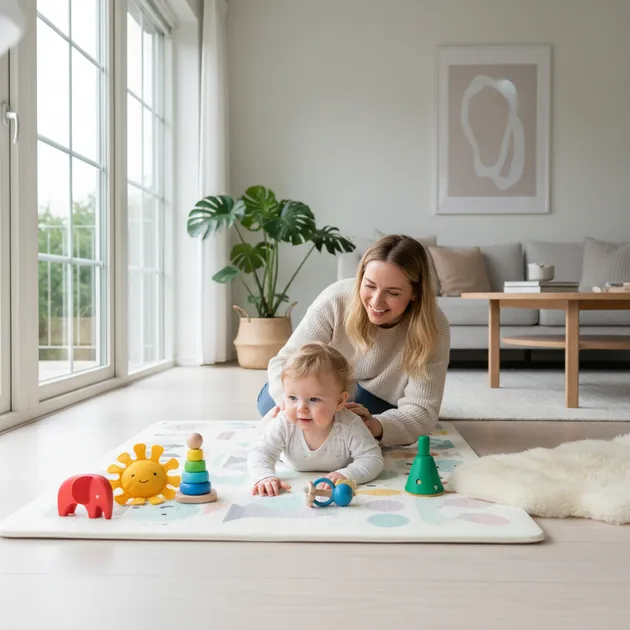
- Place toys in a semicircle around the baby for reaching practice
- Use everyday objects like wooden spoons, silk scarves, and plastic bowls
Safety with DIY: Make sure all objects are large enough not to be a choking hazard (larger than a toilet paper tube), that nothing can come loose, and that the construction is stable. The baby should always be supervised during baby gym time.
Age-Appropriate Baby Gym Activities
0-3 Months: See and Discover
In the first months, it's about giving the baby something to look at and reach toward.
Activities:
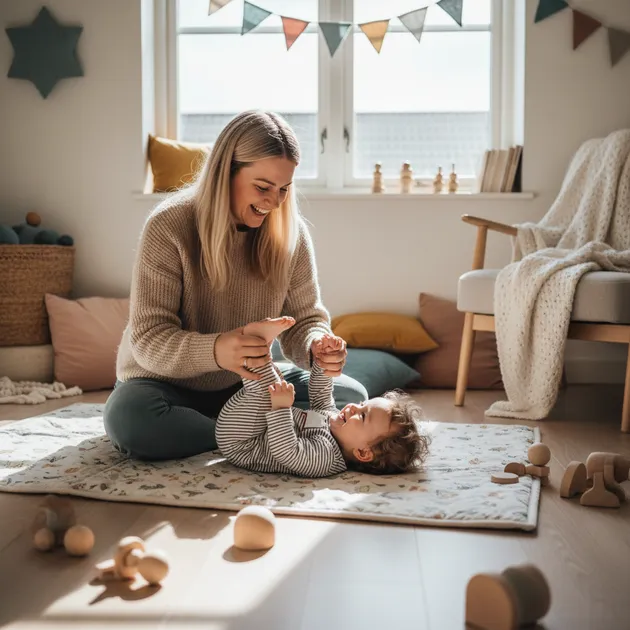
- Face-to-face, lie down next to the baby and let them see your face. Newborns see best at 8-12 inches
- Contrast images, hang up black-and-white pictures or cards above the baby. Newborns see contrasts best
- Soft fabric, let the baby touch different fabrics, silk, fleece, cotton
- Slow movement, move a colorful toy slowly from side to side in front of the baby, so they practice tracking with their eyes
- Tummy time, place the baby on their tummy for short periods (30 seconds to a few minutes) to strengthen neck muscles
Tummy time tip: Many babies protest during tummy time at first. Place the baby on your chest instead, that counts as tummy time and is more comfortable for the baby.
3-6 Months: Grasp and Explore
The baby begins to reach for things intentionally and has better control over their arms.
Activities:
- Grasping exercises, hang toys at the right height so the baby can reach them
- Rattles, give the baby a rattle and let them discover that movement creates sound
- Rolling practice, place a toy just out of reach so the baby is motivated to roll
- Mirror, set up a baby-safe mirror in front of the baby during tummy time. Babies love seeing faces
- Foot stimulation, hang toys in the gym frame so the baby can kick at them
- Texture toys, give the baby things with different surfaces to explore with hands and mouth
6-9 Months: Move and Sit
The baby may be sitting with support and starting to move forward.
Activities:
- Seated play, place the baby in a sitting position with support and put toys around them
- Crawling practice, place an attractive toy just out of reach to motivate crawling
- Standing practice, let the baby hold onto low furniture while practicing standing
- Box of things, fill a box with different objects the baby can take out and put back
- Ball play, roll a ball toward the baby and show how to roll it back
- Music and movement, play music and clap together. The baby starts imitating movements
9-12 Months: Climb and Stand
The baby is active, mobile, and curious about everything.
Activities:
- Obstacle course, create a simple obstacle course with pillows, blankets, and boxes the baby can climb over and crawl through
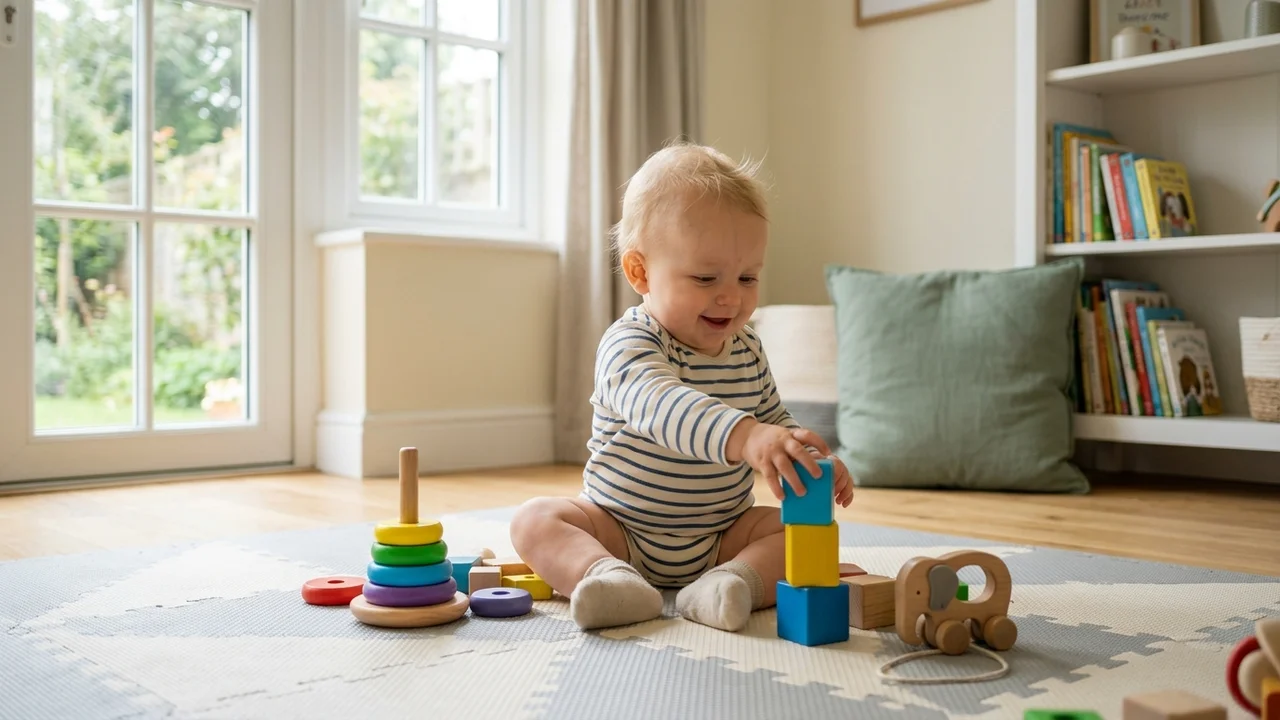
- Stack and knock down, give the baby blocks to stack and topple. Trains fine motor skills and understanding of gravity
- Cruising, stand by a wall and take side steps, many babies do this spontaneously
- Dance, hold the baby's hands and let them stand on the floor while you dance to music
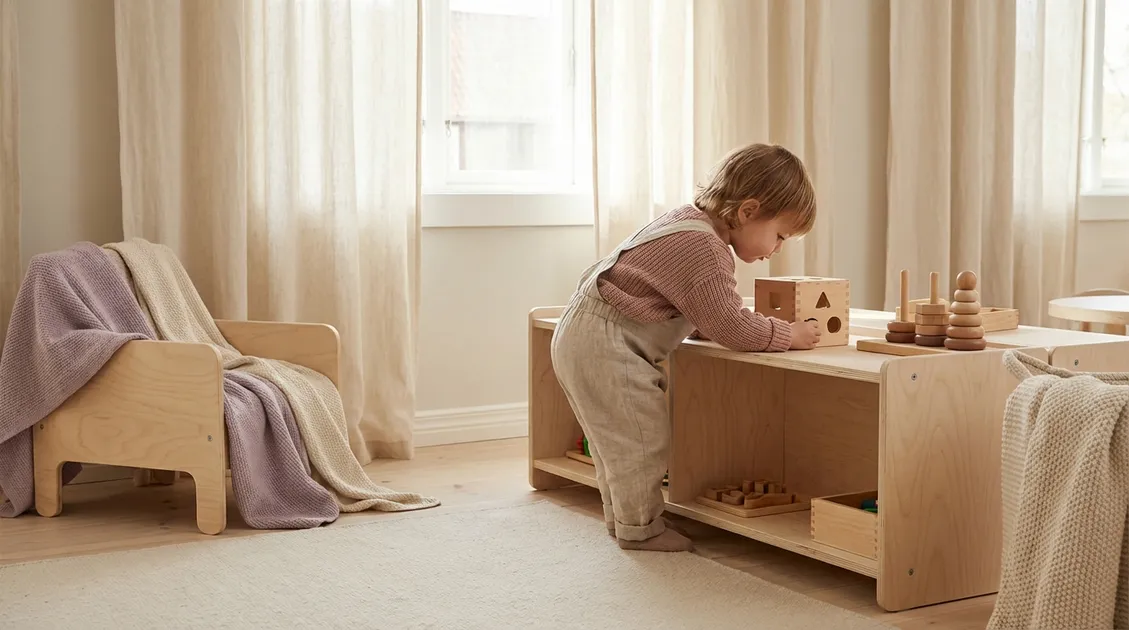
- Shape sorter, a box with holes where the baby can push balls or blocks through
- Hide and seek, hide a toy under a blanket and let the baby find it. Trains object permanence
Tummy Time. The Most Important Baby Gym Exercise
Tummy time is perhaps the single most important activity for your baby's motor development. The AAP recommends daily tummy time from the first weeks.
Why Tummy Time?
- Strengthens neck, back, and shoulder muscles
- Helps prevent flat head syndrome (positional plagiocephaly)
- Prepares the baby for rolling, crawling, and eventually walking
- Gives the baby a new perspective on the world
How to Do Tummy Time
For newborns (0-2 months):
- Place the baby on your chest while you're lying semi-reclined
- Start with 1-2 minutes at a time, several times daily
- Stop if the baby becomes very upset
For babies 2-4 months:
- Place the baby on their tummy on a soft blanket on the floor
- Lie in front of the baby so they can see your face
- Use toys and songs to keep the baby engaged
- Gradually increase to 10-20 minutes daily, spread over several sessions
For babies 4-6 months:
- The baby should have 30-60 minutes of tummy time daily in total
- Place toys in a semicircle in front of the baby
- Use a baby-safe mirror for extra motivation
- The baby may begin to lift their arms and legs off the floor (airplane exercise)
If your baby hates tummy time: That's normal. Try short sessions after diaper changes, place the baby across your lap instead of on the floor, or use a rolled-up towel under their chest for extra support. It gets easier as the baby gets stronger.
Baby Gym Classes and Groups
Many communities and private organizations offer baby gym classes. These are organized groups where parents and babies do exercises together, led by an instructor.
What Happens at Baby Gym?
- Warm-up songs with movements
- Motor exercises adapted to age
- Free play with various toys and equipment
- Social time for parents and babies
Benefits of Baby Gym Classes
- Professional guidance on motor development
- Social network for parents
- The baby meets other babies
- Inspiration for activities you can do at home
Where to Find Baby Gym Classes
- Your pediatrician's office, many have information about local programs
- Community centers, often offer free or affordable baby gym groups
- Private providers, gyms and activity centers for children
- Local parenting groups, check Facebook or community boards for baby gym meetups
Safety During Baby Gym
- Always supervise, never leave the baby playing alone under a gym frame
- Soft surface, use a blanket or mat under the baby
- Check the toys, make sure nothing is loose, broken, or has small parts
- Right temperature, the baby should be comfortably dressed, not too warm
- Follow baby's signals, stop if the baby is tired, hungry, or fussy
- Never on the couch or bed, baby gym should always be done on the floor to prevent falls
Frequently Asked Questions
From what age can a baby use a baby gym?
Babies can use a baby gym frame from birth. In the first weeks, it's mostly about looking at the toys, while the baby gradually begins to reach and grasp from around 3 months of age.
How long should the baby lie on the baby gym?
There's no fixed rule. Let the baby play as long as they're happy, that could be anything from 5 to 30 minutes. Follow your baby's signals and stop when they become upset.
Do we need an expensive baby gym frame?
No. A simple wooden frame works just as well as an expensive brand-name one. You can also create activities entirely without a frame by holding toys above the baby or placing them around them on the floor. The most important thing is floor time and stimulation.
Is tummy time really that important?
Yes. The AAP recommends daily tummy time from the first weeks of life. It strengthens the muscles your baby needs for rolling, crawling, sitting, and eventually walking. Babies who have regular tummy time generally reach motor milestones sooner.
What if my baby isn't reaching milestones?
All babies develop at their own pace. There's a wide range of normal. If you're concerned about your baby's motor development, talk to your pediatrician. They can assess whether further follow-up is needed.
Sources
- AAP - Developmental Milestones
- CDC - Physical Activity for Infants
- AAP - Back to Sleep, Tummy to Play
🔧 Helpful Tools
- Baby Milestones Tracker. Track your baby's developmental milestones
- Development Leaps. Understand your baby's developmental leaps
- All Baby Tools. Browse all free tools for pregnancy and baby care
📖 Related Articles
- Baby Not Rolling at 6 Months: Should You Worry?. Baby not rolling at 6 months? Learn about normal variation, when to contact your pediatrician, and exercises that encourage rolling.
- Baby Not Sitting at 9 Months: What Is Normal?. Baby not sitting at 9 months? Learn about normal variation, the difference between supported and independent sitting, and when to seek advice.
- Baby Not Walking at 15 Months: When Should You Seek Help?. Baby not walking at 15 months? Learn about the normal range for walking (9–18 months), bum shufflers, and when to contact a physical therapist.