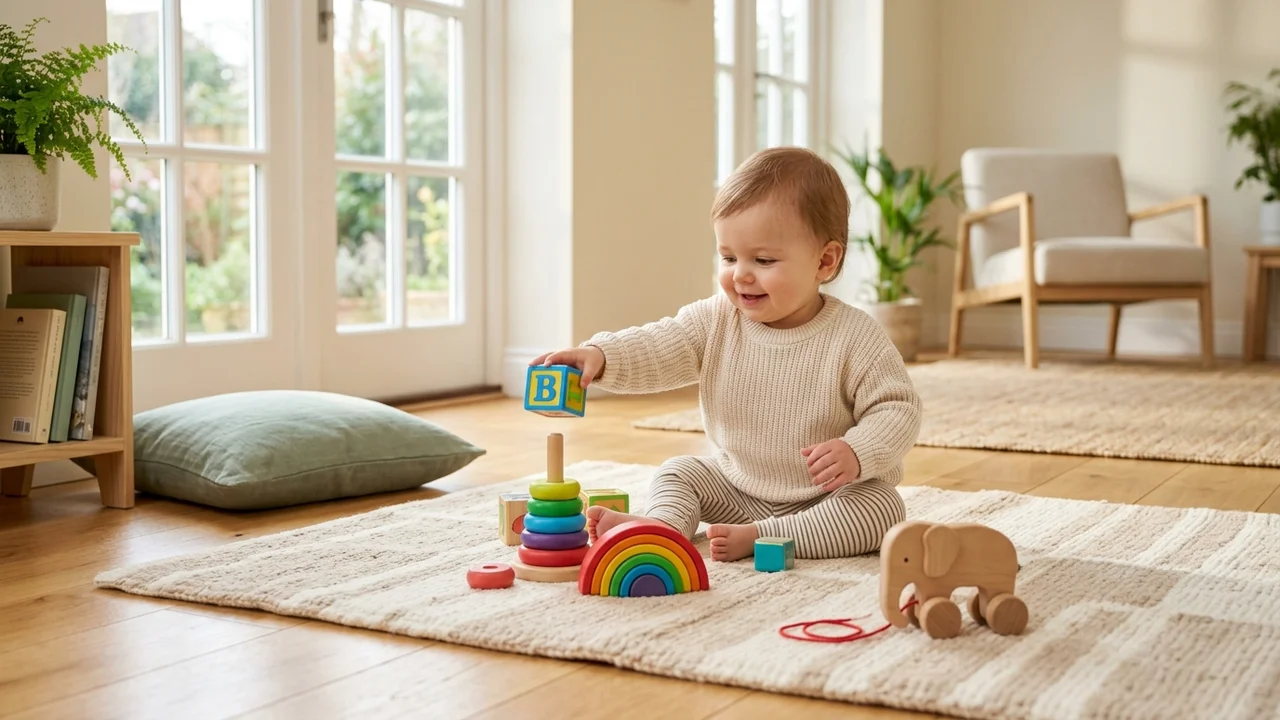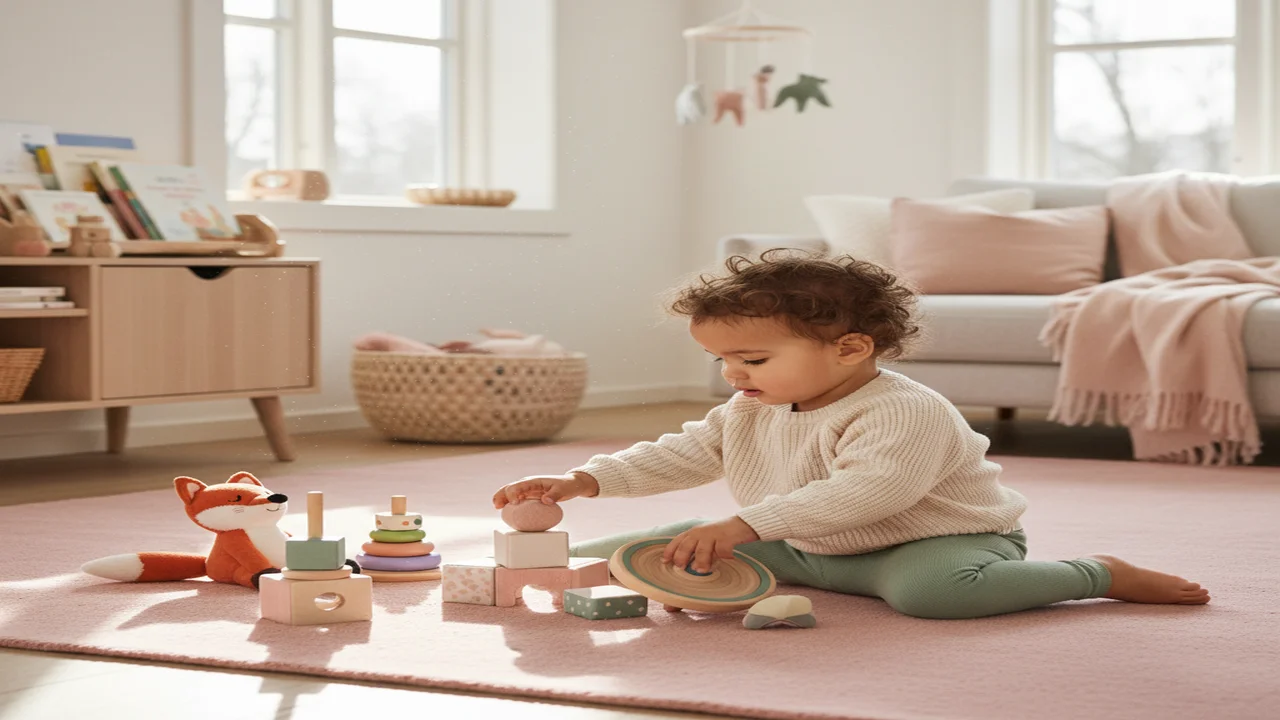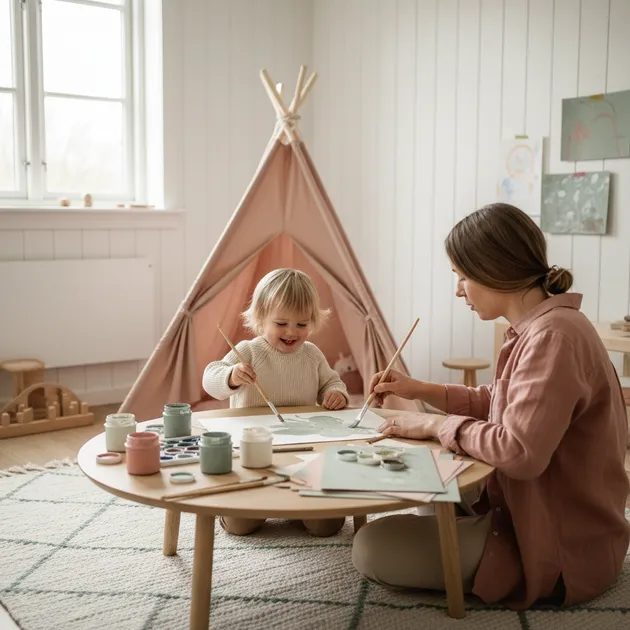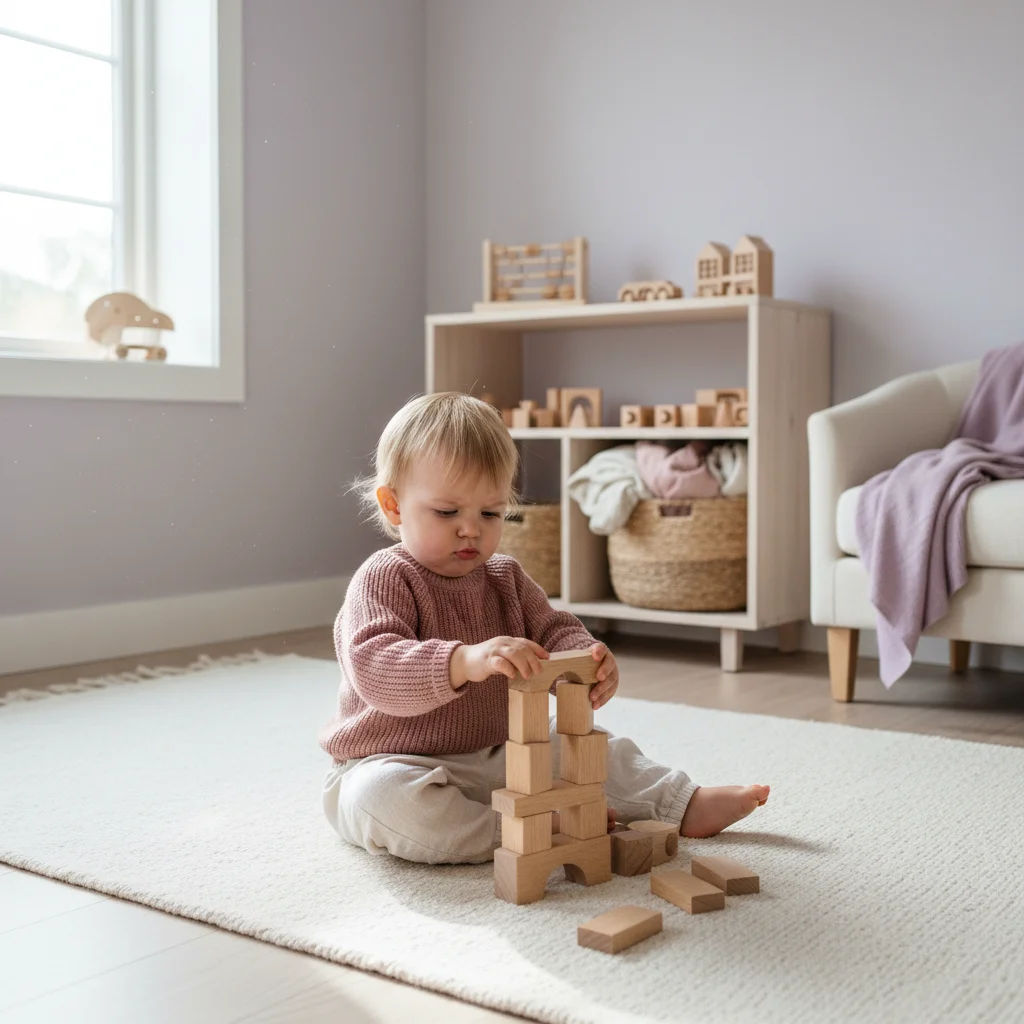
Your two-year-old jumps from activity to activity. Three minutes with blocks, then over to the books, then straight to the kitchen. You might wonder if this is normal, or if your child has poor concentration.
The answer is almost always: completely normal. Toddler brains are built to explore broadly, not deeply. But there are simple things you can do to support your child's ability to focus over time.
Normal Attention Spans by Age
Toddler brains develop at an enormous pace. The prefrontal cortex, the part that controls attention and impulse control, is one of the last parts to mature. This means short attention spans are not a weakness, they're biology.
Here are approximate attention spans by age:
- 1 year: 1–2 minutes with one activity
- 1.5 years: 2–3 minutes
- 2 years: 4–6 minutes
- 2.5 years: 5–7 minutes
- 3 years: 6–8 minutes
These numbers apply to activities the child hasn't chosen themselves. When a child is deeply engaged in something they've found on their own, an insect on the ground, running water, a shape sorter, concentration can last much longer.
Notice when your child becomes completely absorbed in something. These moments tell you what truly captures their interest, and that's the key to building concentration.
How to Support Concentration in Everyday Life
You don't need any special programs or expensive toys. The most effective approaches are about adjusting the environment and changing your own behavior.
Don't Interrupt Deep Play
When your child is absorbed in something, let them continue. Resist the temptation to say "look here!" or offer a different activity. Every minute of uninterrupted concentration builds the child's ability to focus over time.
Wait with practical instructions until the child naturally finishes what they're doing. If you must interrupt, give a gentle transition: "When you're done with that block, we're going to eat."
Fewer Toys, Better Focus
A room full of toys doesn't lead to better play, it leads to more flitting between activities. Research shows that children play longer and more creatively with fewer choices.
Try this:
- Have 5–8 toys available at a time
- Rotate toys every week or two
- Store the rest in a box out of sight
- Let the child choose toys from a clear, organized shelf
Follow the Child's Interest
Concentration isn't something you can force. It arises naturally when the child is genuinely interested. Observe what the child is drawn to and build from there.
Does the child like animals? Offer animal books, animal figures, visit a farm. Is the child fascinated by cars? Make a ramp from cardboard, play with cars in the sandbox, read books about vehicles.
In early childhood education, this is called "following the child's lead." Adults observe what the child explores and facilitate more of it, without taking over.
Activities That Build Concentration
Some types of activities train focus more than others. What they have in common is that they require some effort, provide immediate feedback, and have a clear beginning and end.
For 1–2-Year-Olds
- Shape sorters and posting boxes, requires trial and error, provides reward when the shape fits
- Stacking towers, stacking and knocking down is repetitive but enormously engaging
- Water play, scooping, pouring, and emptying trains coordination and holds attention
- Pointing books, short sessions with books where the child points and you name things
- Drawing with thick crayons, the process matters more than the result
For 2–3-Year-Olds
- Puzzles with 4–12 pieces, gradually increase difficulty
- Sorting games, sort blocks by color, size, or shape
- Simple board games, games designed for the youngest
- Play dough and modeling, calm activity with long concentration periods
- Reading longer books, books with simple plots and recognizable situations
For All Ages
- Outdoor play in nature, unstructured play in parks and green spaces provides natural concentration training
- Music play, singing, clapping, dancing to rhythms
- Practical tasks, helping wash vegetables, tidying up, watering flowers
Screen Time and Attention
The AAP recommends that children under 2 avoid screen time. For children between 2 and 5 years, screen time should be limited to a maximum of one hour per day.
Fast-paced screen entertainment (short clips, frequent scene changes) gives the brain reward without effort. Over time, this can make it harder for the child to engage in activities that require more patience.
Background screens count too. A TV on in the background disrupts the child's play even if the child isn't actively watching. Turn off the screen when the child is playing.
When you do use screens, choose calm, slow-paced programs where the child can follow along. Short YouTube clips that jump between topics train the brain to expect frequent stimulation.
When Should You Look Further?
Most children with short attention spans are well within the normal range. But sometimes it may be worth talking to your pediatrician.
Consider reaching out if the child:
- Never manages to focus on anything, not even things they love
- Cannot sit still during short book readings after age 2.5
- Seems extremely restless compared to peers
- Has difficulty listening to simple instructions
Your pediatrician can help assess whether the child's attention challenges are within normal range or whether further evaluation is needed. An ADHD diagnosis is not made before school age, but early support can make a big difference.
Remember that there is wide normal variation among toddlers. A child who is more active than average doesn't necessarily have a problem, it may be temperament and personality.
The Role of Preschool/Daycare
Good early childhood programs support children's concentration through play-based learning. Play is the most important tool, not sitting still and following instructions.
Good programs:
- Give children long, uninterrupted periods of free play
- Let children finish what they're doing before transitions
- Offer varied materials in calm zones
- Observe children's interests and adapt accordingly
If you're unsure about your child's development, talk to your child's teacher or caregiver. They see the child in a group setting and can provide valuable insight.
Summary
Concentration isn't something you train into a child, it's something you create the conditions for. Fewer distractions, fewer toys, more time for deep play, and an adult who lets the child continue without interrupting. That's the recipe.
Follow the child's lead, reduce screen time, and create space for deep play. Over time, you'll see that attention spans naturally grow longer.
Frequently Asked Questions
How long should a 2-year-old be able to concentrate? A 2-year-old typically has an attention span of 4–6 minutes for activities chosen by others. When the child chooses the activity themselves and is genuinely engaged, focus can last longer. Wide variation is normal.
Do short attention spans mean my child has ADHD? No, short attention spans are completely normal in toddlers. ADHD is typically diagnosed no earlier than school age. Talk to your pediatrician if you're concerned, but remember that most active toddlers develop completely normally.
Do special apps or programs help train concentration? Research shows that unstructured play, nature experiences, and activities with physical materials (blocks, puzzles, books) are more effective than screen-based programs for building concentration in toddlers.
Read More
Sources
🔧 Helpful Tools
- Baby Milestones Tracker. Track your baby's developmental milestones
- Development Leaps. Understand your baby's developmental leaps
- All Baby Tools. Browse all free tools for pregnancy and baby care
📖 Related Articles
- ADHD Signs in Toddlers: What Parents Should Look For. Learn about ADHD signs in toddlers. What's normal active behavior, when should you seek help, and how does evaluation work? A guide for parents.
- ADHD Signs in Toddlers: What Should Parents Look For?. Learn about ADHD signs in toddlers. What is normal active behavior, when should you seek help, and how does assessment work in Norway? Guide for parents.
- Creative Play at Home: 20 Activities for Toddlers, 20 simple and fun activities you can do at home with toddlers. Creative play that supports development without expensive equipment.