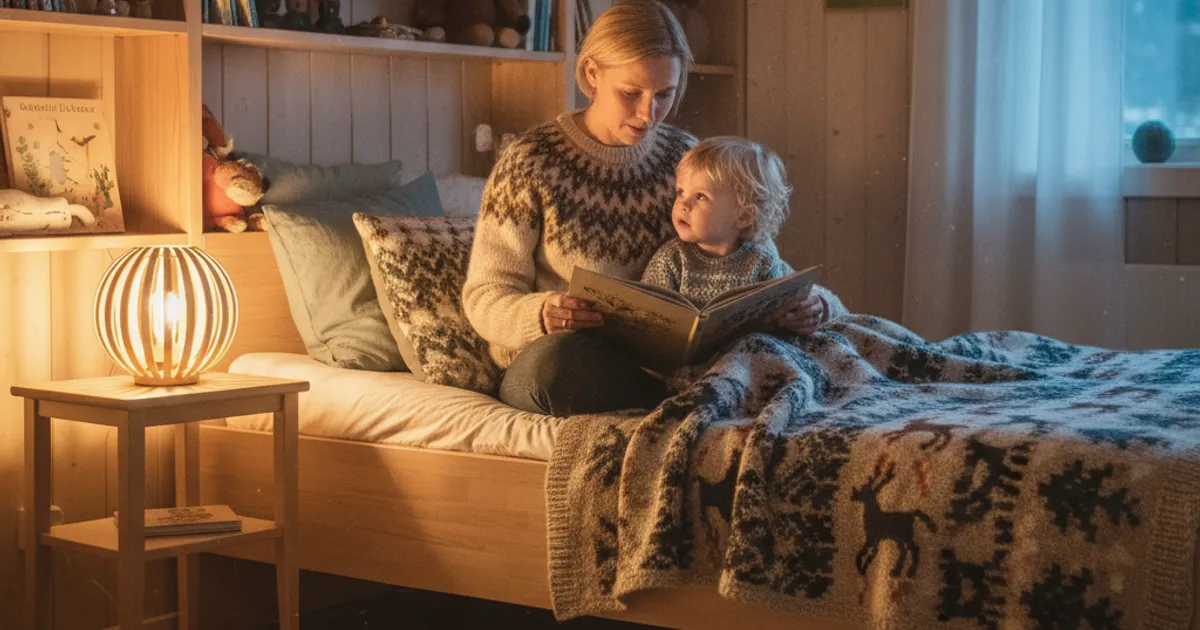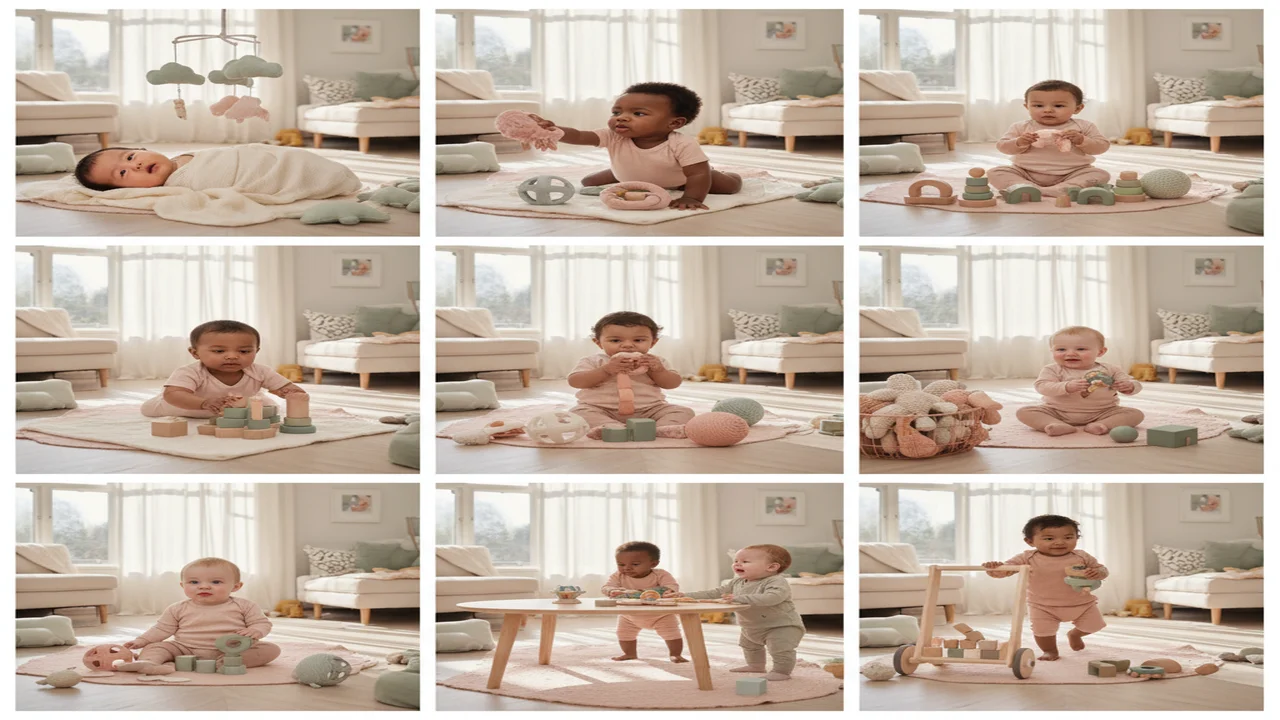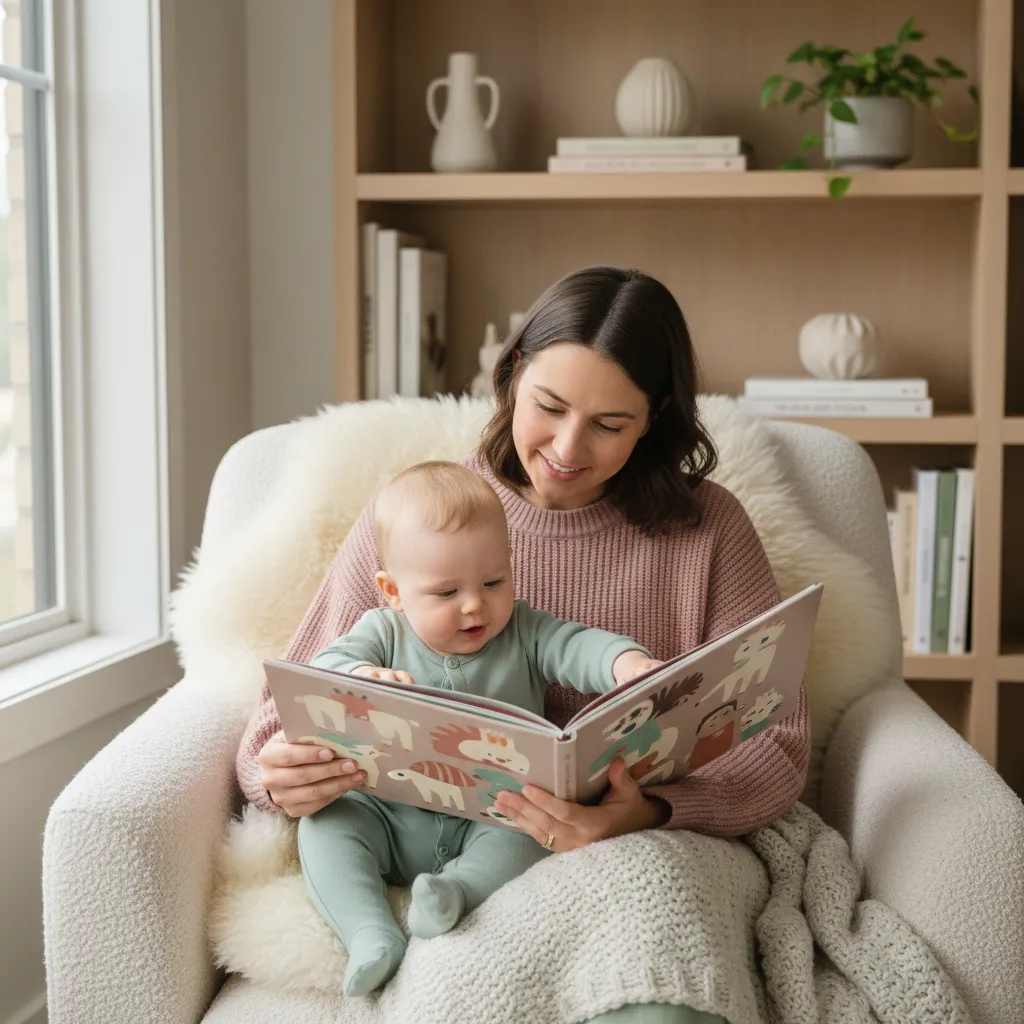
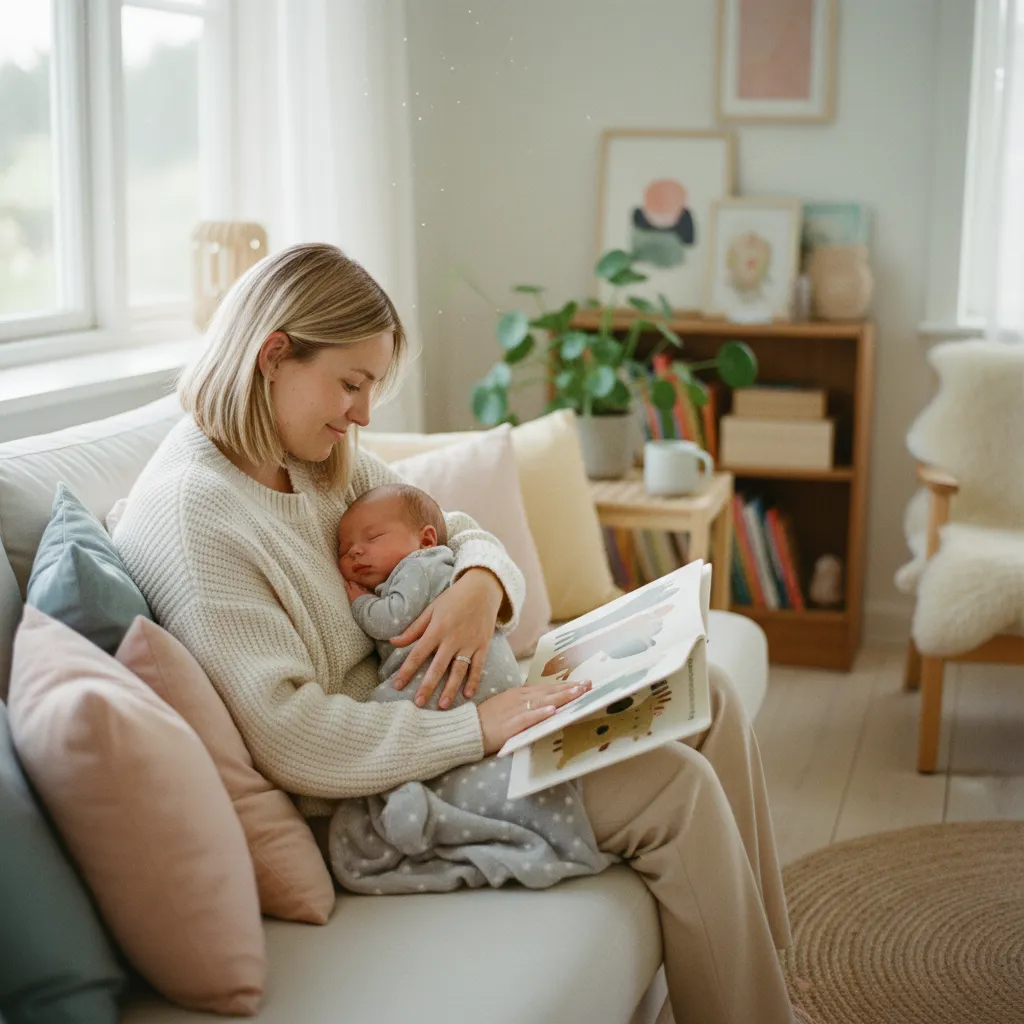
You don't need to wait until the child understands the words. You don't need to wait until they can sit on their own. You can begin reading to your baby from day one, and it's one of the best things you can do.
Research shows that reading aloud from birth strengthens language development, builds attachment, and lays the foundation for a lifelong love of reading. And the best part? It requires no special skills or expensive equipment. All you need is a book, a baby, and your voice.
Why Read to Your Baby?
Reading aloud gives your baby far more than just a story. It's one of the most valuable moments you can share.
Language Development
Children who are read to from an early age hear more words and more varied language than children who aren't. Research from the American Academy of Pediatrics (AAP) shows that children who are read to daily from birth have a noticeably larger vocabulary by the time they start school.
Your voice, with its tones and rhythms, teaches your baby how language works, long before the child begins to speak themselves.
Attachment and Closeness
Story time is a calm, safe moment where you are close together. The baby hears your voice, feels the warmth of your body, and feels secure. This closeness strengthens the attachment between you.
Concentration and Calm
Books give your baby practice in focusing on one thing at a time. From just a few weeks old, the baby can follow contrasts and colors for short moments. Gradually the ability to concentrate over longer periods builds.
Reading aloud doesn't need to take long. Five to ten minutes a day is enough for the youngest. It's the regularity that counts, not the length of the session.
Books for the Youngest (0–6 Months)
Newborns see best at 20–30 cm distance and are most interested in strong contrasts. Vision develops rapidly in the first months.
What Works?
High-contrast books with black-and-white patterns are perfect for the first weeks. The baby picks up the strong contrasts and begins to focus their gaze.
Soft cloth books that the baby can touch, chew on, and explore with their hands. The material provides tactile stimulation, and the books can handle being drooled on.
Simple picture books with large, clear images and few colors. From three to four months, the baby begins to take interest in colors, faces, and simple shapes.
Tips for Story Time
- Hold the book 20–30 cm from the baby's face
- Point to the pictures and describe what you see with simple words
- Use exaggerated tones, babies love variation in voice
- Don't worry if the baby looks away, it doesn't mean they aren't listening
- Choose a calm time, after feeding or before bedtime
Books for Baby 6–12 Months
The baby reaches for the book, turns (or tears) the pages, and begins to point. Interest in pictures and sounds grows.
What Works?
Lift-the-flap books provide a surprise effect that babies love. Lifting the flap and discovering what's hidden underneath trains fine motor skills and cause-and-effect understanding.
Rhyme books and song books with rhythmic text. Babies are drawn to rhythm and rhyme, and it helps them hear patterns in language.
Texture books (touch-and-feel) where the baby can feel different surfaces, soft, rough, smooth. Sensory stimulation and language combined.
Everyday books, pictures of food, animals, clothes, and objects the child recognizes. The baby begins to connect words with things in their own world.
Tips for Story Time
- Let the baby hold the book and turn pages themselves, it doesn't matter if the pages come in the wrong order
- Point and name what you see: "Look, a dog! Woof woof!"
- Ask simple questions: "Where is the cat?"
- Use animal sounds and sound words, babies love them
- Read the same book many times, repetition is learning
Don't get frustrated if the baby would rather chew on the book than look at the pictures. That's also exploration. Board books can handle a lot, and interest in the content comes gradually.
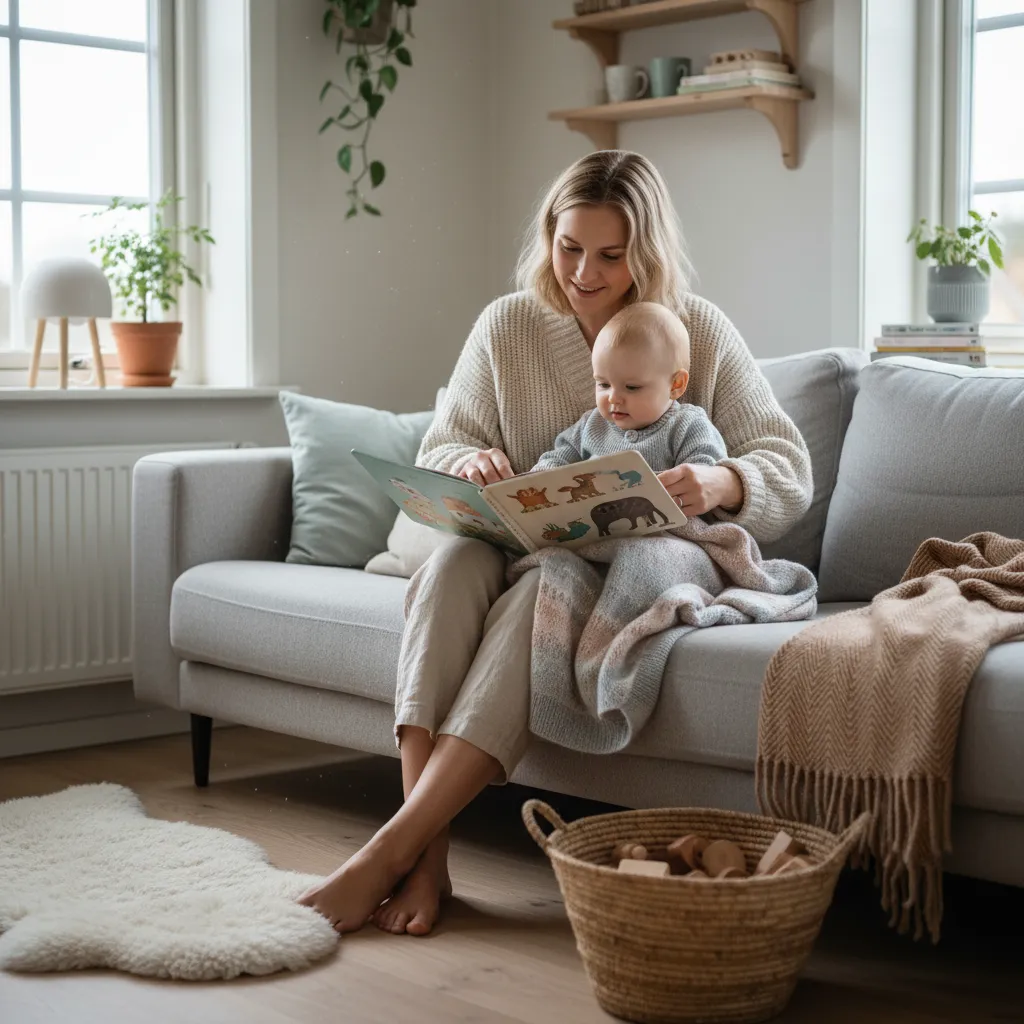
Books for Toddlers 1–3 Years
A quantum leap happens here. The child points, names things, asks questions, and wants to hear their favorite book for the fiftieth time.
1–2 Years
Simple story books with recognizable situations, going to bed, eating breakfast, going to daycare. The child recognizes themselves and connects the story to their own daily life.
Books with simple sentences that the child can fill in words to. "The cow says... MOO!" Active participation makes story time engaging.
Picture books with many objects, word pictures that help the child expand their vocabulary. Picture dictionaries with themes like animals, vehicles, or food.
2–3 Years
Longer stories with simple plots, the child can follow a thread through the book. Characters who experience something, solve a problem, or learn something new.
Books about emotions, stories about getting angry, scared, happy, or sad. Books give the child words for feelings they otherwise struggle to express.
Rhymes and verse, children this age love wordplay. Nonsense words, rhymes, and rhythmic text delight them and strengthen phonological awareness.
Classic Children's Books Worth Reading
There is a wonderful canon of timeless picture books that work across cultures:
Timeless Classics
- Eric Carle, The Very Hungry Caterpillar and Brown Bear, Brown Bear are beloved worldwide
- Maurice Sendak, Where the Wild Things Are, adventurous and emotionally rich
- Leo Lionni, Frederick, Swimmy, Little Blue and Little Yellow, beautifully illustrated
- Margaret Wise Brown, Goodnight Moon, a perfect bedtime book for babies
Popular Series for the Youngest
- Sandra Boynton, humor-filled board books perfect for babies and toddlers
- Julia Donaldson, The Gruffalo, Zog, Sharing a Shell, rhyming stories children adore
- Mo Willems, the Pigeon and Elephant & Piggie series, great for slightly older toddlers
- Jan Thomas, simple, funny books ideal for very young children
Newer Books
Publishers release many wonderful children's books every year. Visit your local library and let the child choose, that's a great way to discover new favorites.
The Library. A Treasure Trove for Families
Your local public library is an incredible resource for families with young children, and it's completely free.
What Does the Library Offer?
Library cards from birth. Your baby can have their own library card from the very beginning. Most libraries have dedicated children's sections with comfortable reading nooks, toys, and a large collection of children's books.
Baby story time and reading groups. Many libraries arrange baby sing-alongs, story hours, and reading groups for the youngest. Check what your local library offers.
Curated book collections. Librarians can put together book boxes tailored to your child's age and interests. They know the collection and give great suggestions.
Digital services. Through the library you may have access to digital children's books and audiobooks.
Make library visits a regular weekly routine. The child learns that books are something positive, and you get a calm shared project in the middle of a busy day.
How to Make Story Time Engaging
It's not about reading "correctly", it's about making it enjoyable. Here are some tips that make story time a highlight.
Use Your Voice
Give characters different voices. Vary the pace, read slowly for tense moments, quickly when there's action. If you whisper, the child leans in closer. Exaggeration is good.
Follow the Child's Interest
The child points to the dog on every single page? Talk about the dog. The child wants to flip back? Let them flip back. Story time belongs to the child, not to you.
Connect the Book to Real Life
"Look, the girl in the book is eating breakfast, just like you did today!" Connecting the book's content to the child's own experiences makes the story vivid and meaningful.
Make It a Routine
A fixed reading time, for example, before bedtime, creates predictability and security. The child knows that after brushing teeth and putting on pajamas comes the lovely reading time. Over time this becomes a ritual you both look forward to.
Read the Same Book Again and Again
Children love repetition. What feels boring to you is safe and enriching for the child. With each reading, the child picks up new details, new words, and new connections.
Frequently Asked Questions
Do I have to read exactly what's written in the book?
No. For the youngest, it's fine just to point and describe the pictures. You can adapt the text, simplify, or add your own comments. Your voice and the interaction are what matter most.
My child won't sit still, is there any point in reading?
Yes. Children don't need to sit perfectly still to benefit from reading. A one-year-old who crawls around while you read still hears your voice and the words. Reading sessions can be short. Even two minutes counts.
When should a child start "reading" themselves?
Children "read" in their own way long before they can read letters. Flipping through books, pointing at pictures, and telling stories in their own words is reading for the youngest. Formal reading instruction belongs in school, in the toddler years it's about building a love of reading.
Are audiobooks as good as reading aloud?
Audiobooks are a nice supplement, but don't replace reading aloud. The value of story time lies in the interaction between you and the child, sharing the experience, pointing, commenting, and being close to each other.
Sources
- American Academy of Pediatrics. Literacy Promotion
- Zero to Three. Reading Together
- American Library Association. Early Literacy
🔧 Helpful Tools
- Baby Milestones Tracker. Track your baby's developmental milestones
- Development Leaps. Understand your baby's developmental leaps
- All Baby Tools. Browse all free tools for pregnancy and baby care