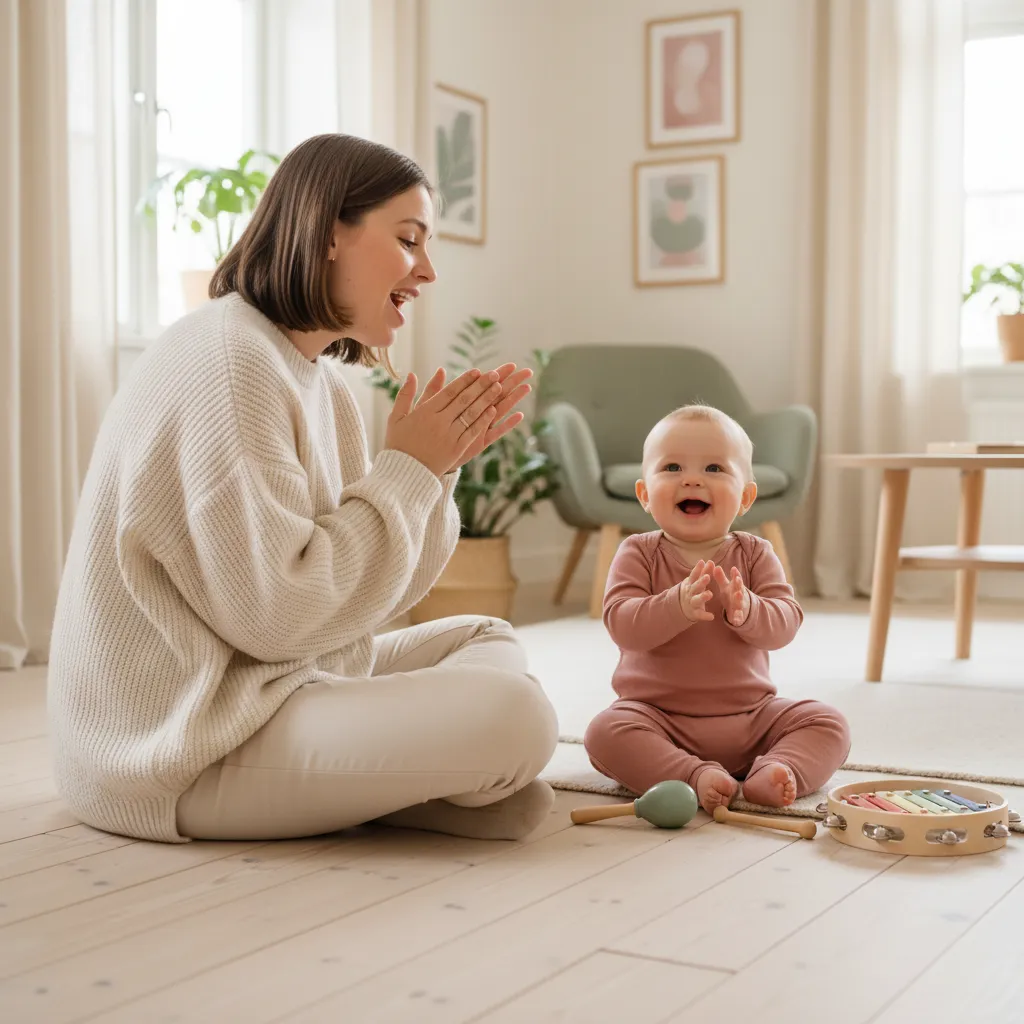
You don't need to be musical to bring your baby joy through music. Your voice, whether or not it hits every note, is the most beautiful instrument your baby knows.
Research shows that music stimulates language development, strengthens attachment, and gives babies a head start in motor coordination. And the best part: you need no training at all. Just a song and a lap.
Why Music Matters So Much for Babies
Babies respond to music even before birth. From weeks 25–27 of pregnancy, the fetus begins registering sound and rhythm.
After birth, music does three things at once:
- Strengthens the brain. Musical patterns activate both hemispheres and build neural connections
- Develops language. Rhythm and melody train the ability to distinguish sounds and syllables. This is the foundation of language comprehension
- Regulates emotions. Calm music lowers stress hormones and heart rate. Upbeat music increases alertness and joy
International research: A study from the University of Washington (2016) found that babies who participated in music play had stronger brain responses to speech and music patterns than the control group. Current AAP guidelines emphasize interaction and play for language development, music play is an excellent way to fulfill these recommendations.
Music Play by Age
0–3 Months: Your Voice Is Enough
Newborns love your voice above all other sounds. They recognize it from the womb.
Activities:
- Hum while you hold your baby. Simple, soothing, and attachment-building
- Sing gentle lullabies, "Twinkle Twinkle Little Star" or "Hush Little Baby" are timeless
- Speak rhythmically. Babies love exaggerated intonation and repetition
- Play soft music. Classical music or gentle folk music in the background
Tip: Babies at this age prefer higher pitches and slower tempos. Feel free to exaggerate your intonation.
3–6 Months: Movement and Sound
Your baby is beginning to connect sound with action. Action songs are perfect right now.
Activities:
- "Pat-a-Cake". Clap your baby's hands in time with the song
- "Row, Row, Row Your Boat". Baby on your lap, rocking gently in rhythm
- Rattles and bells. Let your baby hold a rattle and make sounds
- Dancing. Hold your baby and dance gently around the room
6–9 Months: Baby Participates
Your baby can now bang on things, clap, and make sounds deliberately.
Activities:
- Drum play. A pot and a wooden spoon make a perfect drum kit
- "Itsy Bitsy Spider". Show the hand movements; your baby will try to copy them
- Peekaboo with a song. Combine peekaboo with a melody
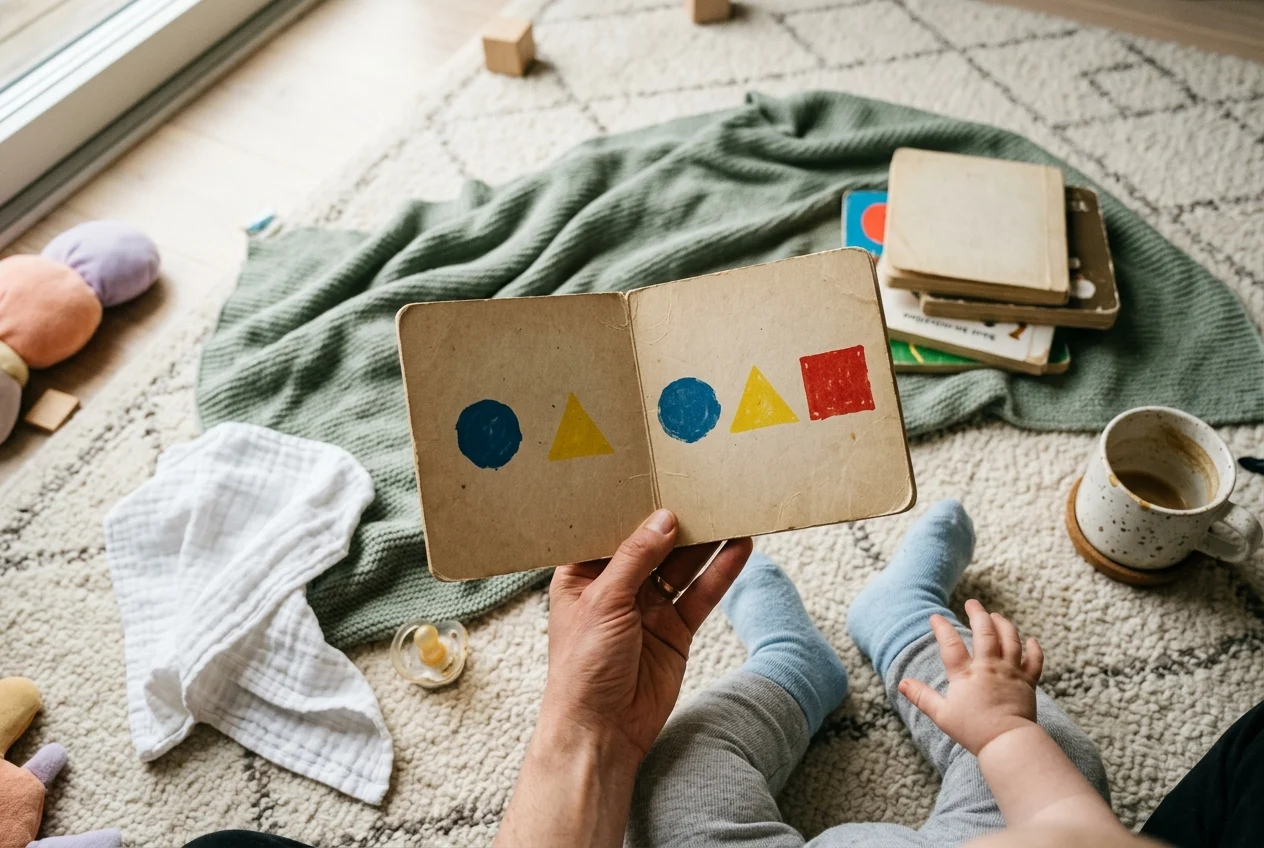
- Musical books. Books with buttons your baby can press to make sounds
9–12 Months: Rhythm and Repetition
Your baby can clap hands, wave, and attempt to sing along.
Activities:
- "Clap, Clap, Clap Your Hands". Clapping songs are big favorites at this stage
- "Wheels on the Bus". Action song with the whole body
- Maracas from a plastic bottle. Fill a small bottle with rice (seal the cap tightly!)
- Dance party. Put on music and dance together. Your baby loves to watch you dance
1–3 Years: Full Music Celebration
Toddlers love repetition and participate actively in singing and dancing.
Activities:
- "Baa Baa Black Sheep" and other singing games
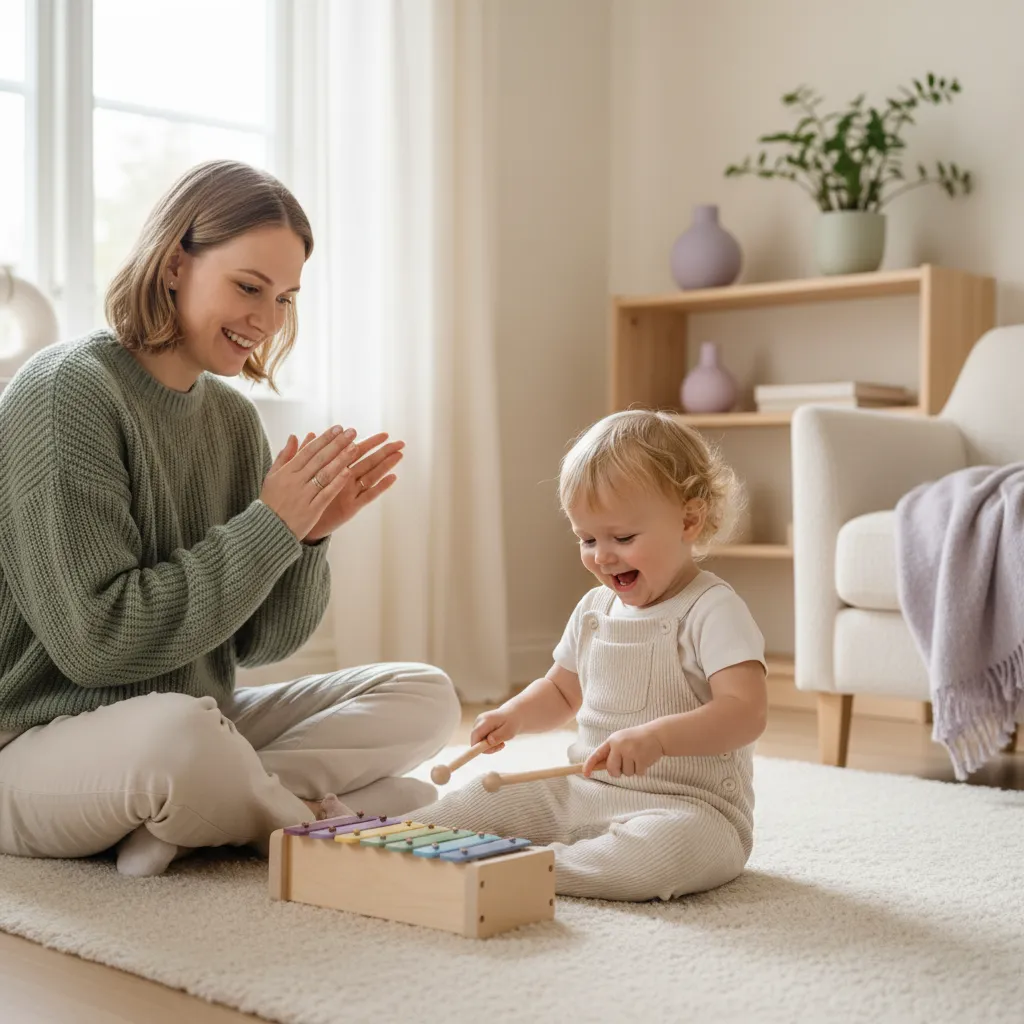
- Instrument play. Xylophone, drum, tambourine
- Action songs, "Head, Shoulders, Knees and Toes"
- Singing together. They start learning the words now
- Freeze dance. Dance to music, freeze when it stops
You don't need to sing well. A study from the University of Montreal showed that babies prefer their mother's voice over professional singers, regardless of quality. Your baby loves your voice because it is yours.
10 Classic Children's Songs Every Parent Should Know
- Twinkle Twinkle Little Star. The ultimate starter song
- Pat-a-Cake. Perfect for clapping
- Itsy Bitsy Spider. Hand movements and drama
- Row, Row, Row Your Boat. Calm and soothing
- Wheels on the Bus. Lots of movements
- Old MacDonald Had a Farm. Everyone loves animal sounds
- Hush Little Baby. Beautiful lullaby
- Mary Had a Little Lamb. Fun and simple
- Head, Shoulders, Knees and Toes. Learn body parts
- If You're Happy and You Know It. Interactive and energetic
Tip: Check out children's playlists on Spotify or YouTube for well-produced children's songs. Many local libraries and community centers also offer baby music groups, check what's available in your area.
Simple Homemade Instruments
You don't need to buy expensive instruments:
- Plastic bottle with rice. Maracas (seal the cap tightly!)
- Pot and wooden spoon. Drum
- Two pot lids. Cymbals
- Cardboard tube with wax paper over one end. Kazoo
- Rubber band stretched around a box. Guitar
Frequently Asked Questions
How much music should my baby hear each day?
There is no fixed rule. Short sessions (5–10 minutes) of active music play are better than hours of background music. Quality over quantity.
Can music help my baby sleep?
Yes, gentle music or humming can be part of a sleep routine. But avoid making your baby dependent on music to fall asleep, vary between music and silence.
Should I avoid loud music?
Yes. Your baby's hearing is sensitive. Keep the volume at conversation level or lower. Never use earbuds or headphones with babies.
Summary
Music is play, attachment, and development all in one. All you need is your voice, a lap, and a little imagination. Sing the song you remember, your baby thinks it's perfect.
Track your baby's development with the milestone tracker and see when their first attempts at singing and dancing appear.
Read More
- Language development in children
- Motor development for babies
- Play and development for toddlers
- Toys for babies 0–6 months
Sources
🔧 Helpful Tools
- Baby Milestones Tracker. Track your baby's developmental milestones
- Development Leaps. Understand your baby's developmental leaps
- All Baby Tools. Browse all free tools for pregnancy and baby care
📖 Related Articles
- Baby Development Milestones by Month (0–12 Months). A complete guide to baby developmental milestones from birth to 12 months, including motor, language, social, and cognitive skills, with red flags to watch for.