Getting outside starts early. From stroller walks through the park to a baby's first crawl on the grass, nature offers sensory stimulation, motor challenges, and calm that no indoor playground can match.
The WHO and the AAP recommend that children under 1 year should be active several times a day, and that varied outdoor activities throughout the year are positive for development. Here you'll find concrete ideas for each season and age group.
Why outdoor and nature play?
Motor development
Uneven terrain like grass, sand, moss, and rocks challenges balance and coordination in a completely different way than a flat floor. Crawling over roots, walking in snow, or climbing a small rock provides well-rounded motor training.
Sensory stimulation
Nature offers endless variety: wind on the face, sunlight filtering through leaves, the sound of birds, the feel of moss and sand. This varied sensory stimulation is valuable for brain development.
Immune system
Research shows that children who spend a lot of time outdoors in contact with soil, plants, and animals develop a stronger immune system. The microbial diversity in nature contributes positively to gut health.
Calmer children
Outdoor time has a calming effect on restless children. Fresh air, daylight, and physical activity improve sleep quality and make it easier for children to settle down.
Activities by season
Spring (March – May)
Spring brings new sounds, smells, and colors after a long winter.
For babies (0–12 months):
- Stroller walk with stops. Stop the stroller near a tree with birdsong. Let the baby listen and observe.
- Feel spring. Give the baby a soft blade of grass or a leaf to hold and explore (under supervision).
- Puddle mirror. Older babies can sit on your lap and see their reflection in a still puddle.
For toddlers (1–3 years):
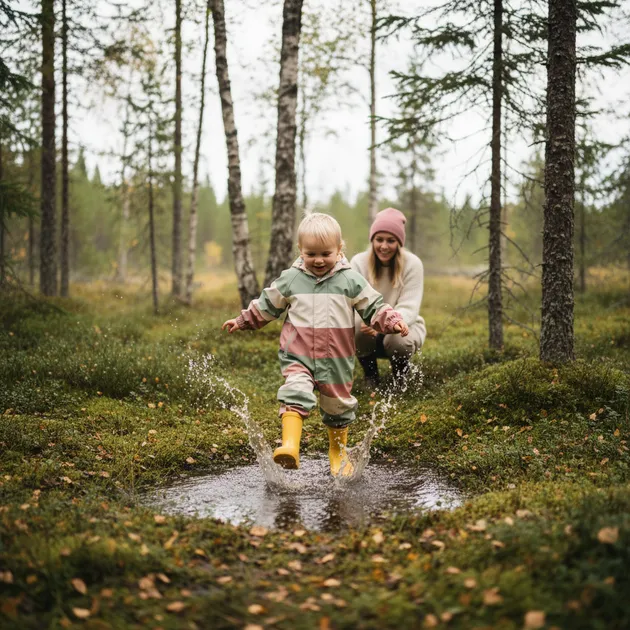
- Puddle jumping. Rain suit, boots, and a good puddle, that's all you need. Jumping in puddles trains balance and brings great joy.
- Flower safari. Go for a walk and look for flowers. Point and name colors: "Look, a yellow flower!"
- Stick collecting. Let the child collect sticks of different sizes. Sort them by length at home.
- Snail hunt. After rain, look for snails together. Observe them without touching.
Rain gear is the best investment for parents of toddlers. With the right clothes, there's no such thing as bad weather, just opportunities for play.
Summer (June – August)
Long days with light and warmth provide the best conditions for outdoor life.
For babies (0–12 months):
- Barefoot in the grass. Let the baby feel grass under their feet. The tactile stimulation strengthens foot muscles and sensory development.
- Water play. A small tub with lukewarm water in the shade. Let the baby splash and play with their hands (never without supervision).
- Shadow play. Lay the baby on a blanket in partial shade and let them watch shadows from the leaves dancing over the blanket.
For toddlers (1–3 years):
- Sand play. Sand is a fantastic material. Scoop, pour, dig, and build. Sand play trains fine motor skills and creativity.
- Berry picking. Let the child pick blueberries or strawberries straight from the bush. The pincer grip is practiced while the child gets fresh berries.
- Water channel. Create a "river" in the sandbox with water. Children love making pools, canals, and waterfalls.
- Bug hunt. Look for ants, beetles, and butterflies. Use a magnifying glass to see them up close.
Protect your baby from the sun. Children under 1 year should not be exposed to direct sunlight. Use a sun hat, light clothing that covers the skin, and stay in the shade. Sunscreen can be used on exposed areas from 6 months of age.
Autumn (September – November)
Autumn is sensory play at its best, colors, sounds, and materials in abundance.
For babies (0–12 months):
- Leaf rain. Gather a handful of leaves and let them drift down over the baby (under supervision; avoid the baby putting leaves in their mouth).
- Pinecone exploration. Give the baby a pinecone to hold and explore. The uneven surface stimulates the sense of touch.
- The walk as a frame. Bundle the baby up and go for a walk in the woods. Stop and point at colorful trees, squirrels, and birds.
For toddlers (1–3 years):
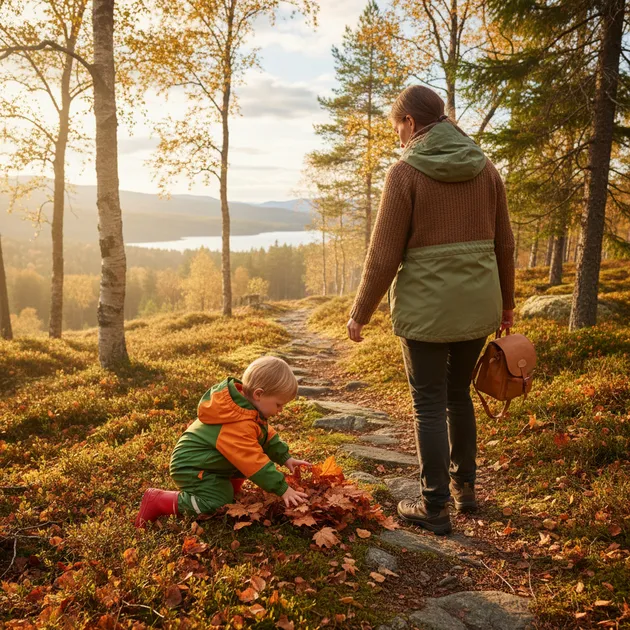
- Leaf art. Collect leaves in different colors. At home, glue them onto paper to make an "autumn picture."
- Chestnut collecting. Look for chestnuts and acorns. Count them, sort by size and shape.
- Leaf pile. Rake up a big pile of leaves and let the child jump in. Gross motor skills and laughter combined.
- Mushroom walk. Go into the woods and look at mushrooms (don't pick or eat without knowledge). Talk about colors and shapes.
- Bird feeder. Make a simple bird feeder from a milk carton. Hang it up and watch the birds that come.
Winter (December – February)
Winter offers unique opportunities that children in other climates can only dream of.
For babies (0–12 months):
- Snowflakes. Let the baby watch snowflakes falling. Catch a flake on a dark mitten and hold it up.
- Cold and warm. Let the baby briefly touch a little snow with their hand, then feel the contrast with a warm mitten afterward.
- Stroller walk. Many strollers work well in snow. A calm walk in a winter landscape brings peace and fresh air.
For toddlers (1–3 years):
- Snow angel. Lay the child on their back in the snow and show them how to make an angel by moving their arms.
- Snowman. Build a small snowman together. Let the child find sticks for arms and stones for eyes.
- Sledding. A simple sled and a gentle slope. Start slowly and gradually increase.
- Icicles. Look for icicles (look, don't touch the ones hanging high up). Break off a small icicle from the ground and let the child hold it.
- Animal tracks. Look for tracks in the snow. "Who walked here? Maybe a cat?"
Age-appropriate tips
0–6 months
The baby experiences nature primarily through the senses. Light, sounds, temperature, and touch are enough stimulation. Short outings (20–30 minutes) in a stroller or baby carrier work well.
6–12 months
The baby wants to explore with their hands and mouth. Let them sit on a blanket outdoors and handle natural materials under supervision. Make sure they don't put dangerous things in their mouth.
1–2 years
The child wants to walk, crawl, and climb everywhere. Let them explore at their own pace. Uneven terrain is the best motor training. Short outings with many stops work better than long distances.
2–3 years
The child can participate more actively in organized activities. Collecting, sorting, simple games, and tasks in nature are engaging. Children this age love to help: carry sticks, feed birds, pick berries.
Safety outdoors
- Clothing. Dress the child in layers. Wool closest to the skin, wind-resistant outer layer. Remember a hat, mittens, and proper shoes.
- Supervision. Always keep the child within reach, especially near water, steep edges, and roads.
- Poisonous plants and berries. Teach the child early not to eat berries or plants without asking an adult.
- Sun protection. Sun hat, sunscreen, and shade in summer. Children are more vulnerable to UV radiation than adults.
- Ticks. Check the child for ticks after walks in tall grass and brush, especially from April through November.
Nature requires no planning or equipment. A walk around the block with stops to watch an ant, feel a leaf, and listen to a bird is just as valuable as an organized forest outing.
Frequently asked questions
How cold is too cold for a baby outside?
Healthy, full-term babies tolerate cold well when properly dressed. Most daycare centers keep children outside down to 14°F (–10°C) or below. For very young babies (0–3 months), limit time outside in very cold weather and check that the baby is warm by feeling their chest (not their hands).
My child only wants to eat dirt and sand, is that dangerous?
Tasting dirt and sand is a completely normal part of exploration for babies and toddlers. Small amounts of plain soil are harmless. Avoid soil from areas where there may be animal feces or pesticides. Calmly say "no, we don't eat that" and offer something else.
Do we need a lot of equipment for outdoor play?
No. Nature is the playground, and the child is their own toy. A stick, a rock, a leaf, and a puddle can entertain a toddler for an hour. Good clothing and a curious attitude are all you need.
How long should children be outside each day?
The WHO and AAP recommend that children should be physically active for at least 3 hours daily from age 1, and a large portion of this can be outdoor time. For babies under 1 year, there is no specific recommendation, but daily outings are positive for both child and parent.
Read more
- Gross motor development in babies: Stimulating activities
- Sensory development in babies
- Your baby's immune system
- Winter activities with baby
- Summer activities with baby
Sources
- World Health Organization (WHO). Guidelines on physical activity for children under 5
- American Academy of Pediatrics (AAP). The Importance of Play in Promoting Healthy Child Development
- Centers for Disease Control and Prevention (CDC). Child development and outdoor play
🔧 Helpful Tools
- Baby Milestones Tracker. Track your baby's developmental milestones
- Development Leaps. Understand your baby's developmental leaps
- All Baby Tools. Browse all free tools for pregnancy and baby care