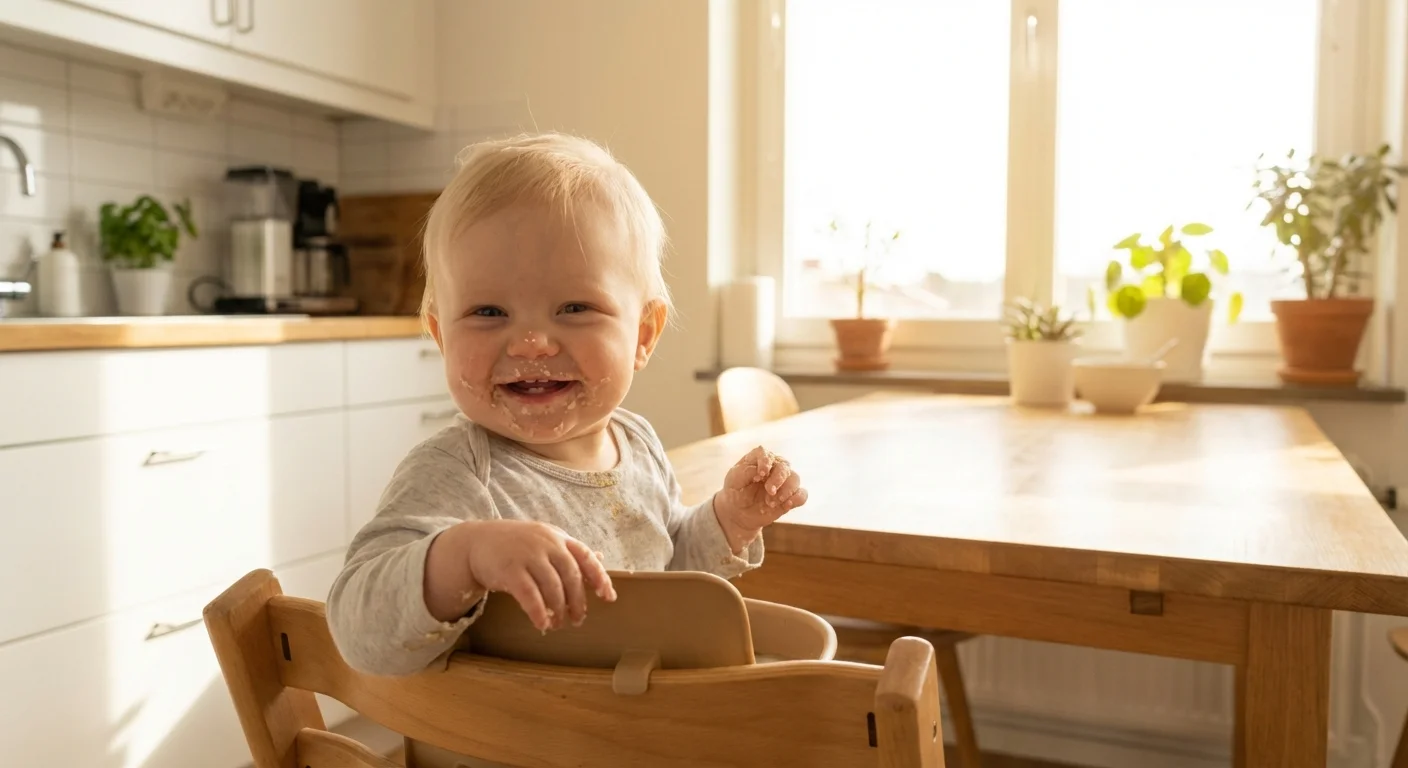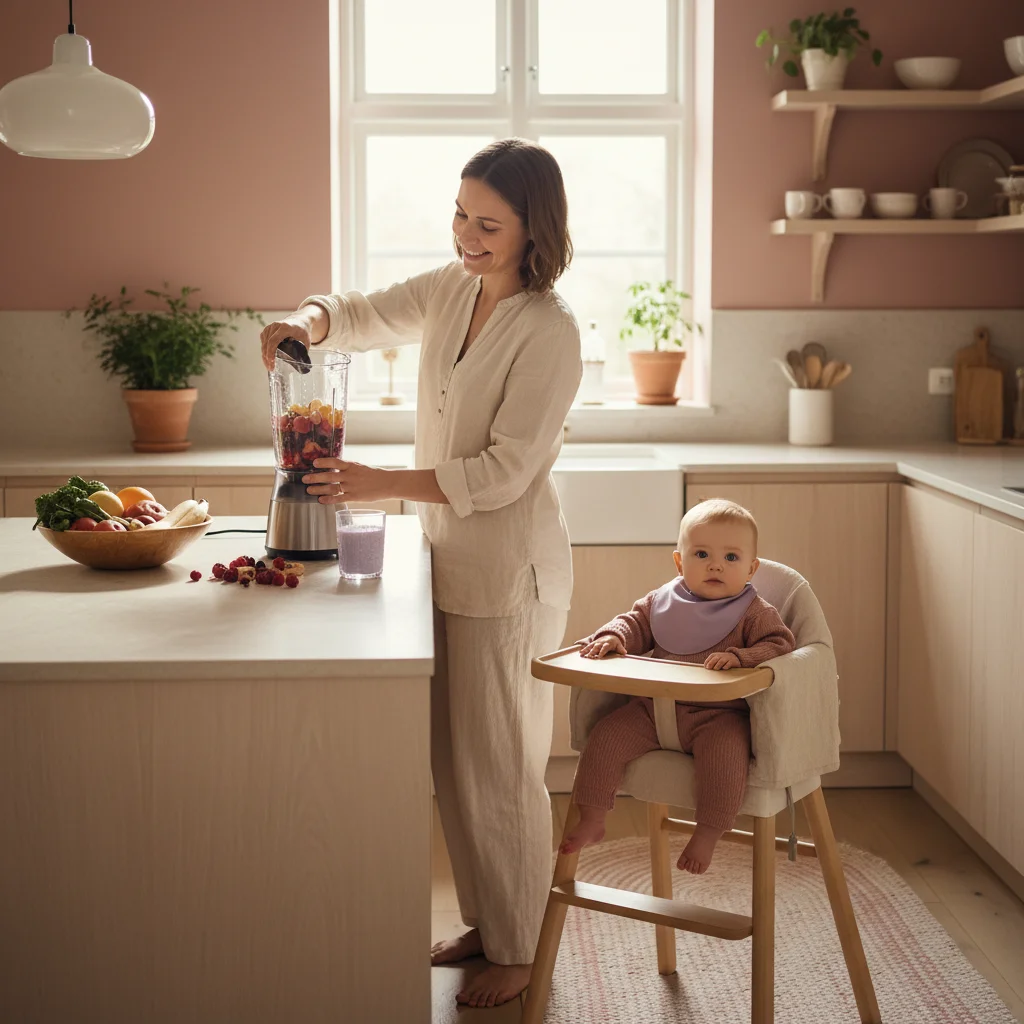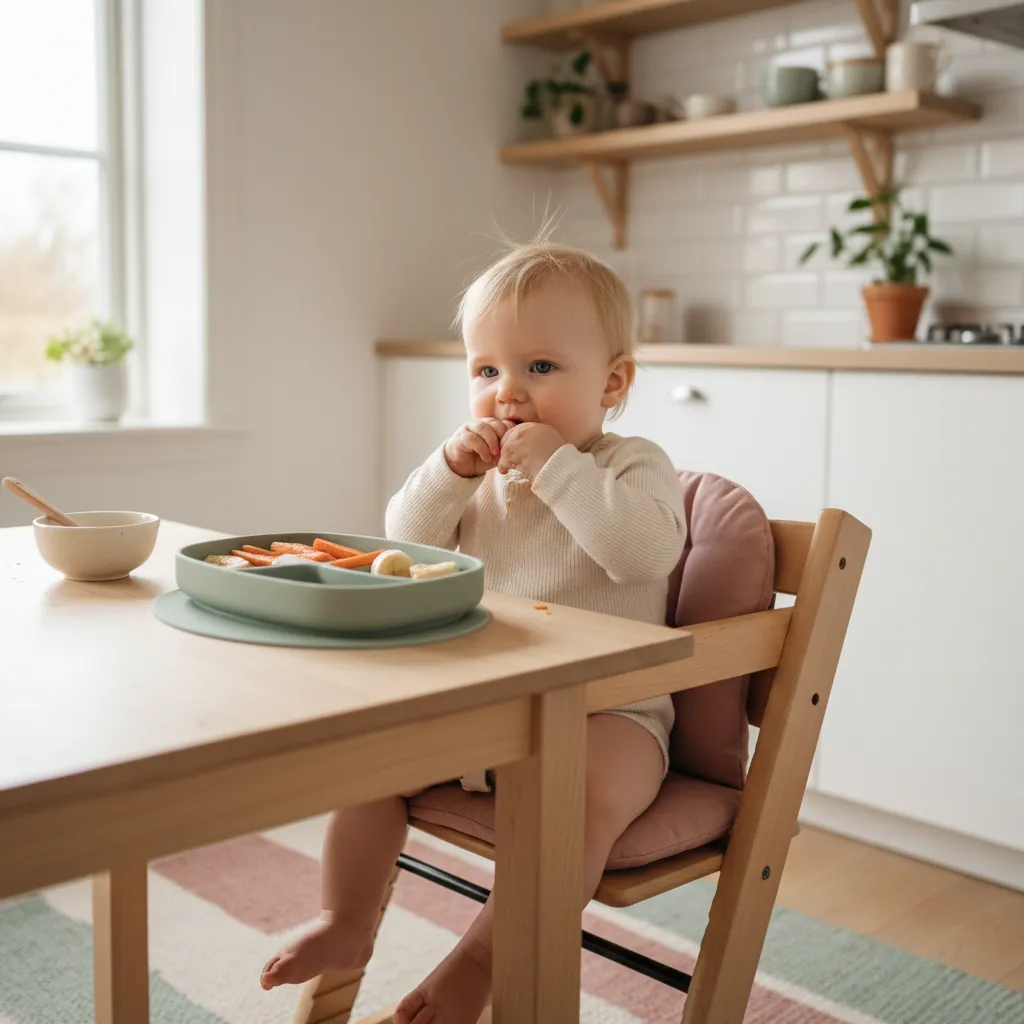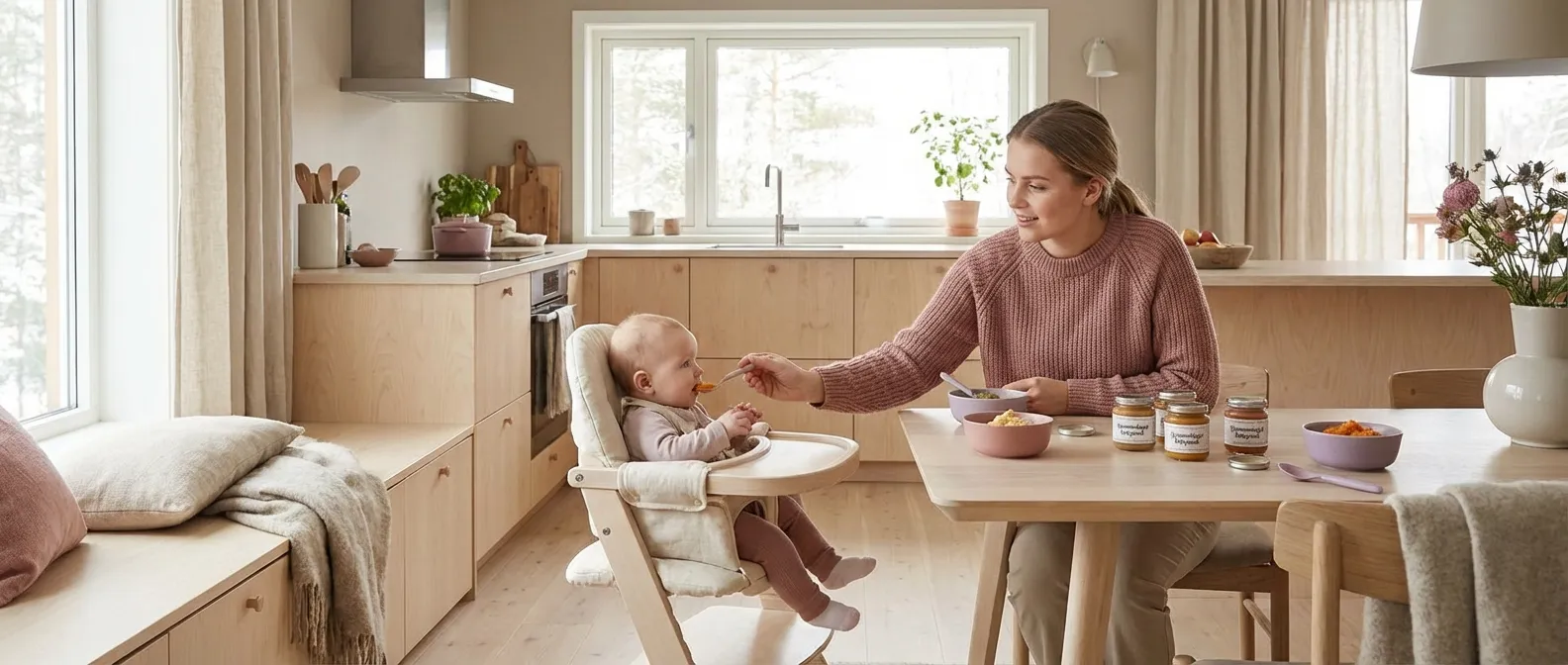
You want to give your baby the best start with food, and homemade baby food is a wonderful way to do it. You know exactly what goes in, it costs less than store-bought, and you can adapt the flavor and texture to your baby's needs.
Here is a complete guide with recipes for every age, texture tips, batch cooking, and safe storage, based on WHO and AAP recommendations.
When can you start homemade baby food?
Most babies are ready for solid food from around 6 months. According to the WHO, breast milk or infant formula should be the main source of nutrition for the first six months.
Signs your baby is ready:
- Can sit with support and hold their head steady
- Shows interest in food (reaches toward your plate)
- Can close their mouth around a spoon
- The tongue-thrust reflex that pushes food out has faded
The AAP recommends starting solids at around 6 months for most babies. Formula-fed babies may be ready slightly earlier if developmentally ready. Check with your pediatrician if you are unsure.
Age by age: What can your baby eat?
From 6 months: Starting solids
Can be eaten from 6 months:
- All vegetables (except high-nitrate vegetables like spinach, beets, and arugula in large amounts for very young infants)
- All fruit, including citrus
- Meat, fish, and eggs (thoroughly cooked)
- Beans, lentils, chickpeas, and peas (well cooked and mashed)
- Grains: oatmeal, bread, pasta, rice, couscous
- Nut butters and seed butters (never whole nuts, choking hazard)
- Hummus
- Avocado
Current guidelines from the AAP recommend introducing allergenic foods (eggs, fish, gluten, peanuts) early, from around 6 months. Research shows that early introduction can reduce the risk of developing allergies. Read more in our allergen introduction guide.
From 10 months: Dairy products
Can be introduced from 10 months:
- Yogurt and fermented dairy (small tastes, max ½ cup per day)
- Cottage cheese
- Cheese as a topping or spread
- Cow's milk in cooking (sauces, baking)
From 12 months: Cow's milk as a drink
Can be given from 12 months:
- Cow's milk as a drink or in porridge (use whole milk, max 2 cups per day including yogurt)
- Regular yogurt and dairy in larger amounts
- Plant-based drinks (oat milk etc.) can be used as a supplement but not as a replacement for cow's milk
Avoid the entire first year
According to WHO and AAP guidelines, these foods should be avoided:
- Honey, risk of botulism
- Large amounts of high-nitrate vegetables (spinach, beets), nitrate risk for very young infants
- Rice drinks and rice cakes, contain inorganic arsenic
- Salt, baby's kidneys cannot process much salt
- Added sugar, unnecessary
- Cow's milk as a drink, wait until 12 months
The right texture for your baby's age
The most common mistake parents make is keeping food too finely puréed for too long. Babies need progressively thicker food to develop chewing and swallowing skills.
6–8 months: Fine and smooth
Start with completely smooth purées and porridge. Use a hand blender or fine-mesh sieve. Food should have the consistency of thick yogurt, no lumps.
Good first foods:
- Avocado (mashed with a fork)
- Sweet potato (cooked and mashed)
- Carrot (cooked and blended)
- Broccoli (cooked and blended)
- Banana (mashed)
- Oatmeal (cooked in water, blended smooth)
- Beans and lentils (well cooked, mashed)
8–10 months: Chunkier and lumpier
Now your baby can handle coarser textures. Mash food with a fork instead of blending. Let there be small, soft lumps for your baby to practice on.
New foods to try:
- Pasta (small shapes, well cooked)
- Bread (soft, in pieces)
- Ground meat (finely minced, in sauce)
- Fish (lightly mashed with a fork)
- Egg (cooked, crumbled, or as an omelet)
- Finger foods (cooked vegetable pieces, banana slices)
10–12 months: Pieces and finger food
Your baby can now eat much of what the family eats, just cut into appropriate pieces. Yogurt and cheese can be introduced as tastes. Avoid large pieces and hard foods that could get stuck.
Finger food favorites:
- Cooked vegetable sticks (carrot, broccoli)
- Banana chunks
- Soft pasta shapes
- Bread pieces with avocado
- Hard-boiled egg in pieces
- Small soft meatballs
- Cheese in thin strips
12+ months: Family food
From one year, your child can eat most of the family's food. Whole milk can be used as a drink (max 2 cups per day including yogurt). Food should still be cut into appropriate pieces. Avoid added salt and sugar, but mild seasoning is fine.
Avoid hard, round foods like whole grapes, cherry tomatoes, sausage pieces, and whole nuts. These are choking hazards. Always cut lengthwise, never crosswise. Read more in our guide on choking hazards.
5 simple homemade baby food recipes
1. Carrot purée (from 6 months)
The perfect first food, mild flavor and easy to make.
- 3 large carrots, peeled and chopped
- Cook in water until completely soft (about 15 minutes)
- Blend with a hand blender until completely smooth
- Add a little of the cooking water for the desired consistency
- Cool to lukewarm before serving
Tip: Make a large batch and freeze in ice cube trays. One ice cube compartment is roughly one baby portion.
2. Sweet potato and apple (from 6 months)
A naturally sweet combination most babies love.
- 1 sweet potato, peeled and diced
- 1 apple, peeled and chopped
- Steam or cook in a little water (about 12 minutes)
- Blend into a smooth purée
- Add a pinch of cinnamon (small amounts are fine for babies)
3. Broccoli porridge with cheese (from 10 months)
Iron-rich and nutritious, broccoli contains both iron and vitamin C.
- 1 handful broccoli, cut into florets
- 2 tbsp rolled oats
- ½ cup water
- 1 tbsp grated mild cheese
Cook rolled oats in water until the porridge thickens. Steam broccoli until soft. Mash broccoli with a fork and stir into the porridge. Sprinkle cheese on top and let it melt.
4. Chicken and root vegetables (from 6 months)
A complete meal with protein and vegetables.
- 1 chicken breast, cut into pieces
- 1 carrot, peeled and chopped
- 1 piece celeriac or parsnip, peeled and chopped
- 1 potato, peeled and chopped
Cook everything together in unsalted water until the meat is cooked through and the vegetables are soft (about 20 minutes). Blend to the desired consistency for your baby's age. Add cooking water to thin the purée as needed.
5. Lentil soup (from 6 months)
Protein-rich, iron-rich, and budget-friendly, perfect everyday food.
- ½ cup red lentils, rinsed
- 1 carrot, peeled and grated
- 1 small onion, finely chopped
- 1½ cups water
- 1 tsp olive oil
Sauté onion in olive oil. Add carrot, lentils, and water. Cook for 15–20 minutes until lentils are completely soft. Mash with a fork for babies 6–10 months, or serve as is for older babies.
Iron-rich baby food: Extra important from 6 months
According to the AAP, iron is especially important from 6 months because your baby's stored iron from birth begins to run out. Iron deficiency is the most common nutritional deficiency in infants.
Good iron sources for baby:
- Iron-fortified cereals (the easiest daily iron source)
- Red meat (beef, lamb)
- Lentils and beans
- Eggs
- Broccoli and peas
Combine iron-rich foods (meat, lentils, beans, iron-fortified cereal) with vitamin C-rich foods (broccoli, bell pepper, kiwi, orange) in the same meal. Vitamin C significantly increases iron absorption.
Batch cooking: Make a week of baby food in one day
Batch cooking saves time and ensures you always have healthy homemade baby food on hand.
How to do it
1. Plan the menu Choose 4–5 recipes for the week. Consider using a meal planner suited to your baby's age.
2. Shopping list Write a shopping list based on the weekly menu.
3. Preparation (about 2–3 hours)
- Wash and peel all vegetables
- Cook different purées/dishes separately
- Blend or mash to the right consistency
- Cool quickly (place pots in cold water)
4. Portioning and freezing
- Divide into ice cube trays or small containers
- Label with contents and date
- Freeze the same day
Sample weekly menu for 7 months
| Day | Breakfast | Lunch | Dinner |
|---|---|---|---|
| Mon | Oatmeal + banana | Carrot purée | Chicken and root vegetables |
| Tue | Oatmeal + apple | Sweet potato and apple | Lentil soup |
| Wed | Oatmeal + pear | Broccoli and potato | Salmon purée with carrot |
| Thu | Oatmeal + avocado | Pea purée | Ground beef and root vegetables |
| Fri | Oatmeal + banana | Carrot and parsnip | Cod with broccoli |
How many meals does your baby need?
Meal frequency increases gradually:
| Age | Number of meals | Portion size |
|---|---|---|
| 6–8 months | 2–3 meals | A few spoonfuls, gradually more |
| 8–9 months | 2–3 meals | About ¾ cup per meal |
| 9–12 months | 3–4 meals + 1–2 snacks | ¾–1 cup per meal |
Remember that breast milk or formula is still important throughout the entire first year.
Safe storage and freezing of homemade baby food
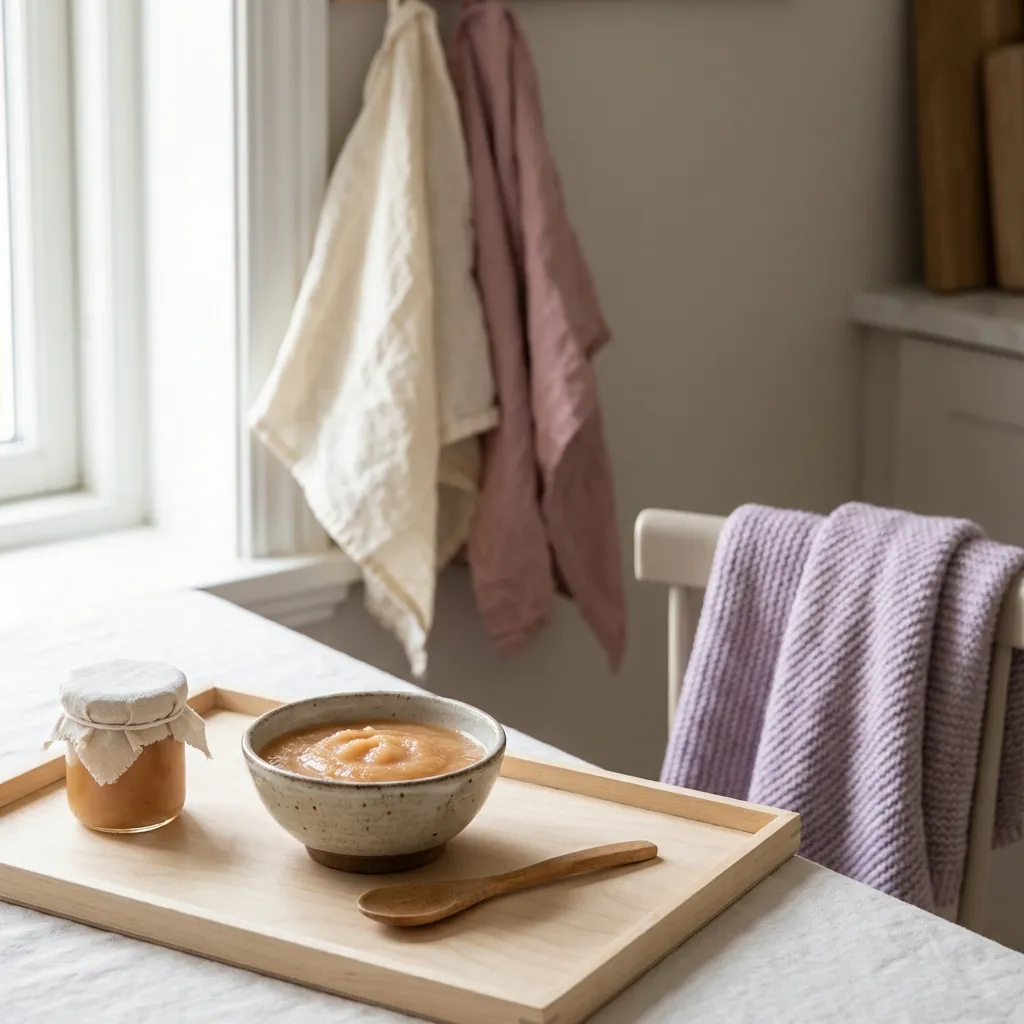
Homemade baby food does not keep as long as commercial baby food. Here are the rules for safe storage:
In the refrigerator
- Fresh purée keeps for 1–2 days in a sealed container
- Always label with date
- Store at max 40°F (4°C)
In the freezer
- Keeps for up to 3 months
- Freeze in ice cube trays or small containers (one ice cube compartment is about one baby portion)
- Label with contents and date
- Thaw in the refrigerator overnight, or in a water bath
- Use freezer bags for larger portions, squeeze out the air
Reheating
- Heat thoroughly (at least 165°F / 74°C)
- Stir well and check temperature before serving
- Never reheat the same portion twice
- Discard leftovers that baby has eaten from (bacteria from the mouth)
Hygiene during preparation
- Wash hands thoroughly before making baby food
- Use clean utensils and cutting boards
- Rinse fruit and vegetables well
- Meat and fish must be cooked through
- Cool food quickly after preparation
Never use a microwave to heat baby food without stirring well afterward. Microwaves heat unevenly and can create hot pockets that burn your baby.
Introduction of allergenic foods
Current guidelines recommend introducing allergenic foods early, from around 6 months. Research suggests that early introduction may protect against allergy development.
The most common allergens:
- Egg. Start with cooked egg, small amounts. Observe for 2–3 days.
- Fish. Give mild white fish (cod, haddock). Thoroughly cooked.
- Gluten. Oatmeal, bread, pasta. Introduce from the start of solids.
- Peanuts/tree nuts. As nut butter. Never whole nuts (choking hazard).
- Cow's milk. In cooking from 10 months, as a drink from 12 months.
How to do it:
- Introduce one new allergenic food at a time
- Give a small amount and observe for 2–3 days
- Watch for reactions: rash, swelling, vomiting, loose stools
- Continue offering the food regularly after introduction
Read more in our allergen guide for babies.
Homemade vs. store-bought baby food
Both have advantages. It doesn't have to be one or the other.
Advantages of homemade:
- You control the ingredients
- Less expensive over time
- Baby gets used to family flavors
- No additives
- Better control over texture
Advantages of store-bought:
- Convenient on the go
- Iron-fortified cereals provide extra iron
- Long shelf life
- Consistent texture
- Quality controlled
Our recommendation: Use homemade food as the main source, and keep store-bought as a supplement. Iron-fortified cereal is a convenient daily iron source that is hard to match with homemade porridge alone.
Frequently asked questions
Can a 6-month-old baby eat scrambled eggs?
Yes. According to the AAP, eggs can be given from 6 months, and scrambled eggs are a great way to introduce them. Make sure the egg is thoroughly cooked. Start with a small taste and watch for allergic reactions.
How do I give bread to a baby?
Bread can be given from 6 months. Cut soft whole-grain bread into strips that the baby can hold. Spread a thin layer of avocado or nut butter on top. Remove the hard crust for younger babies. Bread is also a good source of gluten, which should be introduced from the start of solids.
What can a 10-month-old baby eat?
At 10 months, your baby can eat most of the family's food, cut into appropriate pieces. That includes meat, fish, eggs, pasta, bread, vegetables, and fruit. Yogurt and cheese can be introduced as small tastes from 10 months (max ½ cup yogurt per day). Still avoid salt, sugar, honey, and cow's milk as a drink.
How many meals does a 7-month-old baby need?
A 7-month-old baby needs 2–3 solid food meals per day, in addition to breast milk or formula. Start with breakfast and lunch, and add dinner when your baby is ready.
How do I freeze baby food best?
Use ice cube trays for small portions, one compartment equals roughly one baby portion. Once frozen, transfer the cubes to freezer bags labeled with contents and date. Thaw in the refrigerator overnight. Frozen baby food keeps for up to 3 months.
Does my baby need iron-fortified cereal?
According to the AAP, iron is especially important from 6 months. Iron-fortified cereal is the easiest way to ensure adequate iron intake. You can combine homemade porridge with iron-fortified cereal, and ensure iron-rich foods like meat, lentils, and eggs in other meals.
Can my baby eat the same food as the rest of the family?
Gradually, yes. From 10–12 months, your baby can eat much of the family's food, just cut into appropriate pieces and without added salt. From 12 months, your child can eat almost everything. Avoid whole nuts (choking hazard), honey (during the first year), and added salt and sugar.
What do I do if my baby refuses to eat?
It is normal for babies to reject new flavors. It can take 10–15 attempts before a baby accepts a new food. Do not force it, offer the food again in a few days. Let your baby explore food at their own pace.
Summary
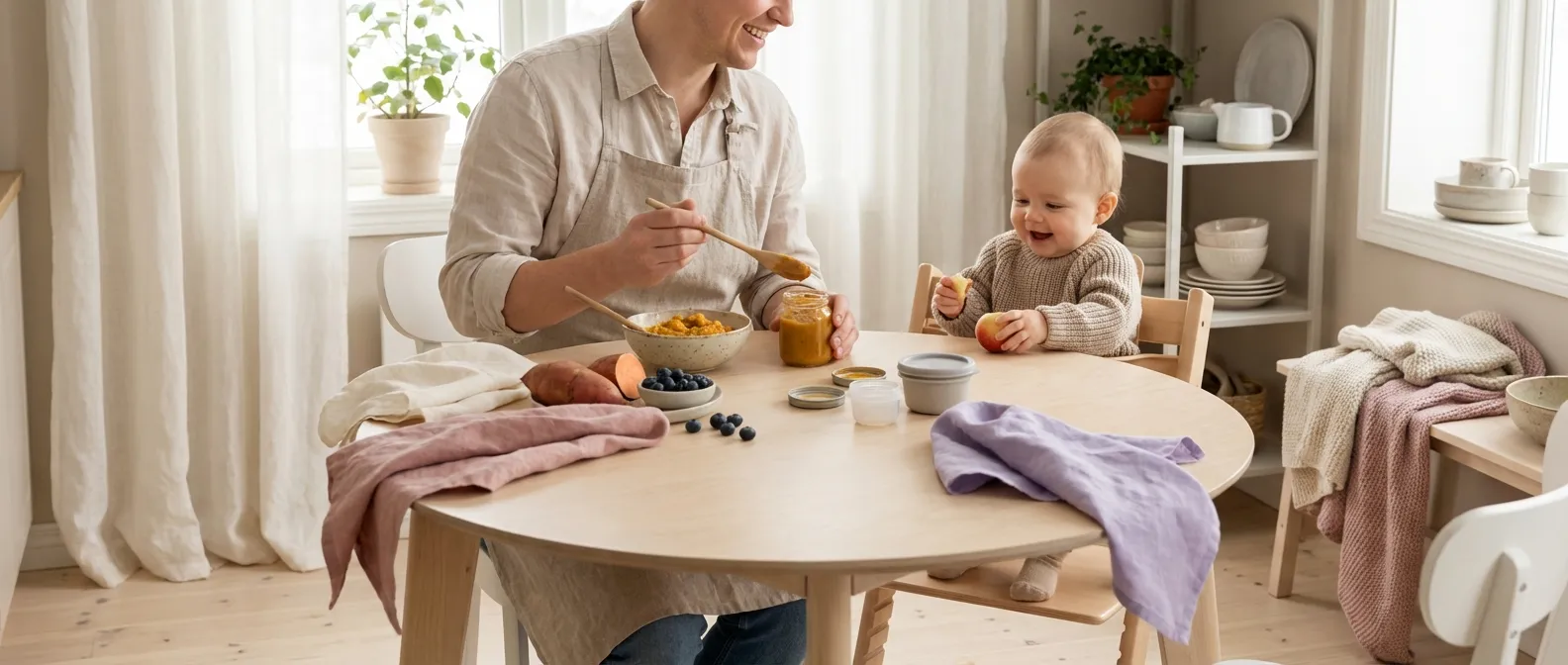
Homemade baby food is simpler than you think. Start with easy purées from 6 months and gradually make food coarser. The most important things are using safe ingredients, adapting the texture to your baby's age, and storing food correctly.
You don't have to make everything yourself, feel free to combine homemade food with iron-fortified cereal and store-bought food when it suits you.
Read more
- Food introduction for baby, complete guide
- BLW: Baby-led weaning
- Allergens for baby: Safe introduction
Sources
- WHO. "Complementary feeding." World Health Organization, 2024.
- American Academy of Pediatrics. "Starting Solid Foods." AAP, 2024.
- CDC. "When, What, and How to Introduce Solid Foods." Centers for Disease Control and Prevention, 2024.
Last updated: March 2026
🔧 Helpful Tools
- Baby Food Guide. Safe foods and introduction schedule for your baby
- Breastfeeding Tracker. Log feeds, track supply, and monitor nursing sessions
- All Baby Tools. Browse all free tools for pregnancy and baby care
📖 Related Articles
- Spices and Flavor for Baby: Guide from 6 Months. Which spices can babies eat? A guide to spices, herbs, and seasoning for babies from 6 months, based on AAP and WHO guidelines.
- Introducing Allergens to Your Baby: A Safe Step-by-Step Guide. How to safely introduce allergens to your baby. Eggs, peanuts, dairy, and gluten, when, how, and what to watch for. Based on current AAP and WHO guidelines.
- Baby Food at 8 Months: Chunkier Textures and Finger Foods. What can your baby eat at 8 months? Guide to textures, portions, finger foods, and meal routines for babies 8–10 months based on WHO and AAP recommendations.