Your baby has just started on solid food, and of course you want to give them the best start. But did you know that iron is the nutrient most babies are lacking?
Fortunately, there are many good iron-rich foods you can safely offer from 6 months. Here's a practical overview based on pediatric dietary guidelines.
Why Is Iron So Important for Your Baby?
Iron is absolutely essential for two things: transporting oxygen throughout the blood, and building the brain and nervous system.
Babies born at full term have iron stores from birth that last about six months. Breast milk contains some iron, but not enough to meet needs on its own after six months of age.
According to the AAP, babies between 6 and 11 months need 8 mg of iron per day. That may sound like a small amount, but it requires conscious food choices.
Iron deficiency during infancy can affect brain development. The effects can be difficult to reverse later. That's why it's important to start with iron-rich food early.
Which Foods Are Rich in Iron?
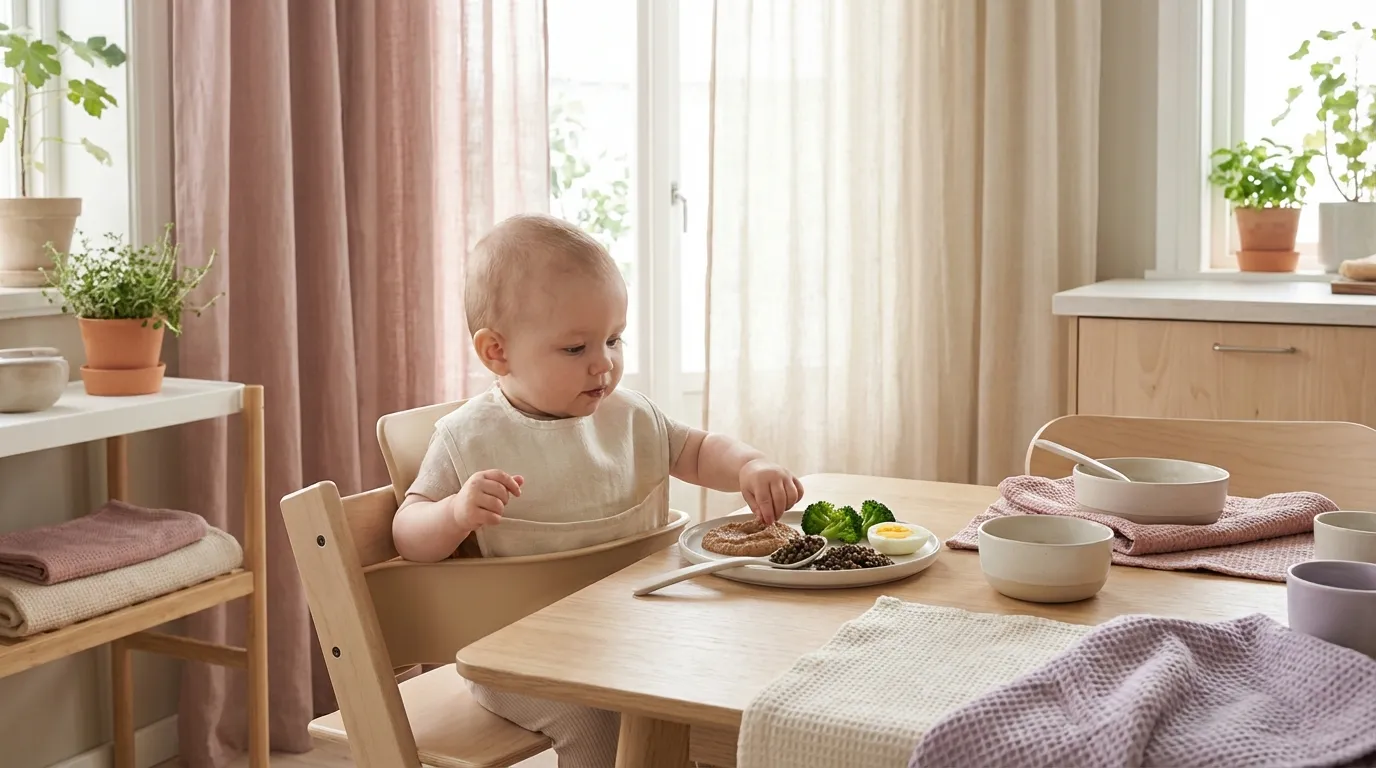
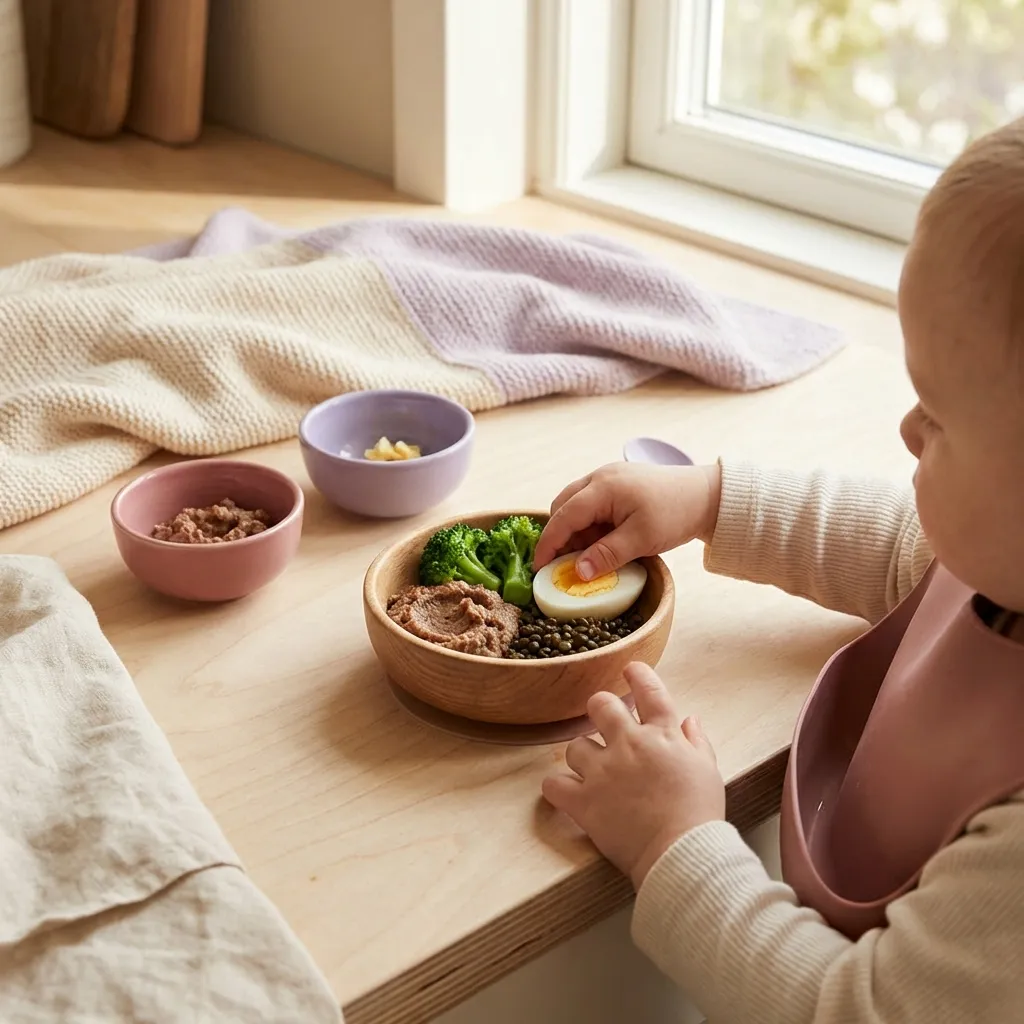
Here are the best iron sources you can safely offer your baby from 6 months:
Meat and Fish
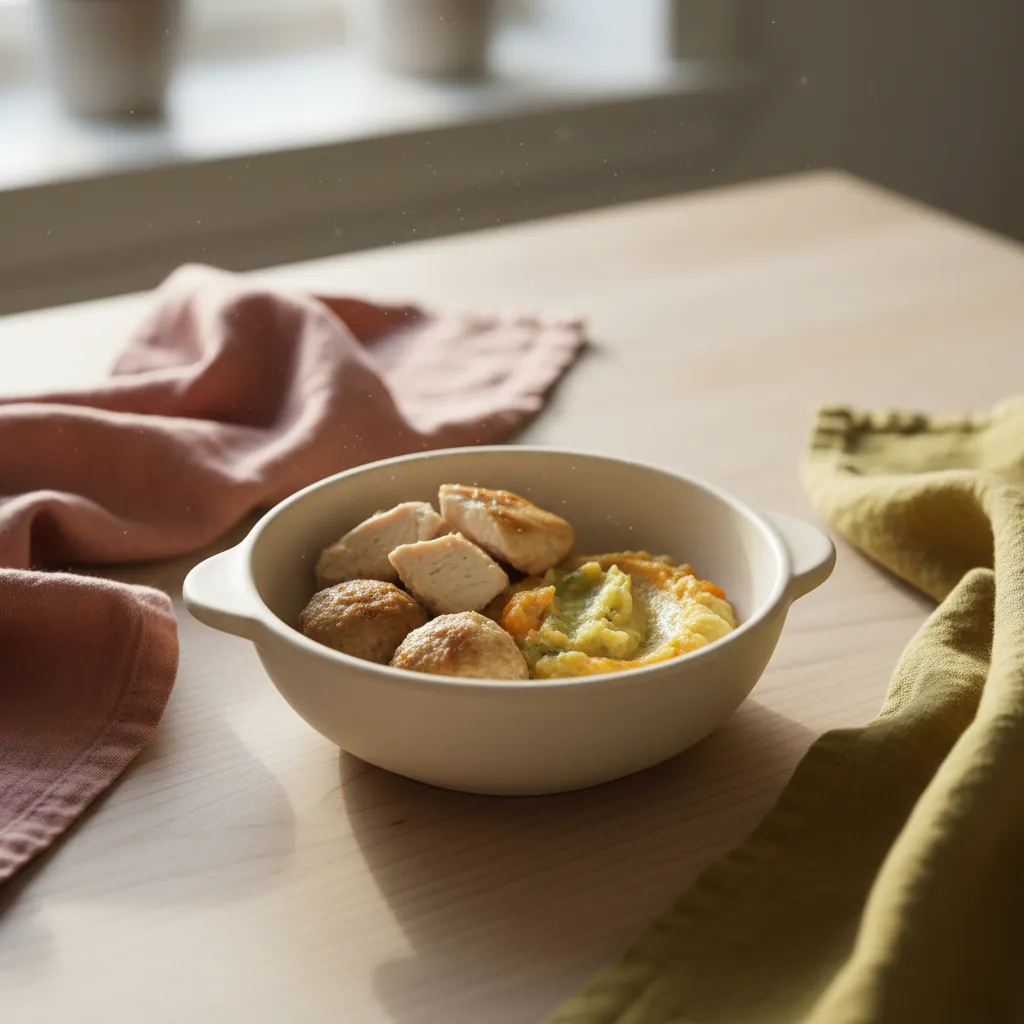
- Meat puree and finely ground meat, one of the very best iron sources for baby
- Liver pate, iron-rich spread that can be given from 6 months (limit to 1-2 servings daily)
- Fish, salmon, cod, and pollock contain iron, plus important omega-3 fatty acids
Eggs
- Boiled egg, most iron is in the yolk. Can be given from 6 months, mashed or in an omelet
Legumes
- Lentils, rich in iron, easy to mash into puree
- Peas, familiar and surprisingly iron-rich
- Beans, can be mashed or served as finger food
Grains and Bread
- Iron-fortified cereal, commercial baby cereal is often fortified with iron and is an easy source
- Whole grain bread, provides iron and fiber. Can be given from 6 months
- Oatmeal, cooked oatmeal is a good daily iron source
Green Vegetables
- Broccoli, contains both iron and vitamin C
- Peas, double benefit: iron + protein
There are two types of iron: heme iron (from meat and fish) and non-heme iron (from plants and grains). Heme iron is absorbed more easily by the body. If you combine plant iron with vitamin C, absorption increases significantly.
How to Boost Iron Absorption. The Vitamin C Trick
Here's something many parents don't know: vitamin C increases iron absorption from food. That means a bit of broccoli or some fruit alongside iron-rich food makes a big difference.
Babies need about 20 mg of vitamin C per day. Here are good sources:
| Food | Vitamin C per 100g |
|---|---|
| Bell pepper | 126 mg |
| Kiwi | 71 mg |
| Strawberries | 69 mg |
| Orange | 51 mg |
| Broccoli | 47 mg |
Practical tip: Offer a little fruit puree (strawberry, kiwi, or orange) together with iron-fortified cereal. Or serve broccoli alongside meat puree. This way your baby gets double the benefit from the meal.
How Do You Know If Your Baby Is Getting Enough Iron?
Most babies who eat a varied diet with regular iron sources get enough iron. But it's good to know the signs of iron deficiency:
- Baby seems unusually tired or lethargic
- Pale skin, especially around lips and nails
- Poor appetite
- Irritability without a clear cause
- Baby is developing slower than expected
Worried about iron deficiency? Bring it up with your pediatrician at the next checkup. A simple blood test can measure iron levels.
Should Your Baby Take Iron Supplements?
For most healthy babies born at full term, supplements are not necessary, as long as they get iron-rich food from 6 months.
But some babies may have increased needs:
- Premature babies, often have lower iron stores
- Babies with low birth weight (under 2,500 grams), the AAP recommends iron supplements based on individual assessment
- Babies who are exclusively breastfed beyond 6 months without solid food
Always talk to your pediatrician before giving iron supplements. Too much iron can also be harmful.
Is There Enough Iron in Iron-Fortified Cereal?
Commercial baby cereal (such as Gerber, HiPP, and Earth's Best) is often fortified with iron. This makes it a practical daily iron source, but it shouldn't be the only one.
A serving of iron-fortified cereal typically provides 2-3 mg of iron. That's a good start, but baby still needs iron from other sources throughout the day.
Homemade cereal (for example, oatmeal cooked in water) contains natural iron, but not as much as fortified cereal. Compensate with meat, an egg yolk for lunch, or some legumes.
Weekly Menu Example: Iron-Rich Food for Baby 6-8 Months
Here's a simple example of how to distribute iron-rich foods throughout the week:
| Day | Breakfast | Lunch | Dinner |
|---|---|---|---|
| Monday | Iron-fortified cereal + banana | Liver pate on bread | Meat puree + broccoli |
| Tuesday | Oatmeal + strawberries | Egg + avocado | Salmon puree + peas |
| Wednesday | Iron-fortified cereal + kiwi | Lentil soup (mashed) | Chicken + sweet potato |
| Thursday | Oatmeal + orange | Liver pate on bread | Cod + broccoli |
| Friday | Iron-fortified cereal + pear | Egg yolk + bell pepper | Bean mash + ground meat |
Notice that fruit (vitamin C) is combined with cereal (iron) at breakfast. Vegetables with vitamin C (broccoli, bell pepper) are combined with meat at dinner. This naturally maximizes iron absorption.
Frequently Asked Questions
Can my baby get too much iron from food?
It's very rare for babies to get too much iron through regular food. The body regulates iron absorption. Be more careful with iron supplements, these should always be discussed with a doctor.
When should I start with iron-rich food?
From around 6 months, when baby shows signs of being ready for solid food. Iron stores from birth begin to deplete at this age.
What's the difference between heme iron and non-heme iron?
Heme iron is found in meat and fish and is easily absorbed. Non-heme iron is found in plants, grains, and eggs. Combine non-heme iron with vitamin C to increase absorption.
Is liver pate safe for baby?
Yes, liver pate can be given as a spread from 6 months, limited to 1-2 servings daily. Liver pate is a rich iron source. Note: liver as a main dish should be avoided in the first year due to cadmium.
Summary
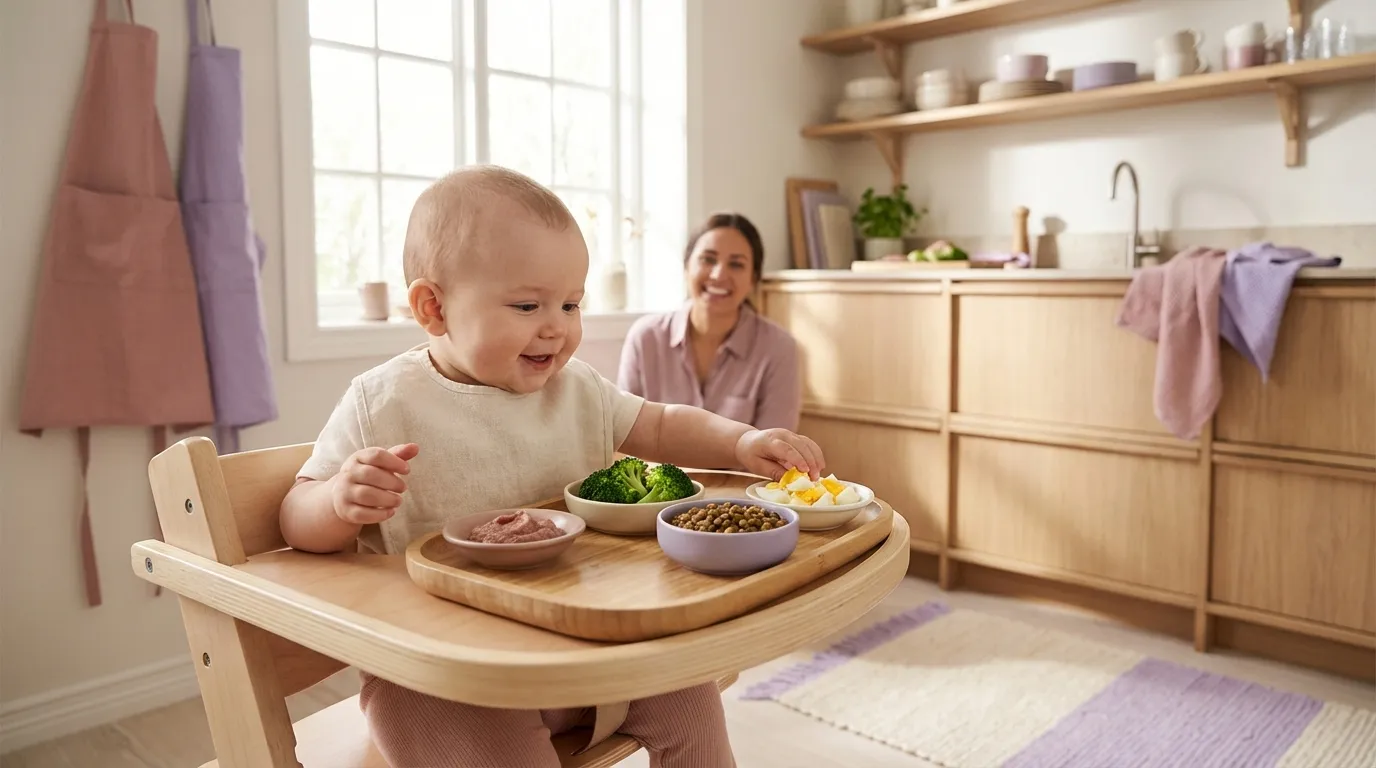
Iron is crucial for your baby's brain development, and needs increase from 6 months. The best iron sources are meat, fish, eggs, legumes, and iron-fortified cereal. Combine with vitamin C-rich food for better absorption.
You don't need to count milligrams, a varied diet with daily iron sources is enough for most babies.
Read More
- Food Introduction for Baby. Complete Guide
- BLW: Baby-Led Weaning Guide
- Allergens Baby: Safe Introduction Guide
- Baby Food at 6 Months
Sources
🔧 Helpful Tools
- Baby Food Guide. Safe foods and introduction schedule for your baby
- Breastfeeding Tracker. Log feeds, track supply, and monitor nursing sessions
- All Baby Tools. Browse all free tools for pregnancy and baby care
📖 Related Articles
- Meat for Baby: Safe Introduction from 6 Months. What type of meat can your baby eat from 6 months? A guide to preparation, portions, and iron-rich meats based on pediatric nutrition guidelines.
- Introducing Allergens to Your Baby: A Safe Step-by-Step Guide. How to safely introduce allergens to your baby. Eggs, peanuts, dairy, and gluten, when, how, and what to watch for. Based on current AAP and WHO guidelines.
- Baby Food at 8 Months: Chunkier Textures and Finger Foods. What can your baby eat at 8 months? Guide to textures, portions, finger foods, and meal routines for babies 8–10 months based on WHO and AAP recommendations.