
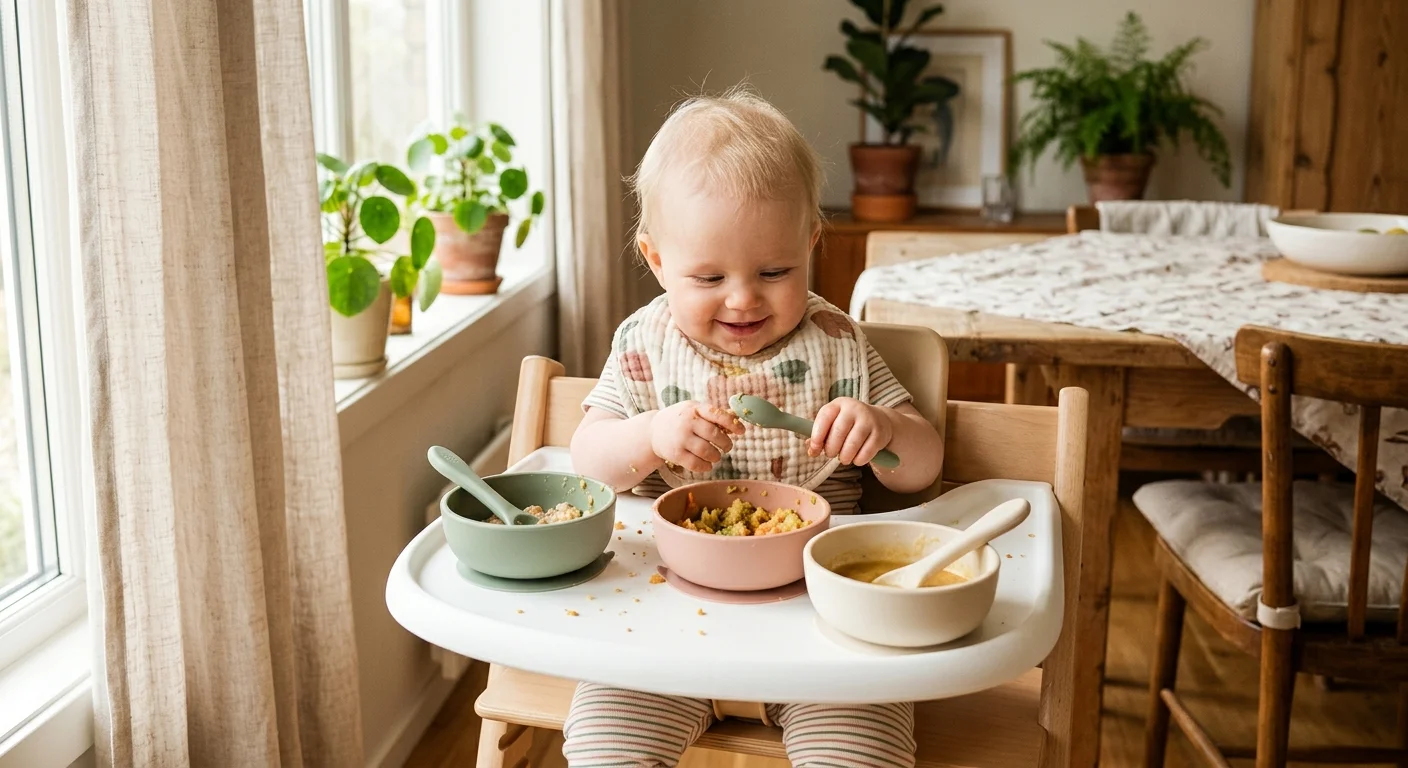
Baby Food Guide
Safe foods and introduction schedule for your baby
Baby Food Introduction Guide
Track your baby's first foods. Know what to introduce when, manage allergens, and discover age-appropriate meal ideas.
When should babies start eating solid food?
Most pediatric organizations recommend introducing solid foods around 6 months of age, though some babies may be ready between 4-6 months. Look for signs of readiness: sitting with minimal support, good head and neck control, showing interest in food, and the ability to move food to the back of the mouth for swallowing.
Early allergen introduction
Research shows that early introduction of common allergens (around 4-6 months) may help prevent food allergies. The LEAP study demonstrated that early peanut introduction reduced peanut allergy risk by up to 86%. Introduce one new allergen at a time, wait 2-3 days, and watch for reactions such as hives, vomiting, or difficulty breathing.
Foods to avoid for babies
- Before 12 months:Honey (botulism risk), whole cow's milk as a drink, added salt and sugar
- Choking hazards (under 4 years): Whole nuts, whole grapes, popcorn, raw hard vegetables, coin-shaped hot dog slices
- Always avoid: Unpasteurized dairy, raw or undercooked meat and eggs, high-mercury fish (shark, swordfish, king mackerel)