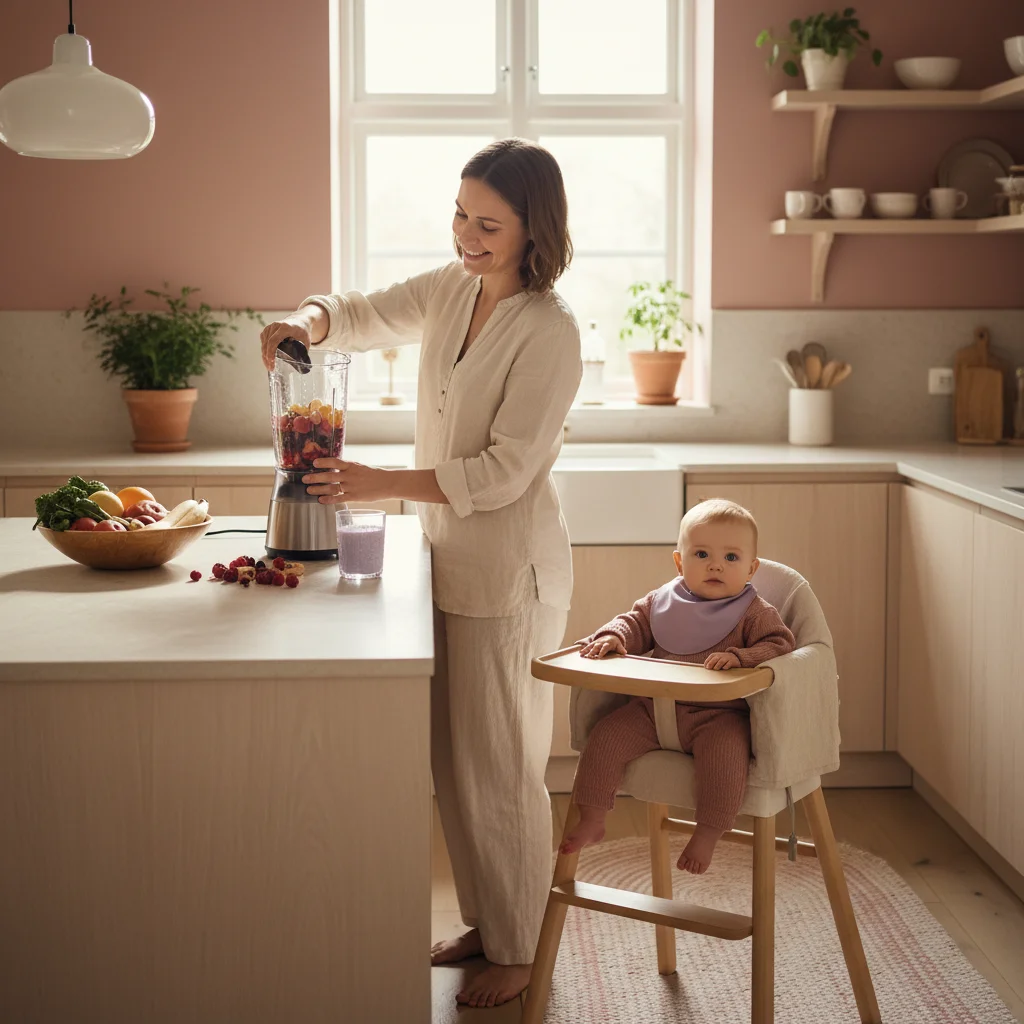
It doesn't have to be two separate dinners, one for the adults and one for the baby. When your baby starts solids around 6 months, you can eat together from the very beginning. Shared mealtimes are great for bonding, for building a love of food, and for saving time in an already busy day.
Here is your guide to family dinners that work for everyone, from 6 months and up.
Why Eat Together?
Sitting around the table and eating together is about more than just nutrition. Research shows that children who eat with their family:
- Develop better eating skills more quickly
- Eat a wider variety of foods
- Have healthier eating habits in the long run
- Learn social skills at the table
Babies learn by watching. When your baby sees you chew, use cutlery, and enjoy your food, they copy you. It is the most natural form of food learning there is.
You don't need to wait until the baby is "ready for real food" to sit together at the table. From the very start of solids, the baby can sit in the high chair and explore food while the family eats.
Ground Rules for Family Dinner with Baby
What Needs to Be Adapted?
Most adult dinners can be adapted for the baby with a few simple adjustments:
- Cut the salt: Add salt to the adults' portions after the baby's portion is set aside
- Cut the sugar: Avoid sweet sauces and marinades in the baby's portion
- Adapt texture: Mash, crush, or cut into appropriate pieces according to age
- Adapt portion size: Babies need much less than you think
- Check the ingredients: Some ingredients need to wait until the right age
What Should the Baby NOT Have?
- Honey: Completely off-limits in the first year of life (risk of botulism)
- Added salt: Baby's kidneys cannot handle much salt
- Strong spices: Chili and hot sauces can irritate the stomach
- Whole nuts: Choking hazard (nut butter is fine from 6 months)
- Spinach and beets: Avoid in the first year (nitrate risk)
Mild spices like cinnamon, vanilla, cumin, coriander, and basil are completely fine for babies from 6 months. Exposing babies to a variety of flavors early on is a good thing.
Family Dinners from 6 Months
Salmon Fillet with Root Vegetables
Fish is recommended from 6 months and is rich in omega-3, iodine, and vitamin D.
For the whole family:
- Salmon fillet in the oven (400°F / 200°C, 15–20 min)
- Root vegetables (carrot, sweet potato, parsnip) in chunks, roasted in the oven with a little oil
- Steamed broccoli
Adapting for baby:
- Remove skin and bones, cut into pieces or flakes the baby can grip
- The root vegetables are already soft, gently crush with a fork if needed
- Broccoli makes perfect finger food as-is
Chicken Stew with Vegetables
For the whole family:
- Chicken breast in pieces
- Carrot, zucchini, and bell pepper
- Coconut milk or cream
- Mild curry (cumin, turmeric, coriander)
- Serve with rice or couscous
Adapting for baby:
- Remove the baby's portion before adding salt
- Mash or cut chicken and vegetables into appropriate pieces
- Couscous is fine from 6 months (contains gluten, which should be introduced early)
Pasta with Tomato Sauce
A classic that works for all ages.
For the whole family:
- Pasta (choose a shape the baby can grip, fusilli or penne)
- Tomato sauce with onion, carrot, garlic
- Ground beef if desired
Adapting for baby:
- Remove the baby's portion before adding salt
- Cook the baby's pasta a little longer than usual
- Short pasta (fusilli) is easiest for babies to pick up
- Mix in a little oil for extra energy
Hide the goodness! Blend carrot, zucchini, or broccoli directly into the tomato sauce. Baby gets vegetables without you needing to make a separate side dish.
Family Dinners from 8 Months
Baby can now handle more texture and variety.
Fish Gratin
For the whole family:
- White fish (cod, haddock, or pollock) in an oven dish
- Make a simple white sauce (butter, flour, milk)
- Layer sliced potato and grated cheese on top
- Bake at 400°F / 200°C for 25–30 minutes
Adapting for baby:
- Remove a portion of fish and potato, mash gently
- The white sauce contains milk, fine in cooking from 8 months
- Go easy on the cheese for the youngest
Meatballs with Mashed Potato
For the whole family:
- Ground beef, egg, onion, and breadcrumbs formed into balls
- Boiled potato mashed with butter and milk
- Cooked vegetables (broccoli, peas, carrot)
Adapting for baby:
- Make a few meatballs without salt
- Break meatballs into pieces or mash with a fork
- Mashed potato is perfect baby food, soft and easy to swallow
- Peas should be mashed or crushed slightly for the youngest
Barley Risotto with Mushrooms and Zucchini
For the whole family:
- Pearl barley cooked in vegetable broth (choose salt-free for baby)
- Mushrooms, zucchini, and onion sautéed in oil
- Parmesan and butter stirred in at the end
Adapting for baby:
- Remove the baby's portion before adding parmesan and salt
- Pearl barley gives a soft, porridge-like texture that babies enjoy
- Crush mushrooms and zucchini with a fork
Family Dinners from 10–12 Months
From 10 months, baby can have cheese and dairy products in cooking, which opens up many more options.
Lasagna
For the whole family:
- Classic lasagna with ground beef, tomato sauce, and béchamel
- Layered with lasagna sheets
Adapting for baby:
- Make a small portion with no salt in the meat sauce
- From 10 months, baby can have the béchamel sauce
- Cut into appropriate pieces, lasagna is soft enough for baby to eat as finger food
Taco Night with Baby
Yes, it works!
For the whole family:
- Chicken or ground beef with mild seasoning
- Corn, avocado, tomato, lettuce
- Soft tortillas, rice, or tortilla chips (for adults)
Adapting for baby:
- Give baby the ground beef or chicken with mild seasoning (avoid strong taco spice blends)
- Avocado pieces, cooked corn, diced tomato (remove skin for the youngest)
- Soft tortilla in pieces as finger food
- Skip nachos and hot salsa for baby
Taco night is a great opportunity to let baby explore many different flavors and textures at once. Put a little of everything in small piles on baby's plate.
Practical Tips for Family Dinnertime
Batch Cooking and Freezing
Make double portions and freeze. Dinners that freeze well:
- Meatballs (freeze on a tray, then transfer to a bag)
- Tomato sauce (in portions)
- Stews and casseroles
- Soups and broth-based dishes
- Homemade fish cakes (without added salt)
Planning the Weekly Menu
A simple weekly plan saves time and money:
| Day | Dinner | Protein |
|---|---|---|
| Monday | Pasta with tomato sauce and ground beef | Meat |
| Tuesday | Salmon fillet with root vegetables | Fish |
| Wednesday | Chicken stew with rice | Chicken |
| Thursday | Fish gratin with broccoli | Fish |
| Friday | Taco night | Meat/chicken |
| Saturday | Meatballs with mashed potato | Meat |
| Sunday | Barley risotto with vegetables | Egg/legumes |
The WHO and AAP recommend that baby eats fish 2–3 times per week. Vary between fatty fish (salmon, mackerel, trout) and lean fish (cod, haddock, pollock) for the best nutrition.
Surviving Dinnertime with Baby. Practical Tips
- Eat at the same time: Baby learns by watching you eat. Sit down and eat your food too.
- Expect mess: Put a small mat or newspaper under the high chair.
- Keep it short: 15–20 minutes is long enough for a baby meal. Don't push it.
- No screens: Remove phones and tablets from the table. Baby should focus on the food.
- Praise exploration: "Oh, you tried the carrot! Did you like it?", don't pressure for more.
Iron-Rich Dinners. Especially Important
Iron is the nutrient babies most often lack. Dinnertime is a great opportunity for iron-rich foods.
Top Iron Sources for Dinner
- Meat: Beef, lamb, and game are richest in iron
- Liver pâté: A good source of iron, can be used as a "sauce" on vegetables
- Legumes: Lentils, chickpeas, and beans (from 6 months)
- Fish: Moderate iron content, but important for other nutrients
- Eggs: Good source of iron, especially the yolk
Combine iron-rich foods with vitamin C-rich vegetables (broccoli, bell pepper, tomato) to boost iron absorption. Avoid serving milk as a drink with iron-rich dinners, calcium inhibits iron absorption.
Frequently Asked Questions
My baby just wants to play with the food and barely eats anything. Is that normal?
Yes, completely normal, especially at the start (6–8 months). Learning to eat is exactly that, learning. Baby is exploring taste, texture, and consistency. Breast milk or formula is still the primary nutrition. Most babies begin eating more around 8–10 months. Be patient and keep offering food without pressure.
Can baby eat the same spices as adults?
Mild spices are fine from 6 months, cinnamon, vanilla, cumin, turmeric, oregano, basil, and thyme. Avoid strong spices like chili, cayenne, and hot paprika. Salt should be avoided entirely in the first year and limited in the second.
What do I do when baby throws food on the floor?
Food throwing is a normal part of development. Baby is exploring gravity and cause and effect. Some tips: serve small amounts at a time (you can always give more), use a floor mat, and when baby consistently throws food, the meal is probably over. Calmly say "food is for eating" and end the meal without turning it into a battle.
How many different dinners does baby need each week?
You don't need to make 7 different dinners. 4–5 different meals in rotation, with variety in protein source (meat, fish, eggs, legumes) and vegetables, covers baby's nutritional needs. Leftovers from the day before are perfectly fine to serve again.
Should baby drink milk with dinner?
Breast milk or formula can be given after dinner in the first year. Avoid giving milk right before dinner, as baby may fill up and eat less. From 12 months, cow's milk can be offered as a drink with meals, but water is equally good. Limit total cow's milk to a maximum of 17 oz (500 ml) per day.
Read More
- Baby food introduction: Complete guide
- BLW, baby-led weaning
- Iron-rich foods for baby
- Homemade baby food
- Transitioning from purees to finger food
- Baby food, storage and freezing
- Explore Babysential's food database
- SmartStart, plan baby's meals
- Track baby's development
Sources
- WHO. Infant and Young Child Feeding
- AAP. Starting Solid Foods
- CDC. When, What, and How to Introduce Solid Foods
- AAP. Iron Deficiency Anemia
🔧 Helpful Tools
- Baby Food Guide. Safe foods and introduction schedule for your baby
- Breastfeeding Tracker. Log feeds, track supply, and monitor nursing sessions
- All Baby Tools. Browse all free tools for pregnancy and baby care
📖 Related Articles
- Breakfast for Baby 6–12 Months: Ideas and Recipes. What can your baby eat for breakfast from 6 months? Age-appropriate breakfast ideas, recipes, and tips for a great start to the day. Based on international feeding guidelines.
- Nutritious Smoothies for Babies and Toddlers. Healthy smoothie recipes for babies from 6 months and toddlers. Age-appropriate recipes with fruit, vegetables, and the right milk.
- Homemade Baby Food: Recipes and Tips from 6 Months. Learn how to make safe homemade baby food from 6 months. Age-appropriate recipes, texture tips, batch cooking, freezing, and storage based on WHO and AAP guidelines.