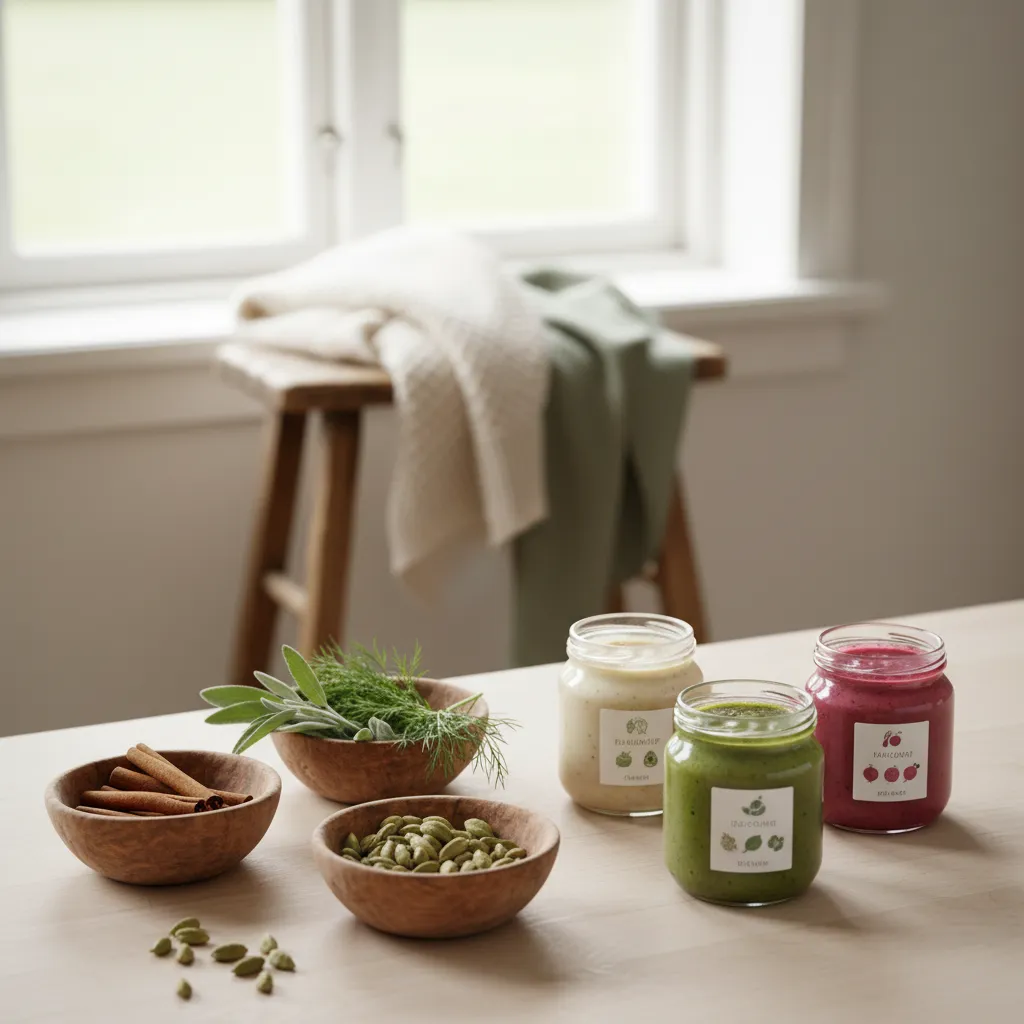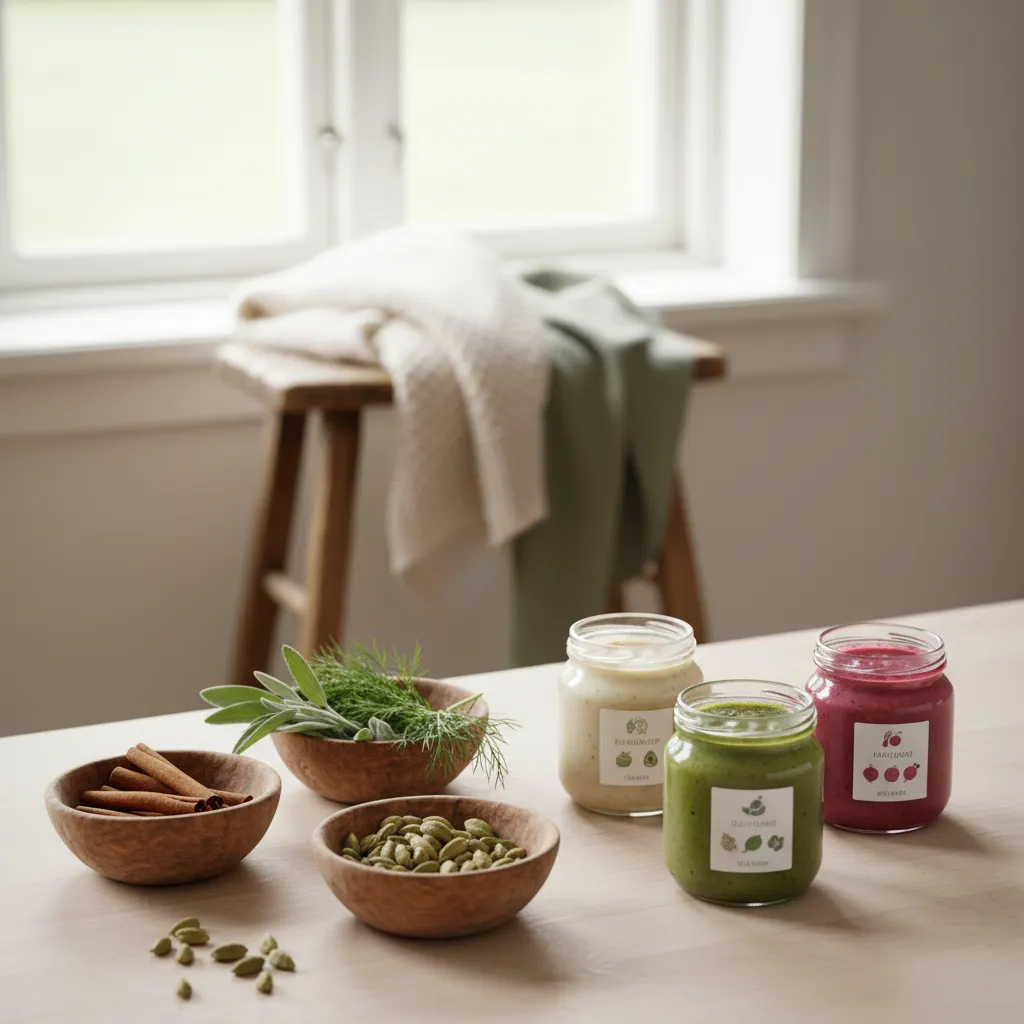
Many parents prepare baby food with no seasoning at all. But babies actually enjoy flavor, and research shows that early exposure to a variety of tastes makes children less picky eaters later on. You don't need salt and sugar to make food flavorful.
Here is a guide to spices and flavors for babies, based on AAP and WHO dietary guidelines.
Can babies eat spices?
Yes. Babies can have mild spices and herbs from 6 months. According to the AAP and WHO:
- Spices and herbs are safe from 6 months in small amounts
- Start with mild flavors and increase gradually
- Avoid salt and sugar as seasoning
- Spices provide taste experiences without empty calories
Babies have more taste buds than adults. They taste everything more intensely than we do. What tastes mild to you can be a powerful flavor experience for your baby. Start cautiously.
Safe spices from 6 months
Mild spices
| Spice | From age | Best in | Tips |
|---|---|---|---|
| Cinnamon | 6 months | Porridge, fruit puree, baking | A tiny pinch. Use Ceylon cinnamon (not cassia cinnamon) |
| Cardamom | 6 months | Porridge, baking, fruit puree | Warm and mild flavor |
| Vanilla | 6 months | Porridge, fruit puree, baking | Use real vanilla extract, not vanilla sugar |
| Coriander (ground) | 6 months | Vegetable puree, lentil dishes | Mild, citrusy flavor |
| Turmeric | 6 months | Vegetable puree, rice | Mild taste, yellow color (can stain clothes!) |
| Nutmeg | 6 months | Mashed potato, white sauce | A very tiny pinch (can cause digestive upset in large amounts) |
Fresh herbs
| Herb | From age | Best in | Tips |
|---|---|---|---|
| Parsley | 6 months | Vegetables, meat, fish | Finely chopped, mild flavor |
| Dill | 6 months | Fish, potato, carrot | Classic flavor, finely chopped |
| Basil | 6 months | Tomato, pasta, vegetables | Fresh and mild |
| Mint | 6 months | Fruit, yogurt, peas | Fresh flavor, use sparingly |
| Thyme | 6 months | Meat, vegetables, soup | Mild and aromatic |
| Rosemary | 6 months | Meat, potato, root vegetables | Can be strong in flavor, use very little |
Medium-strength spices (from 8–10 months)
| Spice | From age | Best in | Tips |
|---|---|---|---|
| Garlic | 8 months | Dinner, sauce, vegetables | Start with cooked (milder than raw) |
| Onion | 8 months | Dinner, soup, sauce | Cooked or sautéed (milder than raw) |
| Sweet paprika | 8 months | Vegetables, meat, rice | Mild and slightly sweet |
| Ginger | 8 months | Soup, vegetables, smoothie | A little at a time, strong flavor |
| Oregano | 8 months | Pasta, tomato, pizza | Dried, a small pinch |
| Cumin | 8 months | Vegetables, lentils, hummus | Mild, warm flavor |
Spices to avoid in the first year
| Spice/seasoning | Why to avoid | When OK |
|---|---|---|
| Salt | Baby's kidneys are immature, max 1 g/day | After 12 months in small amounts |
| Sugar | Unnecessary calories, can damage teeth | Avoid added sugar as long as possible |
| Honey | Risk of botulism (Clostridium botulinum) | After 12 months |
| Chili/cayenne | Too strong, can irritate stomach and mouth | From 12–18 months, cautiously |
| Black pepper | Can irritate the stomach | From 10–12 months, a little |
| Soy sauce | Very salty | After 12 months, very little |
| Broth/bouillon | Contains a lot of salt | After 12 months, choose low-sodium |
| Strong curry blends | Too intense a flavor | From 12–18 months |
Honey should NEVER be given to children under 12 months. Honey can contain spores of the bacterium Clostridium botulinum, which can cause infant botulism, a rare but serious illness. This applies to ALL honey, including organic and raw honey.
Salt and babies
Salt is the most important seasoning to limit for babies. According to the FDA and AAP:
Maximum salt intake by age
| Age | Max salt per day |
|---|---|
| 0–6 months | Covered by breast milk/formula |
| 6–12 months | Under 1 g (0.4 g sodium) |
| 1–3 years | Max 2 g (0.8 g sodium) |
Where is salt hidden?
- Bread, can contain 1–1.5 g of salt per slice
- Cheese, many cheeses contain significant salt
- Lunch meats and deli foods, contain some salt
- Canned foods, check the nutrition label
- Commercial baby food jars, usually low in salt
Tip: Do not add salt to your baby's food. Your baby's kidneys are immature and cannot handle large amounts. Use spices and herbs for flavor instead.
Sugar and babies
According to the AAP and WHO, babies under 12 months should not have added sugar:
- Food tastes good enough for babies without sugar
- Sugar provides empty calories with no nutrients
- Sugar can contribute to dental problems
- Early exposure to sweetness can create a preference for sweet foods
Natural vs. added sugar
- Natural sugar (in fruit, vegetables, milk) is completely fine
- Added sugar (white sugar, syrup, honey, agave syrup) should be avoided
- Fruit purees are fine, but should not replace vegetables
Use naturally sweet foods to give your baby a sweet taste without added sugar: mashed banana, sweet potato puree, carrot puree, apple puree, pear puree, and mango. These provide natural sweetness plus fiber and nutrients.
5 ways to flavor baby food without salt and sugar
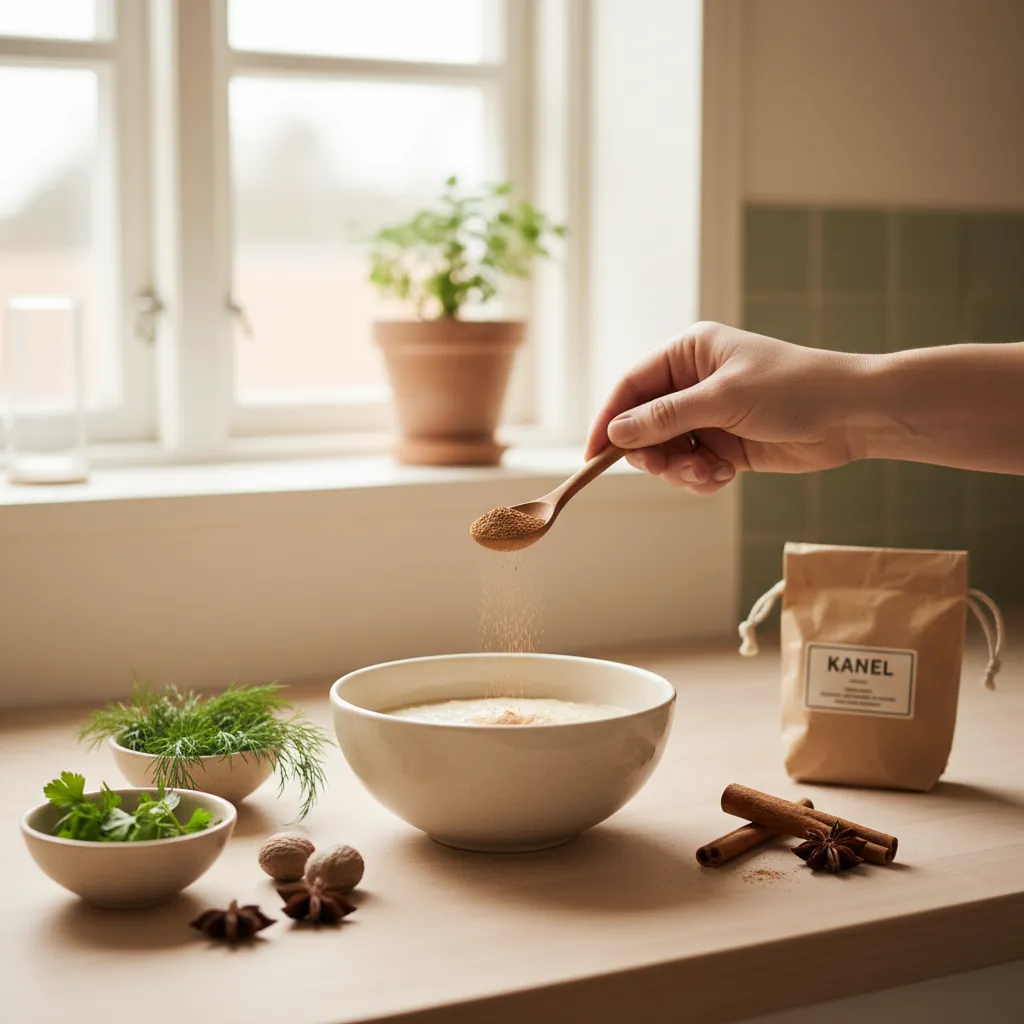
1. Spices in porridge
Stir a small pinch of cinnamon, cardamom, or vanilla into your baby's cereal. Top with fruit puree for natural sweetness.
2. Herbs in vegetable puree
Mix finely chopped parsley or dill into carrot or potato puree. Fresh herbs add a mild, fresh flavor.
3. Garlic and onion in dinner dishes
Sauté a little onion and garlic in olive oil before adding vegetables. Cooked garlic is milder than raw.
4. Lemon and lime
A few drops of lemon juice add freshness to fish, vegetables, and hummus. Use sparingly, sour flavor is intense for babies.
5. Coconut milk in cooking
Coconut milk adds richness and mild sweetness to vegetable curries and lentil dishes. Use it in cooking, not as a drink.
How to introduce new flavors
- One new flavor at a time, wait 2–3 days between new spices
- Start with a very small amount, a pinch is enough
- Watch your baby, some flavors require 10–15 exposures before a baby accepts them
- Don't give up, a baby can make a face without actually disliking the food
- Mix with familiar food, a new spice in a known puree is easier to accept
Research shows that babies exposed to varied flavors between 6 and 12 months are less picky eaters as toddlers. Flavor exploration during this period is an investment in future food enjoyment.
Frequently Asked Questions
Can a 6-month-old baby eat cinnamon?
Yes. Cinnamon is safe from 6 months in small amounts (a small pinch in porridge). Choose Ceylon cinnamon over cassia cinnamon, as cassia contains more coumarin. Cinnamon gives a warm, natural sweetness without sugar.
Is garlic safe for babies?
Yes, from around 8 months. Cooked garlic is milder than raw. Start with a small amount of cooked garlic in dinner dishes. Garlic adds great flavor without salt and is a staple of cooking around the world.
Can babies eat curry?
Mild curry (a small pinch of turmeric, cumin, coriander) can be given from 8–10 months. Avoid strong curry pastes and pre-mixed blends with chili during the first year. Make a mild version of a family curry dish.
When can my baby eat food with salt?
After 12 months, your baby can eat family food with moderate salting. Between 6 and 12 months, food should be prepared without added salt. Your baby's kidneys mature gradually, but salt intake should still be kept low.
Should I season my baby's food?
Yes. Spices and herbs add flavor without empty calories. Babies exposed to diverse flavors early on more readily accept new foods as toddlers. Mild spices like cinnamon, cardamom, and parsley are good starting points.
Summary
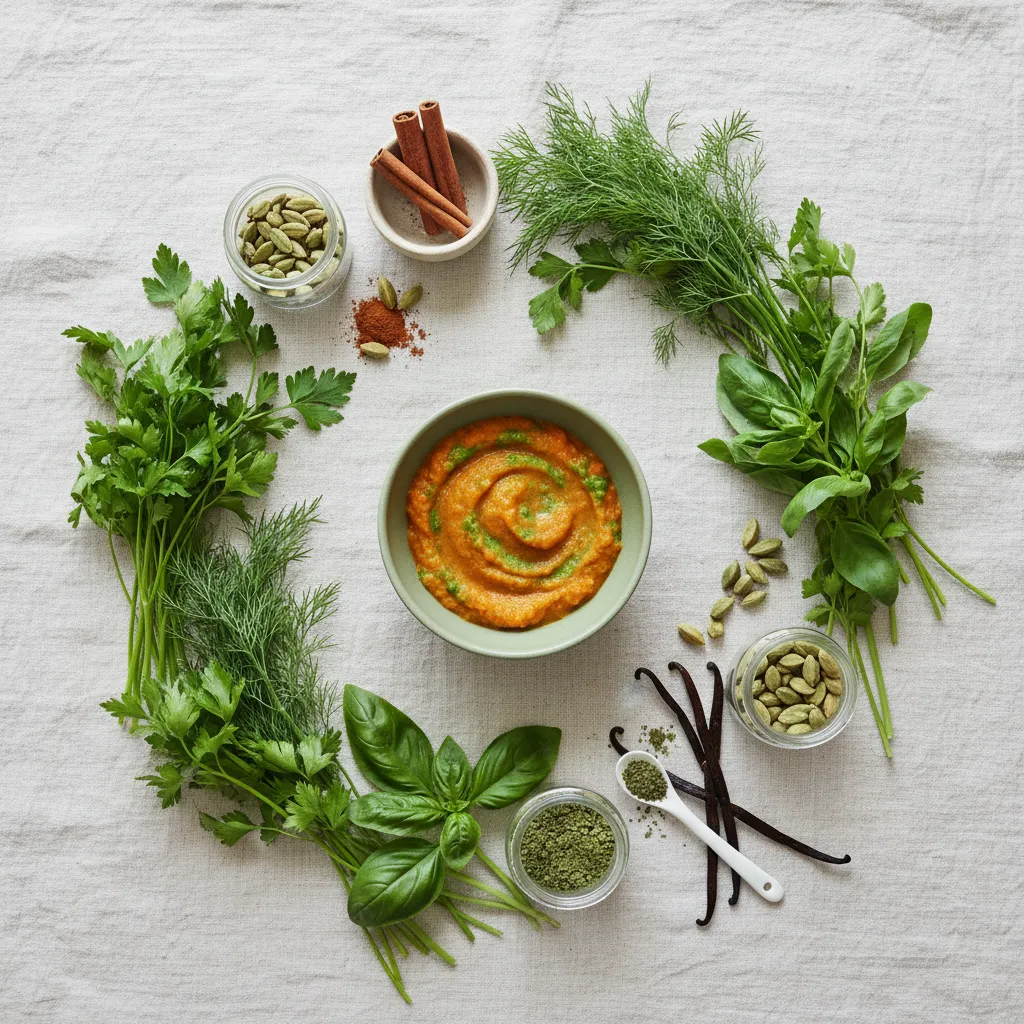
Babies can have mild spices and herbs from 6 months. Avoid salt, sugar, and honey during the first year. Use spices, herbs, onion, and garlic to add flavor. Naturally sweet foods (fruit, sweet potato) replace sugar. Early flavor exploration makes children less picky eaters.
Further Reading
- Food Introduction for Baby. Complete Guide
- Baby Food from 6 Months
- Vegetables and Fruit for Baby
- Homemade Baby Food: Recipes and Tips
- Choking Hazards: Making Food Safe
- Allergens for Baby: Safe Introduction
Sources
🔧 Helpful Tools
- Baby Food Guide. Safe foods and introduction schedule for your baby
- Breastfeeding Tracker. Log feeds, track supply, and monitor nursing sessions
- All Baby Tools. Browse all free tools for pregnancy and baby care
📖 Related Articles
- Spices and Flavors for Baby: Guide from 6 Months. Which spices can your baby eat? A guide to spices, herbs, and flavoring for babies from 6 months based on pediatric nutrition guidelines.
- Homemade Baby Food: Recipes and Tips from 6 Months. Learn how to make safe homemade baby food from 6 months. Age-appropriate recipes, texture tips, batch cooking, freezing, and storage based on WHO and AAP guidelines.
- Introducing Allergens to Your Baby: A Safe Step-by-Step Guide. How to safely introduce allergens to your baby. Eggs, peanuts, dairy, and gluten, when, how, and what to watch for. Based on current AAP and WHO guidelines.