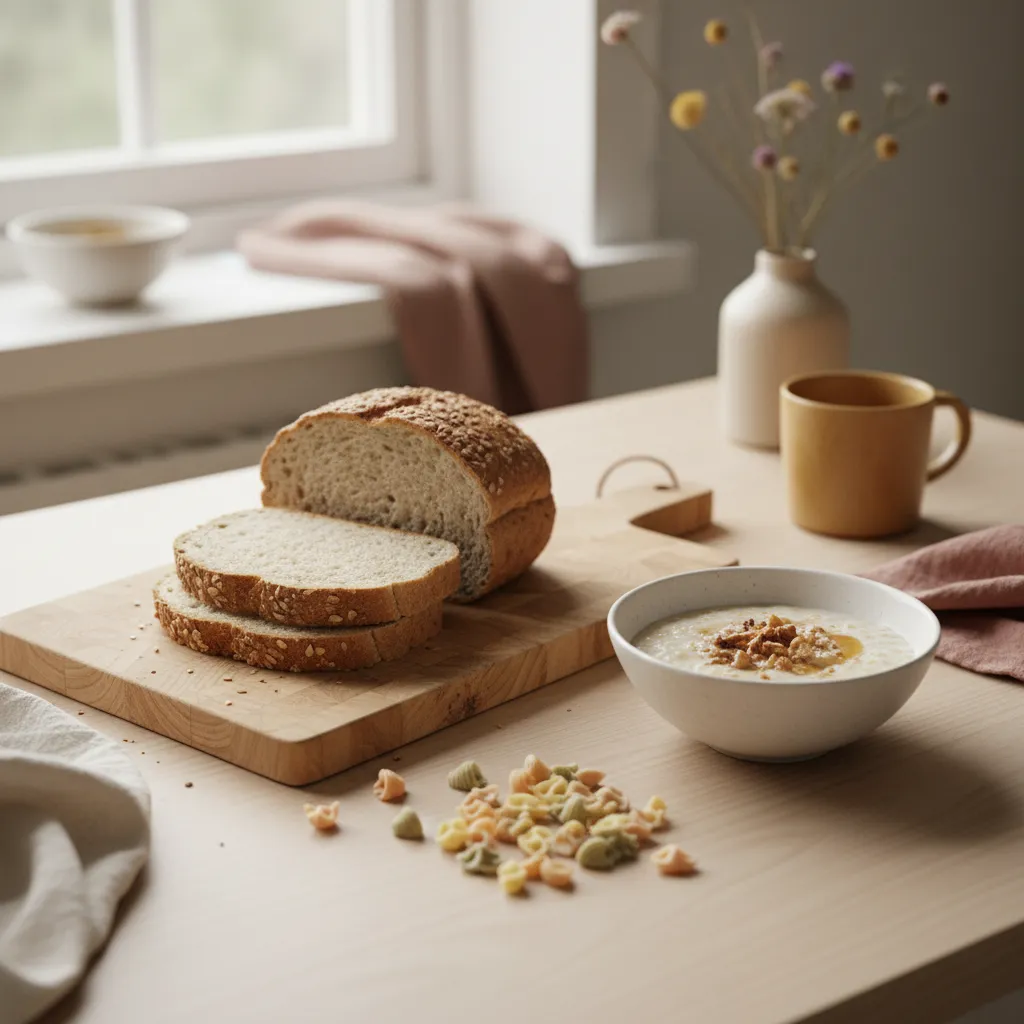
Bread, porridge, and pasta are staple foods in family kitchens, and your baby can start eating them from 6 months of age. But what kind of bread is best? And what about gluten?
Here is the complete guide to grains for babies, based on current recommendations from the WHO and the American Academy of Pediatrics (AAP).
When Can Babies Eat Grains?
Babies can have grains from 6 months, that is, from the time they start solid foods. According to the AAP and WHO, gluten should be introduced early because:
- Early introduction of gluten (from 6 months) is recommended by international health guidelines
- Delaying gluten does not lower the risk of celiac disease
- Grains are an important source of energy, fiber, and B vitamins
Iron-fortified baby cereal is one of the first foods recommended from 6 months. It is important because a baby's iron stores begin to deplete at 4–6 months of age, and breast milk alone does not meet the full iron requirement.
Grains by Age
6–8 Months: Porridge and Soft Bread
Porridge:
- Iron-fortified baby cereal, the most important source of iron
- Oatmeal cooked in water (not cow's milk), blend smooth
- Rice porridge cooked in water, smooth consistency
Bread:
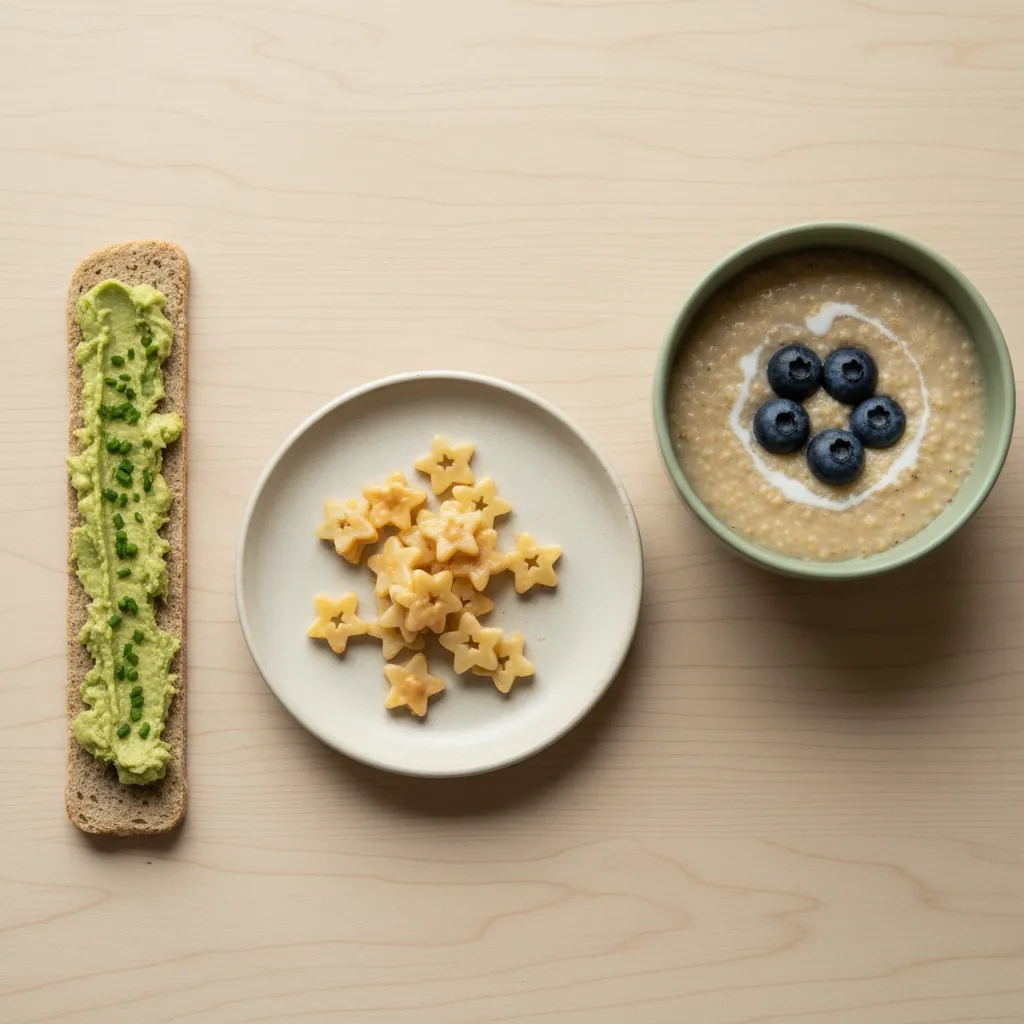
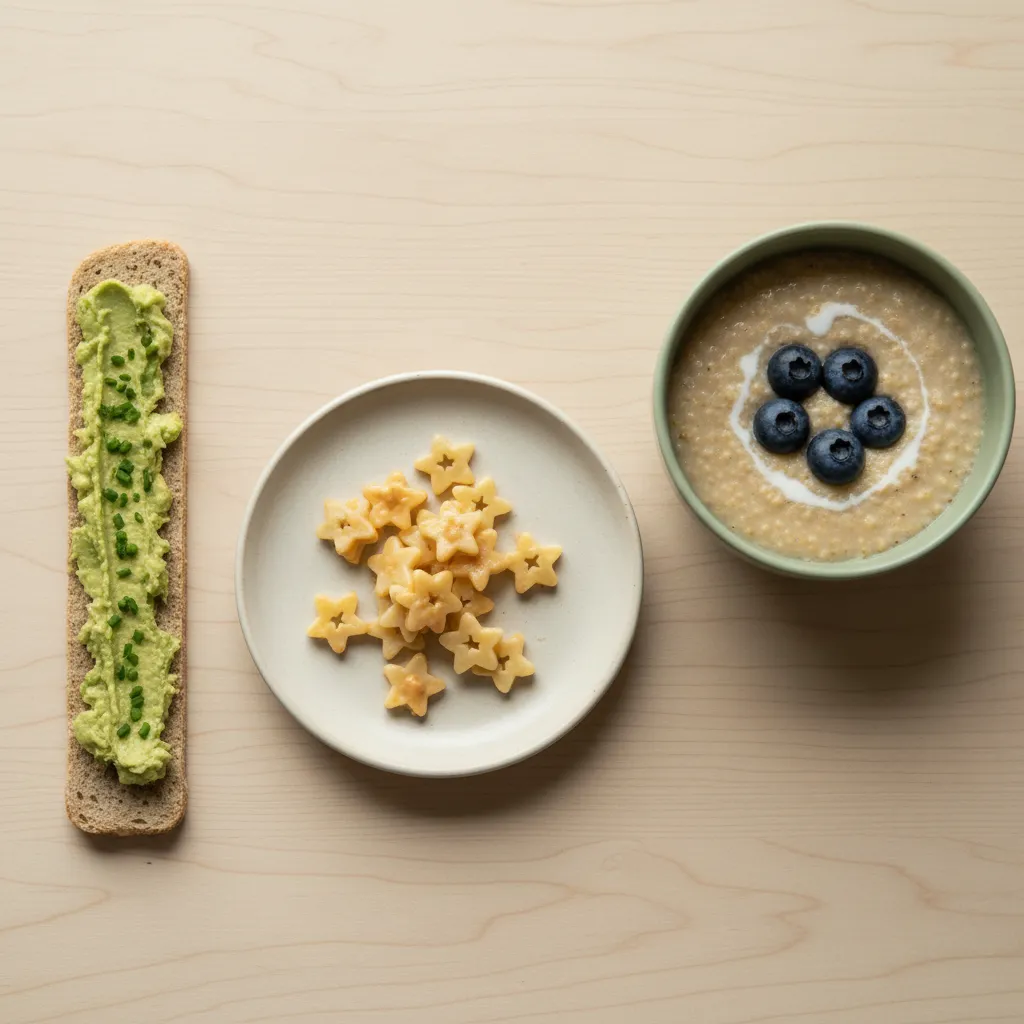
- Soft whole-grain bread in thin strips
- Remove the hard crust
- Spread a thin layer of avocado or another soft topping
- Let the baby hold and gnaw on bread strips
Pasta:
- Well-cooked and finely chopped
- Choose small pasta shapes (stars, alphabet, orzo)
8–10 Months: More Variety
- Toast with toppings (thin layer)
- Pasta with sauce (mashed or finely chopped)
- Pancakes without sugar (oats + egg + banana)
- Homemade oat crackers
- Soft crispbread (soft only, not hard and crumbly)
10–12 Months: Family Meals
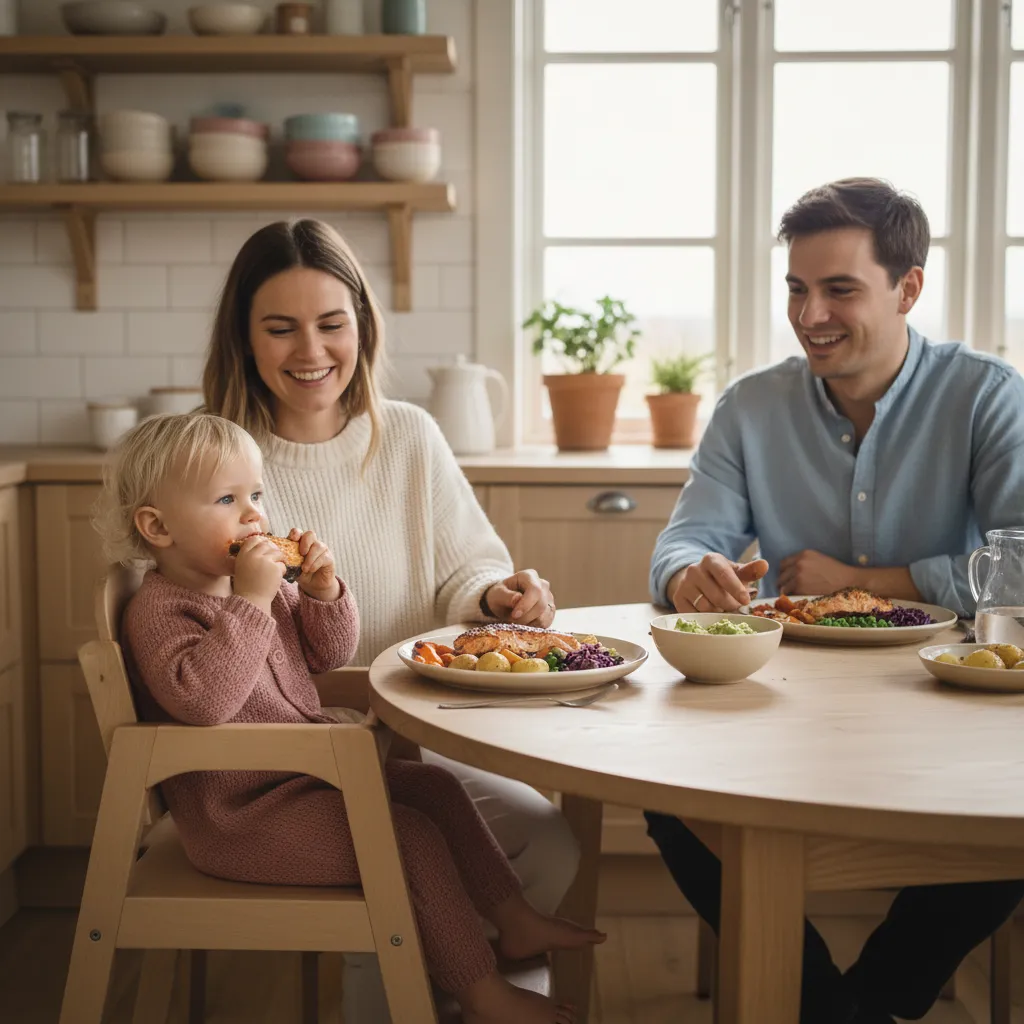
- Baby can eat the same bread as the family (soft whole-grain)
- Toast with toppings: liver pâté, cheese, avocado, egg
- Pasta in family sauces (reduce seasoning)
- Unsweetened breakfast cereal (oats, muesli without added sugar)
Which Porridge Is Best for Baby?
Iron-Fortified Baby Cereal
According to the AAP, iron-fortified baby cereal should be part of the diet from 6 months. This is the simplest way to ensure your baby gets enough iron.
Good options:
- Oatmeal (iron-fortified)
- Multi-grain cereal (iron-fortified)
- Rice cereal (iron-fortified)
Preparation: Use water or breast milk/formula. Cow's milk in porridge should wait until 12 months.
Homemade Porridge
Homemade porridge is cheaper but does not contain added iron. Combine it with iron-fortified cereal when possible:
- Oatmeal: 2 tbsp rolled oats + 80 ml water. Cook and stir to desired consistency
- Millet porridge: 2 tbsp millet + 120 ml water. Cook for 15–20 min, blend smooth
- Rice porridge: 2 tbsp rice + 160 ml water. Cook for 20–25 min, blend smooth
Tip: Add fruit (banana, blueberries, apple) for flavor and nut butter for extra nutrition.
Combine iron-fortified cereal with vitamin C-rich fruit (strawberries, kiwi, oranges). Vitamin C significantly increases iron absorption. Read more in our guide to iron-rich foods for baby.
What Kind of Bread Is Best for Baby?
Choose Soft Whole-Grain Bread
Babies need fiber, but not so much that it crowds out other nutritious foods. A soft whole-grain bread is ideal:
Good bread choices:
- Soft whole-grain bread (50–75% whole-grain flour)
- Oat bread
- Spelt-oat bread
- Bakery bread without large seeds or whole kernels
Avoid:
- Very dense bread with whole grains and seeds (hard to chew, choking risk)
- White bread and refined rolls (little fiber or nutrition)
- Bread with high salt content (check the nutrition label)
- Hard crispbreads (choking risk for younger babies)
Toppings for Baby
| Topping | From age | Tips |
|---|---|---|
| Liver pâté | 6 months | Iron-rich, max 1–2 slices per day |
| Avocado | 6 months | Mashed or in slices |
| Cheese (cheddar, cream cheese) | 10 months | Thin layer |
| Hard-boiled egg (mashed) | 6 months | Good protein source |
| Peanut butter | 6 months | Thin layer (allergen, observe for reactions) |
| Hummus | 6 months | Homemade without added salt is best |
| Banana | 6 months | Mashed on bread |
| Fruit jam | 12 months | Choose varieties without added sugar |
Liver pâté is an excellent topping for babies because it is iron-rich. Limit it to a maximum of 1–2 slices per day. Avoid serving liver as a main meal during the first year, liver as a meal contains high levels of cadmium, which can be harmful in large amounts.
Gluten and Your Baby
What Is Gluten?
Gluten is a protein found in wheat, rye, barley, and spelt. Oats do not naturally contain gluten, but may be cross-contaminated during processing. Choose oats labeled "gluten-free" if your baby needs a gluten-free diet.
Celiac Disease. What You Should Know
Celiac disease is an autoimmune condition where gluten damages the small intestine. According to the AAP and WHO:
- About 1–2% of the population has celiac disease
- Early introduction of gluten does not reduce the risk, but delaying it is also not recommended
- Symptoms in babies: diarrhea, bloated stomach, poor weight gain, irritability
If you suspect celiac disease:
- Do not remove gluten from the diet on your own
- Contact your pediatrician, the baby must be eating gluten for blood tests to show accurate results
- The doctor can order a blood test (celiac antibodies) and refer for a biopsy if needed
Gluten-Free Alternatives
If your baby has confirmed celiac disease:
- Rice, corn, buckwheat, millet
- Certified gluten-free oats
- Gluten-free pasta and bread
- Potato, sweet potato
Pasta for Baby
Pasta is a practical everyday food that babies can eat from 6 months.
6–8 months:
- Choose small shapes (stars, alphabet, orzo)
- Cook until very soft (2–3 extra minutes)
- Mash or finely chop
- Serve with vegetable sauce
8–10 months:
- Slightly larger shapes (fusilli, penne, short spaghetti)
- Baby can pick up pieces independently
- Mix with finely chopped ground meat or fish in sauce
10–12 months:
- Family pasta (cut into appropriate lengths)
- Baby eats more and more independently
- Vary with different sauces
Frequently Asked Questions
Can a 6-month-old baby eat bread?
Yes. According to the AAP and WHO, babies can eat soft bread from 6 months. Start with thin strips of soft whole-grain bread that the baby can hold and gnaw on. Remove the hard crust. Spread a thin layer of topping such as avocado or liver pâté.
Should my baby eat gluten-free?
No, unless your baby has been diagnosed with celiac disease. International guidelines recommend introducing gluten from 6 months as part of normal food introduction. Avoiding gluten without a medical reason may cause the baby to miss out on important nutrients.
Can babies eat oatmeal?
Yes, from 6 months. Oatmeal porridge is an excellent baby breakfast. Cook rolled oats in water to a smooth consistency and add fruit for flavor. Choose iron-fortified oat cereal when possible for extra iron.
When can babies eat muesli?
From around 10–12 months, babies can eat muesli without added sugar. Choose varieties with soft ingredients (rolled oats, dried fruit cut into small pieces). Avoid muesli with whole nuts (choking risk) and high sugar content.
Are rice cakes safe for baby?
Health authorities caution against rice cakes for children under 6 years because they contain inorganic arsenic. Choose oat crackers or soft bread as a snack instead.
Summary
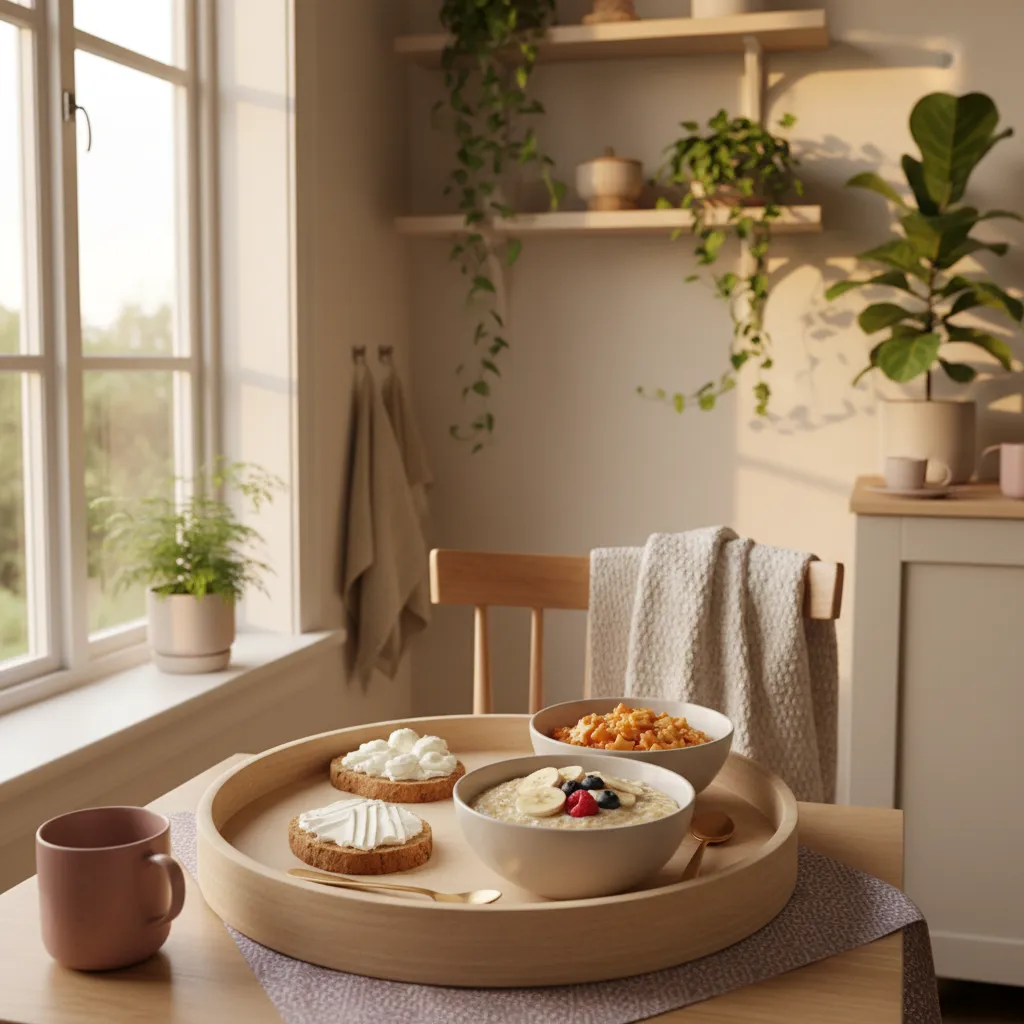
Grains are safe from 6 months. Start with iron-fortified baby cereal and soft whole-grain bread. Introduce gluten early (it is recommended). Vary with pasta, oatmeal, and toast with nutritious toppings. Avoid rice cakes and bread with high salt content.
Read More
- Starting solids: A complete guide for baby
- Iron-rich foods for baby
- Baby food from 6 months
- Homemade baby food: Recipes and tips
- Choking hazards: How to make food safe
- Allergens for baby: Safe introduction
Sources
- American Academy of Pediatrics (AAP). "Starting Solid Foods." 2024.
- World Health Organization (WHO). "Complementary feeding." 2024.
- Centers for Disease Control and Prevention (CDC). "When, What, and How to Introduce Solid Foods." 2024.
🔧 Helpful Tools
- Baby Food Guide. Safe foods and introduction schedule for your baby
- Breastfeeding Tracker. Log feeds, track supply, and monitor nursing sessions
- All Baby Tools. Browse all free tools for pregnancy and baby care
📖 Related Articles
- Baby Food at 6 Months: What Can Your Baby Eat?. Complete guide to food for a 6-month-old baby. Porridge, fruits, vegetables, and amounts. Tips for a great food start based on WHO and AAP recommendations.
- Baby Allergens: A Safe Guide to Introducing Allergenic Foods. How to safely introduce allergens to your baby. Eggs, nuts, milk and gluten - when, how and what to look for. Based on current guidelines.
- Introducing Allergens to Your Baby: A Safe Step-by-Step Guide. How to safely introduce allergens to your baby. Eggs, peanuts, dairy, and gluten, when, how, and what to watch for. Based on current AAP and WHO guidelines.