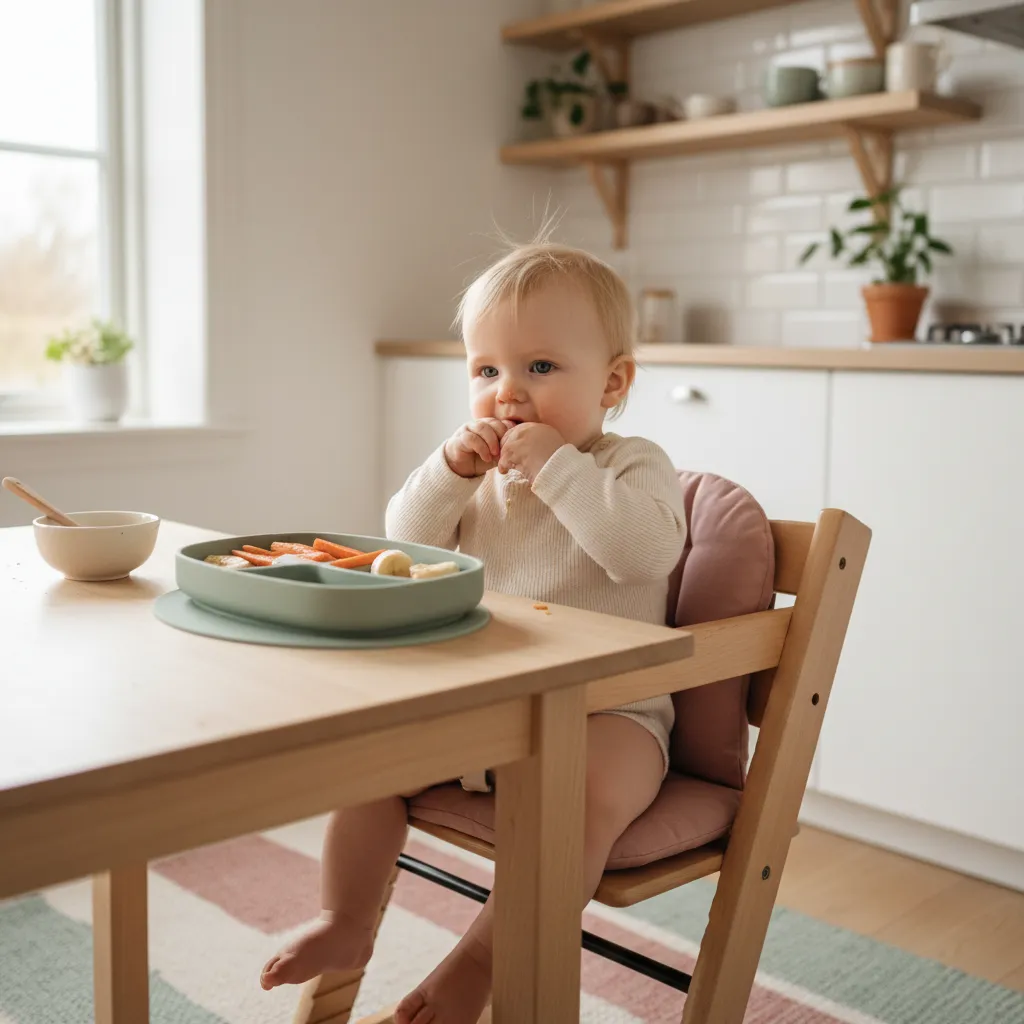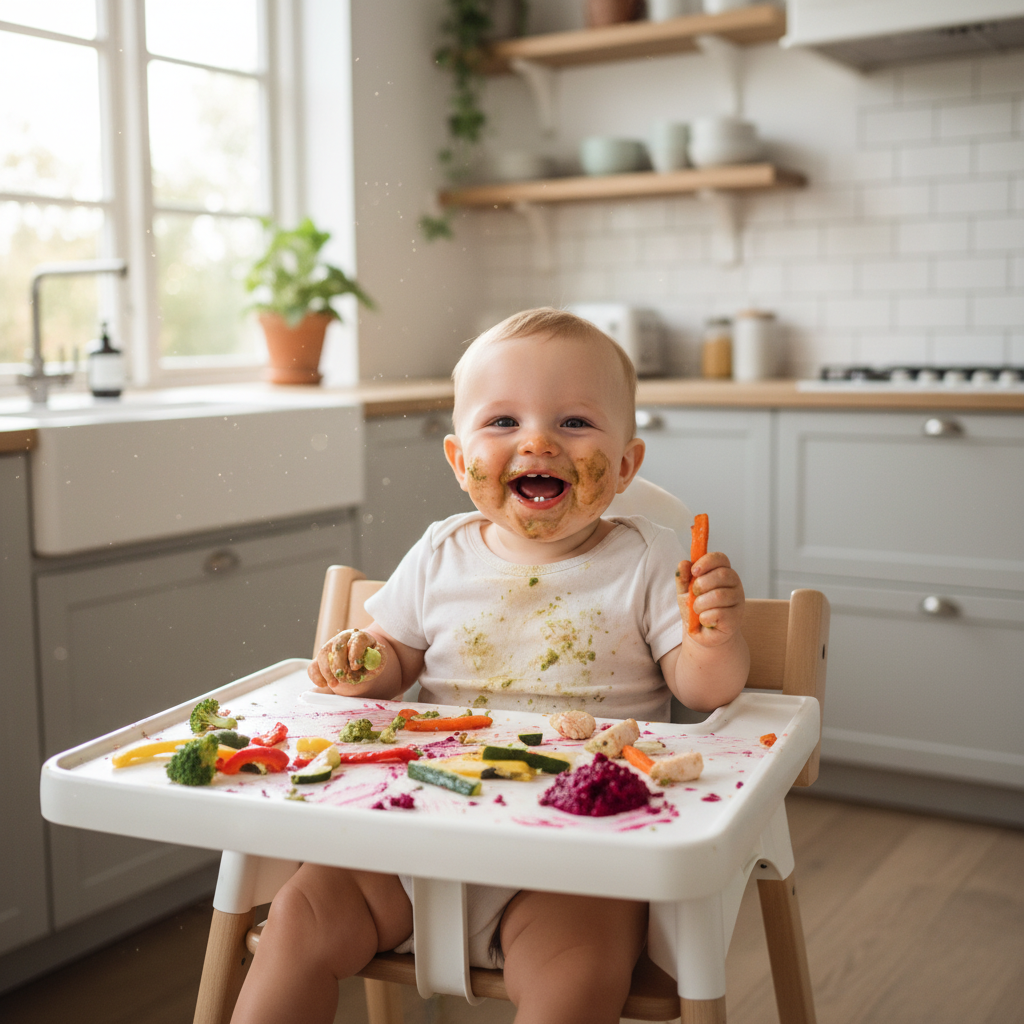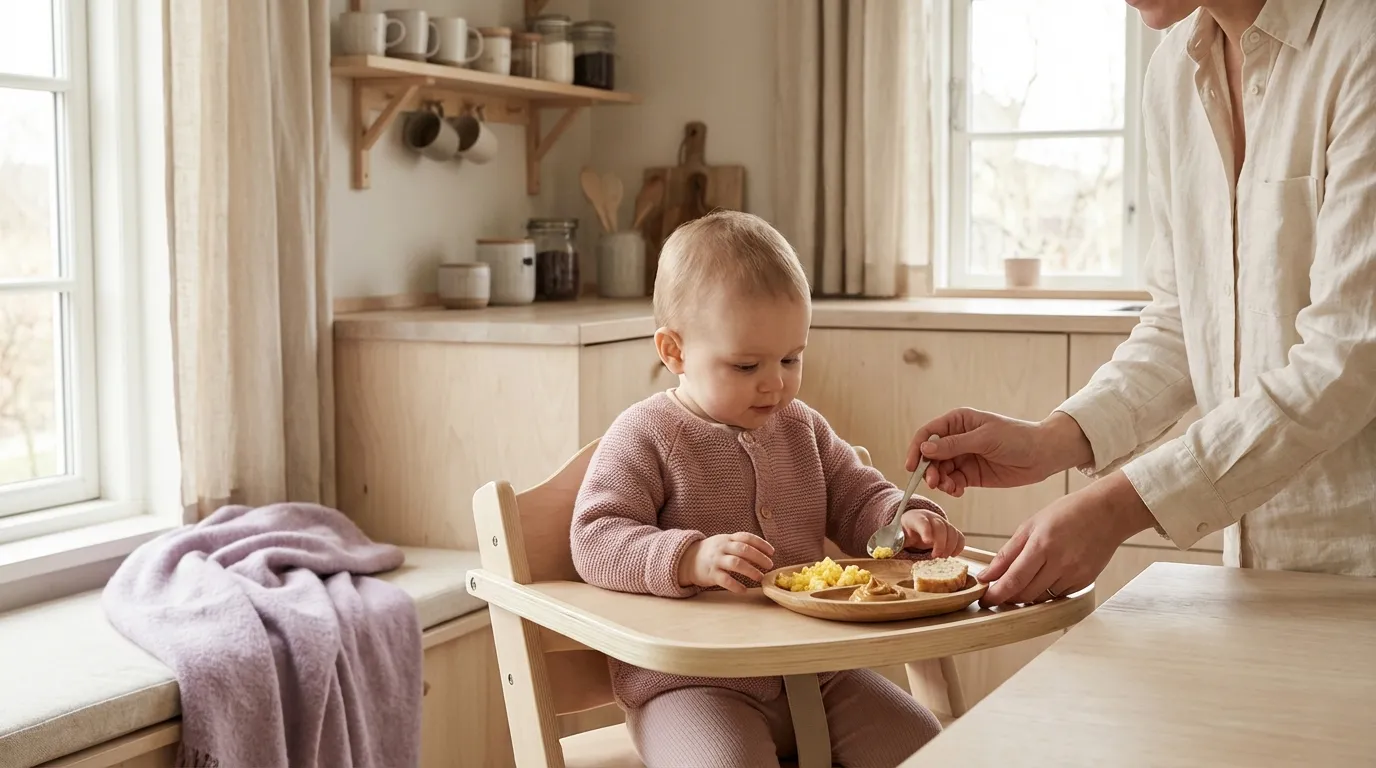
Your baby is 8 months old and has probably already tasted a good variety of foods. Now it's time for the next step: chunkier textures, finger foods, and more variety. Your baby is starting to develop the pincer grasp and will want to feed themselves.
Here is the guide to food for babies between 8 and 10 months, based on recommendations from the WHO and the American Academy of Pediatrics (AAP).
What's New at 8 Months?
According to the AAP, a lot happens between 8 and 10 months:
- Pincer grasp developing, baby picks up small pieces with thumb and index finger
- Chewing improving, baby can mash soft food with their gums
- Chunkier texture, transition from purée to mashed food with soft lumps
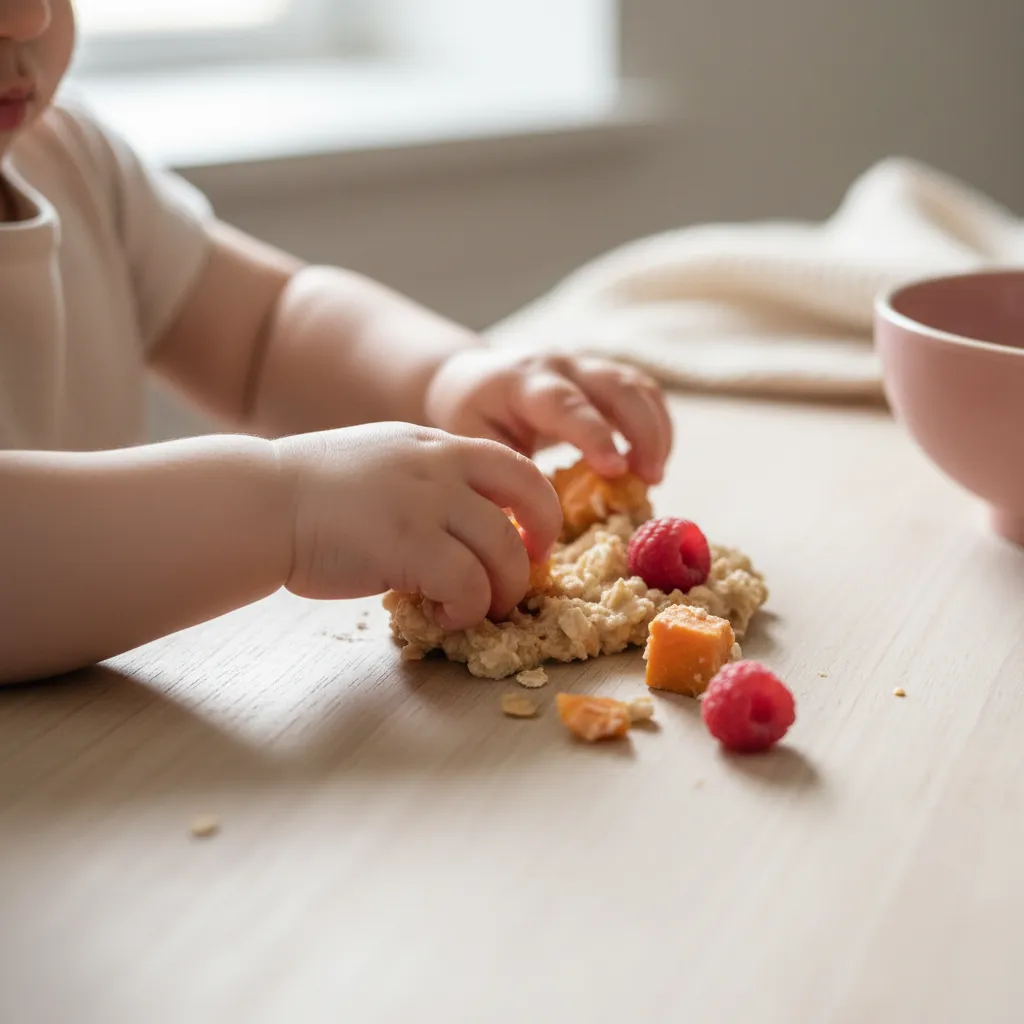
- Finger foods, baby wants to hold and eat food themselves
- More meals, most babies eat 2–3 meals plus snacks
Babies don't need teeth to chew soft food. The gums are strong enough to mash well-cooked vegetables, soft fruit, and other soft foods. Don't wait for teeth before moving to chunkier textures.
Texture at 8–10 Months
From Purée to Mash and Pieces
| Age | Texture | Examples |
|---|---|---|
| 6–7 months | Smooth purée | Blended vegetables, iron-fortified cereal |
| 8–9 months | Mashed with soft lumps | Fork-mashed carrots, pasta in sauce, risotto |
| 9–10 months | Pieces and finger foods | Bread strips, banana pieces, cooked vegetables |
Why Chunkier Textures Matter
Research shows that babies who are not introduced to chunkier textures before 10 months have a greater risk of becoming picky eaters as toddlers. According to the AAP, you should gradually increase texture from 8 months.
Tips for the transition:
- Mash with a fork instead of blending
- Leave soft lumps in the food
- Mix chunkier pieces into familiar purée
- Offer finger foods on the side
Finger Foods for 8-Month-Olds
Good First Finger Foods
Everything should be soft enough to mash between fingers and cut into elongated strips baby can grasp.
Vegetables (cooked until soft):
- Carrot strips (steamed until soft)
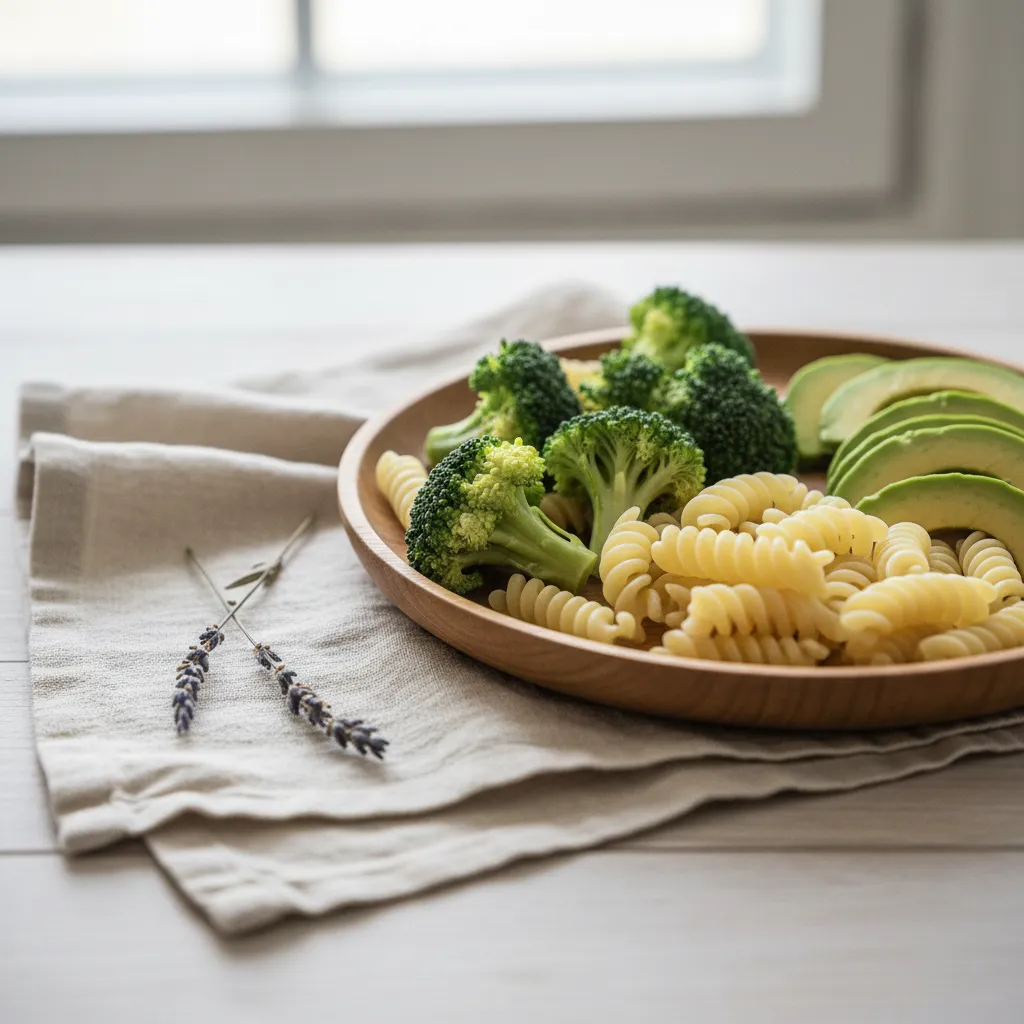
- Broccoli florets (soft, easy to grasp)
- Sweet potato strips
- Cauliflower florets
- Cooked peas (crush slightly to break the skin)
Fruit:
- Banana slices
- Soft pear slices
- Avocado strips
- Watermelon strips (seedless)
- Mango strips
Bread and grains:
- Bread strips with thin topping
- Cooked pasta (rotini, penne)
- Oat pancakes (without sugar)
- Homemade rice crackers
Protein:
- Soft meatballs (cut in half)
- Chicken strips (cooked and soft)
- Flaked cooked fish (check for bones)
- Omelet strips
Choking hazards: Avoid round, hard foods such as whole grapes, whole cherry tomatoes, whole nuts, raw carrots, popcorn, and sausage pieces cut in round slices. Whole grapes and cherry tomatoes should always be halved or quartered lengthwise. Read more in our guide on choking hazards.
Meal Routines at 8 Months
Typical Daily Schedule
According to the AAP, your baby should have 2–3 solid food meals plus breast milk or formula:
| Time | Meal | Example |
|---|---|---|
| Morning (7–8 AM) | Nursing/bottle | Breast milk or formula |
| Breakfast (8–9 AM) | Cereal + fruit | Iron-fortified oatmeal with mashed banana |
| Mid-morning (10–11 AM) | Nursing/bottle | Breast milk or formula |
| Lunch (11 AM–12 PM) | Lunch | Chicken + vegetables + pasta |
| Afternoon (2–3 PM) | Nursing/bottle + snack | Breast milk + bread strips with avocado |
| Dinner (5–6 PM) | Dinner | Fish + potato + broccoli |
| Evening (7–8 PM) | Nursing/bottle | Breast milk or formula |
Amount per meal: About 2–4 tablespoons of food, plus finger foods baby eats themselves. Baby decides how much they want.
Important About Milk
- Breast milk or formula is still the most important source of nutrition
- Solid food supplements, doesn't replace milk
- Most babies nurse 4–6 times per day at 8 months
- Don't cut back on nursing to increase food intake
New Foods to Introduce at 8 Months
Many foods have already been introduced. Here are some that often come at 8–10 months:
Foods Suitable from 8 Months
| Food | Preparation | Tips |
|---|---|---|
| Pasta | Well-cooked, small shapes | Rotini and penne are easy to grasp |
| Rice | Well-cooked, sticky | Mix with vegetables |
| Garlic | Cooked in dinner dishes | Milder than raw |
| Onion | Cooked or sautéed | Good flavor without salt |
| Tomato | Cooked in sauce | Remove skin and seeds for the youngest |
| Yogurt (plain) | Taste portions from 10 months, max 2 oz | Wait until 10 months (AAP) |
| Cottage cheese | Taste portions from 10 months, max 2 oz | Wait until 10 months (AAP) |
At 8 months, your baby should have tried the most common allergens: eggs, milk (in food), gluten, fish, peanuts, and sesame. According to the AAP, allergens should be introduced during the first year of life to reduce allergy risk.
3 Simple Recipes for 8 Months
1. Vegetable Pasta with Ground Beef
- 2 oz cooked pasta (rotini)
- 2 oz lean ground beef, cooked
- 2 tbsp tomato sauce (homemade, no salt)
- 1 tbsp finely grated carrot
- 1 tsp olive oil
Cook pasta until very soft. Cook ground beef. Mix everything with tomato sauce. Roughly mash with a fork, leave soft lumps. Add olive oil.
2. Oat Pancakes (Finger Food)
- 1 egg
- 1 ripe banana, mashed
- 3 tbsp rolled oats
Mix everything. Fry small pancakes in a little butter over medium heat, about 2 minutes per side. Cool. Perfect finger food, baby can hold and gnaw.
3. Fish Stew with Vegetables
- 1 cod fillet (about 3 oz)
- 1 small potato, cut into pieces
- 1 carrot, cut into pieces
- 1 handful broccoli
- 1/3 cup water
Cook potato and carrot in water until soft (15 minutes). Add fish and broccoli on top for the last 8 minutes. Roughly mash with a fork. Check for fish bones.
Common Challenges at 8 Months
Baby Refuses Chunkier Texture
- Mix some lumps into familiar purée
- Increase gradually over weeks
- Offer finger foods on the side, some babies prefer to be in control
- Never force, respect baby's pace
Baby Throws Food on the Floor
Completely normal. Baby is exploring food with all their senses, including by dropping it. It's part of the learning process. Tips:
- Place newspaper or a plastic mat under the chair
- Give small portions at a time
- Clean up after the meal, not during
Baby Only Wants Breast/Bottle
Some babies are slow with solid foods, and that's OK. Breast milk still covers most of their nutritional needs. Continue offering food without pressure. Most babies increase their food intake between 9 and 12 months.
Frequently Asked Questions
What can an 8-month-old baby eat?
At 8 months, baby can eat most foods in the right texture: roughly mashed vegetables, pasta, rice, meat, fish, eggs, fruit, and bread. Food should have soft lumps, not smooth purée. Finger foods like bread strips and cooked vegetable sticks are perfect. Dairy products like yogurt and cheese wait until 10 months (AAP).
How many meals does an 8-month-old need?
Most babies eat 2–3 set meals per day at 8 months, plus breast milk or formula 4–6 times. Some also have 1–2 snacks (bread, fruit). Breast milk is still the most important source of nutrition.
Can an 8-month-old eat family food?
Partly. Baby can eat many of the same ingredients as the family, but food should be adapted: roughly mash, cut into pieces, avoid salt and strong seasoning. Set aside baby's portion before seasoning the family's food.
Should an 8-month-old still have iron-fortified cereal?
Yes. Iron-fortified baby cereal is still important as an iron source. Most babies should have iron-fortified cereal daily in addition to other iron-rich foods (meat, liver pâté, lentils) until 12 months.
When can baby feed themselves completely?
Most babies eat more and more by themselves from 8–10 months, but need help until 12–15 months. Let baby try themselves with fingers and a spoon, it's messy but important for motor development.
Summary
At 8 months: transition from purée to roughly mashed food and finger foods. Offer 2–3 meals per day. Let baby feed themselves with fingers. Breast milk is still most important. Increase texture gradually. Don't wait for lumps, baby doesn't need teeth to chew soft food.
Use Babysential's food database to check age recommendations for all foods and plan meals for your 8-month-old.
Read More
- Baby Food from 6 Months
- Introduction to Solids: Complete Guide
- Choking Hazards: How to Make Food Safe
- Meat for Baby
- Fish for Baby
- Eggs for Baby
- Homemade Baby Food: Recipes and Tips
Sources
- AAP. American Academy of Pediatrics: Starting Solid Foods
- WHO. Complementary Feeding: Family Foods for Breastfed Children
- AAP. Infant Food and Feeding Guidelines
🔧 Helpful Tools
- Baby Food Guide. Safe foods and introduction schedule for your baby
- Breastfeeding Tracker. Log feeds, track supply, and monitor nursing sessions
- All Baby Tools. Browse all free tools for pregnancy and baby care
📖 Related Articles
- Food for Baby at 8 Months: Coarser Textures and Finger Foods. What can your baby eat at 8 months? Guide to textures, portions, finger foods, and meal routines for babies 8-10 months based on WHO/AAP guidelines.
- Introducing Allergens to Your Baby: A Safe Step-by-Step Guide. How to safely introduce allergens to your baby. Eggs, peanuts, dairy, and gluten, when, how, and what to watch for. Based on current AAP and WHO guidelines.
- Baby Food Introduction: Complete Guide from 6 to 12 Months. When is your baby ready for solid food? How do you start, and what should they eat each month? Complete guide to food introduction from 6 to 12 months.