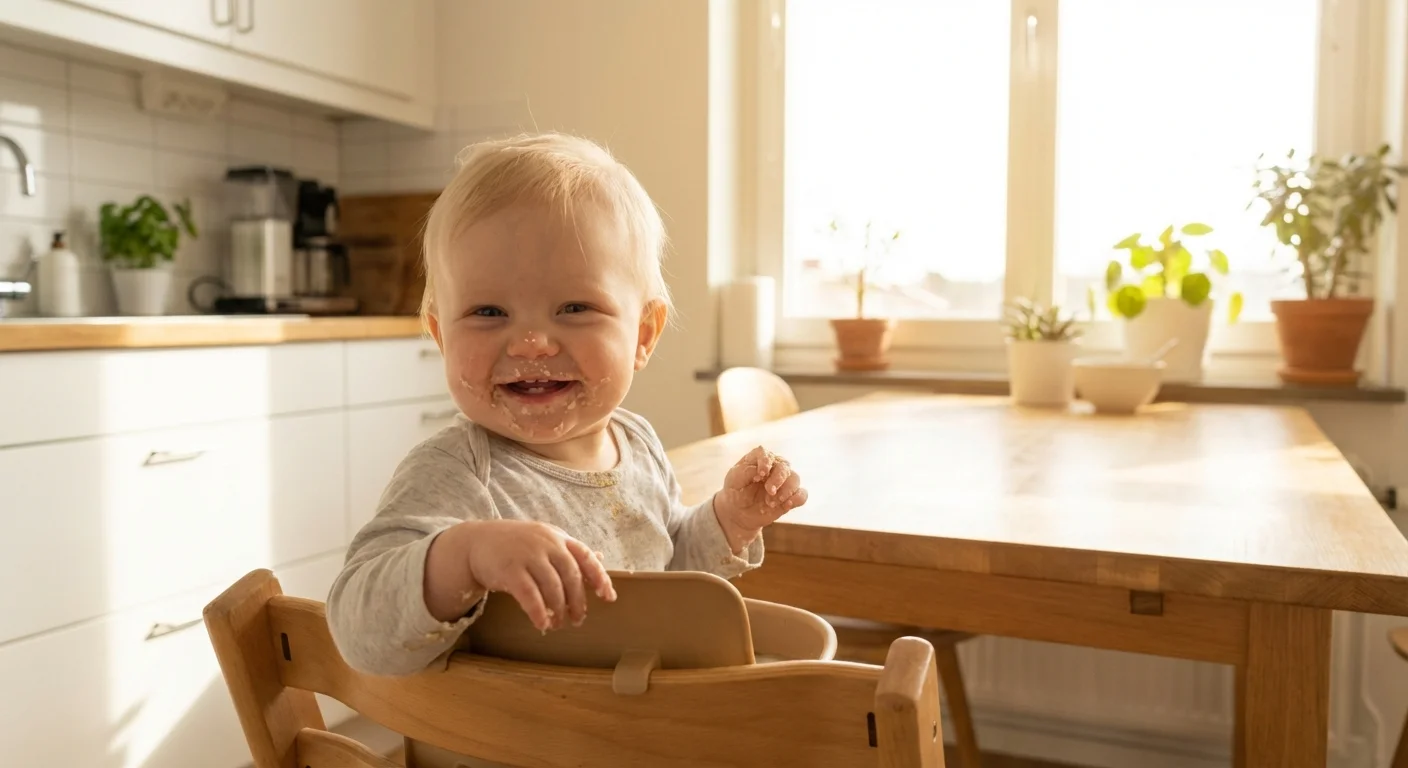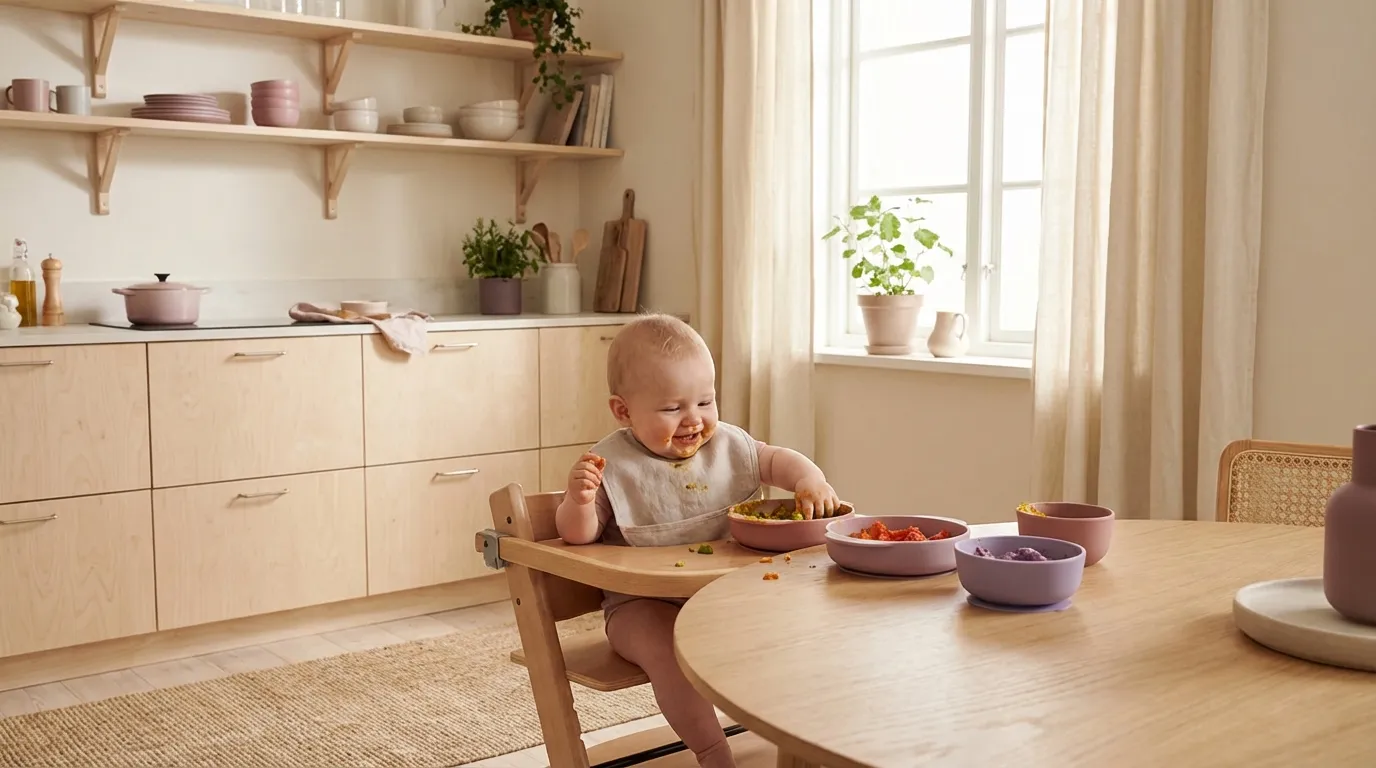
At 6 months, babies should eat pureed vegetables, fruits, iron-fortified porridge, and small amounts of protein like chicken or lentils, alongside breast milk or formula, which remains the primary nutrition source. The WHO and AAP recommend starting solid foods around 6 months, never before 4 months.
Your baby has reached six months, congratulations! Now begins one of the most exciting chapters of your baby's first year: the first tastes.
But what can a 6-month-old baby actually eat? How much should you give? And what should you avoid?
Here's a practical guide based on updated recommendations from the WHO and the American Academy of Pediatrics (AAP).
Signs that baby is ready for food
Not all babies are ready for solid foods exactly at 6 months. Look for these signals:
- Sits with support, baby holds their head steady and can sit upright
- Shows interest in food, reaches toward your food and makes smacking sounds
- Opens their mouth, when you offer food on a spoon, baby willingly opens up
- Tongue-thrust reflex is gone, food is no longer automatically pushed out of the mouth
- Seems unsatisfied by breast milk or formula alone
WHO and AAP recommend that breastfed babies who are growing well can wait until around 6 months for solid foods. Formula-fed babies may start solid foods from 4 months if the baby is developmentally ready. Never before 4 months. Breast milk or formula remains the primary nutrition throughout the entire first year.
Which foods are right for a 6-month-old?
You can introduce a surprisingly wide variety right from the start. Here's an overview of great first choices:
Vegetables
Start with mild vegetables that are easy to puree:
- Carrot, naturally sweet and popular with most babies
- Sweet potato, creamy texture and gently sweet flavor
- Parsnip, mild and easy on the tummy
- Butternut squash and zucchini, easy to prepare and digest
- Broccoli and cauliflower, nutritious, but may cause some gas
- Avocado, soft, nutrient-dense, and requires no cooking
Fruit
- Banana, just mash with a fork, ready to serve
- Pear and apple, cooked and mashed
- Mango and apricot, soft fruits with great flavor
- Berries, mashed or crushed, blueberries work well
Porridge and grains
Porridge is a great source of iron and energy for baby:
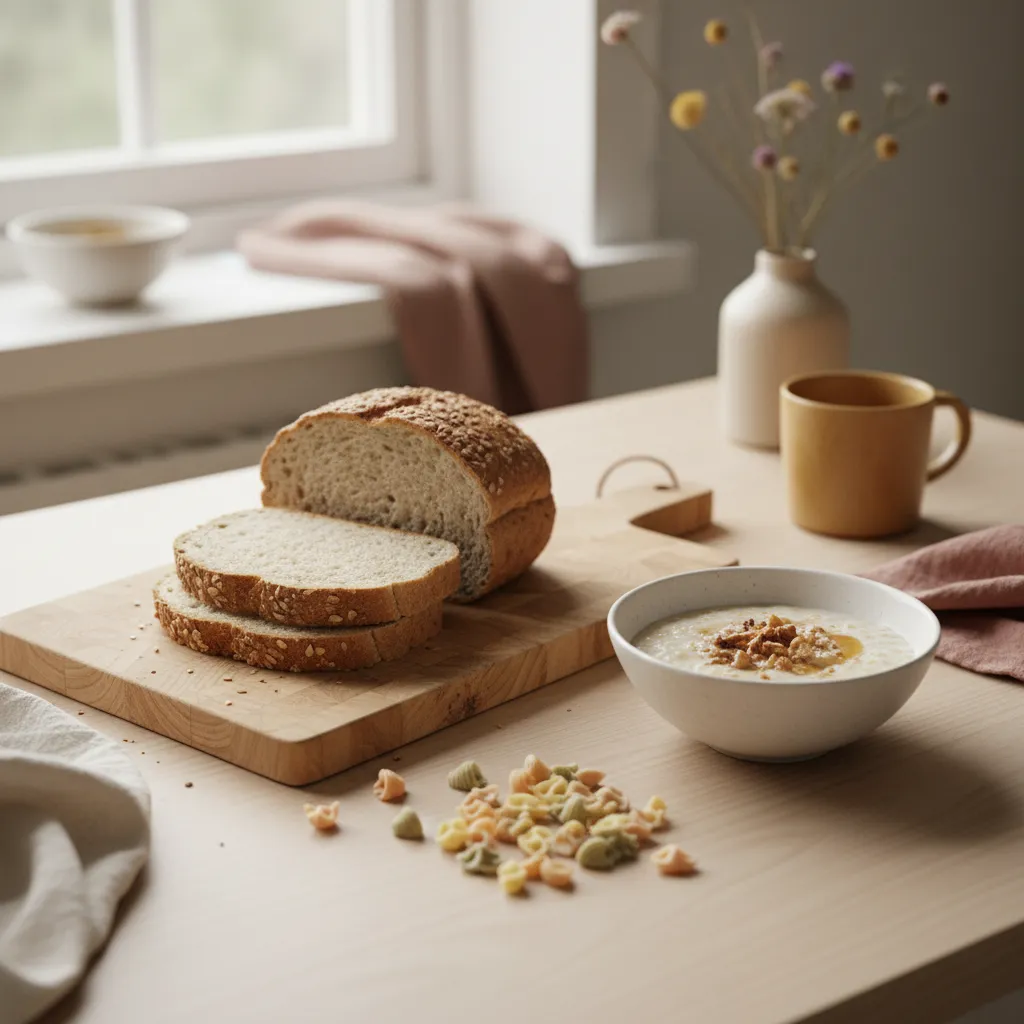
- Oatmeal, make thin porridge from rolled oats or oat flour. Soak oats in water for at least 1 hour (preferably overnight) for better iron absorption
- Millet flour, gluten-free alternative with extra iron (avoid rice flour due to arsenic)
- Soft bread, soft pieces baby can try to self-feed
Soaking and iron: Grains contain phytic acid which inhibits iron absorption. Soaking breaks down phytic acid, so baby gets more iron from the porridge. Always add a teaspoon of canola oil or olive oil to porridge and purees, the fat provides important energy and helps the body absorb fat-soluble vitamins.
Protein
From 6 months, baby can try:
- Chicken, cooked and finely chopped or pureed
- White fish, cod, haddock, or pollock, well cooked
- Egg, hard-boiled and mashed (important for allergy prevention)
- Lentils and beans, cooked and pureed, a good protein source
Meal plan for a 6-month-old baby
In the beginning, it's all about tastes, not large portions. Here's what a typical day might look like:
| Time | Meal | Example |
|---|---|---|
| 7:00 AM | Breast milk/formula | Nursing or bottle |
| 9:00 AM | Breakfast | Thin oatmeal with mashed banana |
| 11:00 AM | Breast milk/formula | Nursing or bottle |
| 12:30 PM | Lunch | Carrot puree with a teaspoon of oil |
| 2:30 PM | Breast milk/formula | Nursing or bottle |
| 5:00 PM | Dinner | Sweet potato and chicken puree |
| 7:00 PM | Breast milk/formula | Evening nursing/bottle |
Start with 1–2 solid meals per day, increasing to 2–3 meals toward the end of 6–8 months. Baby decides the amount, never force food on a child.
Amounts in the beginning
- Days 1–3: A small teaspoon
- Days 4–7: Two to three teaspoons
- Weeks 2–4: A few tablespoons per meal, up to 2–3 tbsp
- Toward 8 months: About 3–4 oz (80–100 ml) per meal
Baby's stomach is about the size of their fist. So it's completely normal for portions to seem tiny.
Simple recipes for a 6-month-old baby
Thin oatmeal with fruit
- Cook 1 tbsp rolled oats in ½ cup water until thick
- Thin with breast milk to desired consistency
- Stir in 1 tsp canola oil
- Top with mashed banana or cooked apple
Carrot and potato puree
- Peel and dice: 1 carrot + 1 small potato
- Steam or boil until soft, about 15 minutes
- Mash with a fork, add cooking water to reach desired consistency
- Stir in 1 tsp olive oil
Sweet potato and chicken
- Roast half a sweet potato in the oven for 40 minutes at 400°F (200°C)
- Cook a small piece of chicken fillet all the way through
- Mash both together with a fork
- Add a little water or breast milk for the right consistency
Offer a fruit high in vitamin C (kiwi, orange, strawberries) alongside iron-rich foods like porridge, meat, or lentils. Vitamin C significantly increases the body's absorption of iron.
Texture and consistency, a gradual transition
Food for baby should follow a natural progression:
- 6 months: Finely pureed and almost liquid, thin porridge and smooth puree
- 6–7 months: Thicker puree, possibly with small lumps
- 7–8 months: Fork-mashed with noticeable texture
- 8+ months: Soft pieces baby can chew with their gums
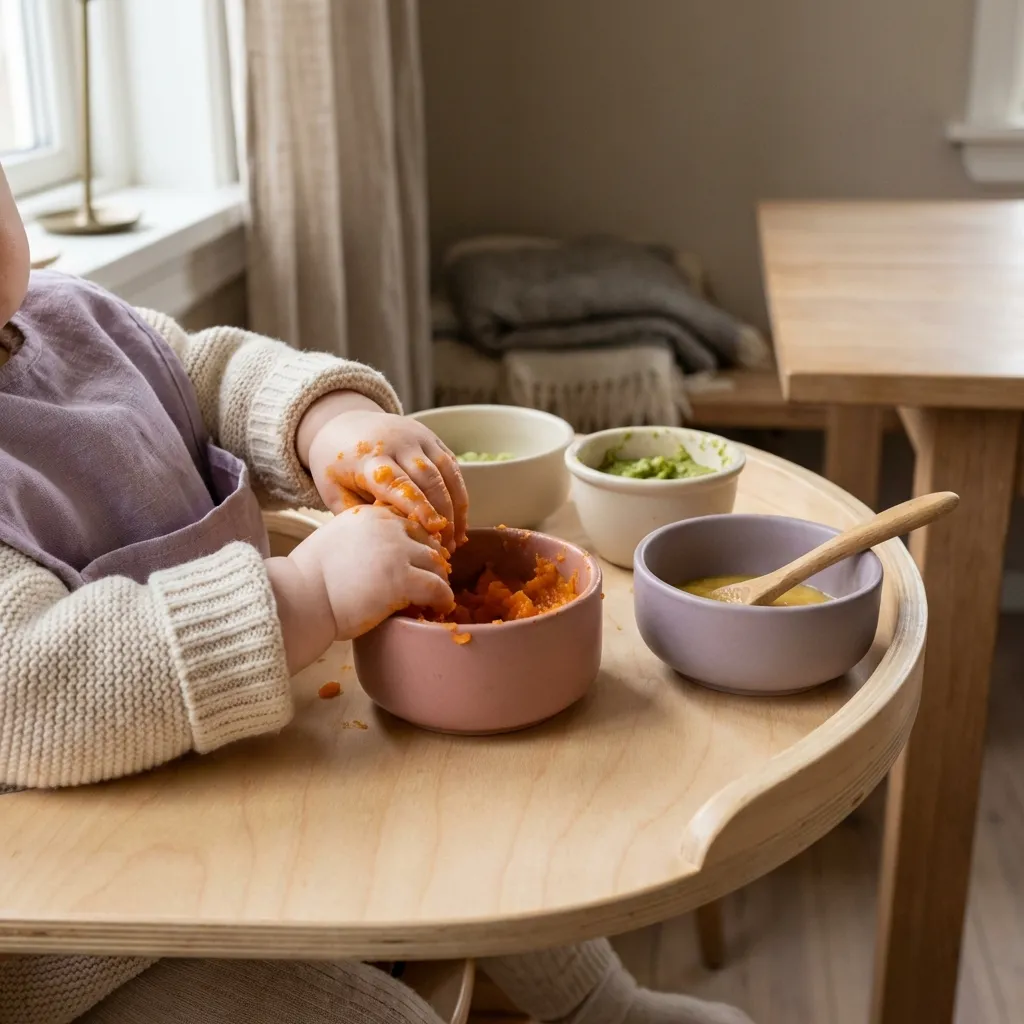
Don't be afraid to let baby explore food with their hands. It stimulates eating motor development and helps the child learn to handle different textures.
Curious about baby-led weaning (BLW)? Read our complete BLW guide for tips and practical advice.
What should you avoid giving baby?
Some foods are not suitable for babies under one year:
- Honey, risk of infant botulism
- Cow's milk as a drink or in porridge, low in iron. Small amounts in cooking from 10 months, as a drink from 12 months
- Salt, baby's kidneys can't handle much salt
- Sugar, avoid juice, soda, and added sugar
- Whole nuts and whole grapes, choking hazard (whole nuts should not be given to children under 4–5 years, grapes should be cut in half lengthways)
- Spinach, beets, and arugula, nitrate-containing vegetables to avoid in the first year (AAP/WHO)
- Rice milk and rice cakes, inorganic arsenic (avoid under 6 years)
- Cinnamon, avoid daily use due to coumarin content
Never let baby eat unsupervised. Always sit with your child during mealtimes, and make sure food has the right texture and temperature.
Allergies: introduce early, but gradually
Research shows that early introduction of allergens can actually prevent allergies. The AAP recommends introducing common allergens during the first year of life:
- Egg, hard-boiled and mashed
- Fish, well-cooked white fish
- Peanuts, as thin peanut butter (never whole nuts)
- Wheat, through porridge and bread
- Cow's milk, in cooking from 10 months, as a drink from 12 months. Cheese as a spread from 10 months
Introduce one new allergen at a time. Wait 2–3 days before trying something new, so you can watch for any reactions.
Practical tips for a great food start
- Don't give up, it can take up to 15 attempts before baby accepts a new flavor
- Cook and freeze, make large batches and freeze in ice cube trays
- Nurse first, offer the breast or bottle before solid food, so baby isn't too hungry
- Water with meals, offer a little water in a cup alongside the food
- Avoid screen time, let mealtimes be a calm time for exploration
Checklist: are you ready for baby meals?
Before you start, make sure you have what you need:
- High chair where baby sits securely upright
- Soft baby spoon (some babies prefer to eat with their hands)
- Bib or smock
- Ice cube trays for freezing purees
- Canola oil or olive oil
- Patience and plenty of time
Remember: food in the beginning is about taste and exploration, not calories. Breast milk or formula still covers most of baby's nutritional needs up to 12 months.
Common questions
What is the best first food for a 6-month-old baby?
Great first choices are carrot, sweet potato, parsnip, avocado, and banana. Start with finely pureed consistency and introduce one new food at a time. Porridge with soaked oats is also a good source of iron.
How much food should a 6-month-old baby eat?
Start with a small teaspoon and increase gradually. In the beginning, it's all about tasting, not large portions. Toward 8 months, baby can eat about 3–4 oz (80–100 ml) per meal. Breast milk or formula is still the main nutrition in the first year.
Can baby have egg and fish from 6 months?
Yes, the AAP recommends introducing common allergens early, including egg and fish. Give hard-boiled, mashed egg and well-cooked white fish. Introduce one new allergen at a time and wait 2–3 days between new foods.
What should baby not eat in the first year?
Avoid honey (botulism), cow's milk as a drink (not until 12 months), salt, sugar, whole nuts (choking hazard), spinach and beets (nitrates), rice milk and rice cakes (arsenic). Cow's milk in cooking can be introduced from 10 months.
Summary
Starting solid foods for your 6-month-old is an exciting milestone. Begin calmly with tastes, vary vegetables, fruit, and porridge, and let baby explore at their own pace. Follow baby's cues, avoid honey and salt, and remember that breast milk or formula is still the main meal.
With a little planning and patience, you're laying the foundation for healthy eating habits that last a lifetime.
Read also: Baby food at 8 months | Iron-rich foods for baby | Allergen introduction guide
Sources in this article are based on recommendations from the AAP and WHO, updated 2026.
Frequently Asked Questions
What should a 6-month-old eat?
A 6-month-old should eat pureed vegetables (carrot, sweet potato, avocado), fruits (banana, pear, mango), iron-fortified porridge, and small amounts of protein like chicken or lentils. Breast milk or formula remains the primary nutrition source throughout the first year (WHO, AAP).
What are the best first foods for a 6-month-old?
The best first foods are carrot, sweet potato, parsnip, avocado, and banana, all easy to puree and gentle on the stomach. Iron-fortified oatmeal is also recommended by the AAP because iron needs increase significantly at 6 months.
How much should a 6-month-old eat per day?
Start with 1 teaspoon of solid food per meal and increase gradually. By 8 months, babies typically eat 3–4 oz (80–100 ml) per meal, 2–3 times daily. Breast milk or formula (24–32 oz per day) remains the primary nutrition source until 12 months (AAP).
Can a 6-month-old eat eggs and fish?
Yes. The AAP recommends introducing common allergens, including egg and fish, during the first year of life, starting around 6 months. Give hard-boiled, mashed egg and well-cooked white fish. Introduce one new allergen at a time and wait 2–3 days before trying the next.
What foods should a 6-month-old avoid?
Avoid honey (risk of infant botulism), cow's milk as a drink (not until 12 months), salt, added sugar, whole nuts (choking hazard), and rice milk (arsenic). Never give foods that are a choking risk without the right texture and supervision.
When should I start solid foods for my baby?
The WHO and AAP recommend starting solid foods around 6 months for breastfed babies. Formula-fed babies may start from 4 months if developmentally ready. Never before 4 months. Signs of readiness include sitting with support, showing interest in food, and the tongue-thrust reflex being gone.
How do I know if my 6-month-old is ready for solids?
Your baby is ready for solid foods when they sit upright with support and hold their head steady, show interest in food (reaches, opens mouth), no longer push food out with their tongue, and seem unsatisfied by breast milk or formula alone.
Should I give breast milk or formula before or after solids?
Offer breast milk or formula before solid food at 6 months, so your baby is not too hungry or frustrated during feeding. As solid intake increases toward 9–12 months, you can gradually shift solids before milk feeds. Breast milk or formula remains primary nutrition until 12 months (AAP).
Sources
- American Academy of Pediatrics. Starting Solid Foods
- WHO. Complementary Feeding
- USDA. Infant and Toddler Nutrition
🔧 Helpful Tools
- Baby Food Guide. Safe foods and introduction schedule for your baby
- Breastfeeding Tracker. Log feeds, track supply, and monitor nursing sessions
- All Baby Tools. Browse all free tools for pregnancy and baby care
📖 Related Articles
- Bread and Grains for Baby: From Porridge to Toast. When can your baby eat bread, pasta, and porridge? A complete guide to grains for babies from 6 months, including gluten advice and preparation tips based on WHO and AAP guidelines.
- Baby Allergens: A Safe Guide to Introducing Allergenic Foods. How to safely introduce allergens to your baby. Eggs, nuts, milk and gluten - when, how and what to look for. Based on current guidelines.
- Introducing Allergens to Your Baby: A Safe Step-by-Step Guide. How to safely introduce allergens to your baby. Eggs, peanuts, dairy, and gluten, when, how, and what to watch for. Based on current AAP and WHO guidelines.