You probably know the feeling: baby is hungry, you are in the middle of a shopping trip, at the park, or on your way to grandma's. What do you have on hand? With a little planning, you can always have good food available, without resorting to crackers and pouches.
Here is the practical guide to food on the go with baby and toddlers, adapted for families of all seasons.
Ground Rules for Food Away from Home
Food Safety on the Go
When food needs to travel, there are some basic rules to keep it safe:
- A cooler bag is your best friend: Food containing eggs, dairy, or meat needs refrigeration
- The 2-hour rule: Food without refrigeration should be eaten within 2 hours (shorter in warm weather)
- Clean hands: Always bring wet wipes or hand sanitizer
- Sealed containers: Use airtight food containers that do not leak
- Temperature check: Keep cold food cold and hot food hot, avoid the "danger zone" (40-140°F / 4-60°C)
A small cooler bag with an ice pack keeps food safe for 3-4 hours. Freeze a small ice pack the night before and place it in the bag with your food.
What Do You Need to Bring?
Basic kit for food on the go:
- Food containers with lids (2-3 small ones)
- Spoon or fork (BabyBjörn and similar travel utensils work well)
- Bib (preferably with a catch pocket)
- Wet wipes or a damp cloth in a bag
- Water bottle or cup
- Cooler bag (for food that needs refrigeration)
- Paper napkins or a small cloth
Food on the Go: 6-8 Months
The first months of starting solids are easiest with foods that tolerate room temperature and do not require much equipment.
Best Travel Food for the Youngest
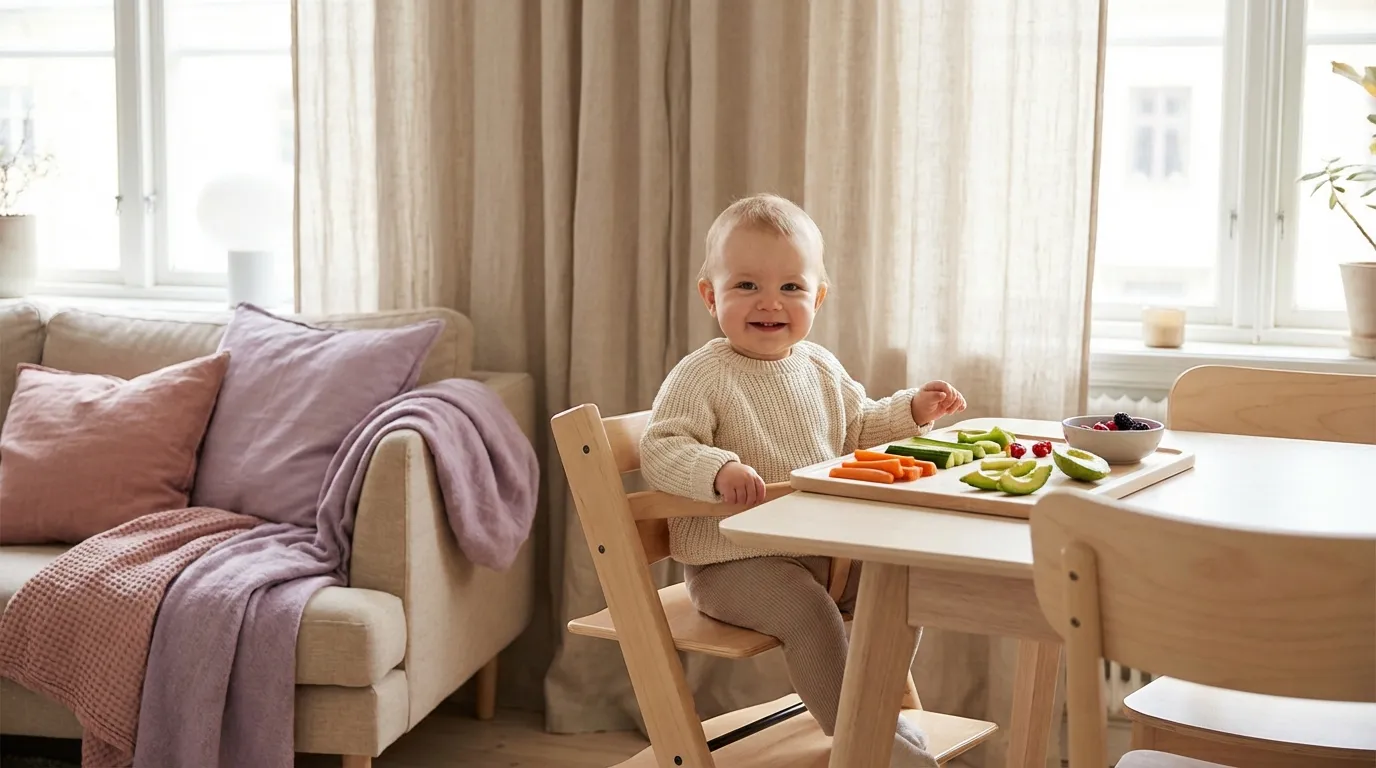
Finger foods that travel well:
- Banana (nature's perfect packaging)
- Avocado (halve it and let baby eat with a spoon directly from the skin)
- Cooked vegetable sticks in a container (carrot, broccoli, sweet potato)
- Soft bread strips
- Hard-boiled egg (in a container, split when serving)
Puree/porridge on the go:
- Homemade puree in a small container with a cooler bag
- Oatmeal cooked thick and cooled (can be eaten as finger food)
- Banana mash made on the spot (mash banana with a fork)
Banana and avocado are the easiest travel foods for baby. They need no preparation, no refrigeration (when unpeeled), and baby can eat them with minimal equipment.
What About Store-Bought Baby Food Jars and Pouches?
Commercial baby food in jars is convenient when traveling. They tolerate room temperature (unopened) and can be heated in a water bath or eaten as-is. Use them as a supplement, but not a replacement for homemade food in everyday life.
Squeeze pouches should be limited. The AAP and WHO note that they provide a lot of sugar and zero chewing practice. Use them only as a last resort, not as everyday travel food.
Food on the Go: 8-12 Months
Baby can now eat more variety, and finger food becomes even easier to bring along.
Travel Food That Holds Up in a Container
Fruit and vegetables:
- Banana (whole or in pieces)
- Blueberries (in a small container)
- Cooked vegetable pieces (can be eaten cold)
- Cucumber strips (raw, refreshing, and hydrating)
- Avocado (bring whole, split on site)
- Mango pieces (ripe and soft)
- Grapes cut in half (important for choking prevention)
Bread and grains:
- Bread pieces with toppings
- Unsweetened oat crackers
- Toast with peanut butter (in a container)
- Crispbread (watch for hard edges for the youngest)
Protein-rich:
- Hard-boiled egg (keeps well in a cooler bag)
- Pieces of meatballs (homemade without salt)
- Fish cake pieces
- Hummus in a small container with vegetable sticks
Needs refrigeration:
- Yogurt (from 10 months, in a cooler bag)
- Cottage cheese with fruit (from 10 months)
- Cheese strips (from 10 months)
Whole grapes, cherry tomatoes, and other round foods are choking hazards. Always cut in half or quarters before giving them to baby, no matter where you are.
Food on the Go for 1-3-Year-Olds
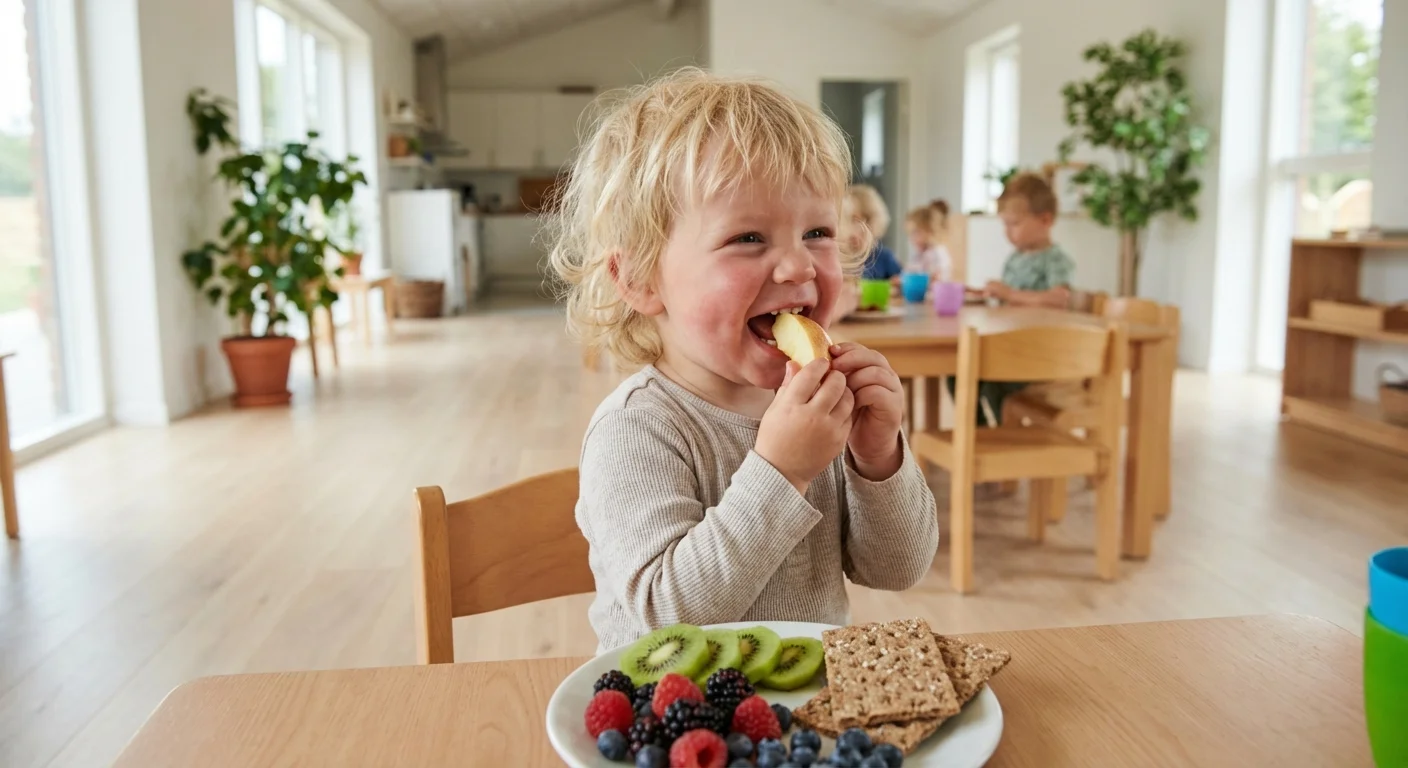
Toddlers have strong opinions and high activity levels. Travel food should be easy to eat, nutritious, and ideally a little fun.
Top 15 Travel Snacks for Toddlers
- Fruit pieces in a container: Apple, pear, melon, grapes (halved)
- Vegetable sticks: Carrot, cucumber, bell pepper
- Bread with toppings: Cheese, liver pâté, peanut butter
- Yogurt in a squeeze pouch (homemade): Fill reusable pouches with plain yogurt
- Energy balls: Oats, nut butter, dates, coconut, roll into balls and refrigerate
- Pancakes (cold): Banana pancakes or whole-grain pancakes
- Omelet pieces: Make the evening before, eat cold
- Mini wraps: Tortilla with hummus and vegetables, roll and cut
- Dried fruits: Apricots, raisins, prunes (without added sugar)
- Cooked corn: Works as a fun finger food
- Edamame beans: Cooked, cooled, fun to squeeze out of pods
- Toasted bread pieces: With cheese, seasoning, or nut butter
- Cottage cheese with berries (in a cooler bag)
- Fish cake pieces (in a cooler bag)
- Frozen banana pieces: Frozen banana in pieces (thaws and softens naturally)
Drinks on the Go
- Water: Always bring it. In a cup or bottle the child can manage.
- Milk: In a thermos or cooler bag for longer trips
- Avoid: Juice, sweet drinks, flavored beverages
Food for Longer Trips and Travel
Car Trips
Giving food to children in car seats is discouraged for safety reasons. Stop for a meal break instead.
Road trip tips:
- Pack food in a cooler bag that is easily accessible
- Plan meal stops along the way (every 2-3 hours)
- Keep an "emergency bag" with dried fruit and crispbread in the car
- Bring wet wipes and a small trash bag
- Stop at rest areas with tables, it is more pleasant than eating in the car
Avoid giving food to children while they are in their car seats. Choking risk is higher when the child is reclined, and you cannot help quickly while driving.
Air Travel
Tips for flying with baby/toddlers:
- You can bring baby food through security (let them know at the checkpoint)
- Pack food in clear containers for easier security screening
- Squeeze pouches with puree are approved for babies
- Dried fruits, crispbread, and energy balls tolerate long travel
- Order a children's meal from the airline (done at booking)
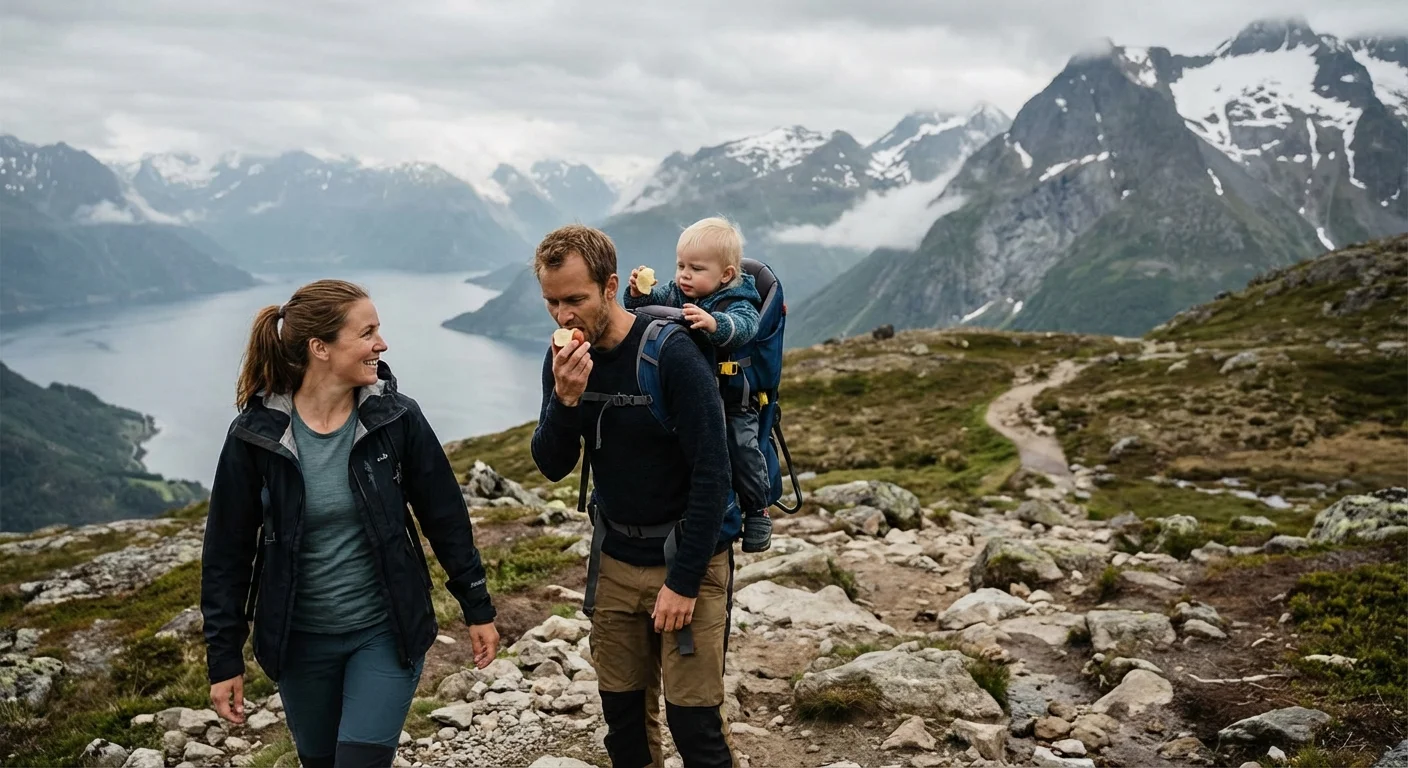
Day Trips Outdoors
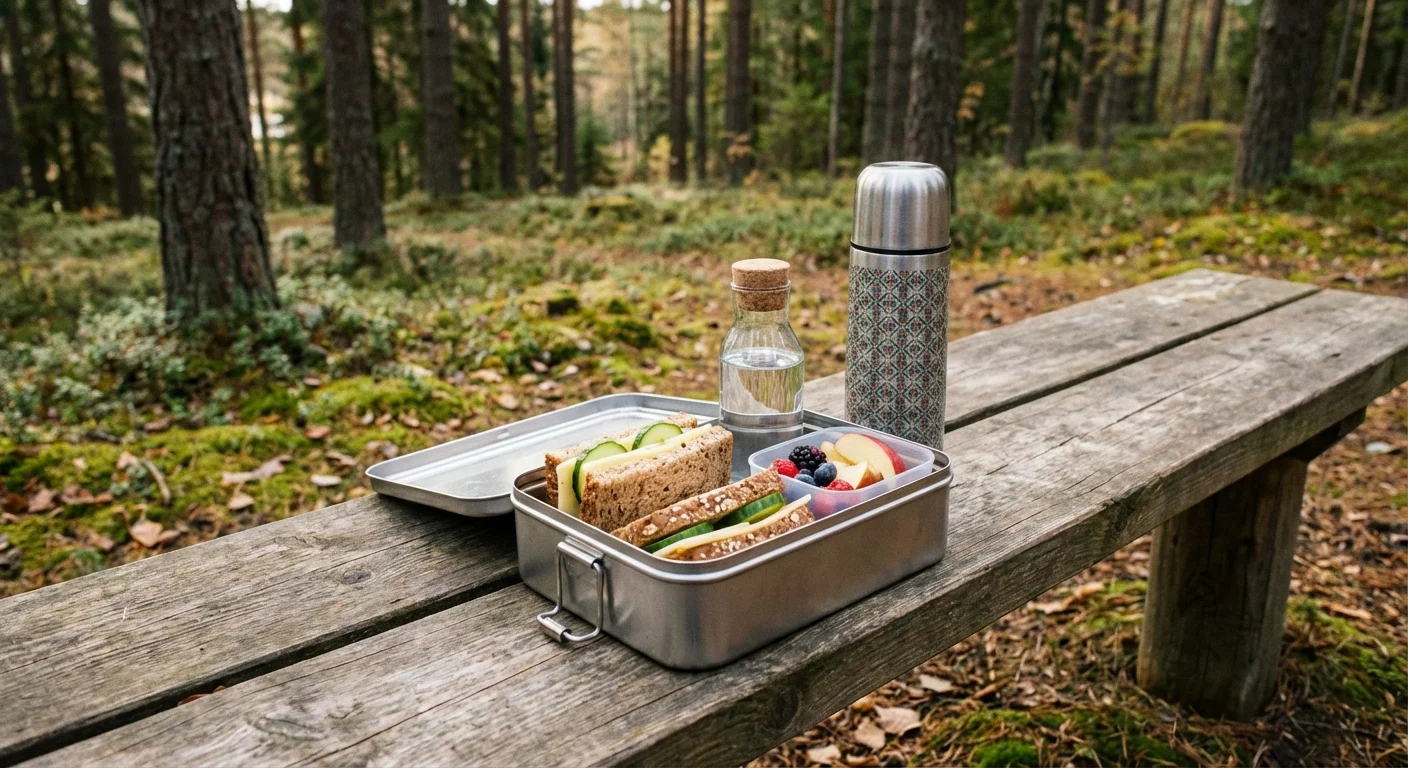
The outdoors are perfect for outings with children. Here is a food pack that works:
Summer outing:
- Container with bread, fruit, and vegetables
- Cooler bag with yogurt and drinks
- Extra water (children dehydrate faster than adults)
- Sunhat and sunscreen, not food-related, but important!
Winter outing:
- Thermos with warm oatmeal or soup
- Bread well wrapped (cold makes bread hard)
- Banana (stays soft in a jacket pocket)
- Warm drinks in a thermos (water or milk)
- Chocolate for the grown-ups (well-deserved!)
Freeze yogurt in a reusable squeeze pouch the night before a summer outing. It thaws gradually and keeps the rest of the food cool, and is ready to eat after a few hours.
Batch Prepping Travel Food
Prepare a week's worth of travel food with one hour of effort:
Sunday Prep
-
Energy balls (20 pieces, keeps 1 week in the fridge):
- 1 cup rolled oats, ¼ cup peanut butter, ¼ cup chopped dates, 2 tbsp shredded coconut
- Mix, form into balls, store in the refrigerator
-
Vegetable sticks (good for 3-4 days):
- Cut carrot, cucumber, and bell pepper into sticks
- Store in a container with slightly damp paper towel
-
Pancakes (freeze):
- Banana pancakes in a large batch
- Freeze individually, thaw as needed
-
Mini muffins (freeze):
- Vegetable muffins with zucchini, carrot, and egg
- Perfect travel food, tolerates room temperature for a few hours
-
Hard-boiled eggs (keeps 5 days in the fridge):
- Boil 6-8 eggs, keep in the refrigerator
- Bring 1-2 in a container when you go out
Food on the Go. What to Avoid
Common Pitfalls
- Squeeze pouches as a main food: High sugar, zero chewing practice
- Crackers and cookies: "Baby crackers" are often just as unhealthy as regular ones
- Rice cakes: Not recommended for children under 6 years (arsenic content)
- Juice and sweetened drinks: High sugar, bad for developing teeth
- Food in the car seat: Choking hazard
Healthier Swaps
| Instead of | Choose instead |
|---|---|
| Crackers | Crispbread with cheese |
| Squeeze pouch | Whole fruit |
| Rice cakes | Oat crackers |
| Juice | Water + fruit pieces |
| Candy bag | Dried fruit |
Frequently Asked Questions
How long does homemade baby food last without refrigeration?
Homemade food with meat, fish, eggs, or dairy should be eaten within 2 hours without refrigeration (1 hour in warm weather above 77°F / 25°C). Food that only contains fruit and vegetables lasts a bit longer, but should still be eaten within 3-4 hours. With a cooler bag and ice pack, food stays safe for 4-6 hours.
Can baby eat cold food?
Yes, it is completely safe to give baby cold food. Many babies happily eat cold porridge, cold vegetables, and cold pasta without any problem. Some babies prefer food at room temperature, for those, a thermos works well to keep porridge or puree warm.
What are the best reusable food containers for children?
Look for containers that are: leak-proof (critical!), BPA-free, dishwasher-safe, and the right size for a child's portion. Multi-compartment systems are convenient for varied travel food. Popular brands include Klean Kanteen, LunchBots, and Yumbox.
What do we do if baby does not want to eat on the go?
New surroundings can distract baby from food. This is completely normal. Offer food without pressure, and accept that your child may eat less than at home. Make sure baby has had breast milk or formula, and try again a little later. Many babies eat better after settling down in new surroundings.
Can I give baby food from a café or restaurant?
Yes, with a few caveats. Ask for food without salt and strong seasonings for baby. Cooked vegetables, boiled potato, bread, and fruit are usually available in most places. Many cafés and restaurants are used to babies and can adapt on request.
Read More
- Baby food introduction: Complete guide
- Healthy snacks for kids
- Baby food, storage and freezing
- Transition from puree to finger food
- Choking hazards baby
- Smoothie bowls and healthy snacks
- Explore Babysential's food database
- SmartStart, plan your baby's meals
Sources
- AAP. Infant and Toddler Nutrition
- WHO. Complementary feeding
- FDA. Food Safety for Moms-to-Be
- CDC. Food Safety
🔧 Helpful Tools
- Baby Food Guide. Safe foods and introduction schedule for your baby
- Breastfeeding Tracker. Log feeds, track supply, and monitor nursing sessions
- All Baby Tools. Browse all free tools for pregnancy and baby care
📖 Related Articles
- Food on the Go with Baby and Toddler: Practical Guide. How to manage meals on trips, travel, and outings with a baby or toddler. Packing tips, shelf-stable snacks, and meal ideas that work away from home.
- Snacks for Kids: Healthy Between-Meal Ideas from 6 Months to 3 Years. When should babies and toddlers have snacks? What are good between-meal options from 6 months to 3 years? A practical guide with age-specific ideas and foods to avoid.
- First Vacation with Baby: Tips and Packing List. Everything you need to know about your first vacation with a baby. Packing list, travel tips, accommodation, and practical advice for a relaxed family trip.