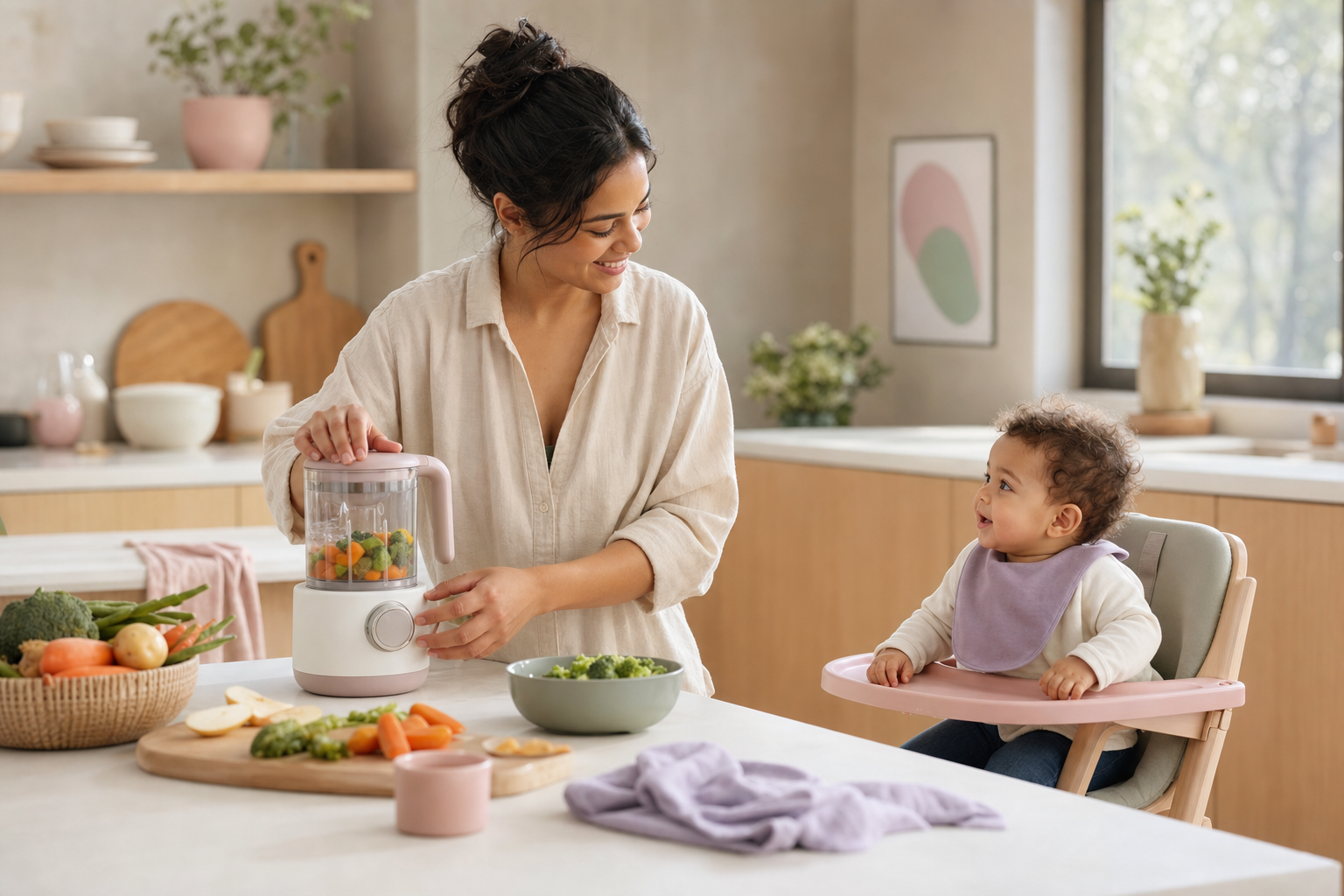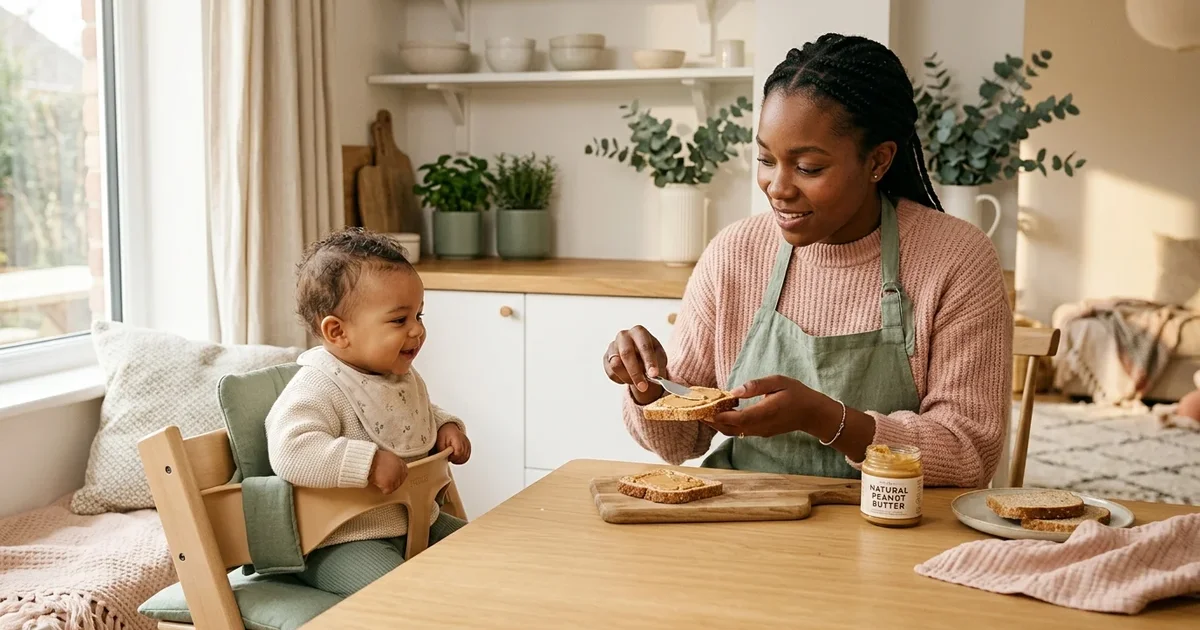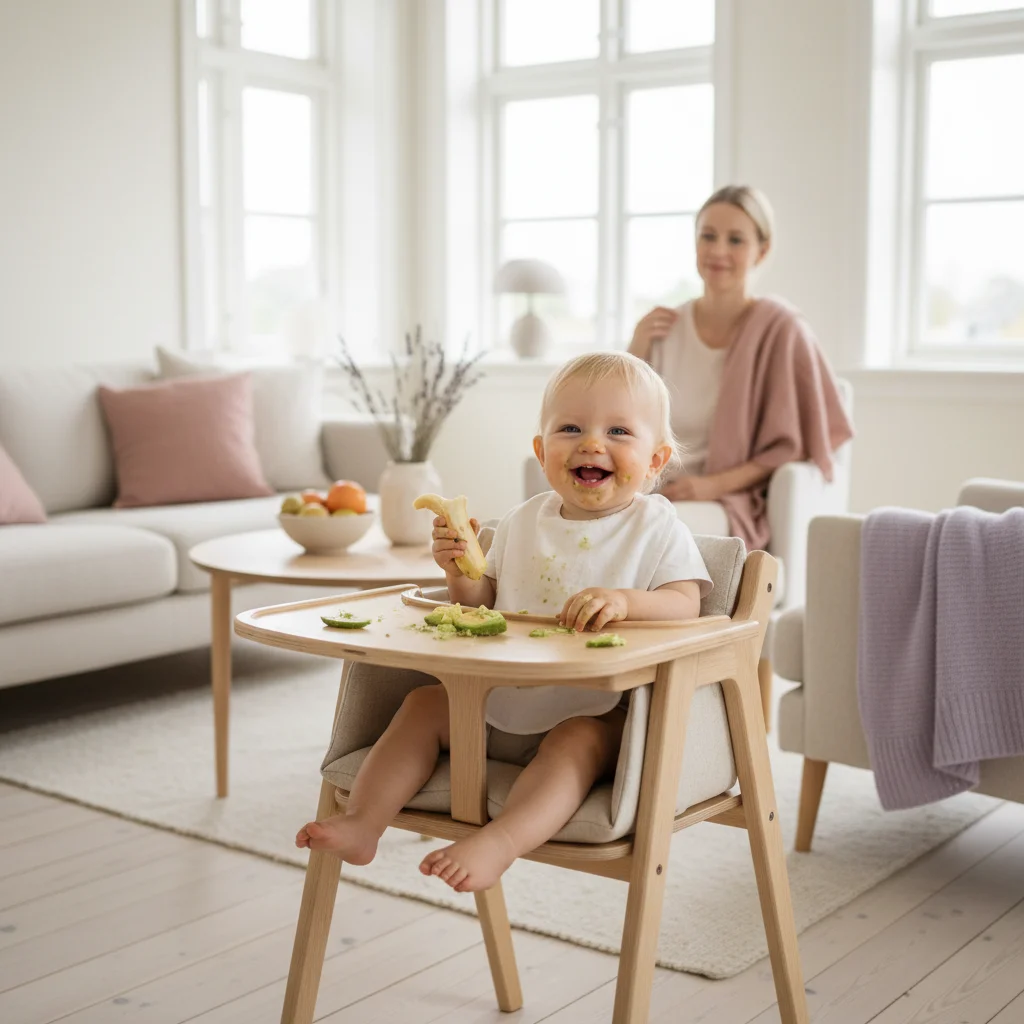
Your baby has been eating mashed food and purees for a while. Now it's time for the next step: finger food. Pieces the baby can hold themselves, explore with their mouth, and gradually learn to chew.
The transition from puree to finger food doesn't happen overnight. It's a gradual process where you adjust the texture to match your baby's development. Here's the path from smooth puree to independent meals.
When Is a Baby Ready for Finger Food?
Most babies can start with finger food from 6 months, at the same time as starting solids. Some babies are ready a little earlier, others a little later. Look for these signs:
- Baby sits stably with support
- Baby can grasp objects and bring them to their mouth
- Baby shows interest in your food
- The tongue-thrust reflex that pushes food out has disappeared or weakened
You don't need to wait until the baby has teeth. Baby gums are surprisingly strong and can crush soft food just fine.
You can start with finger food right from the beginning of solids at 6 months. There's no need to go through a long puree phase first. Many families combine purees and finger food from the start, the baby is offered both.
Step-by-Step Progression
Stage 1: Smooth Puree (from 6 months)
Start with smooth, thin puree. Single-ingredient purees let the baby get to know each flavor on its own. Good foods to start with:
- Cooked and mashed sweet potato, carrot, broccoli
- Mashed banana or avocado
- Iron-fortified cereal (oats, rice)
- Mashed peas or beans
Make purees gradually thicker over the following weeks. The baby learns to move food to the back of the mouth and swallow.
Stage 2: Coarse Puree and Mash (6-7 months)
Mash food with a fork instead of blending it. Leave a bit of texture, small pieces in the mash. The baby learns to handle uneven consistency.
Try:
- Roughly mashed banana with some oatmeal
- Avocado with fork-mashed beans
- Cooked and roughly mashed cauliflower or potato
- Mashed fish with potato and carrot
Stage 3: Soft Pieces and Finger Food (7-8 months)
Now you can introduce soft pieces the baby can hold themselves. Cut food into sticks, about the size of an adult index finger. The baby grasps with the whole hand and gnaws on the end that sticks out.
Good first choices:
- Steamed broccoli florets (natural handle)
- Soft banana stick
- Cooked carrot stick (soft enough to crush with fingers)
- Avocado stick (rolled in oatmeal for better grip)
- Well-cooked pasta spirals
Stage 4: Smaller Pieces (9-10 months)
The baby develops the pincer grasp, the ability to pick up small objects with thumb and index finger. Now you can offer smaller pieces:
- Blueberries (halved)
- Pea-sized pieces of soft fruit
- Small pasta pieces
- Grated cheese (from 10 months)
- Bread pieces with toppings
Stage 5: Family Meals (10-12 months)
The baby gradually eats more of what the family eats, cut into appropriate pieces. Avoid added salt and sugar, but otherwise the baby can eat most things.
Don't rush the transition. Some babies love finger food right away, others need more time. Follow the baby's pace. Offering a tray of pieces doesn't mean the baby has to eat everything, exploration is also learning.
Safe Finger Foods
Finger food should be soft enough that you can crush it between your thumb and index finger. If it's too hard for your fingers, it's too hard for the baby.
Great First Choices (from 6 months)
| Food | Preparation | Shape |
|---|---|---|
| Banana | Raw, ripe | Half stick |
| Avocado | Raw, ripe | Stick or slice |
| Sweet potato | Cooked/steamed | Stick |
| Broccoli | Steamed | Whole floret |
| Carrot | Cooked until soft | Stick |
| Pasta | Cooked until soft | Large spiral or penne |
| Bread | Lightly toasted | Strip |
| Egg omelet | Cooked | Strips |
| Fish | Cooked/steamed | Flakes |
| Beans | Well-cooked | Mashed or whole |
Avoid These (Choking Hazard)
- Whole grapes, cherry tomatoes (always cut lengthwise into halves or quarters)
- Whole nuts (use nut butter instead)
- Raw carrot, apple, and other hard vegetables/fruit
- Hot dog pieces (cut lengthwise, never in round slices)
- Popcorn, chips, hard crackers
- Large clumps of bread or nut butter
Gagging vs. Choking
This frightens most parents. It's important to know the difference.
Gagging
The gag reflex is a safety mechanism. The baby pushes food forward in the mouth with the tongue when it gets too far back. It looks dramatic, the baby may gag, turn red, and make sounds.
The gag reflex is:
- Loud (the baby makes sounds)
- Baby turns red, not blue
- Resolves on its own
- Completely normal and actually a good sign
What you do: Nothing. Let the baby handle it. Stay calm. The baby is learning.
Choking
Choking is silent and dangerous. Food is blocking the airway.
Choking is:
- Silent (baby cannot make sound)
- Baby turns pale or bluish
- Baby cannot cough
- Requires immediate action
What you do: Back blows between shoulder blades (infant) or abdominal thrusts (older child). All parents should learn infant first aid.
The baby should always sit upright during meals, never lying down or leaning backward. Let the baby set the pace. Never put food in the baby's mouth. Never leave the baby unsupervised during meals.
Baby-Led Weaning (BLW) vs. Traditional Approach
BLW means the baby takes the lead from the start, only finger food, no purees, the baby picks up and feeds themselves.
Traditional approach starts with purees and gradually increases texture over time.
Combination is the most common approach, parents offer both purees and finger food. The baby gets a spoon of mash AND some pieces to explore.
Most pediatric organizations recommend introducing coarser textures and finger food no later than 8 months of age. Babies who only receive smooth purees for too long may have more difficulty accepting pieces later.
Practical Tips for Everyday Finger Food
Mess Is Learning
Food on the floor, in the hair, and all over the face is normal. The baby is exploring with all their senses. Put a splash mat under the chair and dress the baby in a bib with a catcher.
Offer Often, Never Force
A baby may need to see a new food 10-15 times before tasting it. Offer calmly, let the baby see and touch the food, and respect a no.
Eat Together
Babies learn by watching others eat. Sit down at the table and eat the same (or something similar). It's the strongest motivation for a baby.
Frequently Asked Questions
When should a baby eat finger food?
You can offer finger food right from the start of solids at 6 months. AAP and most pediatric organizations recommend introducing coarser textures and finger food no later than 8 months of age. Babies who only receive smooth purees for too long may have difficulty accepting pieces.
Is it normal for a baby to gag on finger food?
Yes, the gag reflex is completely normal and an important safety mechanism. The baby is learning to handle food in the mouth. The reflex is stronger in younger babies and diminishes with experience. Gagging is loud and the baby turns red, choking is silent and the baby turns pale.
Does a baby need teeth to eat finger food?
No. Baby gums are strong enough to crush soft food. Many babies eat finger food long before the first tooth arrives. The food just needs to be soft enough, test by crushing it between your thumb and index finger.
The transition from purees to finger food is an exciting phase. The baby discovers flavors, textures, and the joy of feeding themselves. Let go of a bit of control, tolerate the mess, and enjoy watching your baby master new foods.
Read More
- Baby-Led Weaning (BLW) Guide
- Choking Prevention and First Aid for Babies
- Baby Food from 6 Months
- Iron-Rich Foods for Babies
Sources
🔧 Helpful Tools
- Baby Food Guide. Safe foods and introduction schedule for your baby
- Breastfeeding Tracker. Log feeds, track supply, and monitor nursing sessions
- All Baby Tools. Browse all free tools for pregnancy and baby care