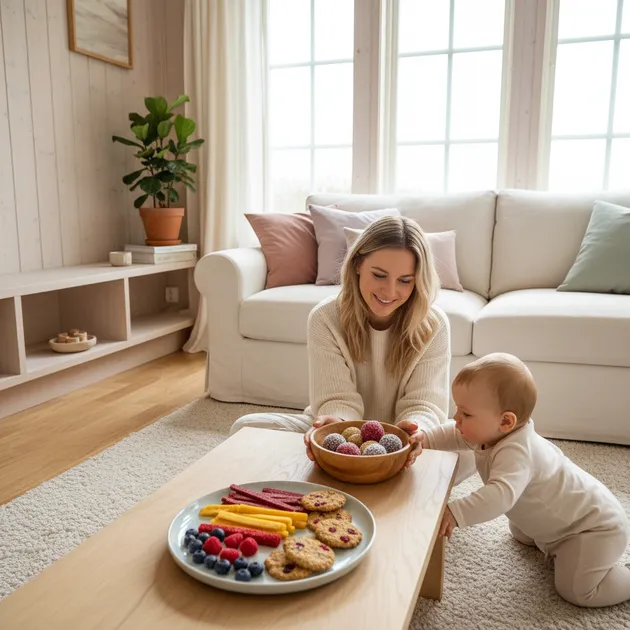
It's 2:30 in the afternoon, and the baby is starting to get restless. The next meal is an hour away. What can you offer as a snack, without reaching for crackers or cookies?
Healthy snacks for babies and toddlers don't have to take long to make. With a few ingredients you probably already have at home, you can create snacks that are nutritious, free of added sugar, and beloved by little ones.
Here are 10 recipes suitable from 6 months and up, adapted to your baby's age and chewing ability.
General rules for baby snacks
According to the AAP and WHO, snacks for babies and toddlers should:
- Contain no added sugar, fruit's natural sweetness is enough
- Contain no added salt, babies' kidneys handle very little sodium
- Be age-appropriate, soft consistency for the youngest, a bit more texture for older babies
- Supplement main meals, not replace them
A snack should be smaller than a main meal. Think fruit pieces, a small vegetable, or a smoothie bite, not a full portion.
Babies from 6 months need 1–2 snacks daily in addition to 3 main meals. Toddlers aged 1–3 years need 2–3 snacks.
10 healthy snack recipes
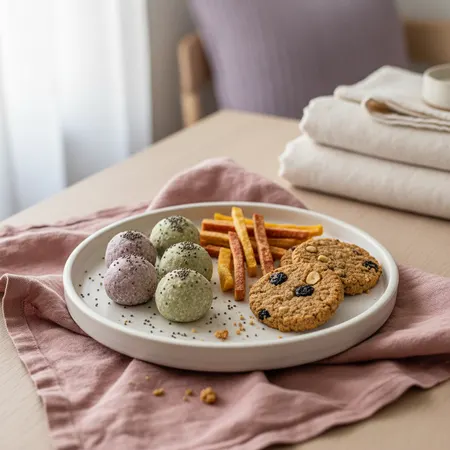
1. Smoothie bites (banana-oat-berry)
The ultimate baby snack, easy to make and perfect for little hands.
Ingredients:
- 1 ripe banana
- 3 tbsp rolled oats
- Handful of blueberries or raspberries
How to make:
- Mash the banana with a fork
- Mix in the oats and mashed berries
- Shape into small balls with your hands (slightly damp hands help)
- Place on parchment paper and freeze for 1 hour
- Store in the freezer, take out 10 minutes before serving
Age: From 6 months (mash more finely for the youngest)
2. Avocado sticks
Avocado is one of the most nutritious foods you can give your baby, packed with healthy fats, fiber, and potassium.
How to make:
- Cut a ripe avocado into thick spears
- Roll in finely ground oats for a better grip if desired
- Serve immediately (avocado browns quickly)
Age: From 6 months
3. Baked sweet potato wedges
Soft, sweet, and perfect for little fingers.
Ingredients:
- 1 sweet potato
- A little olive oil
How to make:
- Peel and cut the sweet potato into thick wedges
- Brush with a little olive oil
- Bake at 400°F / 200°C for 20–25 minutes until soft
- Cool to room temperature
Age: From 6 months
Make a big batch of sweet potato wedges and freeze them. They thaw quickly and can be warmed in a microwave or oven. Perfect to have on hand for busy days.
4. Sugar-free oat cookies
Soft, long-lasting, and safe for the youngest.
Ingredients:
- 1 ripe banana
- 1/3 cup rolled oats
- 1 tbsp coconut oil (melted)
- Cinnamon (optional)
How to make:
- Mash the banana and mix with oats and coconut oil
- Shape into small flat cookies on parchment paper
- Bake at 350°F / 180°C for 12–15 minutes
- Cool completely, they firm up as they cool
Storage: 3–4 days in a sealed container, or freeze
Age: From 6 months (soft enough to gum)
5. Frozen fruit pops
Perfect for warm summer days and during teething.
Ingredients:
- Ripe banana, mango, or strawberries
- A little plain yogurt (from 10 months)
How to make:
- Mash the fruit and yogurt together
- Pour into popsicle molds (available in baby-friendly sizes)
- Freeze for at least 4 hours
Age: From 6 months (without yogurt), from 10 months (with yogurt)
6. Date and oat energy balls
Naturally sweet, nutritious, and popular with the whole family.
Ingredients:
- 3.5 oz / 100 g pitted dates
- 1/3 cup rolled oats
- 2 tbsp peanut butter (or other nut butter)
- 1 tbsp shredded coconut (optional)
How to make:
- Soak the dates in warm water for 10 minutes
- Blend everything in a food processor into a sticky dough
- Shape into small balls
- Store in the refrigerator, keeps for one week
Age: From 8–9 months (mash more finely for the youngest). Do not give whole balls to babies who can't chew well yet, break them into pieces.
Dates are naturally very sweet. Use in moderation as a snack, not as a daily treat in large amounts. Note that dates are sticky and can cling to teeth.
7. Cheese sticks (from 10 months)
Cheese is a great source of calcium and protein.
How to make:
- Cut mild cheddar or similar cheese into thin sticks
- Serve with cucumber spears or bell pepper strips
- Optionally alongside whole grain crackers
Age: From 10 months (AAP recommends introducing cheese around 9–10 months)
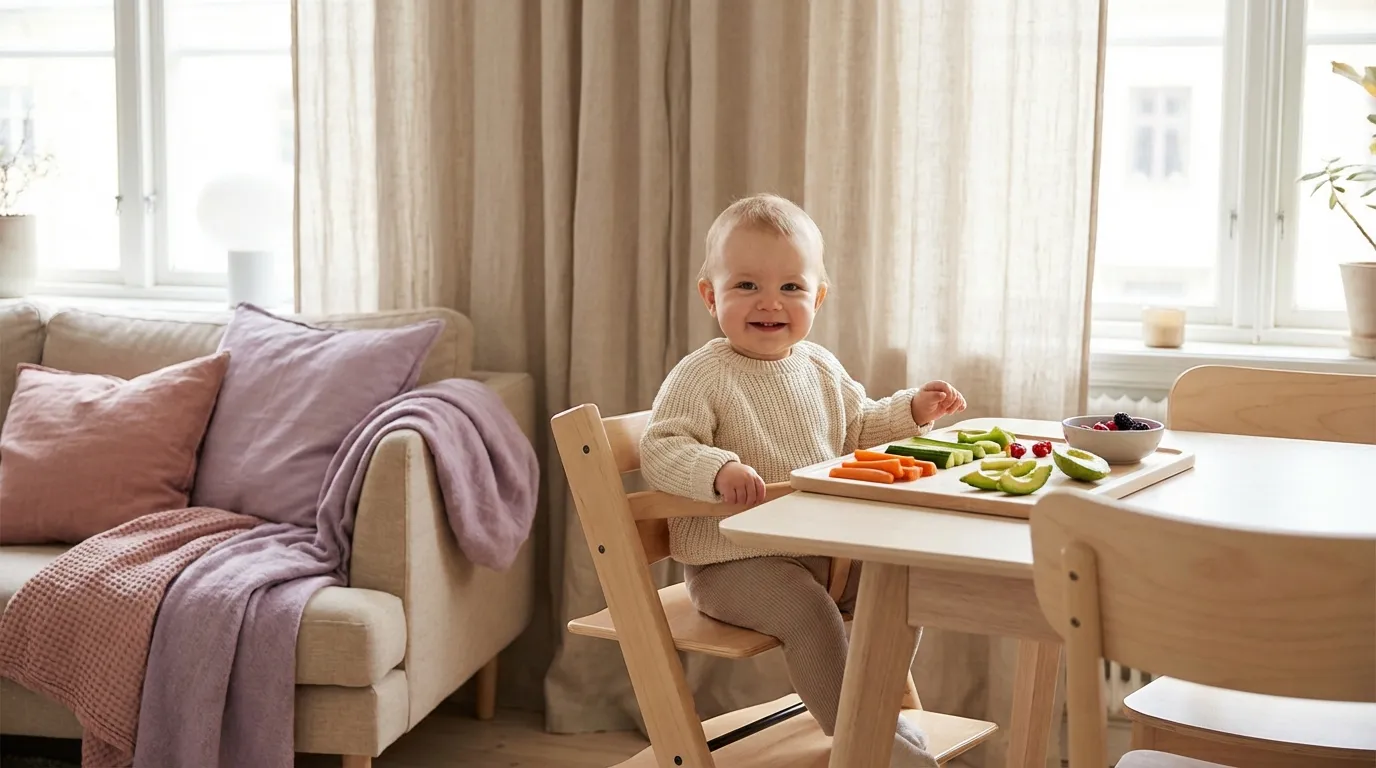
8. Veggie sticks with hummus
Colorful, nutritious, and fun to dip.
Ingredients:
- Cooked carrot sticks (soft)
- Bell pepper strips
- Cucumber spears
- Store-bought or homemade hummus
How to make:
- Cook the carrots until soft (about 8 minutes)
- Cut bell pepper and cucumber into appropriate sticks
- Let your child dip in hummus
Hummus is made from chickpeas and tahini, both safe from 6 months.
Age: From 6 months
9. Banana pancake strips
A mini version of banana pancakes, cut into easy-to-grip strips.
Ingredients:
- 1 egg
- 1 ripe banana
- 2 tbsp rolled oats
How to make:
- Blend everything into a smooth batter
- Cook small pancakes in a little butter
- Cut into strips or pieces
Age: From 6 months
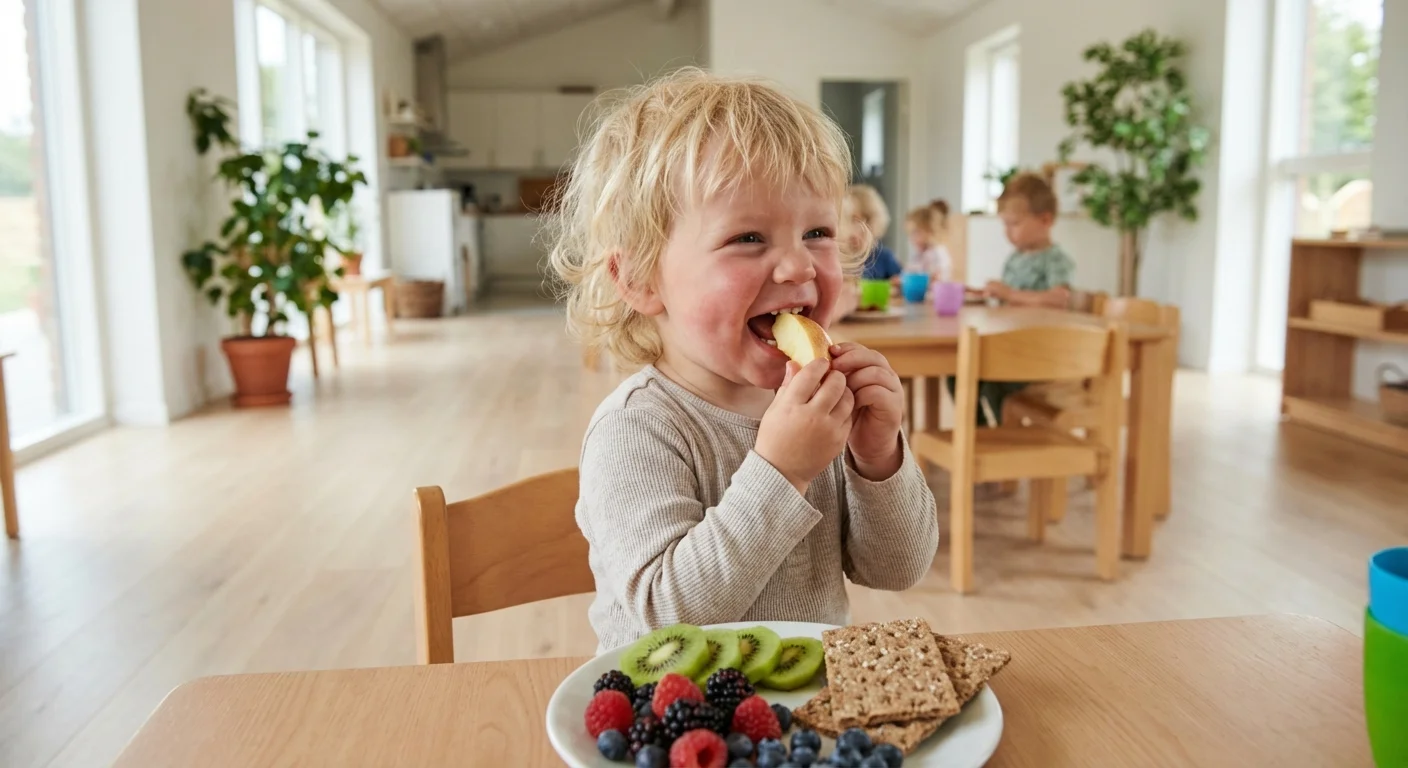
10. Soft fruit salad
The simplest snack, and often the most popular.
Great fruits for babies:
- Banana (cut into pieces)
- Soft pears
- Blueberries (mashed for the youngest, whole from 12 months)
- Mango (in strips)
- Kiwi (in pieces)
- Strawberries (halved)
Combine 2–3 types of fruit in a bowl. Let the child pick with their fingers.
Age: From 6 months (adjust size and consistency)
Berries are among the most nutritious foods available. Blueberries, raspberries, and strawberries are excellent snacks for babies. Frozen berries are just as nutritious as fresh and available year-round.
Snacks to avoid
Some popular adult snacks are unsuitable for babies and toddlers:
- Rice cakes and rice crackers, limit due to arsenic content (avoid large amounts under age 6, per FDA)
- Cookies and cakes, added sugar, little nutrition
- Hot dog pieces, high sodium, choking hazard (always slice lengthwise)
- Whole nuts, choking hazard under age 4 (nut butter is fine)
- Popcorn, choking hazard under age 3
- Honey, not before 12 months (risk of infant botulism)
- Hard candy, choking hazard and sugar
Storage and meal prep
Many of these snacks can be prepared in large batches:
| Snack | Refrigerator | Freezer |
|---|---|---|
| Smoothie bites | 2 days | 3 months |
| Oat cookies | 4 days | 2 months |
| Energy balls | 1 week | 3 months |
| Sweet potato wedges | 3 days | 2 months |
| Banana pancakes | 2 days | 1 month |
Tip: Use a "snack Sunday" to prepare the week's snacks. One hour on the weekend gives you snacks for the whole week.
Frequently asked questions
How many snacks does a baby need each day?
From 6–12 months: 1–2 snacks daily. From 1–3 years: 2–3 snacks. Adjust according to your child's appetite and activity level.
Can babies eat snacks with nut butter?
Yes, nut butter and peanut butter are safe from 6 months. Never give whole nuts due to the choking hazard. Nut butter is a good source of protein, iron, and healthy fats.
Should I avoid fruit because of the sugar?
No. The natural fructose in fruit is completely different from added sugar. Fruit contains fiber, vitamins, and minerals that babies need. The AAP recommends fruit daily for all children.
Are smoothie bites a choking hazard?
Smoothie bites of the right size (about 3/4 inch / 2 cm in diameter) and soft consistency are safe. They should mash easily between your fingers. For very young babies, you can flatten them slightly instead of making round balls.
Can my baby have snacks at daycare?
Many daycares serve fruit as a snack. Talk to the daycare if you'd like to send snacks from home, especially if your child has allergies or you prefer specific options.
Healthy snacks make everyday life easier
With a freezer full of smoothie bites, oat cookies, and sweet potato wedges, you always have a healthy snack ready. No stress, no guilt, just good food for little bellies.
Remember that snacks are part of the overall diet. They don't need to be fancy, a banana and some blueberries is an excellent snack.
Read more
Sources
🔧 Helpful Tools
- Baby Food Guide. Safe foods and introduction schedule for your baby
- Breastfeeding Tracker. Log feeds, track supply, and monitor nursing sessions
- All Baby Tools. Browse all free tools for pregnancy and baby care
📖 Related Articles
- Healthy Snacks for Babies and Toddlers: Ages 6 Months to 3 Years. Healthy snacks for babies and toddlers. Age-appropriate snack ideas, portion sizes, and tips for avoiding added sugar. Based on AAP and WHO dietary guidelines.
- Baby Food at 1 Year: Transitioning to Family Meals. What can your child eat at 1 year old? Guide to family foods, cow's milk, portions, and diet for one-year-olds based on WHO and AAP recommendations.
- Baby Food at 8 Months: Chunkier Textures and Finger Foods. What can your baby eat at 8 months? Guide to textures, portions, finger foods, and meal routines for babies 8–10 months based on WHO and AAP recommendations.