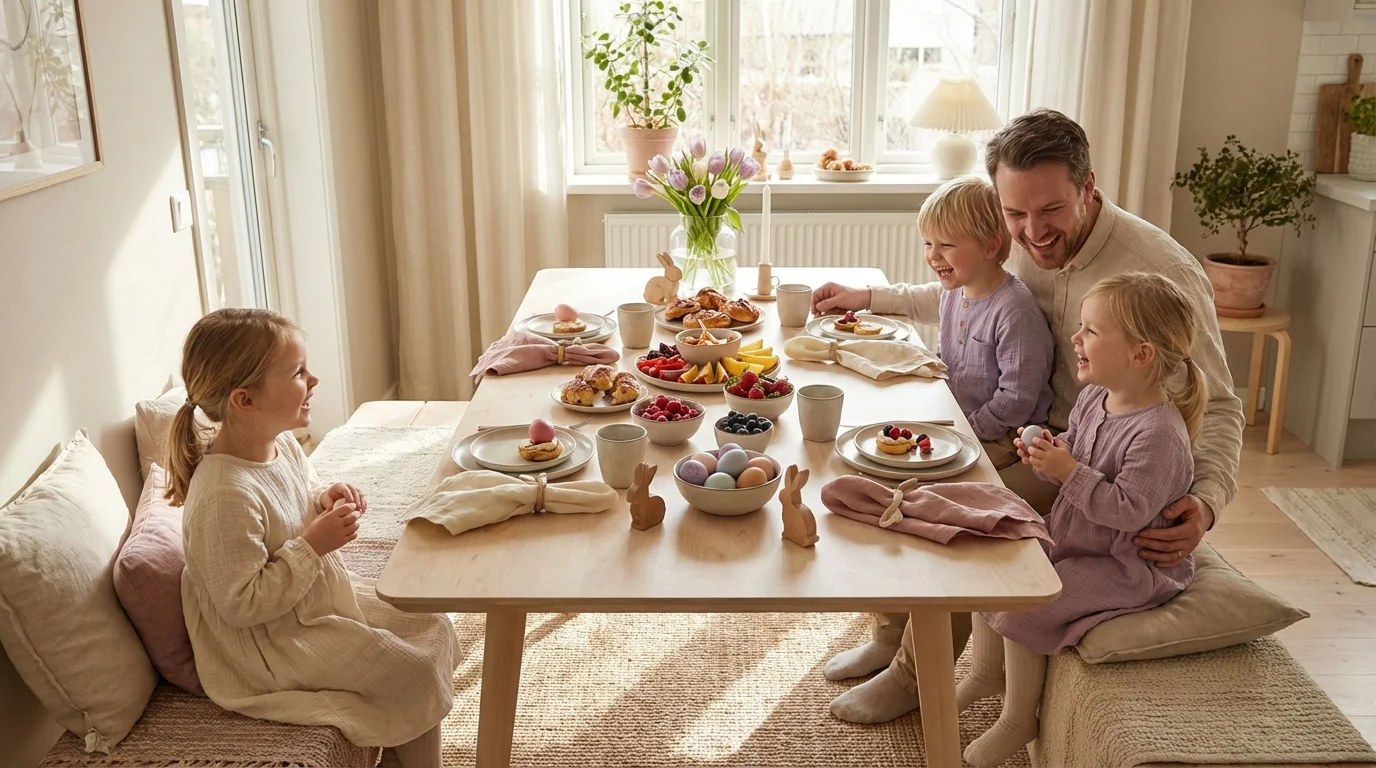
Easter breakfast is one of the year's coziest meals. Boiled eggs, fresh rolls, fruit, and the whole family gathered around a decorated table. With a little creativity and a few simple tricks, you can make Easter breakfast into something extra special, without getting up at five in the morning to prepare.
Here you'll find kid-friendly recipes, age-appropriate tips, and decoration ideas that the children themselves can contribute to.
Kid-Friendly Easter Food by Age
Not all Easter food is right for every age. Here's a guide to what you can safely serve, based on current recommendations from the WHO and pediatric nutrition guidelines.
From 6 Months
The baby has just started with solid foods, and Easter breakfast can be a wonderful taste experience.
- Mashed hard-boiled egg yolk, mash with a little breast milk or water. Eggs are safe from 6 months and a good source of iron and protein
- Banana, mashed or in thin slices
- Avocado, mashed or in pieces the baby can self-feed
- Oatmeal porridge, made with water or breast milk
Read our guide to introducing eggs to baby for detailed information on safe egg introduction.
From 10 Months
Now the baby can eat more variety and may have teeth to chew with.
- Scrambled eggs, cooked in a little butter, without salt. Soft and easy to eat
- Bread with butter, wholegrain bread in strips the baby can hold
- Soft fruit, strawberries in pieces, blueberries (halved), banana slices
- Yogurt, plain yogurt with mashed berries (small tastes from 10 months)
- Mild cheese, soft cheese in thin slices
From 10 months, baby can try dairy products like yogurt and cheese, but in small amounts. From 12 months, dairy can be used more regularly. Cow's milk as a drink is recommended from 12 months. Source: WHO/AAP guidelines.
From 1 Year
Now the options really open up. A one-year-old can eat most of what adults eat.
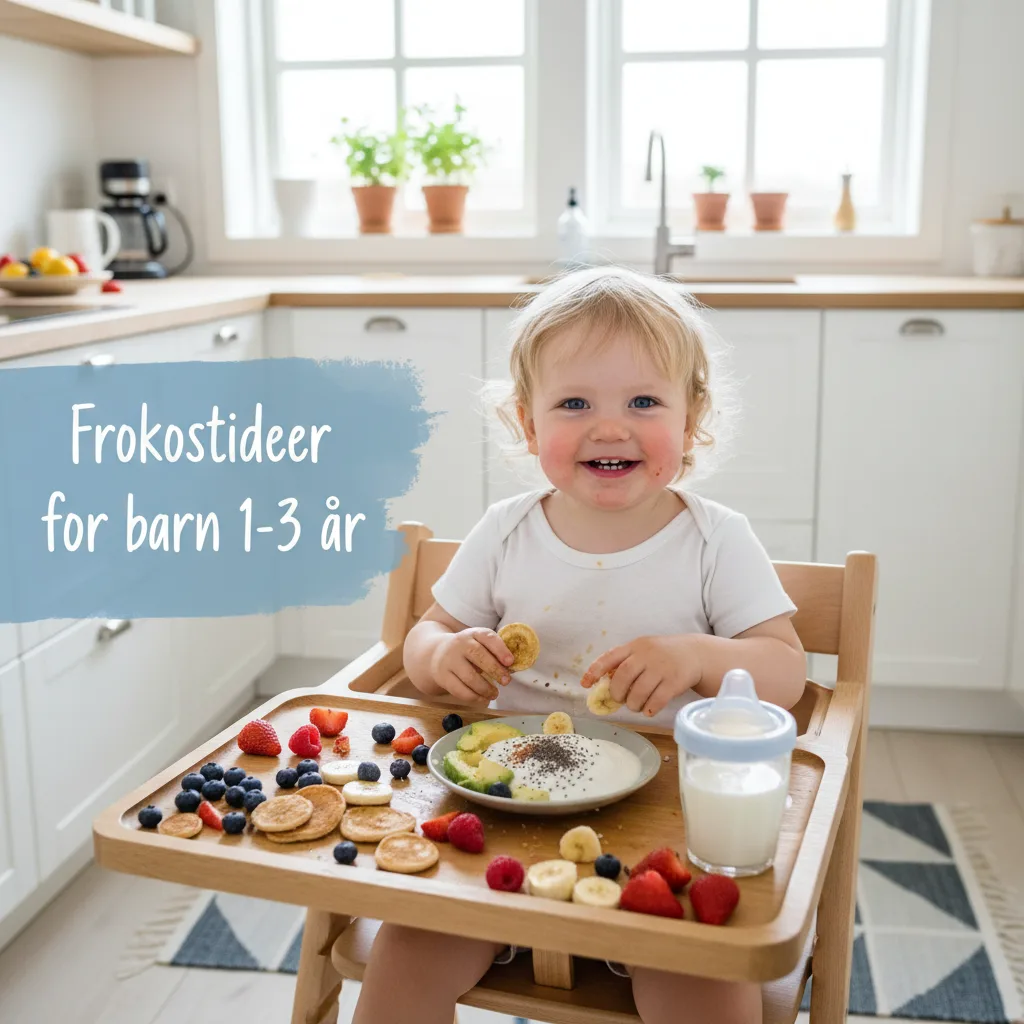
- Pancakes, small, thin pancakes with blueberries or banana
- Yogurt with fruit and granola, crunchy and colorful
- Cheese in all varieties, mild cheddar, cream cheese on bread
- Eggs in all forms, boiled, fried, scrambled, omelette
- Fruit, everything from apple to oranges (in pieces)
2–3 Years
Toddlers can now properly participate at the Easter table and eat almost the same as adults.
- Smoothie, banana, mango, and yogurt
- Waffles, with wholegrain varieties, topped with berries
- Smoked salmon, safe from 2 years, in thin slices on bread
- Wholegrain rolls, bake together the evening before!
- Fruit skewers, colorful and festive (see recipe below)
Simple Easter Recipes Kids Love
Chick-Shaped Pancakes
A fun twist on regular pancakes that makes breakfast extra festive.
How to:
- Make regular pancake batter (3 eggs, 300ml milk, 200ml flour, 1 tbsp butter)
- Pour batter into a squeeze bottle (e.g., a clean ketchup bottle)
- Draw chick shapes on the pan, a round body and a small head
- Cook over medium heat until bubbly on top, flip carefully
- Decorate with blueberry eyes and a small piece of carrot as the beak
Age: From 1 year. For younger babies: serve without decoration, cut into pieces.
Egg Muffins with Vegetables
Perfect to prepare the evening before. Just warm up in the morning.
How to:
- Whisk together 6 eggs with 100ml milk
- Add finely chopped vegetables: bell pepper, broccoli, spinach, mushrooms
- Divide into greased muffin tins
- Bake at 180°C (350°F) for 18–20 minutes until firm
- Cool slightly and serve
Age: From 10 months (no salt, with soft vegetables). Use spinach only for children over 12 months.
Fruit Skewers in Easter Colors
Colorful and festive. Let the kids help thread the fruit onto the sticks.
How to:
- Cut fruit into appropriate pieces: melon (green), blueberries, strawberries, kiwi, mango
- Thread alternately onto wooden skewers (cut off the sharp tip for safety!)
- Serve on a pretty plate with a bowl of yogurt for dipping
Age: From 1 year with supervision. Cut grapes and blueberries in half for children under 3 (choking hazard).
Smoothie Bowl with Easter Decoration
A colorful start to the day that looks festive and tastes wonderful.
How to:
- Blend 1 banana, 100ml frozen mango chunks, and 100ml yogurt into a thick smoothie
- Pour into a bowl
- Top with coconut flakes, banana slices, blueberries, and a sprinkle of oats
- Make an Easter motif with the fruit, a chick made of banana slices and blueberry eyes
Age: From 1 year. For babies 6–12 months: serve the smoothie as is, without toppings.
Decorate the Easter Table Together with the Kids
Table decorations don't have to cost a fortune. Here are simple ideas the children can contribute to.
- Cress in eggshells, sow cress seeds in empty eggshells filled with cotton and water 5–7 days before Easter. Place in egg cups as table decorations
- Children's drawings as place cards, let the kids draw Easter chicks and bunnies. Write names on them and use as place cards
- Napkin folding, fold yellow napkins into chicks or rabbits (YouTube has simple instructions)
- Natural decorations, branches with pussy willows, moss, and twigs from the garden
- Painted eggs, hard-boil eggs and let kids paint with food-safe paint or markers
Start the cress a week before Easter. Children love watching it grow, and it's a wonderful activity in the days before the Easter holiday. Place the eggshells in an egg carton on the kitchen counter and let the kids water them a little each day.
Easter Lunch and Dinner with the Little Ones
Lamb for Children
Lamb is a classic Easter dish, and babies can have lamb from 6 months. Prepare it soft and juicy.
- For babies 6–12 months: Slow-roast lamb until tender, then finely chop or mash. Serve with mashed vegetables
- For 1–3 years: Cut into small pieces. Lamb stew with root vegetables is perfect, soft and easy to chew
Alternative: Chicken
Not all children like lamb. Chicken is a great alternative.
- Roasted chicken thighs with herbs
- Cut into small pieces for the youngest
- Serve with rice and vegetables
Healthy Easter Snacks
Between meals, kids need something to munch on. Here are healthy alternatives to Easter candy.
- Fruit skewers, see recipe above
- Vegetable sticks with dip, cucumber, carrot, and bell pepper with hummus (from 6 months)
- Energy balls, oats, banana, peanut butter, and coconut, rolled into balls (from 1 year)
- Dried fruit, raisins, apricot pieces, mango pieces (from 1 year, in small pieces)
- Rice cakes or corn puffs, for the youngest who need something crunchy
Frequently Asked Questions
Can baby have eggs from 6 months?
Yes. According to current guidelines from WHO and the AAP, it's recommended to introduce eggs from 6 months. Early introduction may actually reduce the risk of egg allergy. Start with well-cooked egg yolk, and watch for allergic reactions the first few times.
Can babies eat both whites and yolks?
Yes, baby can eat both egg white and egg yolk from 6 months. Earlier guidelines recommended waiting on egg whites, but this recommendation is outdated. The egg should be fully cooked or thoroughly boiled.
Is smoked salmon safe for children?
Smoked salmon is typically recommended from 2–3 years due to listeria risk and high salt content. Heat-treated salmon (cooked, baked, or poached) is safe from 6 months and an excellent source of omega-3 and vitamin D.
What about Easter candy for children?
Health guidelines recommend avoiding added sugar in the first year of life. For children 1–3 years: limit the amount and offer healthy alternatives like fruit and berries. A small chocolate Easter egg is not harmful for a child over 1 year, but make it the exception rather than the rule.
More Easter Food Inspiration
Looking for more food ideas? Here are useful articles:
- Breakfast Ideas for Children 1–3 Years, 12 simple weekday breakfasts
- Eggs for Baby, complete guide to egg introduction
- Fish for Baby, when and how to introduce fish
- Smoothies for Baby and Toddler, simple recipes
Read More
- Breakfast for Baby 6–12 Months: Ideas and Recipes
- Picky Eaters: How to Handle Toddlers Who Won't Eat
Sources
- WHO. Complementary feeding guidelines
- American Academy of Pediatrics. Infant nutrition recommendations
- ESPGHAN. Complementary feeding guidelines
Last updated: March 2026
🔧 Helpful Tools
- Baby Food Guide. Safe foods and introduction schedule for your baby
- Breastfeeding Tracker. Log feeds, track supply, and monitor nursing sessions
- All Baby Tools. Browse all free tools for pregnancy and baby care
📖 Related Articles
- Breakfast for Baby 6–12 Months: Ideas and Recipes. What can your baby eat for breakfast from 6 months? Age-appropriate breakfast ideas, recipes, and tips for a great start to the day. Based on international feeding guidelines.
- Breakfast Ideas for Toddlers 1–3 Years, 12 simple and nutritious breakfast ideas for children aged 1 to 3. Quick everyday breakfasts the whole family will enjoy.
- Family Dinners with Baby: Shared Meals from 6 Months. How to adapt the family dinner for your baby from 6 months. Simple recipes the whole family can enjoy, with age-appropriate tips.