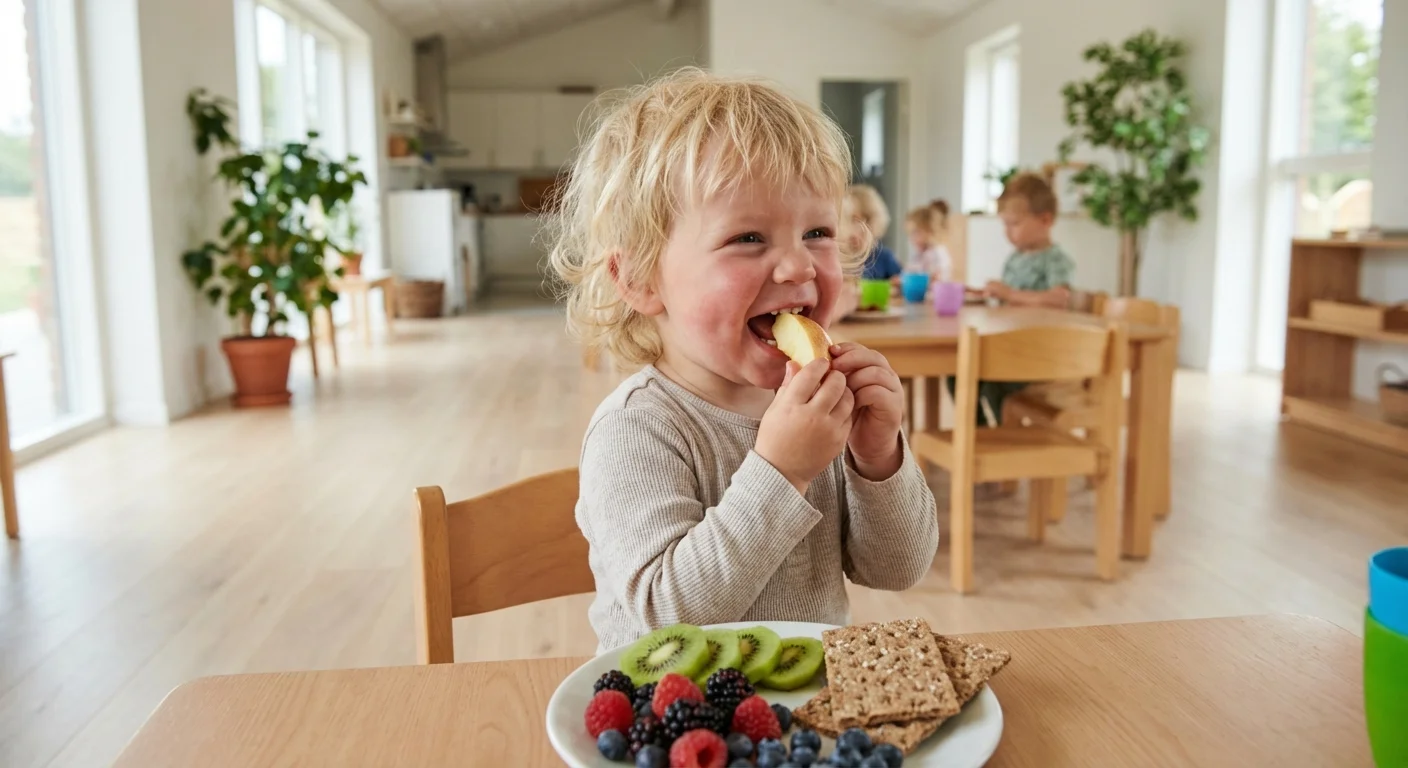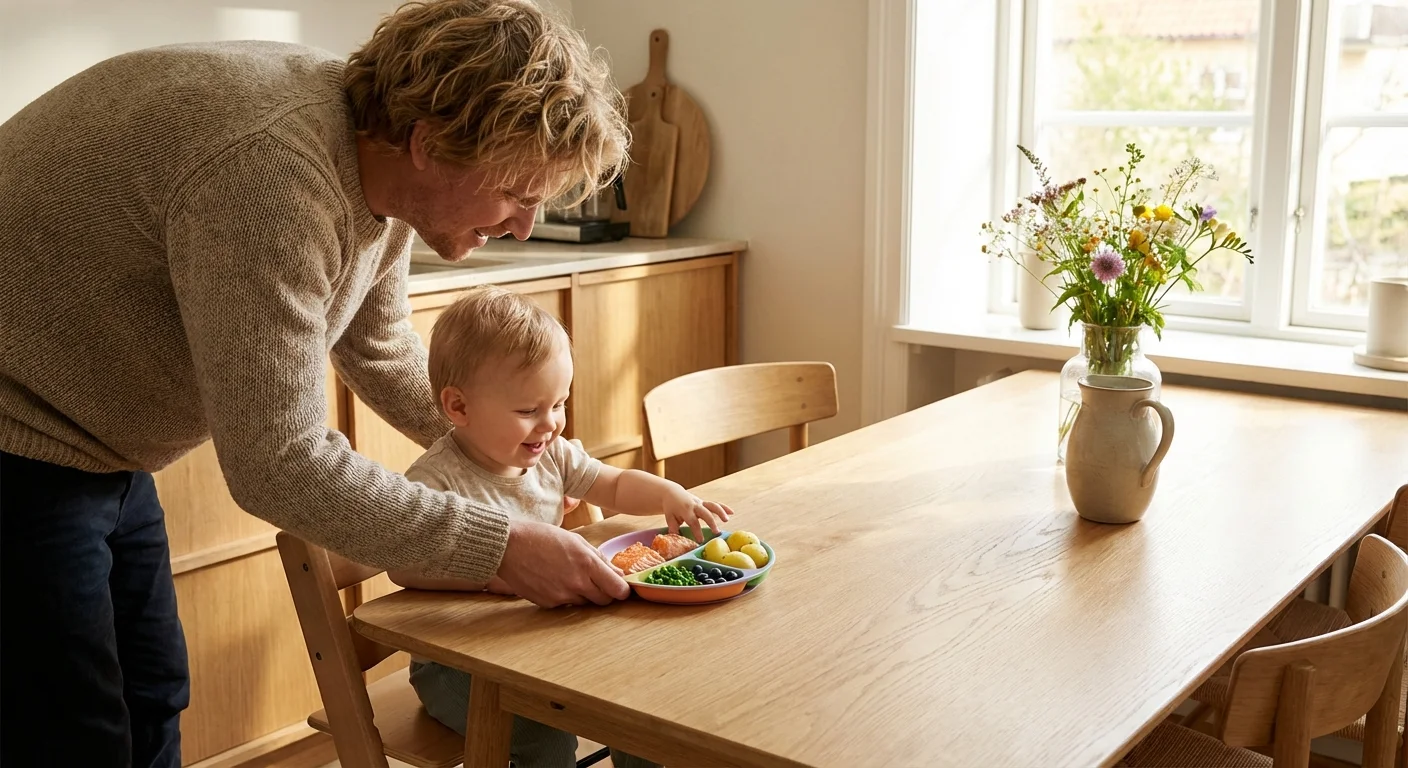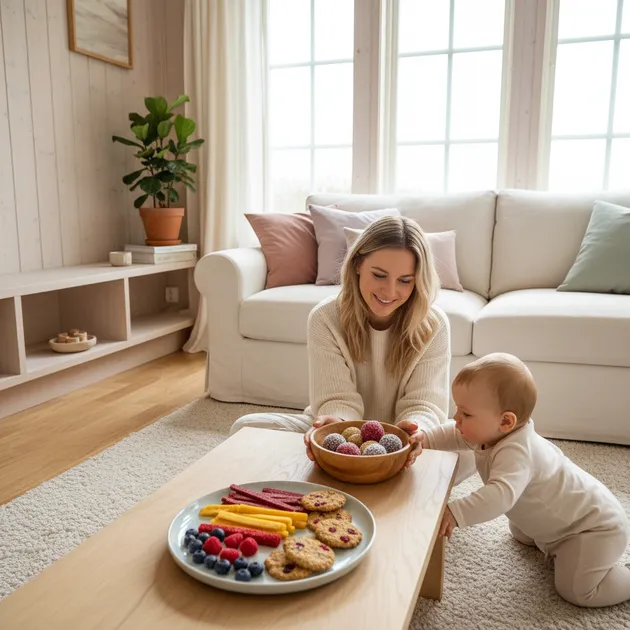
Between breakfast and lunch, between lunch and dinner, little stomachs need refueling. Snacks are an important part of a child's diet, but it can be challenging to find healthy options that actually work in everyday life.
In this guide, you'll find age-appropriate snacks from a baby's first food experiences to the three-year-old who has strong opinions about what to eat.
Why are snacks important?
Children have small stomachs and high energy needs. According to the AAP and WHO, children should have 3 main meals and 2–3 snacks daily. Snacks contribute to:
- Stable blood sugar: Prevents the child from becoming too hungry between main meals
- Adequate nutrition: Difficult to meet nutritional needs with only three meals
- Better mood: Hungry children often become restless and irritable
- Good eating habits: Regular meals create predictability and security
A snack doesn't need to be large or elaborate. A piece of fruit, a slice of bread, or some vegetable sticks is enough. What matters most is that it comes at a set time and provides a little energy.
Snacks from 6–8 months
In the beginning, snacks are mostly about practicing eating. Breast milk or formula remains the primary source of nutrition.
Simple snacks for the youngest
- Banana sticks: Cut a banana into long strips the baby can grasp
- Avocado sticks: Soft, nutritious, and perfect for small hands
- Cooked carrot: Soft and long enough for the baby to hold
- Cooked broccoli: Natural "handles" make broccoli ideal finger food
- Apple or pear purée: Cooked and mashed, served with a spoon
- Bread stick: Soft bread cut into strips, optionally with a thin layer of nut butter
Portion size 6–8 months
A few teaspoons or 2–3 pieces of finger food is enough. Let the baby control the amount themselves. It is completely normal for most of it to end up on the floor at first.
Snacks from 8–10 months
The baby can now handle more variety and thicker textures. The pincer grasp is developing, and the baby can pick up smaller pieces.
Ideas for 8–10 months
- Soft fruit pieces: Ripe mango, melon, blueberries (halved), strawberries (in pieces)
- Vegetable sticks: Cooked sweet potato, zucchini, or parsnip
- Rice balls: Cooked rice shaped into small balls, optionally with mashed vegetables
- Cooked egg (in pieces): Protein-rich and easy to prepare
- Hummus with bread stick: Chickpeas are a good source of iron and can be introduced from 6 months
- Pea mash on bread: Cooked peas mashed with a little oil
- Smoothie by spoon: Banana, berries, and a little water blended thick
Avoid whole grapes, whole cherry tomatoes, whole nuts, and round pieces that can get stuck in the throat. Always cut round foods in half or quarters. See our article on choking hazards for more information.
Snacks from 10–12 months
From 10 months, the baby can taste dairy products, which opens many new snack options.
Ideas for 10–12 months
- Yogurt with fruit: Plain yogurt with mashed banana or berries (max 1/4 cup per day)
- Mild cheese in strips: Cheddar or mild cheese in thin strips
- Banana pancakes: Banana, egg, and oats, easy to batch-make and freeze
- Veggie muffins: Zucchini, carrot, and egg baked in muffin tins
- Cottage cheese with fruit: Protein-rich and simple
- Sugar-free oat crackers: Oats, banana, and a little oil baked into soft crackers
- Cooked pasta with pesto: Short pasta the baby can pick up
From 10 months, dairy products are allowed as taste portions. From 12 months, they can be a regular part of the diet. Total cow's milk products should not exceed about 2 cups (500 ml) per day for toddlers.
Snacks for 1-year-olds
From 12 months, the child can eat most of what the family eats. Whole cow's milk can be used as a drink, and snacks can become more varied.
Top 10 snacks for 1-year-olds
- Fruit: Apple in pieces, pear, banana, berries, grapes (halved)
- Slice of bread with topping: Hummus, cheese, peanut butter
- Yogurt with granola: Plain yogurt with unsweetened granola and fruit
- Vegetable sticks with dip: Carrot, cucumber, bell pepper with hummus
- Smoothie: Banana, berries, yogurt, and a little milk
- Crispbread with cheese: Simple and quick
- Hard-boiled egg: Perfect to bring on the go
- Energy balls: Oats, nut butter, dried fruit (no added sugar)
- Cooked corn: Popular and fun to eat
- Toast with avocado: Simple and nutritious
Portion sizes for 1-year-olds
| Food | Portion |
|---|---|
| Fruit | 1/2–1 piece |
| Bread | 1/2–1 slice |
| Yogurt | 1/4–1/2 cup |
| Vegetables | 2–3 sticks |
| Cheese | 1 small slice |
Snacks for 2–3 year olds
Toddlers often have strong opinions about food. The key is to offer healthy options and let the child choose.
Creative snacks for toddlers
- Ants on a log: Celery with peanut butter and raisins
- Fruit skewers: Fruit on a wooden stick (supervised)
- Mini wraps: Tortilla with cheese, chicken, or hummus, roll up and slice
- Frozen yogurt bites: Yogurt with berries frozen in an ice cube tray
- Veggie chips: Thin slices of sweet potato or beet baked in the oven with a little oil
- Popcorn (from age 3): Homemade without salt or butter
- Edamame beans: Cooked and cooled, fun to pop out of the pods
- Banana ice cream: Frozen banana blended into "ice cream"
Let the child help with food preparation. Even 2-year-olds can rinse berries, break bananas, and place fruit in a bowl. Children who help make the food eat it more often.
Snacks on the go
Not all snacks happen at the kitchen table. Always have something in the bag:
Good travel snacks
- Dried fruit (no added sugar), apricots, raisins, prunes
- Crispbread with cheese in a container
- Banana (nature's perfect packaging)
- Toast cut into pieces
- Vegetable sticks in a bag with a little moisture
- Sugar-free oat crackers
- Nut butter in small portions (from 6 months, but not whole nuts)
Avoid giving snacks in the car while the child is in the car seat. The choking risk is higher when the child is reclined, and you cannot help quickly enough. Stop and let the child eat in peace.
Snacks to avoid
Not everything marketed as "kid snacks" is healthy. Here are common traps:
Foods to avoid or limit
- Cookies and biscuits: High in sugar and low in nutrients, even those labeled "child-friendly"
- Fruit pouches: High sugar content and bad for teeth. The AAP recommends limiting these.
- Rice cakes and rice crackers: Not recommended for children under 6 years old (arsenic)
- Juice and nectar: High in sugar, low in fiber. Give whole fruit and water instead.
- Flavored yogurt: Can contain 10–15 g of sugar per serving. Choose plain.
- Salty snacks: Chips and similar snacks are unnecessary for children.
Read the ingredient list
Always check the ingredient list, even on products that look healthy. A good rule of thumb: the shorter the ingredient list, the better. Sugar can hide behind names like glucose, fructose, syrup, maltodextrin, and honey.
When and how often?
Recommended meal schedule
| Age | Main meals | Snacks |
|---|---|---|
| 6–8 months | 1–2 | 0–1 |
| 8–12 months | 2–3 | 1–2 |
| 1–3 years | 3 | 2–3 |
Good timing
- Mid-morning: Between breakfast and lunch (around 9–10 am)
- Afternoon: Between lunch and dinner (around 2–3 pm)
- Optionally evening: A small bite between dinner and bedtime (around 6–7 pm)
Keep set times for snacks. It creates predictability and prevents the child from grazing all day. Between meals, offer only water.
Frequently asked questions
My child only wants snacks and eats little at dinner. What should I do?
This is common, especially with toddlers. Make sure snacks are nutritious (not just "empty calories"), and serve the afternoon snack at least 1.5–2 hours before dinner. Some children naturally eat better at snack time than at main meals, and that is fine as long as the overall nutrition is good.
How much should a child eat at snack time?
A snack should be smaller than a main meal, about 1/4 the size. For a 1-year-old, that means for example half a banana and a slice of bread, or 1/4 cup yogurt with fruit. Let the child control the amount.
Is it okay to give a snack right before dinner?
No, there should be at least 1.5–2 hours between the last snack and the main meal. A full child won't have an appetite for dinner. If the child is very hungry right before dinner, you can offer a few vegetable sticks as a "starter."
What do I do if my child only wants bread with toppings?
Bread with toppings is actually a good snack, especially with nutritious toppings like hummus, cheese, or peanut butter. Continue offering other options alongside the bread, but don't stress about it. Variety usually comes with time.
Does a snack always have to be "healthy"?
Snacks should mainly consist of healthy, nutritious foods. But there is room for flexibility. An ice cream in the park or a cookie at grandma's is perfectly fine occasionally. What matters most is the everyday choices, not the exceptions.
Read more
- Healthy smoothies and snack bowls for babies
- Picky eaters, tips for meals
- Sugar and salt for babies
- Meal plan for babies 6–12 months
- Nutrition for 2–3 year olds
- Choking hazards baby
Sources
- AAP - American Academy of Pediatrics - Infant nutrition
- WHO - Infant and young child feeding
- CDC - Infant and toddler nutrition
🔧 Helpful Tools
- Baby Food Guide. Safe foods and introduction schedule for your baby
- Breastfeeding Tracker. Log feeds, track supply, and monitor nursing sessions
- All Baby Tools. Browse all free tools for pregnancy and baby care
📖 Related Articles
- How Much Should Your Baby Eat? Portion Sizes by Age. How much should your baby eat? A guide to portion sizes from 6 months to 3 years. Amounts per meal, signs of hunger and fullness, and when to talk to your pediatrician.
- Healthy Snacks and Smoothie Bites for Babies, 10 healthy and easy snacks for babies and toddlers. Smoothie bites, fruit pieces, and energy balls the whole family will love.
- Omega-3 for Children. Why Fish Is So Important. Why omega-3 and DHA are important for your child's brain development. Recommendations for fish for babies and children, with safe fish types and supplement tips.