Your first vacation with a baby is a milestone. It's exciting, a little nerve-wracking, and requires more planning than any trip you've taken before. But with the right preparation, it can be a wonderful experience for the whole family.
Here's everything you need: a packing list, travel tips, and practical advice for a successful first trip.
When Is Your Baby Ready to Travel?
There's no set rule for when a baby is old enough to travel. Many families take their first trip when the baby is 3–6 months old, but it's entirely individual.
Things to consider:
- Has your baby settled into a somewhat predictable routine?
- Is feeding, whether breastfeeding or bottle, well established?
- Do you feel confident enough to manage your daily routine outside the home?
- Has your baby had their first round of vaccinations? (especially important for international travel)
Flying with a baby: Most airlines allow infants from 2 weeks of age, but most pediatricians recommend waiting until your baby is at least 2–3 months old. Check with your pediatrician if you have any concerns.
Choose the Right Destination
Your first trip doesn't have to be exotic. Focus on comfort and accessibility.
Good destinations for a first trip:
- A nearby rental cabin or vacation home. Short journey, familiar food, easy access to help if needed
- A staycation. An overnight hotel stay close to home is a great way to ease in
- A neighboring country or state. Short flight or drive, similar climate and culture
- An all-inclusive resort. Everything is taken care of, less planning involved
Think about:
- How far away is the nearest emergency room or hospital?
- Is baby equipment available at your accommodation?
- Is the climate comfortable for a baby?
- Is the journey manageable?
Road Trip with Baby
A road trip is the most flexible way to travel with a baby. You stop when you want and have all your gear within reach.
Road trip tips:
- Plan a stop every 1.5–2 hours for feeding, diaper changes, and stretching
- Your baby must always be in a rear-facing, age-appropriate car seat
- Avoid leaving your baby in the car seat for more than 2 hours at a stretch (especially newborns)
- Use a window shade and sun shade on the car window
- Pack a separate bag with everything you need for the journey (diapers, food, a change of clothes, toys)
- Try driving during your baby's usual sleep times
Car seat safety: Never leave your baby in a car seat for extended periods outside the car. Car seats are designed for car travel, not as a sleeping surface. Take your baby out of the seat when you stop.
Flying with Baby
Flying with a baby is easier than you think, but it requires a little preparation.
Before the flight:
- Book a bassinet seat on long-haul flights (weight limits vary, often up to about 22 lbs/10 kg)
- Check the airline's policy on strollers and car seats (most take these free of charge)
- Pack extra clothes, diapers, and food in your carry-on
- Make sure your baby has their own passport (yes, even infants need one for international travel)
During the flight:
- Nurse, give a bottle, or offer a pacifier during takeoff and landing (helps equalize ear pressure)
- Don't stress about other passengers, most people understand
- A baby carrier is invaluable at the airport
- Infants under 2 typically sit on your lap (with a special infant seatbelt)
What you can usually bring free:
- Stroller (checked at the gate, collected at the gate)
- Car seat
- Travel crib (some airlines)
Accommodation
Your choice of accommodation can make or break a trip with a baby.
Hotel:
- Book a room large enough for a travel crib
- Ask whether a crib or travel cot is available
- Choose a room away from elevator noise and busy corridors
- Check if a microwave or kitchen area is available
Vacation rental or apartment:
- A full kitchen makes meal prep much easier
- More space to move around
- Your baby can sleep in their own room
- More flexibility with routines
Camping:
- See our guide to camping with a baby
Many hotels and vacation rentals offer baby packages with a crib, high chair, and changing mat. Ask when booking, it saves you from packing a lot of extra gear.
Feeding on Vacation
Breastfeeding on vacation:
- Breastfeeding is the easiest option when traveling, the food is always with you, always the right temperature
- Drink plenty of water, especially in warm climates
- Look up quiet spots to nurse in advance (many apps help you find nursing rooms)
Formula feeding on vacation:
- Bring enough formula for the entire trip, plus a backup supply
- Have access to boiled or bottled water (bring a travel kettle or bottle warmer)
- Sterilization options: microwave sterilizer bags or cold-water sterilization tablets take up very little space
- Ready-to-feed formula in cartons is perfect for travel days
Solid foods:
- For babies from 6 months: fruit pouches, baby porridge, and snacks travel well
- Easy travel snacks: banana, rice cakes, bread, fruit pouches
- Use your baby's food tracker to find age-appropriate travel foods
Baby Vacation Packing List
For the journey
- Diapers (enough for travel plus extra)
- Baby wipes
- Change of clothes for baby (2–3 extra)
- Change of clothes for you (you will get spit up on)
- Pacifier and a backup
- Favorite toy or comfort cloth
- Baby carrier or wrap
- Car seat (age-appropriate)
For accommodation
- Travel crib with fitted sheet
- Sleep sack or wearable blanket
- Baby monitor
- Blackout curtain (travel version with suction cups)
- Changing mat
- Portable baby bathtub or inflatable tub
Food and care
- Formula/cereal as needed
- Bottles and nipples
- Sterilization supplies (microwave bags)
- Bib with a catch pocket
- Spoon and sippy cup
- Snack container
Clothing
- 2–3 onesies per day (babies get messier than usual on vacation)
- Layers for cooler evenings
- Sun hat with a brim
- Swimwear and swim diapers
- Rain jacket or poncho
Health and safety
- Baby sunscreen (SPF 50, for babies 6 months and older)
- Insect repellent for babies (check age recommendation on label)
- Digital thermometer
- Infant acetaminophen or ibuprofen (check with your pharmacist for correct dosing)
- Health insurance card or travel health documentation
- Travel insurance information
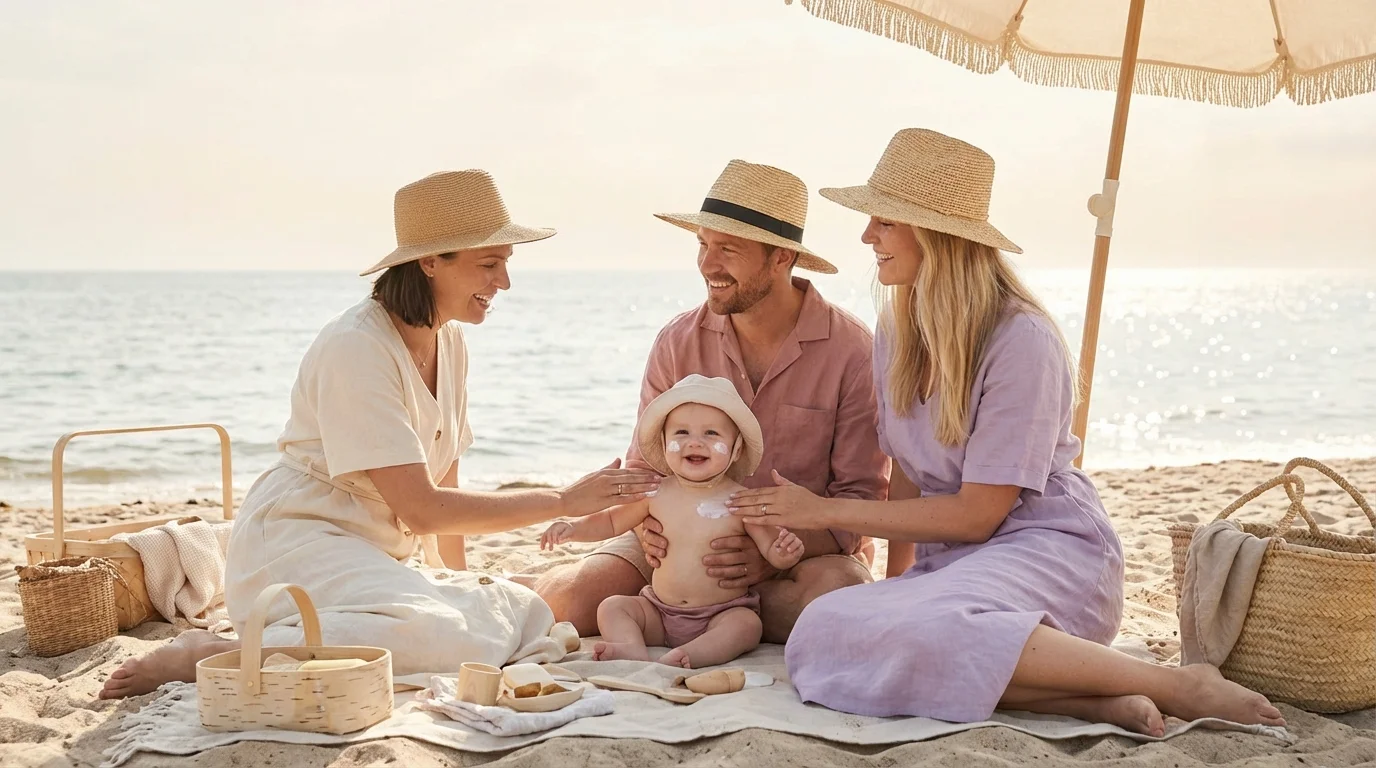
Sun and babies: Babies under 6 months should not be exposed to direct sunlight. Older babies should have SPF 50 sunscreen, a hat, and shade. Avoid direct sun during peak hours (11 a.m.–3 p.m.).
Managing Parental Stress
Your first trip with a baby can be stressful. Lower your expectations and enjoy the small moments.
Managing expectations:
- A vacation with a baby is not the same as a vacation without one. Accept that.
- You won't get to everything you planned. That's okay.
- Some days are just about survival. That's okay too.
- The best vacation memories often happen unplanned.
Share the responsibility:
- Take turns on overnight wake-ups
- Give each other an hour off each day
- Plan one dinner just for the two of you (ask the hotel for a babysitter, or let grandparents take over)
Routines on Vacation
Many parents stress about maintaining routines while away. Relax, a little flexibility is perfectly fine.
What's worth keeping:
- Roughly the same bedtime (within 30 minutes)
- Regular meals in the right sequence
- Enough total sleep (naps + nighttime)
What you can relax about:
- Exact clock times
- A perfectly dark room (a blackout curtain helps, but doesn't need to be 100%)
- Where your baby sleeps (stroller, carrier, travel crib, whatever works)
Safety on the Road
Before you leave:
- Are your baby's vaccinations current?
- Does your travel insurance cover your baby?
- Do you know where the nearest emergency services are at your destination?
- Do you have the local emergency number for your destination?
For international travel:
- Check whether specific vaccinations are recommended
- Keep a digital copy of your baby's passport and health records
- Research local healthcare options
- Carry your travel health insurance details
Frequently Asked Questions
When is a baby old enough to fly?
Most airlines allow babies from 2 weeks old, but 2–3 months is a more typical recommendation. Talk to your pediatrician if your baby has any special health considerations.
Does my baby need their own passport?
Yes, all children need their own passport for international travel. Check your country's requirements, as rules vary.
What do I do if my baby gets sick on vacation?
Call the local emergency number or go to the nearest emergency room. Always travel with health insurance, and bring a small travel first-aid kit with fever reducer.
Should I bring a stroller or a carrier?
Ideally both. A stroller for longer outings and sleep, a carrier for uneven terrain, airports, and places with stairs.
How many diapers do I need?
About 8–10 diapers per day for newborns, 6–8 for older babies. Add extras for travel days. Diapers can usually be purchased at your destination.
Read More
- Camping with Baby and Toddler. Complete camping guide
- Car Seat Safety Guide. Choosing the right car seat
- Road Trip with Baby Tips. How to survive long drives
Sources
🔧 Helpful Tools
- All Baby Tools. Browse all free tools for pregnancy and baby care
📖 Related Articles
- Food on the Go with Baby and Toddlers: Practical Guide. How to handle food on trips and outings with baby and toddlers. Packing tips, shelf-stable snacks, and meal ideas that work away from home.
- Food on the Go with Baby and Toddler: Practical Guide. How to manage meals on trips, travel, and outings with a baby or toddler. Packing tips, shelf-stable snacks, and meal ideas that work away from home.
- Hospital Bag for Birth: Complete Packing List for Parent, Partner, and Baby. Everything you need to pack for the hospital. A complete packing list for your birth stay, for the birthing parent, partner, and baby. Tips from midwives and experienced parents.