Making large batches of baby food and freezing them saves you time on busy days. But improper storage can lead to bacterial growth and food poisoning. Babies are more vulnerable to foodborne bacteria than adults.
Here is the complete guide to safe storage and freezing of baby food, based on food safety recommendations.
Basic Food Safety Rules
Hygiene First
Good hygiene is especially important when preparing baby food:
- Wash your hands thoroughly with soap and warm water before cooking
- Use clean utensils, knives, cutting boards, and cups
- Wash fruits and vegetables under running water
- Keep raw meat and fish separate from other food
- Use a clean dishcloth (change daily)
Babies have an immature immune system and are more susceptible to food poisoning than adults. Bacteria like Salmonella, Listeria, and E. coli can cause serious illness in infants. Be extra careful with hygiene, temperature, and shelf life.
Refrigerator Storage
Temperature
Your refrigerator should be at 40°F (4°C) or below. Use a refrigerator thermometer to check. Baby food should be stored in the coldest part of the fridge (usually the bottom shelf).
Shelf Life in the Refrigerator
| Food Type | Refrigerator Shelf Life | Notes |
|---|---|---|
| Homemade purée (fruit/vegetables) | 2–3 days | In a sealed container |
| Homemade meat purée | 1–2 days | Cool down quickly |
| Homemade fish purée | 1–2 days | Cool down quickly |
| Cooked porridge | 2 days | Cover well |
| Cooked pasta/rice | 2 days | Cool within 1 hour |
| Opened store-bought baby food | 1–2 days | Screw on lid, refrigerate |
| Breast milk (fresh) | Up to 4 days | In a clean, sealed container |
| Prepared formula | Max 24 hours | Best used within 2 hours |
Important Rules
- Cool down quickly, don't let baby food sit at room temperature for more than 2 hours
- Divide into portions, take out what the baby will eat, and put the rest back in the fridge
- Don't save food baby has eaten from for the next meal, bacteria from the baby's mouth multiply quickly
- Use sealed containers, protects against bacteria and odors
- Label with date, write the date on the container so you know when the food was made
When your baby eats directly from the container, bacteria from saliva mix into the food. Leftovers from a meal should be discarded. Instead, scoop out a portion into a separate bowl and refrigerate the rest immediately.
Freezing Baby Food
Freezing is the best way to extend the shelf life of homemade baby food.
How to Freeze Baby Food
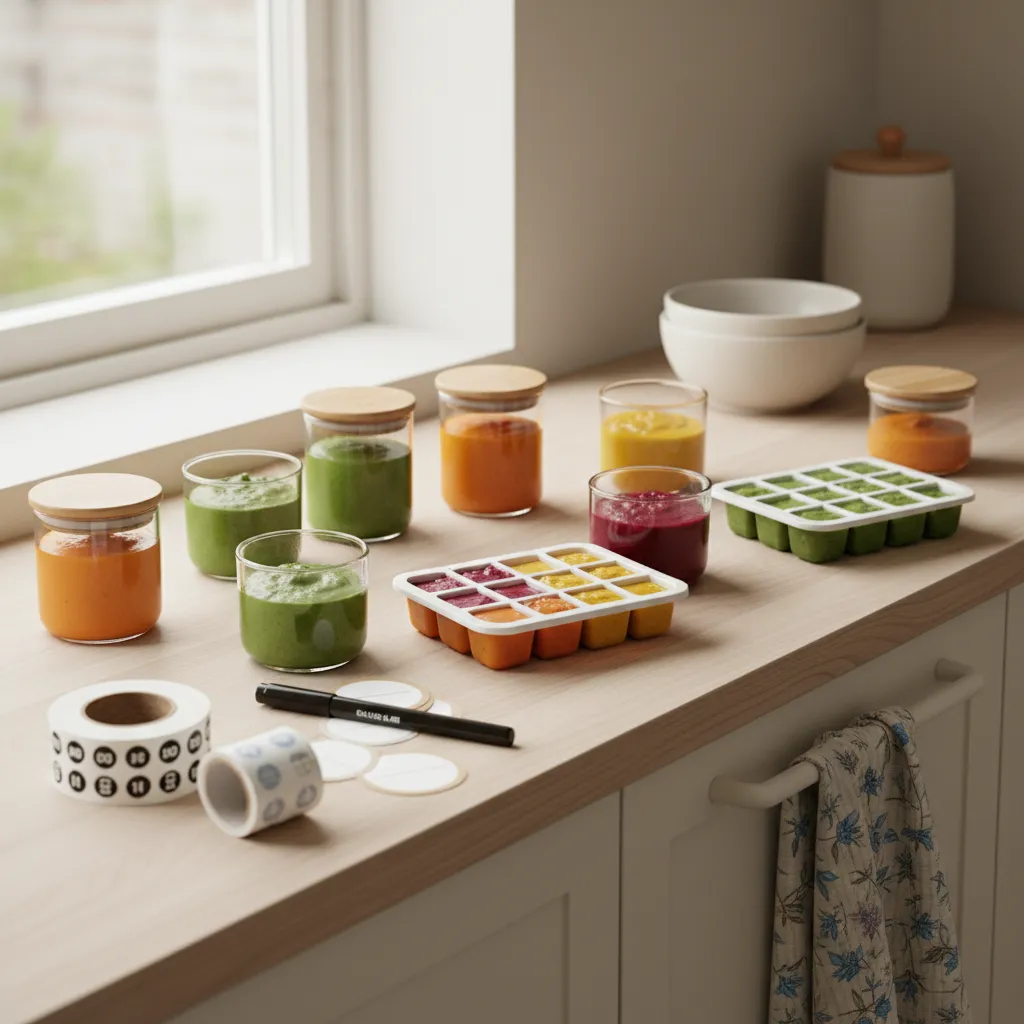
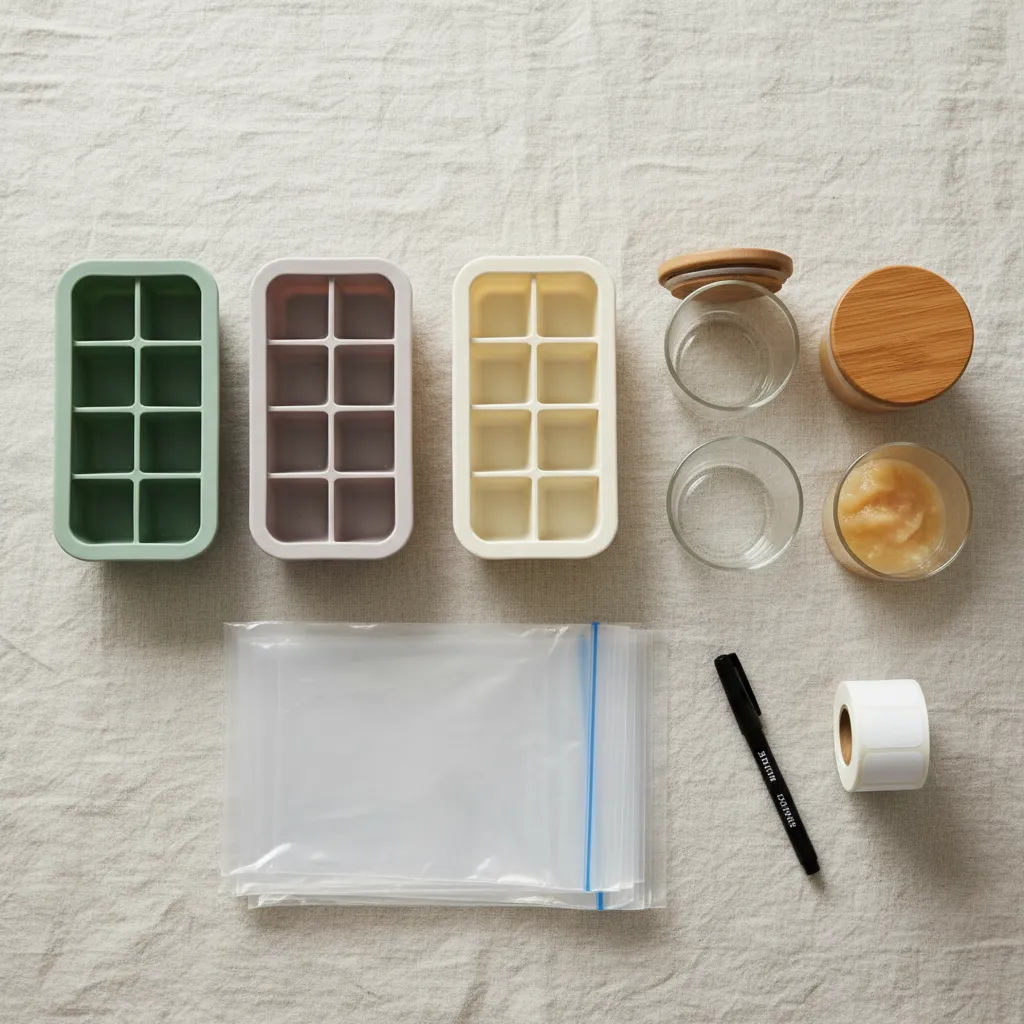
Ice cube method (perfect for purées):
- Fill ice cube trays with cooled purée
- Cover with plastic wrap or a lid
- Freeze until solid (about 4–6 hours)
- Pop out the cubes and place in a freezer bag
- Press out the air from the bag
- Label with contents and date
One ice cube is about 1 oz (30 ml), a perfect portion for the youngest babies.
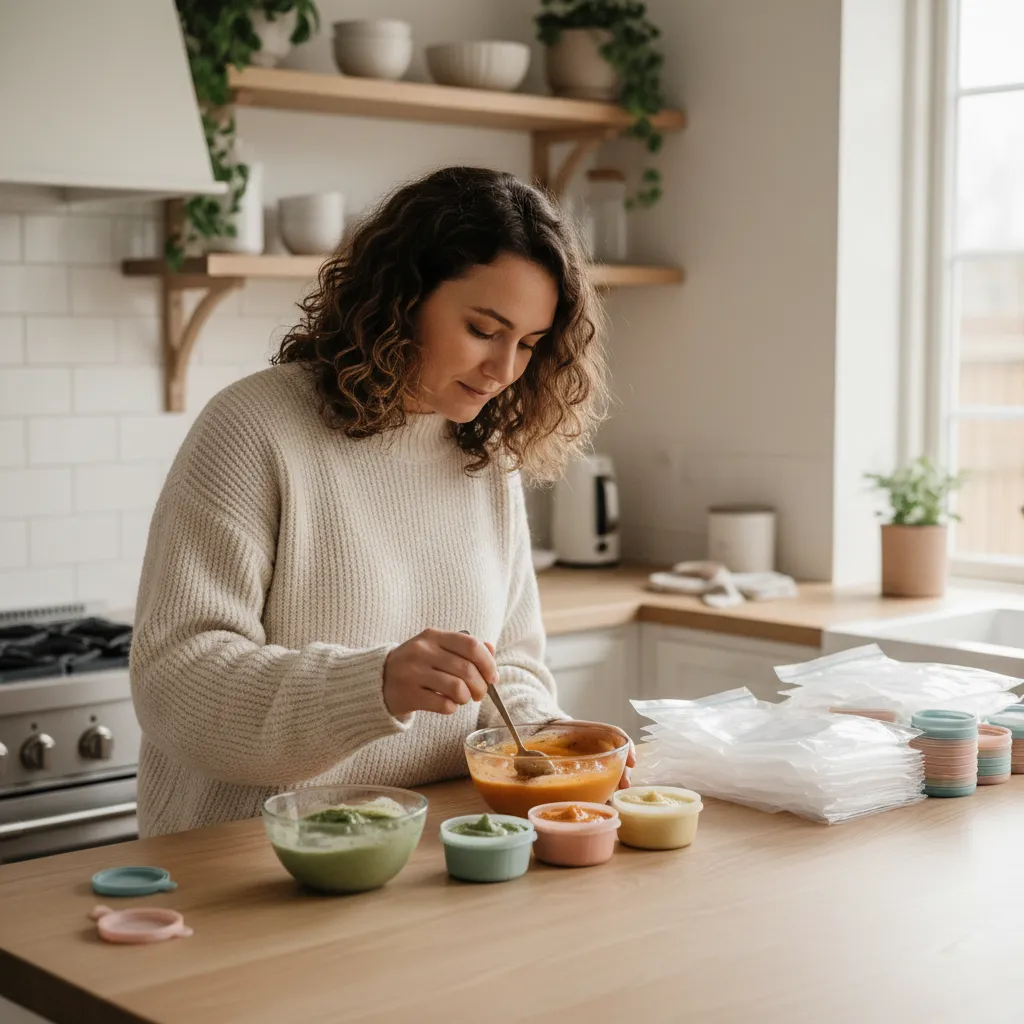
Portion method (for older babies):
- Divide food into portions (2–3 oz / 50–100 ml per container)
- Use small, freezer-safe containers with lids
- Leave a small gap at the top (food expands when frozen)
- Label with contents and date
Freezer Shelf Life
| Food Type | Freezer Shelf Life | Notes |
|---|---|---|
| Fruit and vegetable purée | 3–6 months | Keeps well |
| Meat purée and dishes | 2–3 months | Best quality within 2 months |
| Fish purée and dishes | 2–3 months | Can become dry after long freezing |
| Bean and lentil purée | 3–6 months | Freezes well |
| Porridge (cooked) | 1–2 months | Texture may change |
| Breast milk | 6–12 months | In a clean freezer bag, 0°F (-18°C) |
Your freezer should be at 0°F (-18°C) or colder. Temperature directly affects shelf life. During a power outage, check the temperature, if food has thawed and become warm, it should be discarded (not refrozen).
What Freezes Well?
Freezes well:
- Vegetable purées (carrot, sweet potato, broccoli, cauliflower)
- Fruit purées (apple, pear, banana, mango)
- Ground meat in sauce
- Lentil and bean dishes
- Soups and stews
- Homemade meatballs
Doesn't freeze well:
- Mashed potatoes (becomes sticky and grainy)
- Yogurt (separates)
- Cooked egg (rubbery texture)
- Cucumber-based dishes (watery)
- Salad and raw vegetables
Thawing Baby Food
Safe Methods
In the refrigerator (recommended):
- Move from freezer to fridge the night before
- Takes 8–12 hours to thaw
- Safest method, consistent temperature
- Use within 24 hours after thawing
In a water bath:
- Place the sealed container in a bowl of cold or lukewarm water
- Change water after 30 minutes
- Takes 1–2 hours
- Use immediately after thawing
In the microwave:
- Quick method, but be careful
- Stir well, microwaves heat unevenly
- Check the temperature in several spots (microwaves create hot spots)
- Let the food cool to a comfortable temperature before serving
Always check the temperature of reheated baby food by tasting or testing on the inside of your wrist. The microwave can create very hot spots in the middle of the food, even if the surface feels lukewarm. Stir well and wait 30 seconds after heating.
Unsafe Methods (Avoid!)
- Don't thaw at room temperature, bacteria grow rapidly between 40°F and 140°F (4–60°C)
- Don't thaw in hot water, uneven heating promotes bacterial growth
- Don't refreeze thawed food, this increases bacterial content
Reheating Baby Food
Reheating Rules
- Heat to at least 160°F (70°C) in the center, this kills most bacteria
- Stir well, ensure even heat distribution
- Cool to eating temperature, about 98°F (37°C, body temperature)
- Reheat only once, never reheat food that has already been reheated
- Discard leftovers after a reheated meal
Temperature Check
| Test | Temperature | Meaning |
|---|---|---|
| Too hot to hold | Over 140°F (60°C) | Cool before serving |
| Comfortably lukewarm | About 98°F (37°C) | Perfect serving temperature |
| Wrist test | Lukewarm | Quick safety check |
Batch Cooking. Save Time on Busy Days
Weekly Batch Cooking
Make large batches of basic purées once a week:
Sunday (30 minutes of work):
- Cook 3–4 different vegetables (carrot, sweet potato, broccoli, cauliflower)
- Cook ground meat or chicken
- Purée each vegetable separately
- Freeze in ice cube trays, label with contents and date
Rest of the week:
- Combine frozen cubes as desired: carrot + chicken, broccoli + ground meat
- Thaw in the refrigerator the night before
- Heat and serve, dinner ready in 5 minutes
Smart Combinations
| Day | Combination | Cubes |
|---|---|---|
| Mon | Carrot + chicken + parsley | 2 + 1 + seasoning |
| Tue | Sweet potato + ground meat + cardamom | 2 + 1 + seasoning |
| Wed | Broccoli + fish + dill | 2 + 1 + seasoning |
| Thu | Cauliflower + lentils + cumin | 2 + 1 + seasoning |
| Fri | Mix of everything + olive oil | 2–3 + fat |
Make purées of one ingredient at a time and freeze separately. That way you can mix and match combinations freely. Carrot purée + chicken purée = dinner. Carrot purée + apple purée = fruit blend. Flexible and minimal waste.
Frequently Asked Questions
How long does baby food last in the refrigerator?
Homemade baby food lasts 1–3 days in the refrigerator, depending on contents. Fruit and vegetable purée lasts 2–3 days, meat and fish purée lasts 1–2 days. Store in sealed containers at 40°F (4°C) or below.
Can I freeze baby food?
Yes. Freezing is the safest way to store homemade baby food long-term. Most purées last 3–6 months in the freezer at 0°F (-18°C). Use ice cube trays for easy portions.
Can I reheat baby food in the microwave?
Yes, but be careful. Microwaves heat unevenly and can create very hot spots. Stir well after heating, let the food sit for 30 seconds, and test the temperature on the inside of your wrist before serving.
Can I refreeze thawed baby food?
No. Food that has been thawed should not be frozen again. Bacteria may have multiplied during thawing, and refreezing doesn't kill them. Instead, make smaller portions and only thaw what you need.
How long can baby food sit at room temperature?
Maximum 2 hours. Bacteria grow rapidly between 40°F and 140°F (4–60°C). Refrigerate leftovers as soon as the meal is over. Discard food that has been left out for more than 2 hours.
Summary
Cool baby food quickly (within 2 hours). Store in the refrigerator at 40°F (4°C) or below for 1–3 days. Freeze in ice cube trays for portions that last 3–6 months. Thaw in the refrigerator overnight. Heat to 160°F (70°C), cool to 98°F (37°C), and discard leftovers. Never reheat food twice.
Sources
🔧 Helpful Tools
- Baby Food Guide. Safe foods and introduction schedule for your baby
- Breastfeeding Tracker. Log feeds, track supply, and monitor nursing sessions
- All Baby Tools. Browse all free tools for pregnancy and baby care
📖 Related Articles
- Baby Allergens: A Safe Guide to Introducing Allergenic Foods. How to safely introduce allergens to your baby. Eggs, nuts, milk and gluten - when, how and what to look for. Based on current guidelines.
- Introducing Allergens to Your Baby: A Safe Step-by-Step Guide. How to safely introduce allergens to your baby. Eggs, peanuts, dairy, and gluten, when, how, and what to watch for. Based on current AAP and WHO guidelines.
- Baby Food at 1 Year: Transitioning to Family Meals. What can your child eat at 1 year old? Guide to family foods, cow's milk, portions, and diet for one-year-olds based on WHO and AAP recommendations.