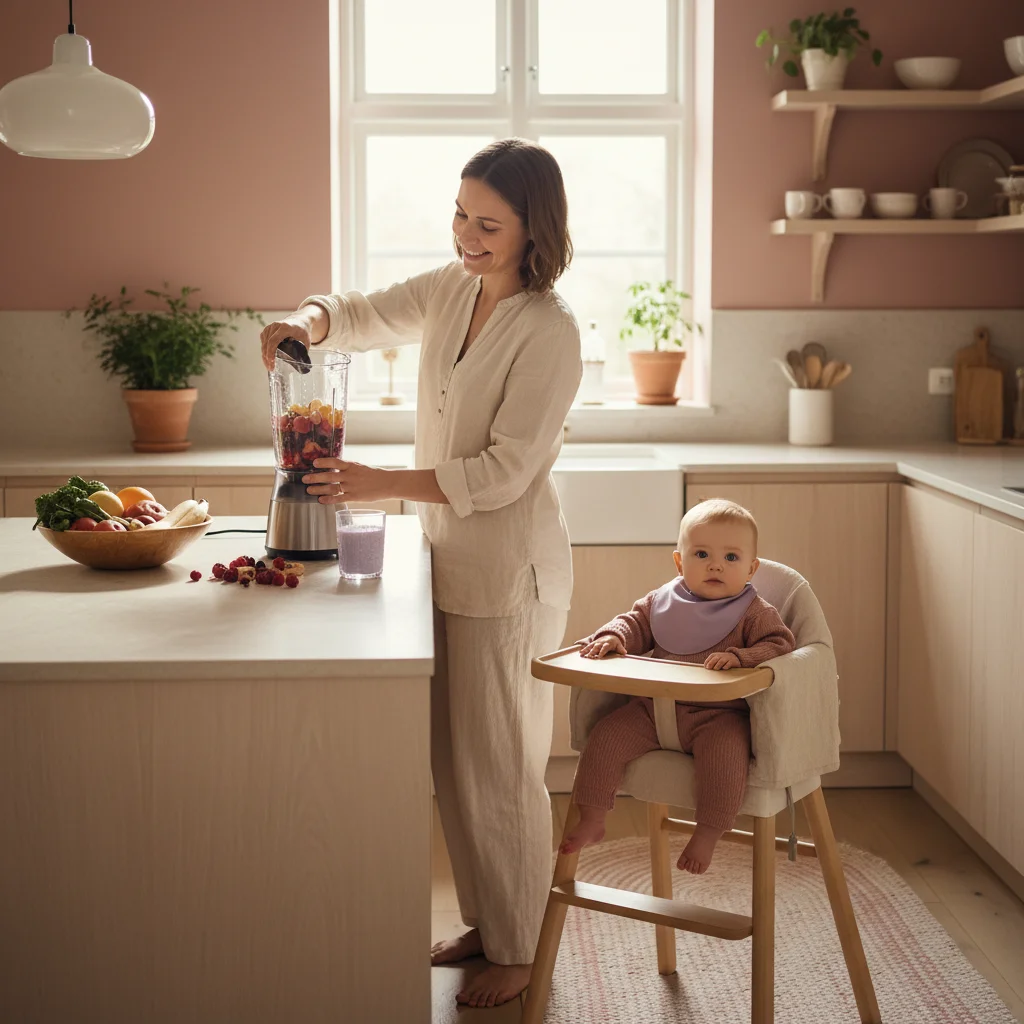
Smoothies are a smart way to get nutrition into babies and toddlers, especially on those days when food ends up on the floor instead of in their mouths. With the right ingredients, your child gets fruit, vegetables, and essential nutrients in a single easy serving.
Here you'll find age-appropriate recipes from 6 months and up, based on recommendations from the WHO and the American Academy of Pediatrics (AAP).
Smoothie ingredients by age, what can you use?
Not all ingredients are suitable for every age. Here's a quick overview of what you can safely blend.
From 6 months
- Fruit: banana, avocado, mango, pear, apple (cooked), blueberries
- Vegetables: broccoli (cooked), carrot (cooked), sweet potato (cooked)
- Liquid: breast milk or infant formula
From 10 months
- Everything above, plus:
- Yogurt (plain, small amounts, max 1.7 oz / 50 ml per day)
- Cottage cheese
- Tahini (sesame butter)
From 12 months
- Everything above, plus:
- Cow's milk (whole or low-fat)
- Spinach (safe from 12 months)
- Oats
- Nut butter (almond butter, peanut butter)
- Fish oil supplement
Never use cow's milk as a smoothie base for children under 12 months. Before 10 months, use breast milk or infant formula. From 10 to 12 months you can use small amounts of yogurt, but cow's milk as a drink is only appropriate from 1 year of age.
6 recipes from 6 months
1. Banana-avocado (the first smoothie)
- 1/2 ripe banana
- 1/4 avocado
- 3–4 tbsp breast milk or infant formula
Blend until smooth. Avocado provides healthy fatty acids important for brain development. Banana adds natural sweetness.
2. Mango-pear
- 1/4 ripe mango
- 1/2 ripe pear
- 3–4 tbsp breast milk or infant formula
Mango is rich in vitamins A and C. Pear adds gentle sweetness and fiber.
3. Blueberry-banana
- A handful of blueberries (fresh or frozen)
- 1/2 banana
- 3–4 tbsp breast milk or infant formula
Blueberries are packed with antioxidants. Frozen blueberries work just as well as fresh and are available year-round.
4. Broccoli-carrot-apple
- 2 tbsp cooked broccoli
- 2 tbsp cooked carrot
- 1/4 apple (cooked, or raw if your baby tolerates it)
- 3–4 tbsp breast milk or infant formula
Broccoli is an iron source that also contains vitamin C, which boosts iron absorption. A perfect combination.
Cook vegetables in advance and freeze in ice cube trays. That way you have a ready-made smoothie base in seconds.
3 recipes from 10 months
5. Yogurt-berry
- 1.7 oz / 50 ml plain yogurt
- A handful of blueberries or raspberries
- 1/2 banana
- A little water if it gets too thick
The first smoothie with dairy. Keep the yogurt amount under 1.7 oz / 50 ml per day until the child is 12 months old.
6. Avocado-banana-tahini
- 1/4 avocado
- 1/2 banana
- 1 tsp tahini (sesame butter)
- 3–4 tbsp breast milk or yogurt
Tahini provides calcium and healthy fats. The mild, nutty flavor pairs beautifully with avocado.
3 recipes from 12 months
7. Green power smoothie
- 1 small handful fresh spinach
- 1/2 banana
- 1/4 mango
- 1/3 cup whole milk
Spinach is safe from 12 months and a good source of iron and folate. The banana and mango completely mask the taste.
8. Oat-banana-blueberry
- 2 tbsp rolled oats
- 1/2 banana
- A handful of blueberries
- 1/3 cup whole milk
- 1 tsp almond butter (optional)
Oats make the smoothie extra filling. Perfect as breakfast on busy mornings.
9. Iron booster
- 2 tbsp cooked broccoli
- 1/2 banana
- A handful of raspberries
- 1/3 cup whole milk
- 1 tsp peanut butter
Broccoli and raspberries provide iron and vitamin C. Peanut butter adds protein and energy. This smoothie is especially good for children who eat little meat.
Tips for smoothies for young children
Consistency
Babies from 6 months need a completely smooth smoothie. From 10 months you can let it be slightly thicker. Toddlers from 1 year can have smoothies with a little texture.
Sugar
Never add sugar, honey (OK from 1 year), or syrup. Fruit provides enough sweetness. Also avoid juice as a base, it delivers a lot of fructose without fiber.
Quantity
A small portion (1.7–3.5 oz / 50–100 ml) is enough for a baby. Toddlers can drink 3.5–7 oz / 100–200 ml. A smoothie doesn't replace a full meal, but works well as a snack or supplement.
Serving
Give smoothies with a spoon to babies, or in an open cup with just a little in it. Toddlers can drink from a cup or through a wide straw. Avoid bottles for smoothies, it's not good for teeth.
Prepare in bulk
Make smoothie mix and freeze in ice cube trays or small bags. Take out the night before and let thaw in the refrigerator. Blend with a little liquid in the morning.
Ingredients to avoid
- Honey, avoid before 1 year (risk of infant botulism)
- Cow's milk, avoid as a drink or base before 12 months
- Spinach and beets, avoid before 12 months (nitrate content)
- Rice milk, avoid for children under 6 years (arsenic content, per FDA guidance)
- Soy milk and plant-based drinks, avoid as primary milk before 12 months
- Juice, delivers a lot of sugar without fiber, unnecessary in smoothies
Frequently asked questions
Can a smoothie replace a meal?
For toddlers, a filling smoothie with oats, nut butter, and milk can work as breakfast. For babies, smoothies are best as a supplement to solid food, not a replacement.
How often can my child have a smoothie?
One smoothie a day is perfectly fine. Vary the ingredients to provide a broad range of nutrients. Smoothies shouldn't replace all solid food, children need practice chewing.
Are frozen berries as nutritious as fresh?
Yes. Frozen berries are frozen right after picking and retain their nutrients well. They're often cheaper than fresh berries and available year-round.
Read more
- Iron-rich foods for babies, ensure enough iron in the diet
- Vegetables and fruit for babies, what can babies eat and when?
- Homemade baby food, making food from scratch
Sources
🔧 Helpful Tools
- Baby Food Guide. Safe foods and introduction schedule for your baby
- Breastfeeding Tracker. Log feeds, track supply, and monitor nursing sessions
- All Baby Tools. Browse all free tools for pregnancy and baby care
📖 Related Articles
- Baby Food at 1 Year: Transitioning to Family Meals. What can your child eat at 1 year old? Guide to family foods, cow's milk, portions, and diet for one-year-olds based on WHO and AAP recommendations.
- Breakfast for Baby 6–12 Months: Ideas and Recipes. What can your baby eat for breakfast from 6 months? Age-appropriate breakfast ideas, recipes, and tips for a great start to the day. Based on international feeding guidelines.
- Breakfast Ideas for Toddlers 1–3 Years, 12 simple and nutritious breakfast ideas for children aged 1 to 3. Quick everyday breakfasts the whole family will enjoy.