It's 11 p.m., your baby is finally drowsy, and the blanket they kicked off twice is on the floor again.
Naps and nights. In one view.
Log naps and nights. See sleep patterns without trying to remember every wake-up.
Create your free accountTry the practice timer
A sleep sack solves that without putting anything loose in the crib. This guide covers what a baby sleep sack is, how to check the fit, how to judge warmth, which styles are hip-safe and when to stop. It rests on guidance from the American Academy of Pediatrics (AAP), the NHS and the International Hip Dysplasia Institute (IHDI).
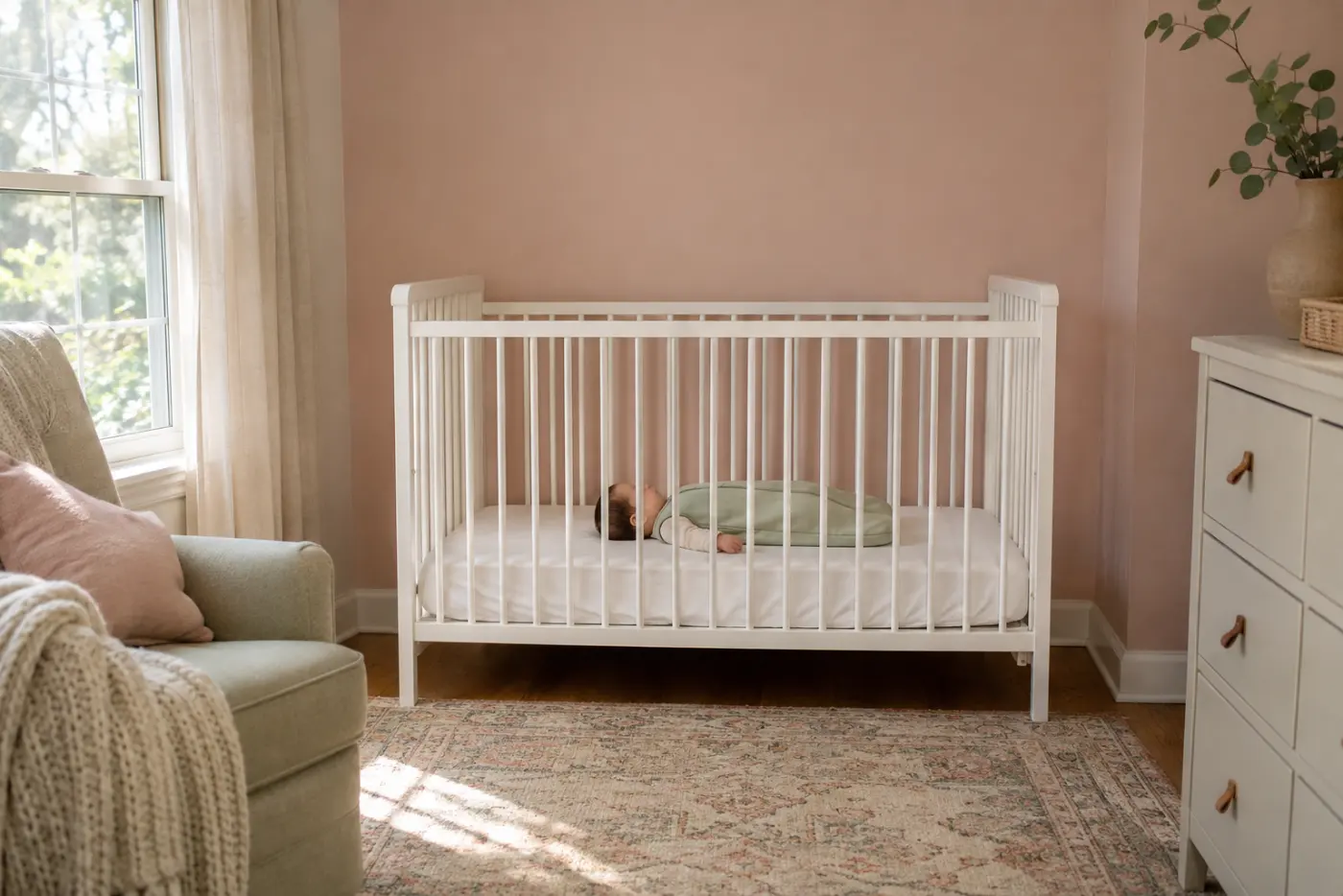
A sleep sack is the AAP's preferred way to keep a baby warm in the crib: it goes on over regular sleepwear, covers no loose edges and can't be pulled over the face. Pick the right size, keep the layers to one more than you'd wear, and choose an arms-free style once your baby shows signs of rolling.
In short
- Use a sack instead of a blanket. The AAP prefers a wearable blanket or sleep sack over blankets and other coverings, and says to keep loose bedding out of the sleep space.
- Size matters more than brand. It should fit well around the shoulders so the head can't slip down inside (NHS) and should not cover the head (AAP).
- Add one layer, not three. The AAP says to dress your baby in no more than one extra layer than you'd wear, and to watch for sweating.
- Skip weighted versions. The AAP says no weighted blankets, clothing or swaddles.
- Arms-free has no end date. Wrapped styles stop at the first sign of rolling.
What Is a Baby Sleep Sack?
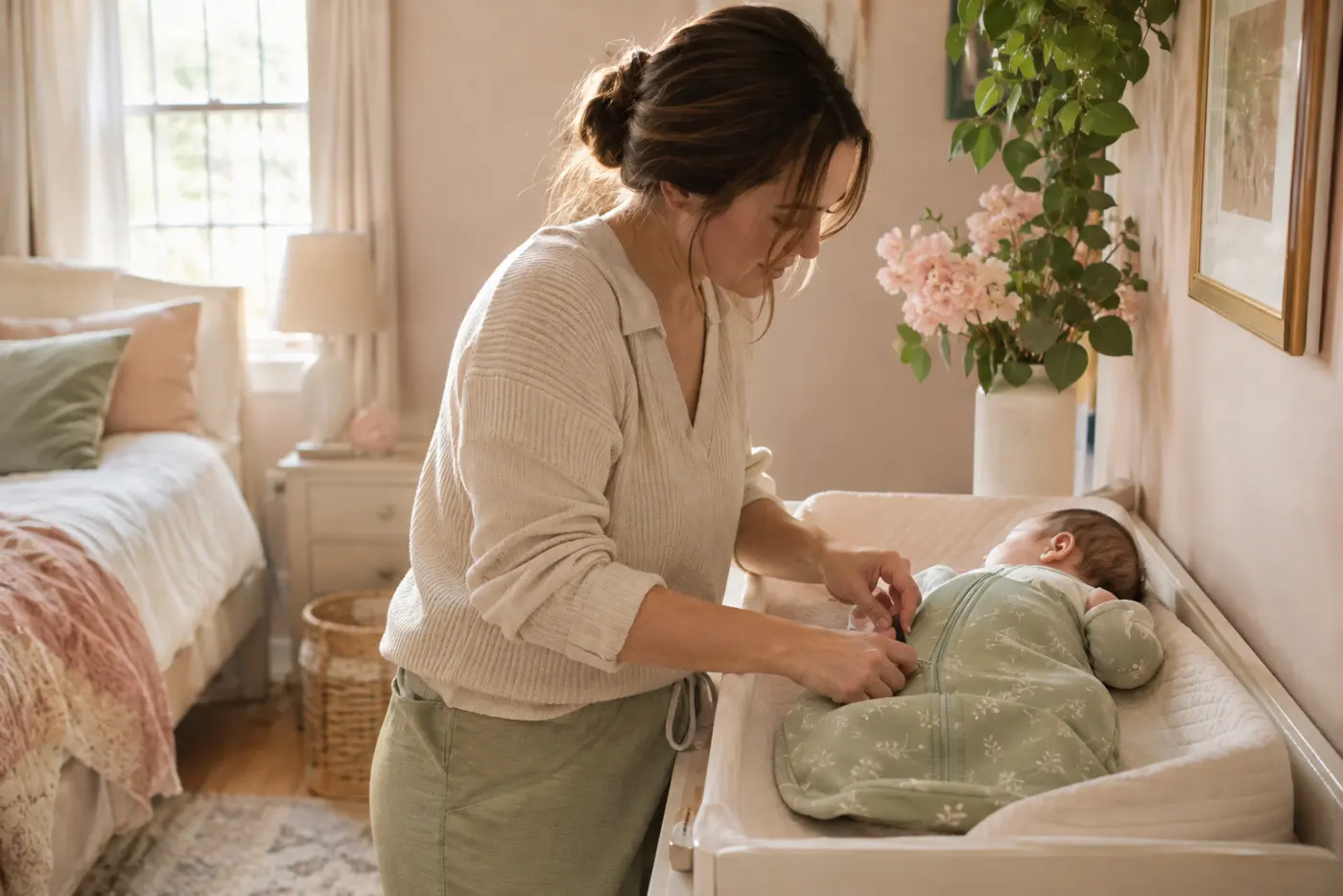
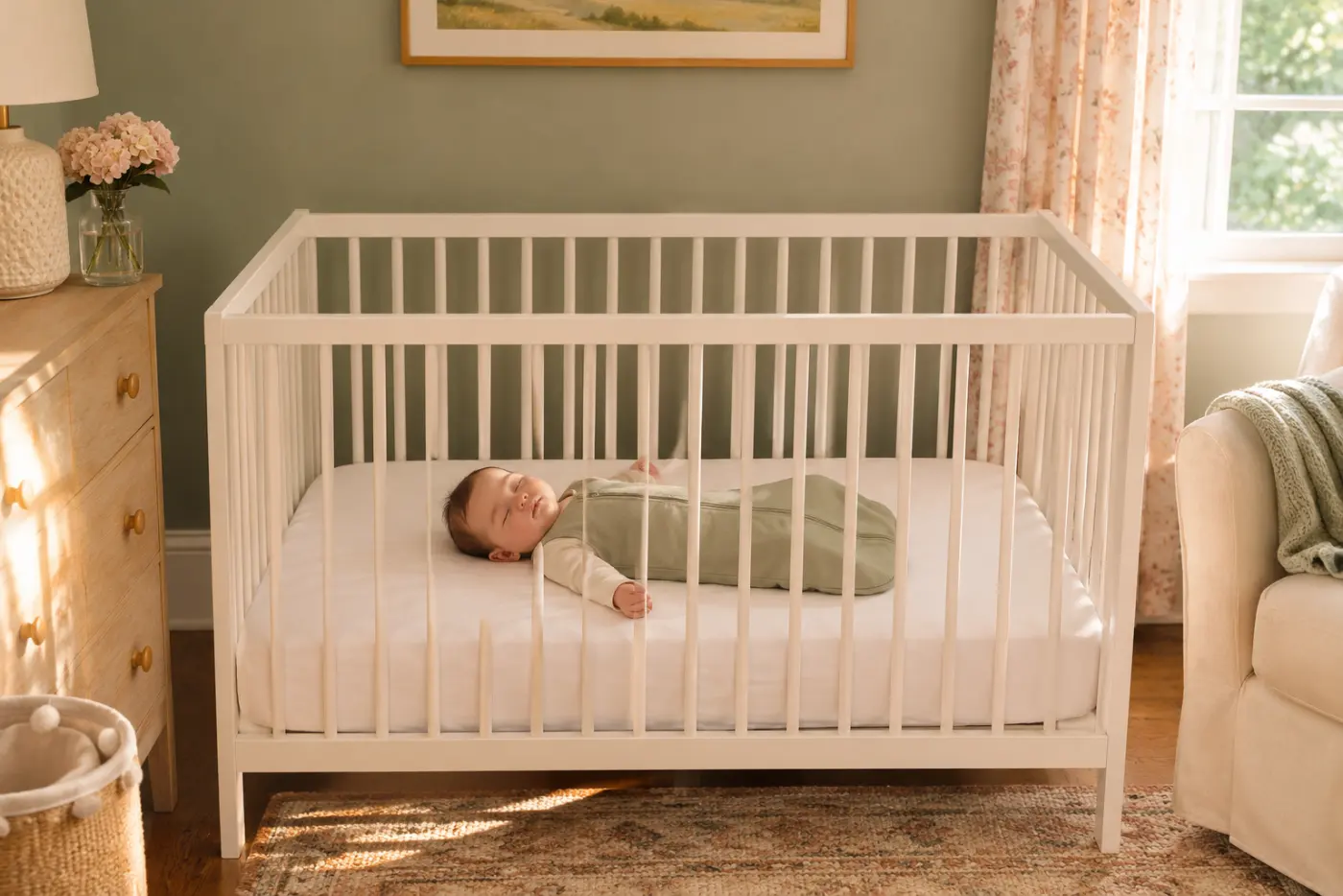
A sleep sack, sold as a wearable blanket or sleeping bag, is a sleeveless bag that zips or snaps over your baby's pajamas. The arms come out through armholes and the legs sit in a roomy pouch, so there's nothing to untuck at 2 a.m.
It does the job of a blanket without the loose fabric. The AAP's swaddling guide (AAP, 2022) says infant sleep clothing such as a wearable blanket or sleep sack is preferred over blankets and other coverings to keep a baby warm, and that a safe sleep space stays free of any loose bedding or soft objects.
Sleep Sack vs Swaddle vs Blanket: What's the Difference?
Three products look alike on a registry and follow different rules. The table sums up what the AAP says about each.
| Arms-free sleep sack | Sleep sack that wraps arms and chest | Swaddle blanket | Loose blanket | |
|---|---|---|---|---|
| Arms | Free | Held snugly | Wrapped in | Free, can be pulled up |
| When to stop | No AAP end date | First sign of trying to roll | First sign of trying to roll | Keep out of the crib |
| Hips | Legs move freely in a roomy pouch | Legs need room to bend up and out | Legs need room to bend up and out | Not applicable |
| Weighted versions | Not recommended | Not recommended | Not recommended | Not recommended |
The AAP's wording for the first column is that sacks that do not swaddle and allow your baby to move freely "can be used as long as you want." The wrapped style counts as a swaddle: once your baby shows any sign of trying to roll over, stop. The AAP notes some babies start as early as 2 months.
Our swaddle and sleep sack counting guide covers how many of each to buy.
Why Use a Sleep Sack Instead of a Blanket?
Because a blanket moves and a sack doesn't. The AAP says loose blankets don't belong in the crib, and that if you worry your baby is cold, a wearable blanket or sleep sack is the answer (AAP, 2026).
The NHS adds a second reason. A baby sleeping bag keeps a baby from wriggling down underneath bedding, and it replaces other bedding entirely. The AAP puts the stakes in numbers: about 3,500 babies in the United States die each year during sleep because of unsafe sleep environments, including suffocation and SIDS (AAP, 2026). A sack removes one of the things on that list.
How Should a Sleep Sack Fit?
Snug at the shoulders, roomy at the legs. The NHS says it should fit well around the shoulders so there's no risk of your baby's head slipping down into the bag. The AAP says the wearable blanket should be the right size for your baby and shouldn't cover the head.
Our four-point check each time you zip it up (the checks are ours, built on the NHS and AAP fit rules above):
- Neck opening: it shouldn't be big enough for the chin or mouth to slide under.
- Armholes: they should sit at the shoulder, with no gap at the underarm that lets the sack ride up over the face.
- Length: the hem should leave room to kick and bend the knees (more on hips below).
- Weight and height range: follow the maker's chart for the size, not the age printed on the front.
If the shoulders don't hold the sack in place, it is too big: stop using it and switch to the size that matches your baby's weight and height on the maker's chart. Move up a size only when your baby reaches the top of the current size's range and the neck and shoulders still fit securely. An oversized sack is the version the NHS and AAP warn about, so don't buy a size to grow into.
How Warm Should the Sleep Sack Be?
Warm enough that your baby isn't cold and not enough to sweat. The AAP says your baby should wear no more than one extra layer than you would wear, and may be too hot if they are sweating or the chest feels hot.
Sleep sacks carry a tog rating, which measures warmth: the higher the number, the warmer the sack. The NHS says to pick the right bag for the time of year and adjust your baby's clothing depending on the room temperature and the tog. Maker charts usually pair each tog with a room temperature range, so use the chart printed on yours.
The NHS also gives a room range of about 16 to 20 degrees C, which is 61 to 68 degrees F, and suggests a room thermometer. The AAP names no number, only a comfortable temperature, so use the NHS range as a reference point, since it is a UK figure and not a US rule.
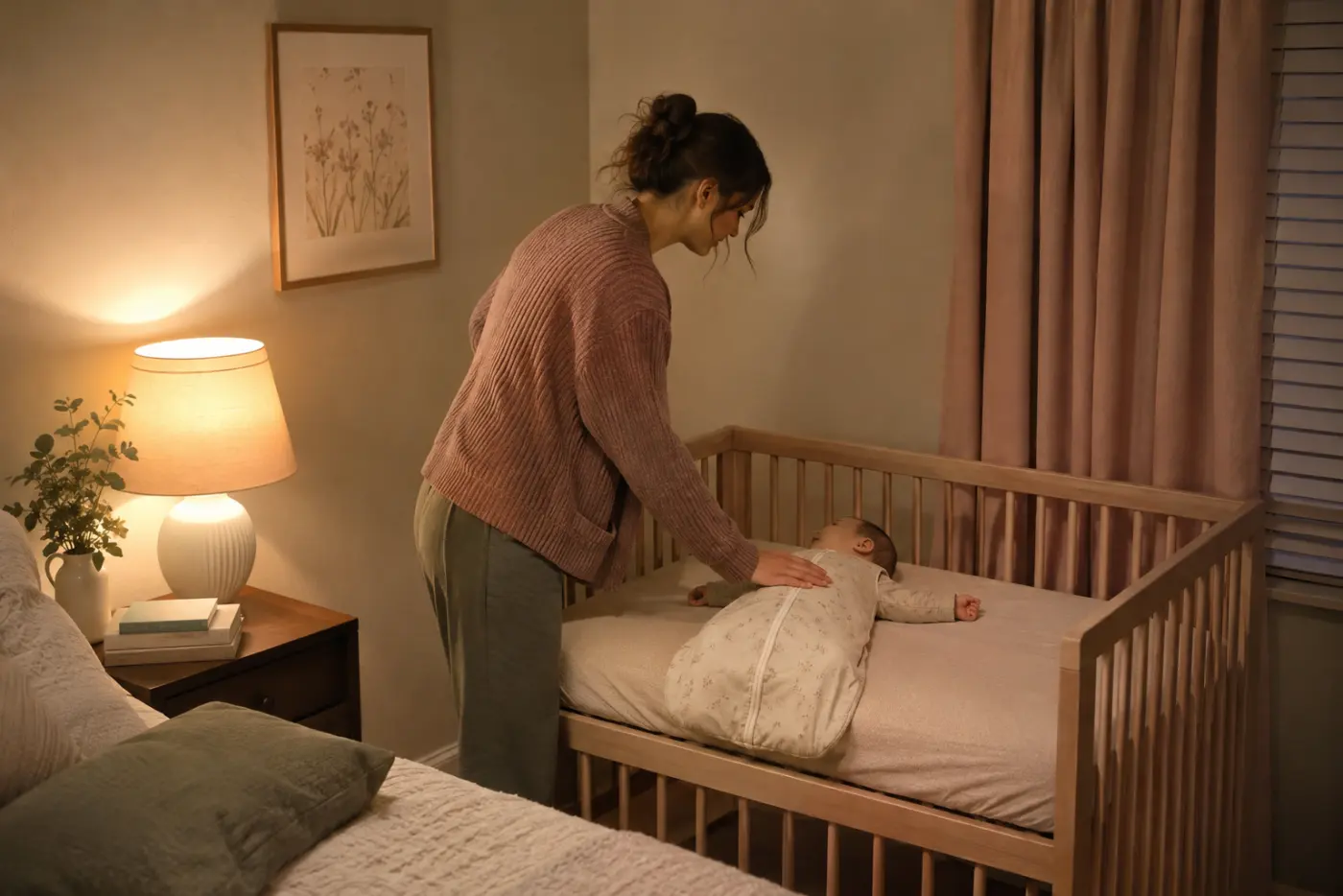
Here is a layering example, which is our own and not from a medical source. If the house is warm enough that you'd sleep in a T-shirt, a short-sleeve bodysuit under a light sack is one layer more than you. If you'd want a sweater, a footed sleeper under a light sack is a reasonable step up.
A few more points from the AAP:
- No hat indoors. The AAP says not to put hats on babies indoors except in the first hours after birth or in the neonatal intensive care unit.
- Don't add a blanket on top of the sack. The sack is the covering.
- Adjust the clothing under the sack to the room. The NHS says to change your baby's clothing based on the room temperature and the tog.
Which Sleep Sacks Are Hip-Healthy?
Look for a sack with a loose pouch for the legs and feet. The AAP warns that straightening and tightly wrapping a baby's legs can lead to hip dislocation or hip dysplasia, and it backs "hip-healthy swaddling," which lets the legs bend up and out.
The IHDI makes the same point about products. Sacks made for swaddling should have a loose pouch for the legs and feet, allowing plenty of hip movement, and even some commercial products can confine the legs if they are tightened around the thighs (IHDI, 2025).
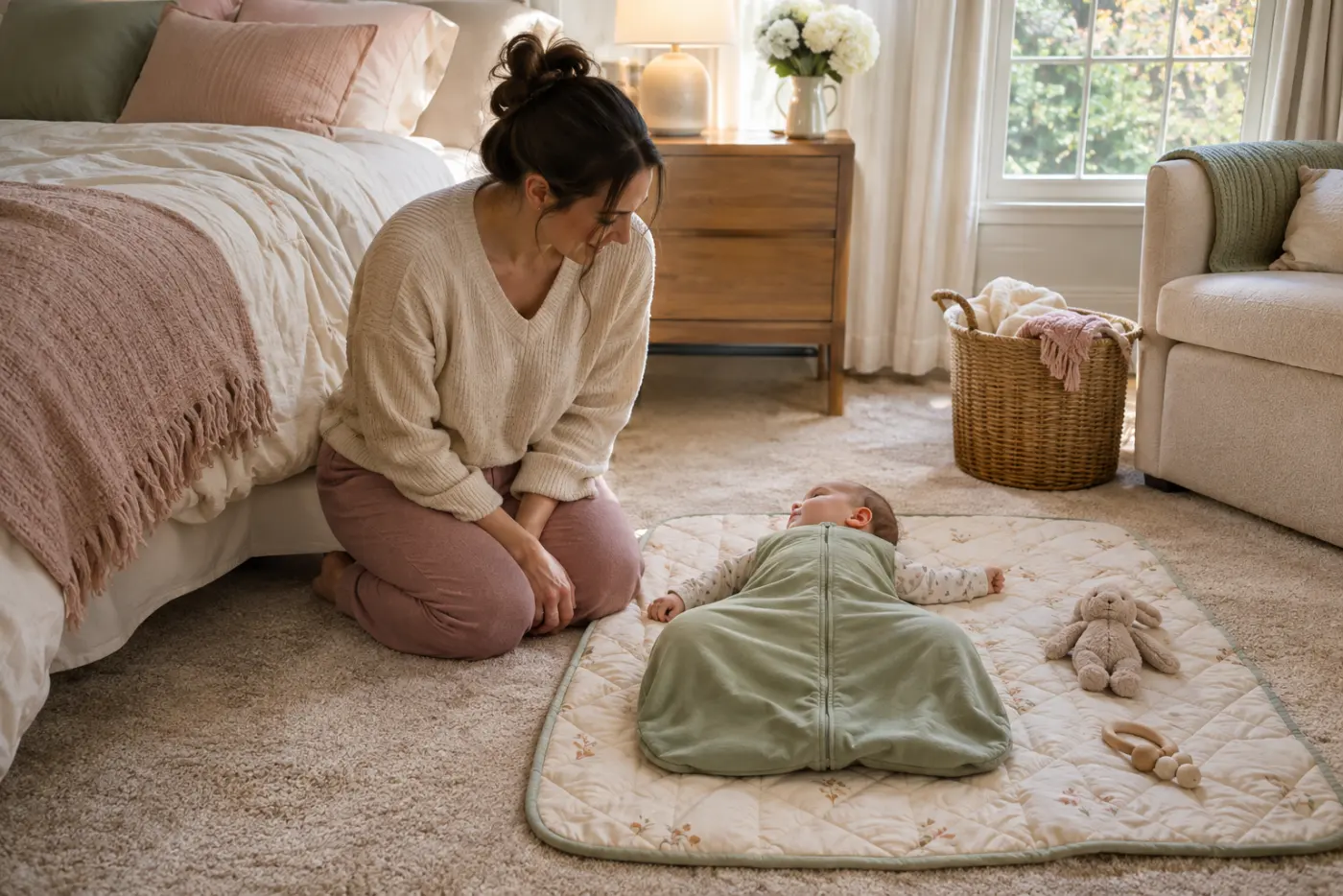
Try this check: lay your baby on the changing mat in the sack and look at the knees. If your baby can draw them up and let them fall out to the sides, the pouch is roomy enough. If the fabric pulls the legs together or the sack narrows to a point at the feet, choose a different style.
Are Weighted Sleep Sacks Safe?
No. The AAP says not to use weighted blankets or weighted clothing, and its swaddling guide says not to use weighted swaddles or weighted blankets, which can place too much pressure on a baby's chest and lungs.
On its registry page the AAP is blunter: weighted blankets can make it harder for your baby to breathe, and your baby can get trapped under a heavy blanket and suffocate. It also tells parents not to believe influencers who say these products helped their little ones sleep better.
If a product's selling point is that it "feels like a hug," read the label for beads, pellets or any added weight. If it's there, leave it on the shelf.
When to Start Using a Sleep Sack and When to Switch
You can start with an arms-free sack from the first night. If you swaddle in the early weeks, move to an arms-free sack when your baby first tries to roll, which can be as early as 2 months, per the AAP. Rolling usually happens around 3 to 4 months but can happen earlier, per the AAP's safe sleep guide (AAP, 2026), so watch for the first attempts rather than waiting for a birthday.
Here is a simple way to handle the switch:
- Spot the signs. The AAP says to stop when your baby looks like they're trying to roll over. In our experience that can look like rocking onto a side or working one arm free.
- Change the same day. Don't wait for a full roll.
- Go arms-free at bedtime and for naps. Put your baby down on their back, as always.
- Expect a few rough nights. Moving the arms is a change, and our guide to the baby sleep schedule by age can help you adjust the routine around it.
After that, the AAP doesn't set an end date for arms-free sacks. You stop when your baby outgrows the largest size or when you'd rather use footed pajamas, and this is a family choice. If your baby is walking or climbing, check that the sack still lets them move their legs freely.
Common Sleep Sack Mistakes
- Using a swaddle sack after rolling starts. Wrapped styles stop at the first sign of rolling (AAP).
- A sack that's too big, where the neck opening can slide over the face (NHS, AAP).
- A blanket on top of the sack "just in case." The NHS says there should be no other bedding.
- Piling layers under a thick sack until your baby sweats (AAP).
- A weighted sack from a registry or secondhand listing (AAP).
- Tightening the legs with a clip or strap, which can confine the hips (IHDI).
For the rest of the sleep setup, our safe sleep guide and nursery sleep environment checklist cover the crib, mattress and room.
Practical Tips for Diaper Changes and Laundry
These come from our own experience of what makes the sack easier to live with, not from the sources above.
- Choose a two-way zipper that opens from the bottom. It lets you change a diaper without lifting your baby out of the sack.
- Keep a clean backup in the drawer. A leak or spit-up at 3 a.m. is much easier when you don't have to dig through the laundry basket.
- Wash before the first use and follow the care label, because some fabrics shrink and a shrunken sack is a poor fit.
- Match the sack to the season, with a light cotton one for summer and a thicker fleece one for winter, instead of one sack for the whole year.
You can add the sacks to your list with the nursery checklist, and log how your baby sleeps in the new sack with our Hush sleep tracker. A bassinet or crib choice comes first, since each has its own sheet.
Frequently Asked Questions
What is a baby sleep sack?
A sleep sack, also called a wearable blanket, is a zip-up or snap-up bag that goes over your baby's sleepwear, with openings for the head and arms. It replaces a loose blanket, which the AAP says to keep out of the crib.
Is a sleep sack safer than a blanket?
The AAP prefers sleep clothing such as a wearable blanket or sleep sack over blankets and other coverings, and says to use one if you worry your baby is cold. A sack can't be kicked over the face the way a loose blanket can.
When should I stop using a sleep sack?
Sacks that wrap the arms or chest stop at the first sign of trying to roll. For arms-free sacks the AAP sets no end date and says they can be used as long as you want, until your baby outgrows the size.
Are weighted sleep sacks safe?
No. The AAP says not to use weighted blankets, weighted clothing or weighted swaddles, because they can make it harder to breathe and put pressure on a baby's chest and lungs.
How do I know if the sleep sack is too warm?
Check the chest or the back of the neck. The AAP says your baby may be too hot if they are sweating or the chest feels hot. Dress your baby in no more than one extra layer than you would wear.
Can my baby wear a sleep sack with a swaddle?
No. A swaddle under a sack adds a second wrap around the arms and chest. Use one or the other, and move to an arms-free sack at the first sign of rolling.
Set Up the Sleep Space Around the Sack
Once the sack is on, the crib should hold only a fitted sheet and your baby. Our newborn essentials list shows what else is worth buying, and our Hush sleep tracker helps you see whether the new sack changes how your baby settles.
This article is for information only and does not replace advice from your pediatrician about your baby's sleep, warmth or hips.
How This Guide Was Made
The Babysential Team wrote this guide from the AAP, NHS and International Hip Dysplasia Institute pages below, checked on November 8, 2026, with AI-assisted drafting. Tips marked as ours come from the team's own experience and are not medical advice. We include no affiliate links or product picks.
Sources
- Swaddling: Is it Safe for Your Baby?. AAP (HealthyChildren.org), 2022
- Safe Sleep: 9 Ways to Reduce a Baby's Risk of SIDS & Suffocation. AAP (HealthyChildren.org), 2026
- Baby Products to Avoid: Unsafe Registry Picks & Secondhand Gear. AAP (HealthyChildren.org), 2026
- How to Keep Your Sleeping Baby Safe: AAP Policy Explained. AAP (HealthyChildren.org), updated September 2026
- Baby safer sleep advice. NHS, updated December 2025
- Sudden infant death syndrome (SIDS). NHS, 2025
- Hip-Healthy Swaddling. International Hip Dysplasia Institute, updated October 2025