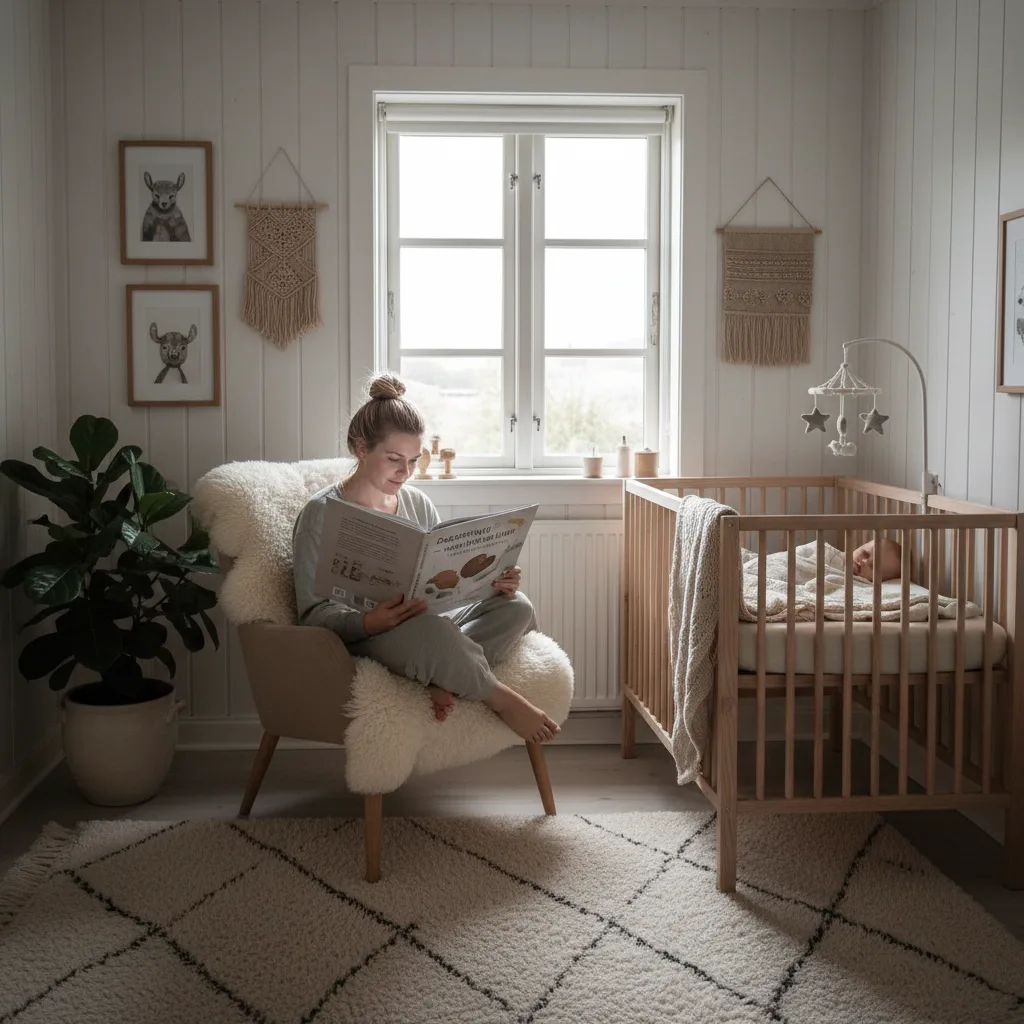
Naps are just as important as nighttime sleep. A baby who sleeps well during the day typically sleeps better at night. But naps can also be the most frustrating part of baby sleep, short naps, nap strikes, and the question of when your baby should actually drop a nap.
Here is everything you need to know about daytime sleep, from newborn to 18 months.
Why Are Naps So Important?
Many parents focus mainly on nighttime sleep, but daytime naps are crucial for your baby's wellbeing:
- Prevents overtiredness. An overtired baby has higher levels of the stress hormone cortisol, which makes it harder to fall asleep, even at night.
- Supports brain development. During sleep, the brain processes new impressions and consolidates learning.
- Better mood. Babies who nap enough are more content, more attentive, and easier to soothe.
- Better night sleep. It sounds paradoxical, but babies who get enough daytime sleep actually sleep better at night.
According to the AAP, babies need a lot of sleep for brain development and growth. Naps cover a significant portion of total sleep needs throughout the first year.
Number of Naps by Age
Here is an overview of what is typical:
| Age | Number of naps | Total daytime sleep | Typical nap length |
|---|---|---|---|
| 0–6 weeks | 4–6+ | 6–8 hours | 30 min – 3 hours |
| 6–12 weeks | 4–5 | 5–7 hours | 30 min – 2 hours |
| 3–4 months | 3–4 | 4–5 hours | 30 min – 1.5 hours |
| 5–6 months | 3 | 3–4 hours | 45 min – 1.5 hours |
| 7–9 months | 2–3 | 2.5–3.5 hours | 1–2 hours |
| 10–12 months | 2 | 2–3 hours | 1–2 hours |
| 13–17 months | 1–2 | 2–3 hours | 1.5–2.5 hours |
| 18+ months | 1 | 1.5–2.5 hours | 1.5–2.5 hours |
Remember these are averages. Your baby may need more or less.
The Big Nap Transitions
The most challenging periods are when your baby needs to drop a nap. Here is what to expect.
From 4 to 3 Naps (around 4–5 months)
Signs your baby is ready:
- The fourth nap (late afternoon) is consistently difficult
- Your baby refuses to sleep in the late afternoon
- Bedtime keeps shifting later
How to make the transition:
- Drop the late afternoon nap gradually, start by skipping it every other day
- Move bedtime slightly earlier (by about 30 minutes)
- Extend wake windows gently, by 10–15 minutes at a time
- Expect a few days with an overtired baby, it is temporary
From 3 to 2 Naps (around 7–9 months)
Signs your baby is ready:
- The third nap (afternoon) is consistently short or difficult
- Your baby does not seem tired when the third nap is due
- Two of the three naps are good and long
How to make the transition:
- Stretch wake windows to 2.5–3 hours
- Drop the third nap gradually
- Shift the midday nap slightly later (for example from 12:30 to 1:00 pm)
- Use an earlier bedtime on days without a third nap
The transition from 3 to 2 naps often takes 2–4 weeks. It is normal to alternate between 2 and 3 naps during this period.
From 2 to 1 Nap (around 14–18 months)
Signs your baby is ready:
- The morning nap consistently delays or disrupts the afternoon nap
- Your baby refuses one of the naps on multiple consecutive days
- Your baby seems fine with just one nap
How to make the transition:
- Gradually push the morning nap later (by 15 minutes per day) toward 11:00 am–12:00 pm
- The midday nap becomes the one remaining nap
- Use an early bedtime on days with only one nap
- Expect 2–4 weeks of alternating between 1 and 2 naps
Important: Many babies seem ready for one nap at 12 months, but often are not. Try to wait until 14–15 months unless your baby is consistently refusing a nap for several weeks.

When Does a Child Drop the Last Nap? (around 2.5–4 years)
Most children drop their last nap between 2.5 and 4 years of age. Some children need a nap all the way until they start school.
Signs your child is ready:
- The nap causes your child to not fall asleep at night until 9–10 pm
- Your child skips the nap without becoming overtired
- Your child has good energy throughout the day without a nap
Replacement: Introduce a "quiet time" with calm activity instead of a nap, books, puzzles, or listening to an audiobook.
Troubleshooting: Short Naps
Short naps (under 45 minutes) are one of the most common challenges with daytime sleep.
Why Does My Baby Only Sleep 30–45 Minutes?
A baby's sleep cycle lasts about 30–45 minutes. Short naps mean the baby wakes after one cycle and cannot link into the next.
Common causes:
- Baby is overtired (wake window too long)
- Baby is not tired enough (wake window too short)
- Room is too bright or too noisy
- Hunger is disrupting sleep
- A developmental period (especially 3–5 months)
What You Can Do
Optimize the sleep environment:
- Dark room (blackout curtains make a big difference)
- Constant background noise (white noise or a fan)
- Right temperature (18–20°C / 64–68°F)
Adjust timing:
- Try putting the baby down 10–15 minutes earlier
- Watch for early sleepy cues and act on them
- Follow age-appropriate wake windows
Accept that some naps are short:
- The morning nap is often the best and longest
- Afternoon naps are often shorter, and that is okay
- One good long nap plus one short nap is better than no naps at all
Log naps for a week to look for patterns. Often the morning nap is consistently good but the afternoon nap is short. Knowing this helps you focus your energy in the right place.
Nap Strikes: When Your Baby Refuses to Nap
Nap strikes are periods when your baby suddenly refuses all naps. They often happen around:
- Sleep regressions (4, 8, 12, 18 months)
- Developmental leaps, the baby is too busy practicing new skills
- Nap transitions, the baby may actually need fewer naps
What you can do:
- Try alternative settling methods: pram, carrier, car ride
- Shift the nap time by 30 minutes
- Give your baby a 15–20-minute break and try again
- Accept that some days will not follow the plan
A nap strike usually lasts 1–2 weeks and is not a sign that your baby is done with naps.
Outdoor Naps vs. Indoor Naps
Many babies sleep best in a pram or stroller, and outdoor naps are a beloved tradition in Scandinavia and other regions.
Benefits of outdoor naps:
- Fresh air and motion help the baby fall asleep
- Naps are often longer outside than inside
- Daylight during the day supports the body clock
- Gets the parents out of the house too
Things to consider:
- Dress your baby appropriately for the temperature
- Position the pram out of the wind
- Use a baby monitor or stay close
Indoor vs. outdoor: Many families let the baby take one nap outside and one inside. Find what works for your family.
Naps When Daycare Starts
When your baby starts daycare, the nap pattern often changes:
- Daycare has set rest times
- Most centers have a midday nap period
- Your baby may sleep differently at daycare than at home
- The transition can take 2–4 weeks
Tips for the transition:
- Talk to your childcare provider about your baby's sleep habits
- Gradually align home nap times with the daycare schedule
- Be prepared for a more tired baby in the first few weeks
- An earlier bedtime can compensate for shorter naps at daycare
Frequently Asked Questions
Should I wake my baby from a long nap?
Generally, let the baby sleep. But there are exceptions: if a late afternoon nap threatens bedtime, you can gently wake your baby. A good rule of thumb is that the last nap should end at least 3–4 hours before bedtime.
Can a baby sleep too much during the day?
In rare cases, excessive daytime sleep can affect night sleep. If your baby consistently sleeps more than shown in the table above and also sleeps poorly at night, you can try gently shortening naps.
What is the "right" time for naps?
There is no perfect time. Use age-appropriate wake windows as a starting point and adjust based on your baby's signals. The morning nap is typically 1.5–2 hours after waking up.
Does the baby always need to nap in their crib?
No. It is completely fine for a baby to nap in a pram, carrier, or car. Variety is normal. But many sleep experts recommend that at least one nap per day is in the crib, so your baby associates it with sleep.
When should I stop letting my child nap?
Most children need daytime sleep until they are 2.5–4 years old. Do not push your child to drop naps too early. Signs of readiness: consistently late bedtime, good energy throughout the day without a nap, and the child refusing on their own.
Read More
Sources
- American Academy of Pediatrics (AAP). "Healthy Sleep Habits: How Many Hours Does Your Child Need?" 2024.
- National Sleep Foundation. "Sleep Guidelines for Babies and Toddlers." 2024.
- Mindell, J.A., et al. "A Nightly Bedtime Routine: Impact on Sleep in Young Children." Sleep. 2009.
🔧 Helpful Tools
- Baby Sleep Tracker. Track and optimize your baby's sleep
- Soothing Sounds. White noise and soothing sounds to help your baby sleep
- All Baby Tools. Browse all free tools for pregnancy and baby care
📖 Related Articles
- Baby Sleep Schedule by Age. Newborn to 12 Months. Practical sleep schedules for babies by age. See sample daily routines, number of naps, and bedtimes from 0–12 months based on AAP and WHO recommendations.
- How Much Sleep Does a Newborn Need?. Newborns need 14–17 hours of sleep per day, spread across multiple short stretches. Learn what's normal, what's not, and how to support healthy newborn sleep.
- What Is a Wake Window for Babies?. A wake window is the ideal amount of time a baby can stay awake between sleeps without becoming overtired. Learn wake windows by age and how to use them to improve sleep.