The Short Answer
A newborn needs six things: a safe place to sleep, a rear-facing car seat, diapers and wipes, a way to eat, a small stack of simple clothes, and a few health basics. Everything beyond that is convenience, and most of it can wait until you have met your actual baby.
Ready before the day comes.
Hospital bag, nursery and baby gear lists you can tick off as you go.
Start a checklistWhat to know:
- The true essentials fit in about 25 items. Retail "must-have" lists often run past 100.
- Safety items (sleep surface, car seat) deserve most of your budget and attention. Federal safety standards exist for both, and the AAP publishes clear guidance.
- Buy most clothing in size 0–3 months, not newborn size. Babies grow out of newborn sizes fast, and some skip them entirely.
- Skip wipe warmers, crib bumpers, shoes, and bulk newborn-size diapers. The savings fund the things you will use daily.
- Have the basics ready by 34–36 weeks of pregnancy.
The Full List at a Glance
| Category | The essentials | How many |
|---|---|---|
| Sleep | Bassinet or crib with a firm mattress, fitted sheets, sleep sacks or swaddles | 1 sleep surface, 2–3 sheets, 2–3 sacks |
| Feeding | Bottles with slow-flow nipples, burp cloths; formula or nursing supplies per your plan | 4–8 bottles, 8–10 burp cloths |
| Diapering | Diapers, unscented wipes, barrier cream, a portable changing pad | 1 small pack newborn size, 1 box 0–3 months size |
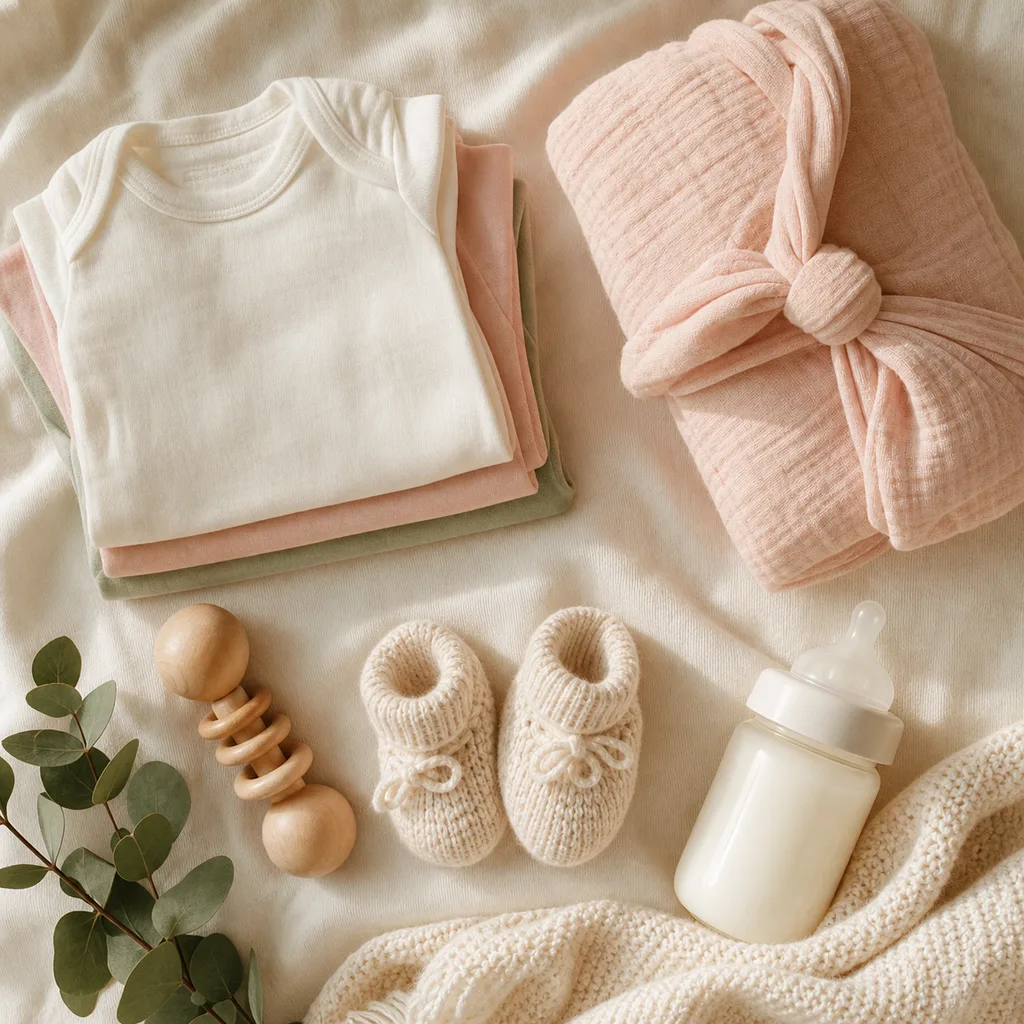
| Clothing | Bodysuits, footed sleepers, socks, hats, one going-home outfit | 5–7 of each core item |
| Travel | Rear-facing infant car seat; stroller or soft carrier | 1 car seat (non-negotiable), 1 of either |
| Health and bath | Digital thermometer, nail file or clippers, bulb syringe, gentle wash, soft towels | 1 of each, 2–3 towels |
That table is the whole job. The rest of this guide explains the choices inside each category, the quantities that actually hold up in week three, and the popular items you can safely leave on the shelf.
If you want this as a living list you can check off and share, our interactive baby checklists tool has a newborn edition you can customize as you go.
Sleep: One Safe Surface, Nothing Else
The single most researched item on this list is the sleep setup, and the guidance is refreshingly simple.
The AAP recommends that babies sleep on their backs on a firm, flat, non-inclined surface with nothing in the sleep area but a fitted sheet.
That means a bassinet, a crib, or a portable play yard that meets current federal safety standards. It does not mean pillows, quilts, positioners, weighted swaddles, or bumper pads. NICHD's Safe to Sleep guidance is explicit: keep soft objects and loose bedding out of the sleep area entirely, and use a wearable blanket if you are worried about warmth.
What to buy:
- One sleep surface. A bassinet is convenient for room sharing in the early months because it fits next to your bed. A full-size crib works from day one too. You do not need both.
- 2–3 fitted sheets sized exactly for that mattress. Loose or improvised sheets are a hazard.
- 2–3 sleep sacks or swaddles. These replace blankets, which do not belong in the crib.
What not to buy: crib bumpers (banned from sale in the US since 2022), inclined sleepers, and any "nest" or "lounger" marketed for sleep. If a product puts padding around or under a sleeping baby, it fails the standard above. The federal Safe to Sleep campaign keeps the definitive short list of what belongs in a sleep area: a firm mattress and a fitted sheet.
For the full picture on positioning, room sharing, and temperature, read our safe sleep guide for babies.
Feeding: Buy for Your Plan, Plus a Small Backup
Feeding gear depends on whether you plan to nurse, pump, formula-feed, or combine. The trap is buying deep for a plan your baby has not agreed to yet.
If you plan to breastfeed: your core kit is nursing pads, a few bottles for expressed milk, and 8–10 burp cloths. A nursing pillow helps some parents and annoys others; it is a nice-to-have, not an essential. If you intend to pump, check your insurance first: most US plans cover a breast pump at no cost under the Affordable Care Act.
If you plan to formula-feed: start with 4–8 bottles with slow-flow (stage 1) nipples and a starter supply of one formula, not a stockpile. Babies sometimes reject a bottle shape or need a different formula, and unopened cases of the wrong one are an expensive lesson.
Either way: buy two or three bottles from different brands rather than eight of one. Let the baby vote before you commit.
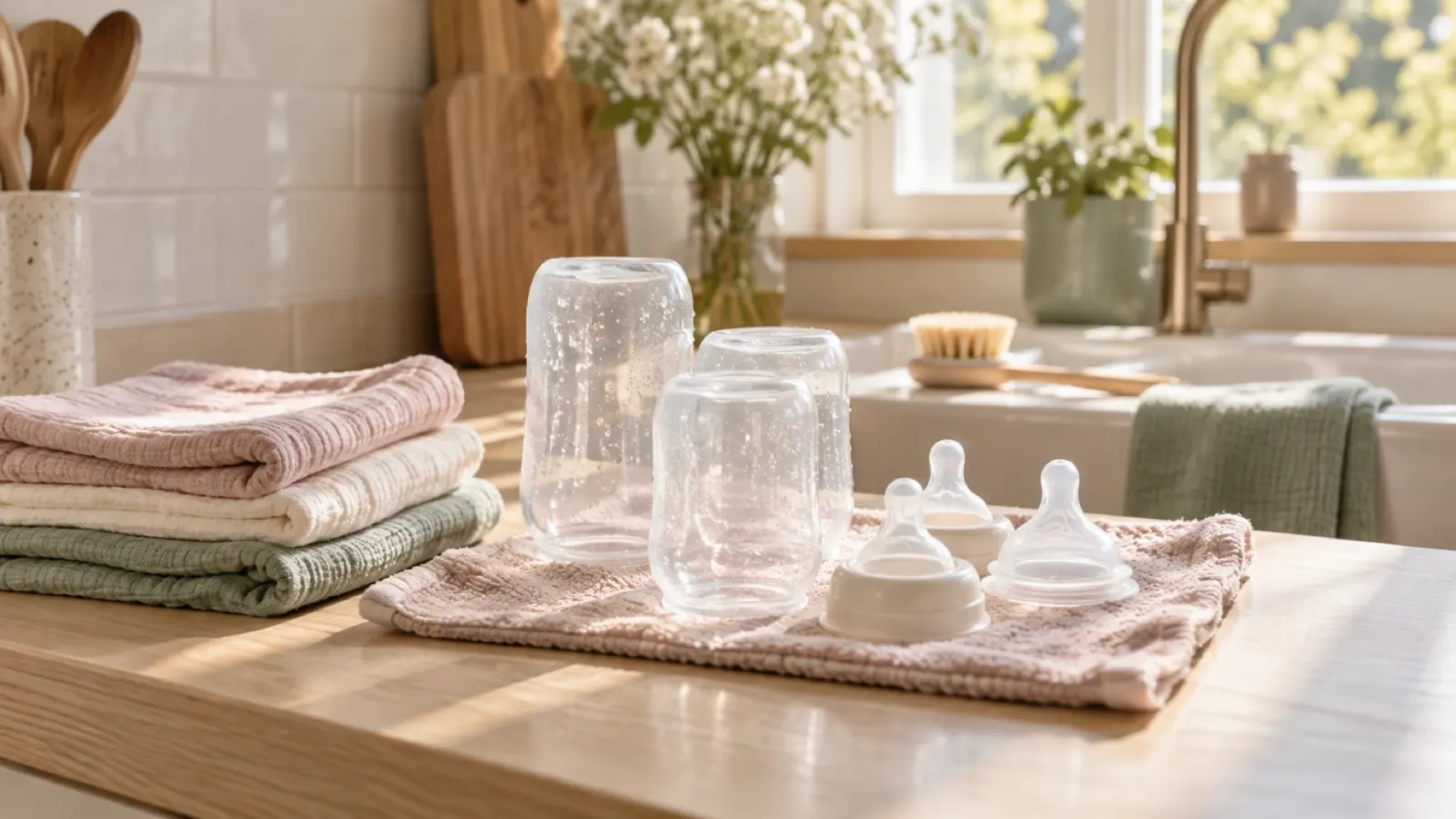
Skip the countertop sterilizer and bottle warmer for now, but not the sanitizing. Hot soapy water handles the daily wash, and a dishwasher run with hot water plus a heated drying cycle also sanitizes; without that cycle, boil or steam the parts instead. The CDC advises sanitizing feeding items daily while a baby is under 2 months old, premature, or immunocompromised. On warming: many babies happily take milk at room temperature.
Diapering: The Real Numbers
Newborns run through 8–12 diapers a day. That is roughly 70 a week, which sounds like a case-buying situation. Resist it, at least for newborn size.
Many babies outgrow newborn-size diapers within two to four weeks, and bigger babies skip the size entirely. The smarter split:
- One small pack of newborn size to start.
- One full box of size 0–3 months (size 1) waiting behind it.
- Unscented wipes in bulk. These you will use for a year or more, so stock up freely.
- A zinc-oxide barrier cream for diaper rash.
- A portable changing pad. A dedicated changing table is furniture, not an essential. A pad on a dresser or a bed does the same work.
A diaper pail is genuinely optional. A regular trash can with a lid, emptied daily, performs the same function for a fraction of the price.
Clothing: Less Than You Think, One Size Up
Newborn clothing is where gift-givers concentrate and where budgets quietly leak. The working wardrobe is small:
- 5–7 bodysuits (short or long sleeve by season)
- 5–7 footed sleepers, which are the de facto uniform of month one
- 4–6 pairs of socks
- 1–2 soft hats
- 1–2 cardigans or zip layers for temperature swings
- One going-home outfit you like in photos
Two buying rules save the most money. First, buy the bulk of it in size 0–3 months; newborn size fits for weeks at best. Second, prioritize zippers over snaps for anything you will handle at 3 a.m.
Season matters more than style. If your due date lands in the cold months, layering changes the math on hats, buntings, and car seat safety, and our winter newborn essentials guide covers those additions separately.
Getting Home: The Car Seat Is the One Item You Cannot Improvise
US hospitals will check that you have a car seat before discharge, and this is the one purchase where "buy new, buy correctly installed" is the whole strategy.
The AAP advises that all infants ride rear-facing starting with their first ride home from the hospital, and stay rear-facing as long as their seat allows.
What to know before you buy:
- An infant car seat (rear-facing carrier style) or a convertible seat used rear-facing both meet the standard. Infant seats click out and carry; convertibles last years longer.
- Avoid secondhand seats unless you know the full history. Crash-involved or expired seats can fail invisibly.
- Install it by 34–36 weeks and have the installation checked. Many fire stations and hospitals offer free car seat checks, and certified technicians catch the majority of installation errors parents miss.
A stroller or a soft carrier rounds out the travel category. You need one of the two in the first weeks, not both, and plenty of parents find a simple wrap or carrier covers everything until the baby has head control.
Health and Grooming: Small Kit, Big Peace of Mind
The health basket is short but non-negotiable:
- A digital thermometer. According to the AAP, a rectal digital thermometer gives the most accurate reading for babies, and accuracy matters most in the newborn window.
- Nail file or baby nail clippers. Newborn nails grow fast and scratch.
- A bulb syringe or nasal aspirator for stuffy noses.
- Fragrance-free baby wash and 2–3 soft towels. Sponge baths only until the umbilical stump falls off.
- Petroleum jelly and gauze if your care plan includes circumcision aftercare.
When to call the pediatrician: in a baby under 3 months, a rectal temperature of 100.4 F (38 C) or higher is a fever and warrants an immediate call, per AAP guidance. Also call promptly for fewer wet diapers than expected, refusal to feed over multiple sessions, deepening yellow skin or eyes, unusual limpness, or labored breathing. None of these are gear problems; all of them are phone calls you should never sit on.
Our guide to the first week home with a newborn walks through what those early days look like hour by hour, including which worries are normal.
What Can You Skip?
Here is the honest assessment of the most-marketed non-essentials:
| Item | Verdict | Why |
|---|---|---|
| Wipe warmer | Skip | Babies adapt to room-temperature wipes in about a day |
| Changing table | Skip | A portable pad on any stable surface does the job |
| Crib bumpers | Never | Unsafe and banned from sale in the US |
| Newborn shoes | Skip | Purely decorative before walking |
| Bottle sterilizer (the appliance) | Skip | Still sanitize daily under 2 months; a dishwasher hot/heated-dry cycle or boiling covers it |
| Diaper pail | Wait | A lidded trash can emptied daily works fine |
| Smart sock or video monitor | Wait | A convenience, not a safety device; no consumer monitor replaces safe sleep practices |
| Baby food maker | Wait | Solids are roughly six months away |
| Full nursery furniture set | Wait | The baby sleeps in your room at first anyway |
"Wait" is the operative word. Most of these become reasonable purchases later for some families. Buying them before the baby arrives just means guessing with worse information.
When Should You Buy Everything?
- By 28 weeks: decide your sleep setup and car seat, and put the big items on your registry. If you are building one, our complete baby registry checklist organizes this entire list into registry categories with price tiers.
- By 34–36 weeks: car seat installed and checked, sleep surface assembled, one pack of diapers and a week of clothes washed in fragrance-free detergent.
- By 37 weeks: hospital bag packed. That list overlaps with this one but is its own project; see what to pack in your hospital bag.
- After the baby arrives: everything in the "wait" table above, ordered with two-day shipping once you know you actually want it.
The essentials list is deliberately boring, and that is the point. A newborn needs safety, warmth, food, and you. The gear industry sells the rest.
Frequently Asked Questions
What does a newborn actually need in the first weeks?
A safe sleep surface, a rear-facing car seat, diapers and wipes, feeding supplies, 5–7 simple outfits, and a digital thermometer. Most other gear is optional and can wait until the baby arrives and you can see what your family actually uses.
How many newborn clothes do I need?
Plan on 5–7 bodysuits, 5–7 footed sleepers, a few pairs of socks, and 1–2 hats. Many babies outgrow newborn size within weeks, so buy most items in size 0–3 months and keep tags on anything you are unsure about.
What baby items can I skip?
Wipe warmers, changing tables, shoes, crib bumpers, and big stockpiles of newborn-size diapers or clothes. Crib bumpers and loose bedding are unsafe for sleep, and the rest rarely earn their cost in the first months.
When should I have newborn essentials ready?
Aim to have the car seat installed and the sleep space set up by 34–36 weeks of pregnancy. Babies born from 37 weeks are considered term, and an early arrival is much easier to handle when the basics are already home and washed.
Do I need both a bassinet and a crib?
No. One safe sleep surface is enough. A bassinet is convenient for room sharing in the early months, but a full-size crib used from day one meets the same safety standards and skips one purchase entirely.