It's 3 a.m., the diaper leaked through to the sheet, and every clean crib sheet you own is in the dryer.
The fix is a stash that matches your wash days. This guide works out how many swaddles you need (fewer than most shopping lists suggest), plus crib sheets and sleep sacks, using one formula and the safe-sleep guidance of the American Academy of Pediatrics (AAP). If you're packing first, check swaddles off your hospital bag list.
Count by your laundry rhythm: if you wash every two to three days, plan on about as many sheets and sleep sacks as days between washes, plus a spare. Buy few swaddles, since the AAP says to stop swaddling once your baby shows any sign of trying to roll over.
Key Takeaways
- The formula: items needed = changes per day × days between washes + 1 to 2 spares. The numbers are our estimate.
- Swaddles have a short run. The AAP says to stop at the first sign of trying to roll, which some babies start as early as 2 months.
- Arms-free sleep sacks have no AAP end date, so they carry most of the sleep wardrobe.
- Sheets are fitted and made for that exact mattress, with nothing else in the sleep space (AAP, NICHD, CPSC).
The Laundry Formula: How Many You Need by Wash Day
Every count here comes from one line of arithmetic. It's our planning estimate, so swap in your own numbers once you see how often things get wet.
Items needed = changes per day × days between washes + 1 to 2 spares.
The spares cover the load still in the dryer when the next leak happens. We assumed two swaddle changes a day and one change a day for everything else. Example, sheets washed every other day: 1 change × 2 days + 1 to 2 spares = 3 to 4 sheets.
Swaddles and sleep sacks take turns: if you swaddle, the sleep sack count matters once swaddling stops. Read the weekly row as a nudge toward a mid-week load, since washing every three days brings sheets down to 4 to 5.
| Laundry rhythm | Swaddles (2 changes a day) | Sleep sacks (1 a day) | Crib or bassinet sheets (1 a day) | Changing-pad covers (1 a day) |
|---|---|---|---|---|
| Daily | 3–4 | 2–3 | 2–3 | 2–3 |
| Every other day | 5–6 | 3–4 | 3–4 | 3–4 |
| Weekly | 15–16 | 8–9 | 8–9 | 8–9 |
How Many Swaddles Do You Need?
At home, plan on 3 to 4 swaddles if you wash daily and 5 to 6 if you wash every other day. Drop one if your baby rarely leaks or spits up.
Buy toward the low end, because the swaddle window closes when your baby starts trying to roll. The AAP says swaddling doesn't reduce the risk of SIDS (AAP safe-sleep guide). Its swaddling guide adds that some studies found an increased risk of SIDS and unintentional suffocation when swaddled babies are placed on their stomach to sleep or roll onto it, and that swaddling may make it harder for a baby to wake up (AAP).
When to Stop Swaddling
The AAP's rule: once your baby shows any sign of trying to roll over, stop swaddling. Its swaddling guide (AAP, 2022) notes that some babies start working on rolling as early as 2 months, and its safe-sleep guide (AAP, 2026) says rolling over usually happens around 3 to 4 months but can come earlier.
Until then, the AAP asks for these habits:
- Back to sleep, every time, with someone watching that your baby doesn't roll while wrapped.
- Two or three fingers of room between your baby's chest and the swaddle.
- No overheating: sweating, damp hair, flushed cheeks, heat rash or fast breathing can mean your baby is too hot.
- Nothing weighted, which can put too much pressure on a baby's chest and lungs.
Hip-Healthy Swaddling
Keep the two or three fingers of room at the chest from the list above, and let the hips move. The AAP warns that wrapping a baby's legs straight and tight can lead to hip dislocation or hip dysplasia, and points to hip-healthy swaddling that lets the legs bend up and out. It also says to use only a thin blanket for swaddling.
Sleep Sack vs Swaddle: Which Should You Use?
For warmth, the AAP prefers infant sleep clothing, such as layers of clothing or a wearable blanket or sleep sack, over blankets and other coverings (AAP), and it says to keep loose blankets out of the crib. A swaddle does the same job with the arms tucked in, and the arms decide how long you can use it.
| Swaddle | Arms-free sleep sack | |
|---|---|---|
| Arms | Wrapped in | Free |
| When to stop | First sign of trying to roll (AAP) | No AAP end date |
| Hips | Legs bend up and out (AAP) | Legs move freely |
| Weighted versions | Not on or near your baby (AAP) | Not on or near your baby (AAP) |
Sleep sacks that wrap snugly around the arms and chest count as swaddles in the AAP's guide, so they stop at the first sign of rolling too. For the arms-free kind that let a baby move, the AAP says they "can be used as long as you want."
The AAP says swaddling carries some risks and lists rules for doing it safely. If you choose to swaddle, follow the rules above and switch to an arms-free sleep sack at the first sign of rolling. If you'd rather not swaddle, an arms-free sleep sack works from the first night. Either way, the AAP says your baby needs one more layer than you'd wear in the same room, no more.
How Many Sleep Sacks Do You Need?
At one change a day, you need 2 to 3 sleep sacks if you wash daily and 3 to 4 if you wash every other day. Sleep sacks come in sizes, so the count repeats as your baby grows; follow the maker's size guidance.
If you're unsure, buy two in the first size and add a third once you know your wash rhythm.
Our Hospital Bag Checklist lists "Swaddle blankets (2–3)". That's the count for the hospital stay, so add the rest for home. "Firm mattress with fitted sheet" is on the Nursery Essentials list. Tick both in our checklists.
How Many Crib Sheets Do You Need?
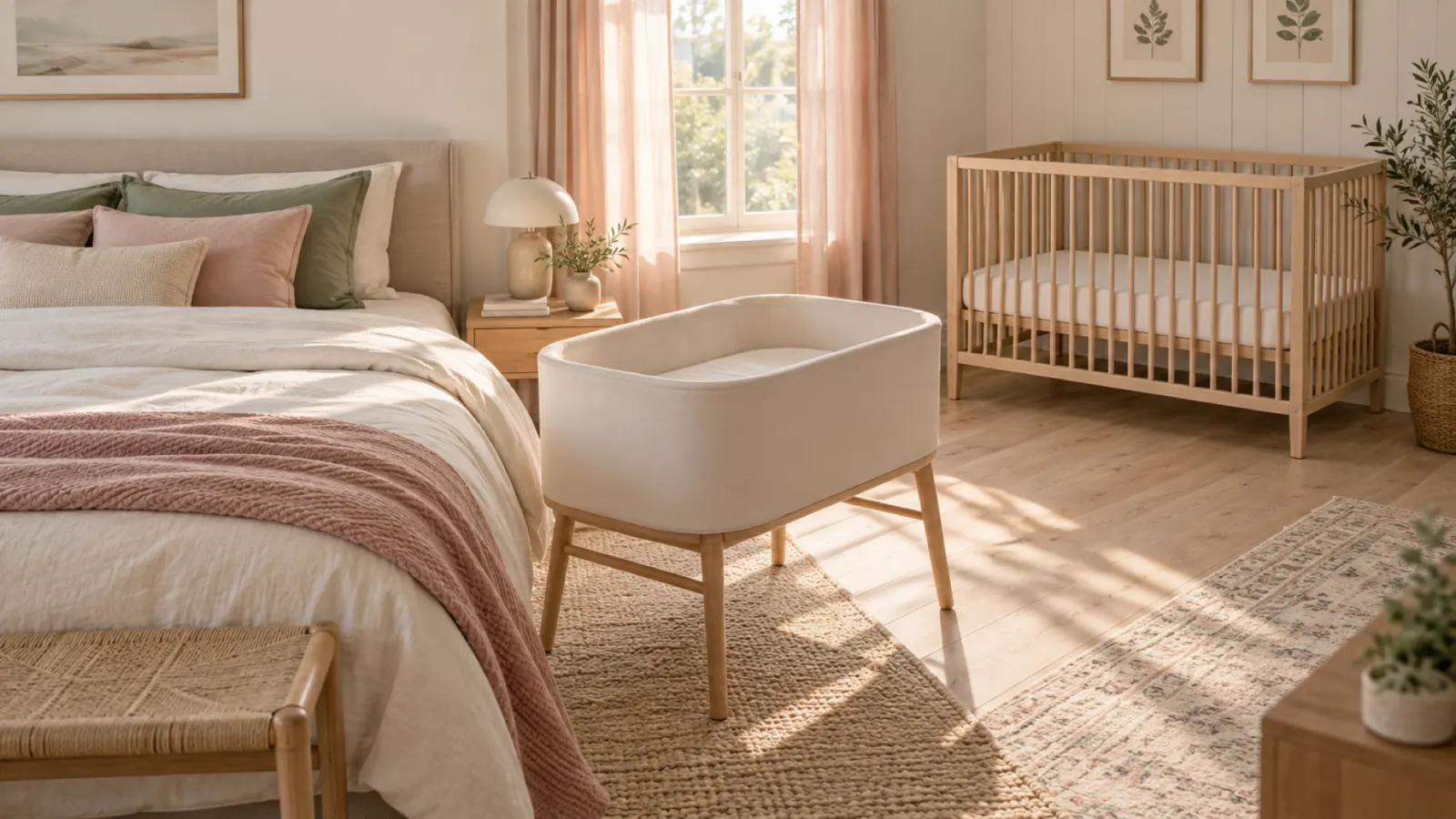
At one change a day plus spares, you need 2 to 3 crib sheets if you wash daily and 3 to 4 every other day. If your baby starts in a bassinet, buy its sheets first and crib sheets for the move, since each mattress needs its own size.
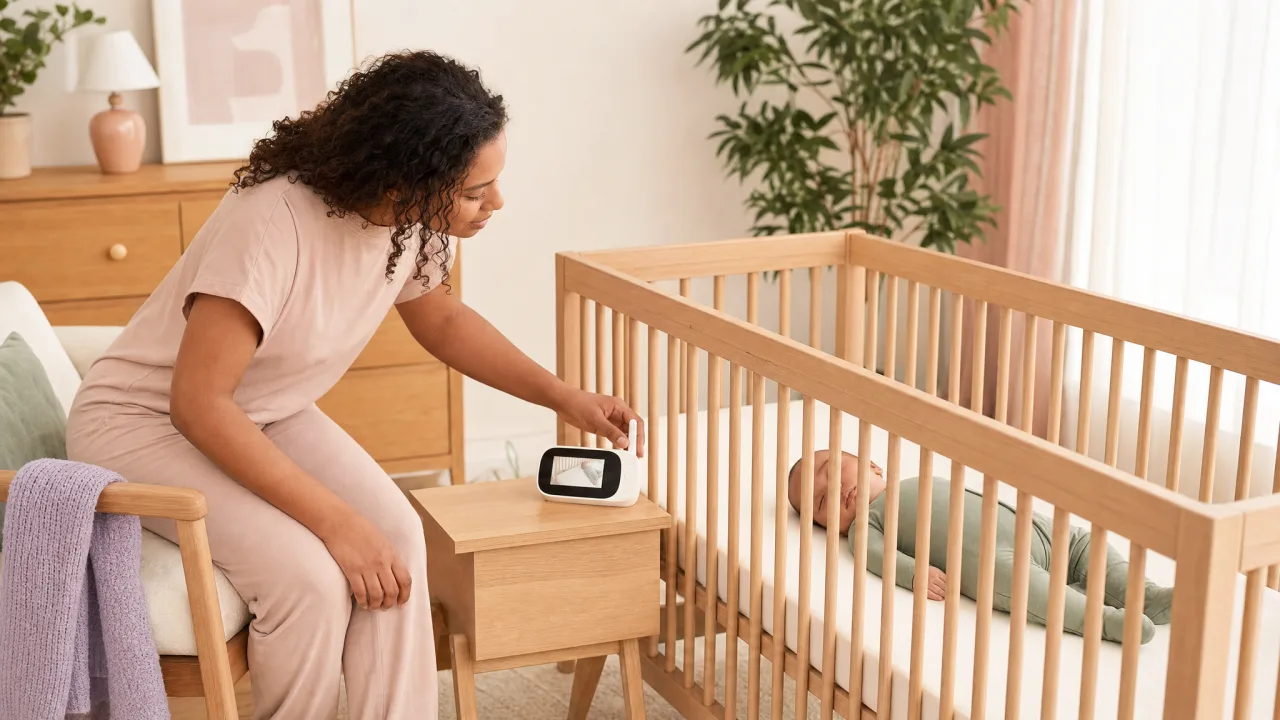
The AAP asks for a crib mattress designed for your specific crib that fits tightly, with a fitted sheet only. NICHD Safe to Sleep lists non-fitted sheets among sleep-area hazards, even light ones that are tucked in.
Our check: once the sheet is on, tug a corner. If it lifts off the mattress, swap it for a sheet made for that size. Our nursery must-haves guide covers the rest of the room.
Bassinet Sheets: Are They Universal?
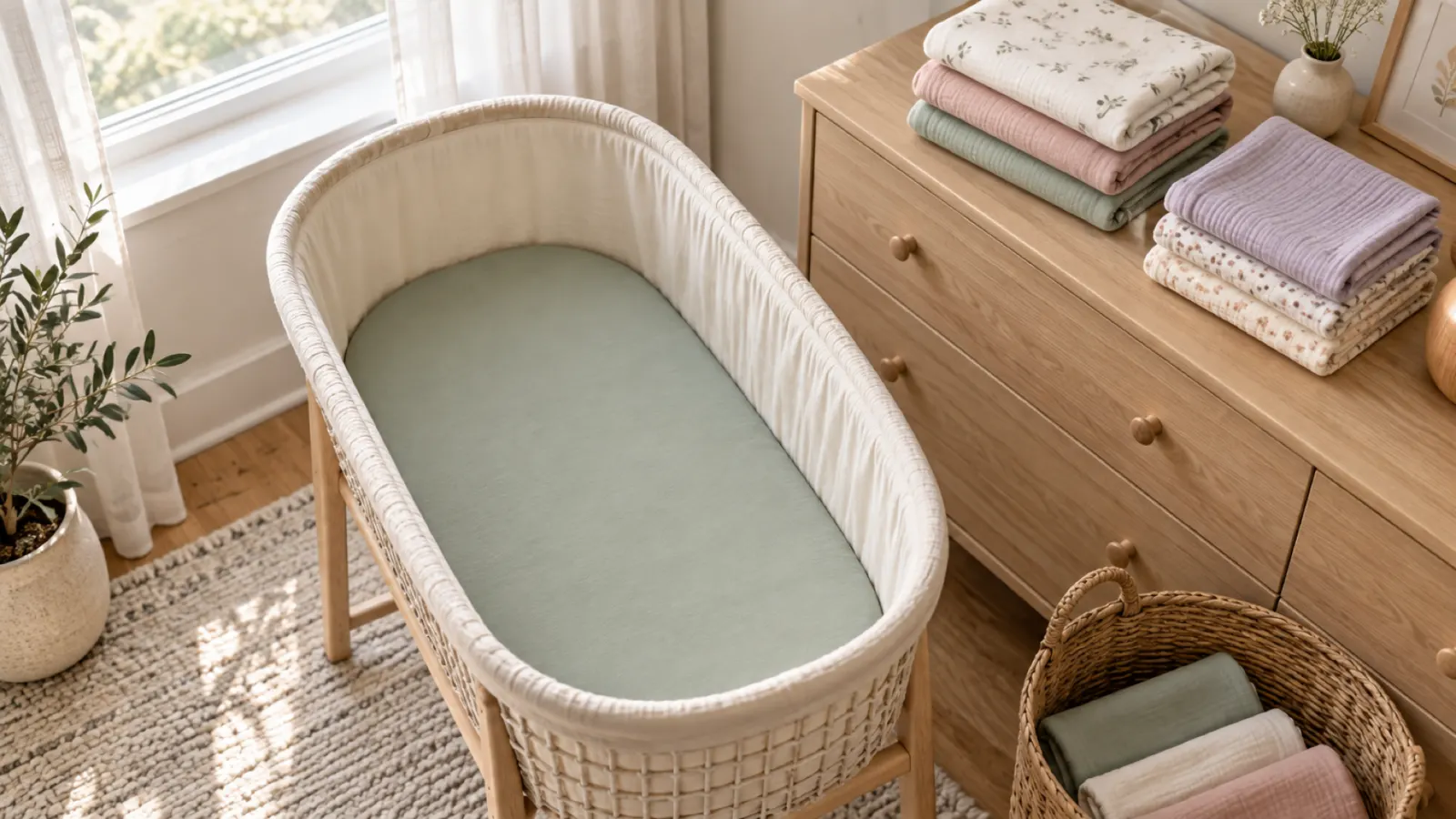
No. Our sources don't cover sheet sizes, but bassinet pads vary in shape and size by model, so a sheet that fits one can sit loose on another. Use only a fitted sheet made for your bassinet model, on the pad it came with; if the maker doesn't sell one, ask them which sheet fits.
The CPSC's safe sleep guidance calls for nothing but a fitted sheet in a crib, bassinet or play yard. The count follows the same formula: 2 to 3 sheets for daily laundry, 3 to 4 for every other day.
Mattress Protectors
Our sources don't cover waterproof protectors directly, and the AAP lists mattress toppers among the soft bedding to keep out. If you use a protector, our suggestion is a thin one made for that mattress, fitted tight under the sheet, never a padded layer. Use one only if the mattress maker's instructions allow it. Two is enough: one on, one in the wash.
Changing-Pad Covers, Sleepers and Receiving Blankets
- Changing-pad covers: at one change a day, 2 to 3 for daily laundry and 3 to 4 every other day. "Changing table or pad" is on our Nursery Essentials list.
- Sleepers: at two changes a day and laundry every other day, 5 to 6 (2 × 2 days + 1 to 2 spares). Under a sleep sack, the sleeper counts as one of your baby's layers. Our newborn essentials list covers the rest of the wardrobe.
- Receiving blankets: a few, for burping and as a clean layer for tummy time on the floor. The AAP wants an awake adult watching tummy time and suggests building to at least 15 to 30 minutes a day by 7 weeks.
- Crib bedding sets: skip sets that bundle a quilt, bumper or pillow with the sheet.
Receiving blankets stay out of the sleep space. The AAP says no loose blankets in your baby's crib, since one that comes loose, swaddle blankets included, could cover your baby's face.
What Never Goes in the Sleep Space
NICHD notes that a crib holding only a fitted sheet may look bare, and calls it the safest option for your baby. Keep these out of the crib, bassinet or play yard:
- Loose bedding: blankets, quilts, comforters, pillows and non-fitted sheets, even light or tucked-in ones (AAP, NICHD).
- Anything attached to the crib: bumper pads and products that tie to the slats or sides (AAP).
- Soft extras: stuffed toys, positioners and mattress toppers (AAP, NICHD).
- Anything weighted: blankets, sleepers, swaddles or other weighted objects (AAP, NICHD).
Frequently Asked Questions
How many swaddles do I need for a newborn?
Two or three for the hospital bag, then 3 to 4 at home if you wash daily or 5 to 6 every other day. The AAP says to stop swaddling at the first sign of trying to roll, so the window is short.
How many crib sheets do I need?
One per day between washes plus one or two spares: 2 to 3 if you wash daily, 3 to 4 every other day. Each should be a fitted sheet made for that mattress.
How many sleep sacks do I need?
Two to three if you wash daily, three to four every other day. The AAP sets no end date for arms-free sleep sacks, so expect to buy the count again in each new size.
Sleep sack or swaddle: which should I use?
The AAP says swaddling carries some risks and lists rules for doing it safely. Swaddles, and sleep sacks that wrap the arms, stop at the first sign of trying to roll; arms-free sleep sacks have no AAP end date. Skip anything weighted.
Are bassinet sheets universal?
No. Bassinet pads vary in shape and size by model (a general point our sources don't cover), so use only fitted sheets made for your bassinet model, on the pad it came with.
Do I need receiving blankets?
A few help with burping and as a clean layer for supervised tummy time. Keep them out of the crib and bassinet: the AAP says no loose blankets in the sleep space.
Put the Numbers on Your List
Settle on a bassinet or crib first, since each sleep surface needs its own sheets. Check how many diapers you're stocking, because leaks and blowouts send sheets to the wash, and how many burp cloths you'll want beside the receiving blankets. Then see what's still missing on your nursery list.
This article is for information only and does not replace advice from your pediatrician about your baby's sleep.
How This Guide Was Made
The Babysential Team wrote this guide from the AAP, NICHD Safe to Sleep and CPSC pages below, checked on October 11, 2026, with AI-assisted drafting. The counts are our own arithmetic from the stated assumptions, and our own suggestions are labeled as ours.
Sources
- Swaddling: Is it Safe for Your Baby?. AAP (HealthyChildren.org), 2022
- How to Keep Your Sleeping Baby Safe: AAP Policy Explained. AAP (HealthyChildren.org), updated 2026
- Safe Sleep Environment. NICHD Safe to Sleep, undated page, checked October 2026
- Safe Sleep: Cribs and Infant Products. U.S. Consumer Product Safety Commission, undated page, checked October 2026