Your baby will sleep for two hours on your chest and eleven minutes in the crib. You have googled whether this is a problem at 3am. This article is the answer.
Short version: contact naps are normal, and they are safe as long as you stay awake. Almost every safety warning you will find about holding a sleeping baby is really a warning about a specific thing — an exhausted adult falling asleep on a sofa or armchair with a baby on them. That is the risk. Not the holding.
What Is a Contact Nap?
A contact nap is any daytime sleep your baby takes on or against a person: chest to chest, in your arms, in a carrier, or across your lap. The baby is asleep. You are not.
That last part is the whole safety question, and it is worth separating from everything else before we go further.
Are Contact Naps Safe? The Honest Answer
Holding a sleeping baby while you are awake is not a recognized risk factor. Nothing in the safe-sleep guidance from the AAP, NICHD or the NHS tells you to put a baby down while you are awake and watching them.
What all three do say, in almost the same words, is this:
- NICHD: "Couches and armchairs are particularly dangerous when an adult falls asleep on them while feeding or comforting baby."
- NHS: "do not sleep on a sofa or in an armchair with your baby."
- AAP: the risk of sleep-related infant death is up to 67 times higher when a baby sleeps with someone on a couch, soft armchair or cushion.
Sixty-seven times. That number is the reason this article spends so long on one narrow scenario, because the scenario is extremely easy to fall into: you sit down on the sofa at 2pm with a baby who finally settled, you have slept five hours in two days, and you did not plan to close your eyes.
The contact nap is not the hazard. The sofa is. If there is any chance you will fall asleep, put your baby down on their back on a firm, flat surface first — before you feel sleepy, not after.
The AAP's instruction for the moment you wake up is unambiguous: move your baby to their own bed as soon as you wake. There is no version of this where you keep going and hope.
What a safe sleep surface is
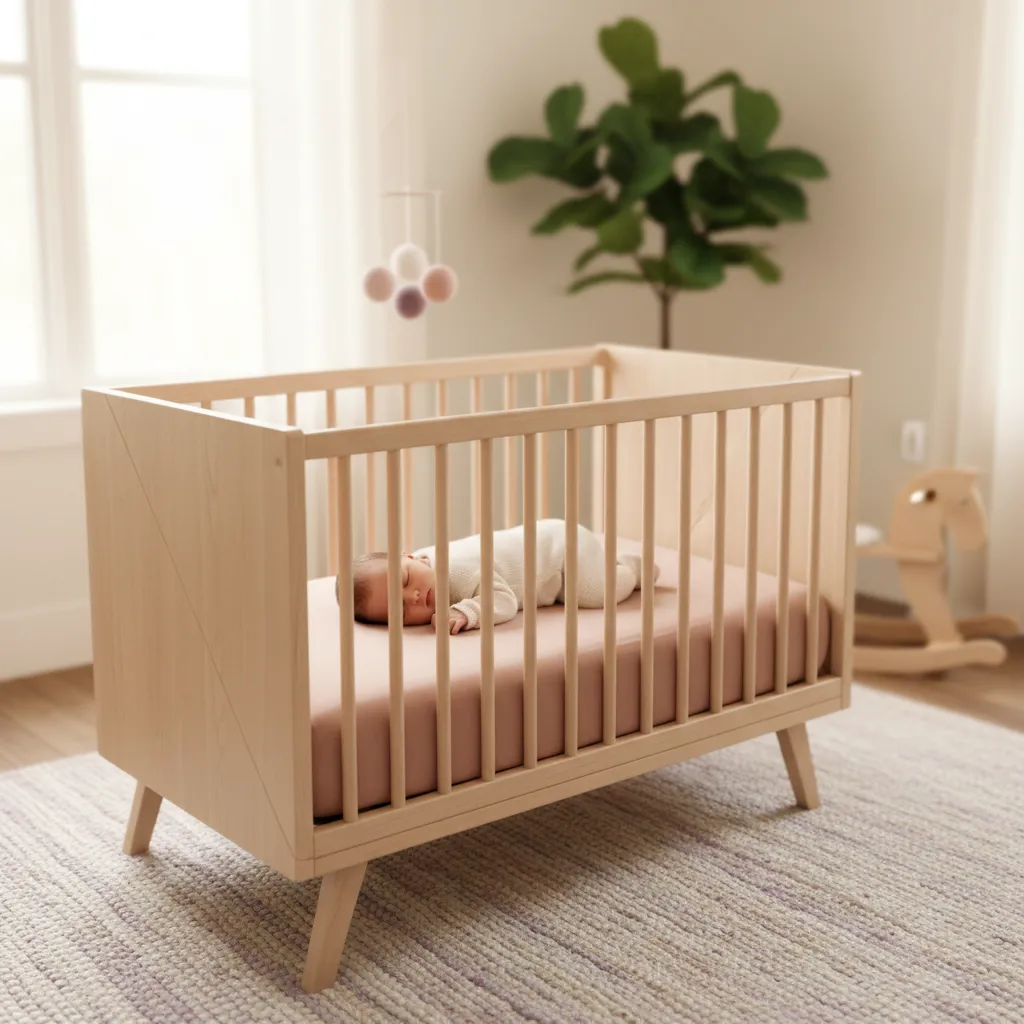
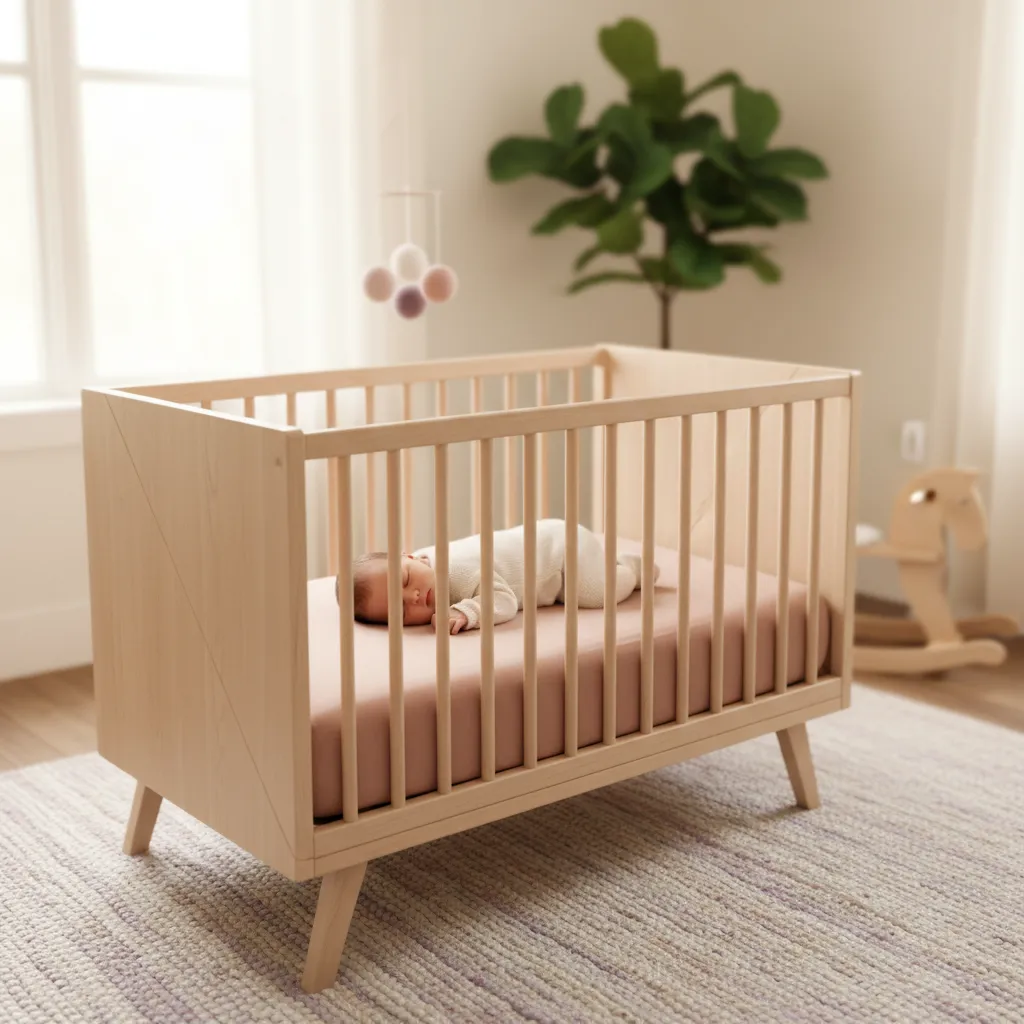
If you are putting the baby down, NICHD describes the surface as firm (returns to its shape quickly when pressed), flat (like a table, not a hammock), level (not at an angle), and covered only with a fitted sheet.
That rules out the places tired parents actually reach for: the sofa, the armchair, the nursing pillow, a car seat indoors, a bouncer. Our safe sleep guide goes through each surface in detail.
Why Your Baby Does This
You are not being manipulated by a nine-week-old. Two things are happening.
Their sleep is not organized yet. Babies do not have regular sleep cycles until about four months of age, and newborns may sleep only one or two hours at a time. The transition between cycles is where a baby half-wakes, checks their surroundings, and either resettles or does not.
You are the surroundings they fell asleep in. A baby who falls asleep on a warm, moving, breathing person and surfaces 35 minutes later on a cool, still mattress notices the difference. That is not a character flaw. It is working sensory equipment.
This is also why the crib transfer fails at a specific moment rather than randomly — see the section on transfers below.
Contact Nap Positions That Work
The position matters more than most parents are told, and it matters for one reason: an infant's airway. Keep the baby's face visible and their chin off their chest.
| Position | Works well for | Watch for |
|---|---|---|
| Upright, chest to chest | Newborns, reflux, post-feed | Chin lifted off the chest, face turned to the side and visible |
| Wrap or structured carrier | Getting anything done, walking | Nose and mouth uncovered, close enough to kiss, no chin-to-chest slump |
| Across the forearm ("koala") | Gassy babies, short settles | Your own arm fatigue — this one has a time limit |
| Lap, semi-reclined | Older babies, second parent nearby | The adult getting comfortable enough to doze — the highest-risk option |
The carrier is the one that changes your day, because it converts a nap you have to sit still for into a nap you can walk around during. It only works if you stay upright: a carrier on a reclining adult is a sofa nap with extra fabric.
Do Contact Naps Create a Bad Habit?
This is the question behind most of the 3am googling, so here is a straight answer with its limits stated.
The safe-sleep guidance we cite here makes no claim in either direction. We checked the AAP, NICHD and NHS material listed at the bottom of this page: none of them names contact naps as something to avoid, and none of them says the habit will be hard to break later. That is a statement about those three sources, not a survey of every study ever published — but they are the guidance parents are told to follow, and it is silent on this.
What we will say plainly, as an observation rather than a finding: the pattern ends. Very few three-year-olds still nap on a parent's chest, and the usual reason is that the child's sleep matured, not that someone broke a habit.
The practical version: if contact naps are working for your family, they are not a debt you will have to repay. If they are not working — if you cannot eat, work, or care for another child — that is a real reason to change something, and it does not need to be justified with a developmental theory.
How to Move Toward the Crib When You Are Ready
Not "how to stop", because stopping abruptly usually fails. Move one variable at a time.
- Change where the nap ends, not where it starts. Let the baby fall asleep on you as usual, then transfer after the first deep-sleep stretch — typically 15 to 20 minutes in, when limbs go floppy. Transferring at minute two almost always fails.
- Warm the mattress first. Rest your hand on the sheet for a minute before you put the baby down. Much of the classic transfer wake-up is a temperature change.
- Put the feet down first, head last, and keep a hand on the chest for 20 seconds after. Do not stand up straight yet.
- Try the first nap of the day. Sleep pressure is highest and the transfer is most likely to hold.
- Take one nap per day for the crib, and leave the others alone. Trying to convert every nap at once produces an overtired baby and a demoralized parent by Wednesday.
- Expect it to take longer than a week, and treat a failed transfer as information about timing, not as a verdict.
If a nap fails, pick the baby up. A contact nap is better than no nap, and an overtired baby transfers worse the next time.
Our complete nap guide covers how many naps to expect by age, and sleep regressions covers what happens when a pattern that was working suddenly stops.
When to Ask Your Pediatrician
Contact naps themselves are not a medical concern. Ask for help if:
- your baby will only sleep upright and seems uncomfortable lying flat, which can point to reflux
- naps come with noisy breathing, pauses, or persistent congestion
- your baby is not gaining weight as expected
- your own exhaustion is becoming unsafe — if you are microsleeping while holding your baby, that is a medical issue for both of you, and it is worth saying out loud to a professional
This article is for informational purposes only and does not replace professional medical advice. Always consult your pediatrician for guidance specific to your child.
Frequently Asked Questions
Are contact naps safe?
Yes, while the adult holding the baby is awake and alert. The danger is not the holding, it is the adult falling asleep. Risk of sleep-related infant death is up to 67 times higher when a baby sleeps with someone on a couch, soft armchair or cushion.
Do contact naps create a bad habit?
The safe-sleep guidance from the AAP, NICHD and the NHS makes no claim in either direction. None of them lists contact naps as something to avoid, and none of them promises the habit will be hard to break later.
How long do contact naps last?
Newborns may sleep only one or two hours at a time and do not have regular sleep cycles until around four months. Many contact naps end at the first cycle transition, roughly 30 to 45 minutes in.
What is the safest position for a contact nap?
Upright against the chest, with the baby's face visible, chin off the chest, and nose and mouth clear. A structured carrier or wrap keeps that position stable while the adult stays upright and moving.
What should I do if I feel sleepy during a contact nap?
Put the baby down on their back on a firm flat surface before drowsiness wins. Never move to a sofa or armchair to get comfortable. Waiting until the last moment is how unplanned sofa sleep happens.
The Bottom Line
Contact naps are safe when you are awake, normal at every age they happen, and not a habit you will have to undo later. The one rule that carries almost all of the risk is the narrow one: never let yourself fall asleep with your baby on a sofa or armchair, and put them down on a firm flat surface before you get sleepy, not after.
If you want to know whether contact naps are actually costing you sleep or just feel like they are, log three days of naps and night wakings in the Baby Sleep Tracker. Most parents find the pattern is different from the one they remember at 3am.
Sources: