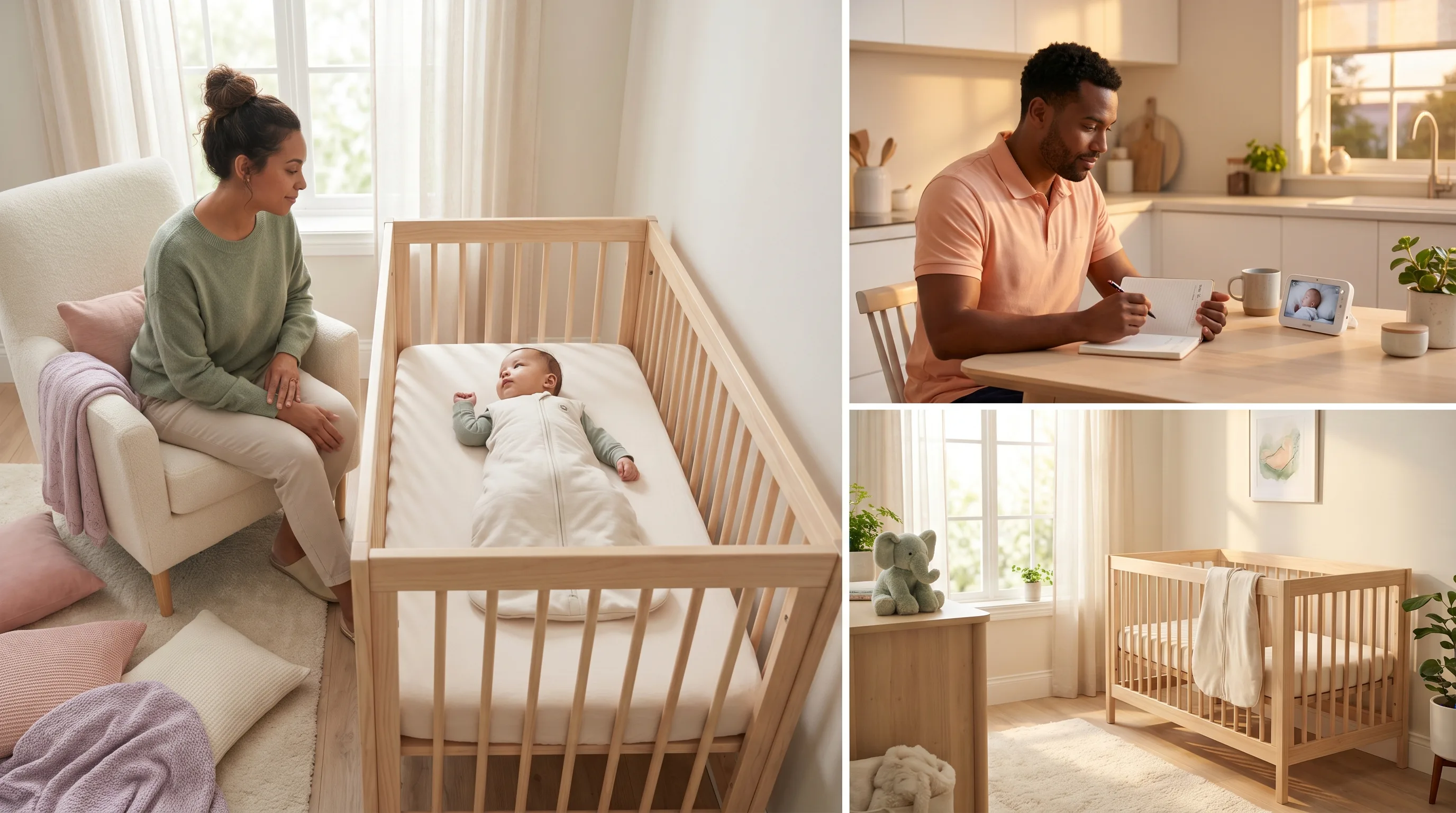
The sleep environment affects how well your baby sleeps. Room temperature, light, sound, and clothing all play a role. The good news is that these are things you can actually control, unlike much else about baby sleep.
Here's a complete guide to creating the best sleep environment for your baby, based on recommendations from the AAP and WHO.
Temperature: The Most Important Factor
Room temperature is the single most important thing you can control for good, and safe, sleep.
Recommended Temperature
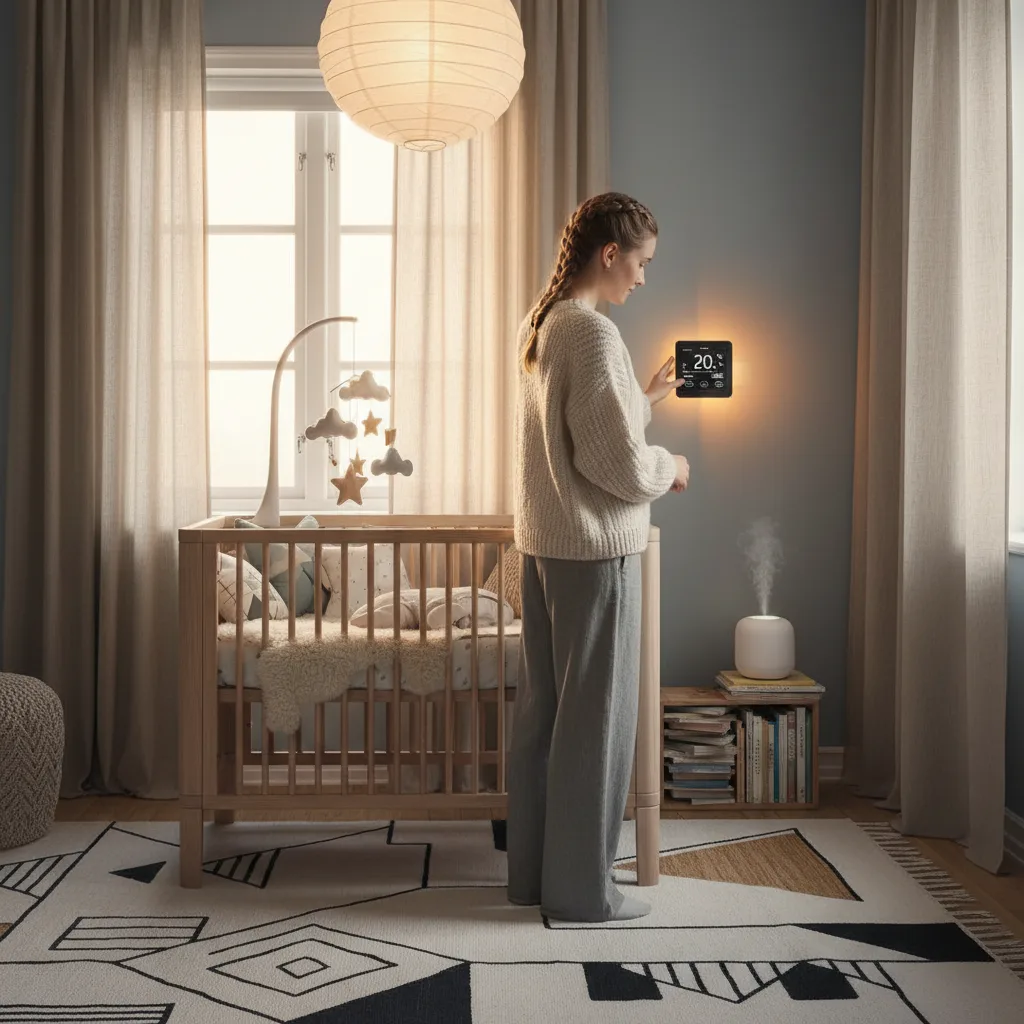
The AAP recommends keeping the sleep room at 68–72°F (20–22°C). This is cooler than most people expect, but babies sleep best in a cool room.
Important for safe sleep: Overheating increases the risk of SIDS. It's better for the room to be slightly too cool than too warm. Read more in our safe sleep guide.
How to Check If Your Baby Has the Right Temperature
- Feel the chest or back of the neck, it should feel comfortably warm, not sweaty or cold
- Hands and feet can feel slightly cool, that's normal and not a sign that the baby is cold
- Sweaty neck means the baby is too warm, remove a layer
Temperature Management Tips
In winter:
- Use a thermostat or space heater with a timer
- Ventilate the room well before bedtime and close the window
- A sleep sack replaces a blanket and provides consistent warmth
- Avoid placing the baby directly next to a radiator
In summer:
- Remove layers of clothing rather than lowering the room temperature
- A fan blowing toward the wall (not directly at the baby) can help
- A thin sleep sack or just a onesie may be enough
- Blackout curtains also help keep heat out
Darkness: Your Hormones' Best Friend
Melatonin, the sleep hormone, is produced in darkness. The darker the room, the easier it is for the baby to fall asleep and sleep longer.
Daytime Naps
For newborns (0–8 weeks) you don't need to darken the room for naps. The baby will sleep regardless, and daylight helps the circadian rhythm develop.
From around 8–12 weeks onward, a dark room makes a noticeable difference for naps. Short naps in particular can be extended by darkening the room.
Nighttime Sleep
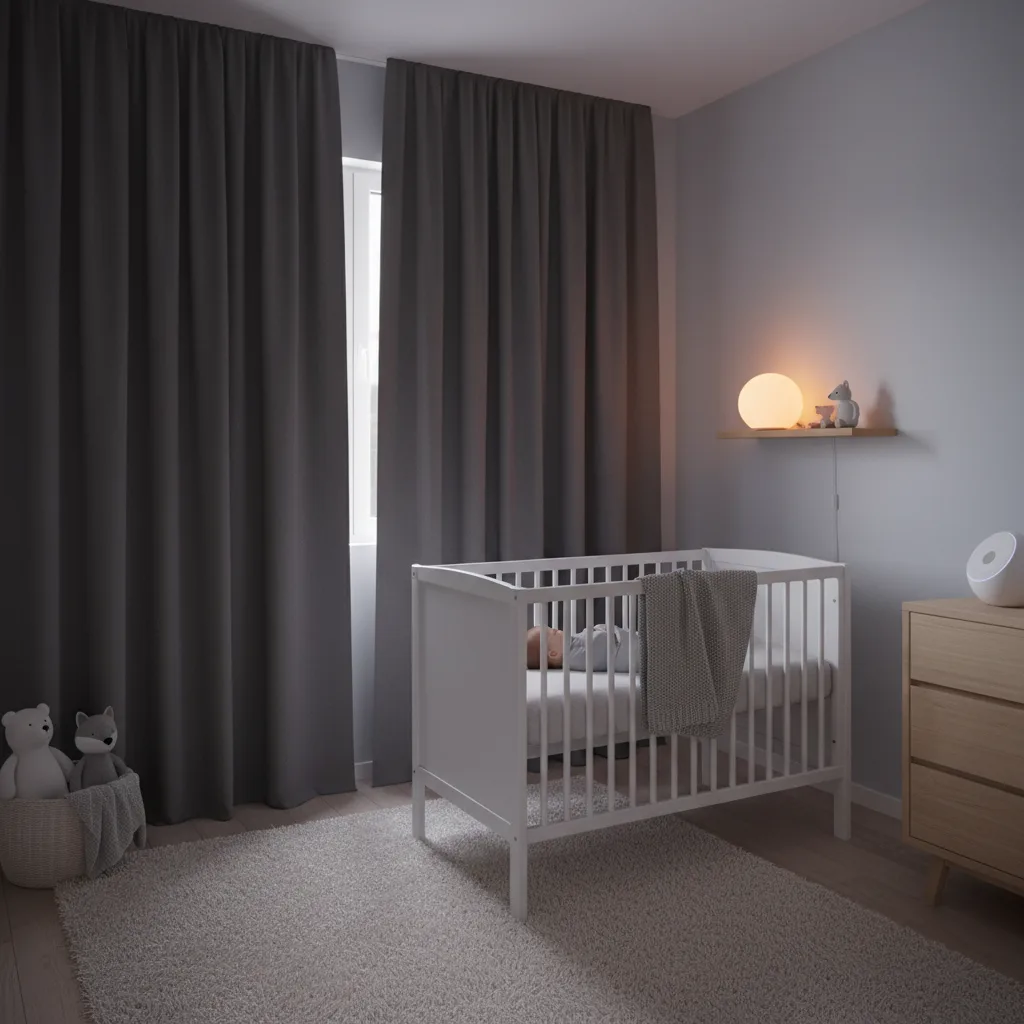
The bedroom should be as dark as possible at night. Ideally, you shouldn't be able to see your hand in front of your face.
Blackout Curtains
This is one of the best investments for baby sleep:
- Travel blackout curtains with suction cups are affordable and flexible
- Permanent blackout curtains give the best results
- Aluminum foil on windows works as a quick emergency solution (not pretty, but effective)
Tip: Summer evenings stay bright for a long time, blackout curtains are practically essential for babies who sleep poorly during June and July.
Night Light
When you need to go to the baby at night for feeding or a diaper change:
- Use a dim, warm night light (red/orange is best)
- Avoid blue/white light, it suppresses melatonin
- Place the night light low, never pointed at the baby's face
- Have the night light in place already, so you don't have to turn on the overhead light
Sound: White Noise and Background Sounds
Babies are used to sound from the womb, it was never quiet in there. So complete silence can actually disturb sleep.
What Is White Noise?
White noise is a steady, monotonous sound that masks sudden noises. Think of the sound of a fan, a vacuum cleaner, or rain against a window.
Benefits of White Noise
- Masks disruptive sounds (older siblings, traffic, the doorbell)
- Reminds babies of the womb, soothing for newborns
- Can extend naps by covering sounds that would otherwise wake the baby
- Signal effect, the baby learns that white noise = sleep time
How to Use White Noise Correctly
Volume: Keep the sound level at around 50–60 dB (roughly like a shower in the next room). Not too loud, it should be comfortable, not overwhelming. The AAP recommends keeping white noise machines at a safe volume and at least 7 feet from the baby's head.
Placement: At least 3–7 feet from the baby's head. Never in the crib.
Duration: You can run white noise all night, but many families use it only at bedtime and through the first few sleep cycles.
Type: Deep, steady sounds (ventilation, washing machine, rain) work better than sharp sounds. Many parents use a dedicated white noise machine or an app.
Clothing and Bedding
What the baby wears in bed matters for both comfort and safety.
Sleep Sack. The Safest Option
Sleep sacks are recommended over blankets because:
- The baby can't kick them off
- No risk of covering their face
- Consistent warmth all night
- No loose bedding
Choose the right TOG rating:
| Room Temperature | TOG Rating | Clothing Underneath |
|---|---|---|
| Above 75°F (24°C) | 0.5 TOG | Diaper only |
| 72–75°F (22–24°C) | 0.5–1 TOG | Short-sleeve onesie |
| 68–72°F (20–22°C) | 1 TOG | Long-sleeve onesie |
| 64–68°F (18–20°C) | 1.5–2 TOG | Long-sleeve onesie |
| 61–64°F (16–18°C) | 2–2.5 TOG | Long-sleeve onesie + socks |
| Below 61°F (16°C) | 2.5–3.5 TOG | Pajamas + onesie |
Safe sleep: Babies under 12 months should not have blankets, pillows, crib bumpers, or loose objects in the crib. Use a sleep sack instead. See our safe sleep guide.
Nighttime Clothing
- Cotton is best, it breathes and regulates heat
- Wool/silk onesies work well in cold rooms
- Avoid fleece and synthetic materials that trap heat
- A hat is not needed indoors, babies regulate heat through their head
The Crib and Mattress
Crib
- Use an approved crib or bedside bassinet
- Slats should be no more than 2⅜ inches apart
- The mattress should fit snugly against the sides (no large gaps)
- No pillows, blankets, or large stuffed animals in the crib during the first year
Mattress
- Firm mattress, not too soft. The baby should not sink in
- Breathable material, some mattresses have ventilation
- Correct size, should fit exactly in the crib
- Clean cover, use a waterproof cover under the sheet
Crib Placement
- Avoid placement by a window (drafts and curtains)
- Avoid placement directly next to a radiator
- Ideal: in the parents' bedroom for the first 6–12 months (recommended by the AAP)
- Keep the crib away from cords, shelves, and anything that could fall
Air Quality and Ventilation
Good air quality in the bedroom contributes to better sleep:
- Ventilate the room daily, 5–10 minutes of fresh air
- CO2 levels affect sleep quality, ventilation matters
- Avoid strong smells, scented products, smoke, strong cleaning agents
- Humidity of 30–50% is ideal. Dry air (common in winter with heating) can cause a stuffy nose
Did you know? Research shows that a well-ventilated bedroom leads to better sleep quality in both children and adults. A window cracked open or proper ventilation can make a big difference.
Checklist: The Perfect Sleep Environment
Use this checklist to optimize your baby's bedroom:
- Room temperature 68–72°F (20–22°C)
- Blackout curtains installed
- Warm night light (red/orange)
- White noise machine or app ready
- Firm mattress that fits the crib
- Sleep sack with correct TOG rating
- No loose objects in the crib
- Good ventilation
- Crib placed away from windows and radiators
- Room free of strong smells
Sleep Environment for Naps vs. Nighttime
You can take a slightly different approach for daytime and nighttime:
Daytime naps:
- Dark room (from around 8–12 weeks)
- White noise
- Can also nap in a stroller or baby carrier for variety
Nighttime sleep:
- As dark as possible
- White noise all night (optional)
- Always in the crib
- Nighttime feedings in dim light with minimal stimulation
When Baby Shares a Room With a Sibling
Many families have limited space. If the baby shares a room with an older sibling:
- White noise helps both sleep undisturbed
- Different bedtimes, put the baby down first
- Room divider (curtain, shelf) can give a sense of a personal space
- Night light, important for the older child, but position it so it doesn't shine on the baby
Frequently Asked Questions
Is white noise harmful to babies?
No, when used correctly. Keep the volume moderate (50–60 dB), place the source at least 3–7 feet from the baby, and avoid sharp sounds. White noise is a tool that many families use successfully.
Should the baby sleep in their own room or with the parents?
The AAP recommends that the baby sleep in the parents' bedroom for the first 6–12 months, but in their own crib or bassinet. This reduces the risk of SIDS.
How cold can the bedroom be?
With the right clothing and sleep sack, babies can sleep comfortably in rooms down to around 61°F (16°C). Use a sleep sack with a higher TOG rating and feel the baby's chest to check that the temperature feels right.
Do I need a humidifier?
In dry indoor air during winter, a humidifier can help, especially if the baby has a stuffy nose. Aim for 30–50% humidity. Clean the humidifier regularly to avoid mold and bacteria.
Can too much silence be a problem?
Yes, actually. Babies used to complete silence can be more easily woken by sudden sounds. A bit of background sound (white noise, ventilation) helps babies sleep through normal household noises.
Read More
- Safe Sleep for Baby. The most important rules for safe sleep
- SIDS Prevention. Guidelines from the AAP
- Indoor Air Quality in the Nursery. Air, temperature, and humidity
- Best Baby Cribs. Find the right crib
- Sleep Tracker. Log sleep and see if changes in the sleep environment help
Sources
- AAP. Safe Sleep
- WHO. Child Health Guidelines
- CDC. Sudden Unexpected Infant Death
- NIH. Sleep in Infants
🔧 Helpful Tools
- Baby Sleep Tracker. Track and optimize your baby's sleep
- Soothing Sounds. White noise and soothing sounds to help your baby sleep
- All Baby Tools. Browse all free tools for pregnancy and baby care