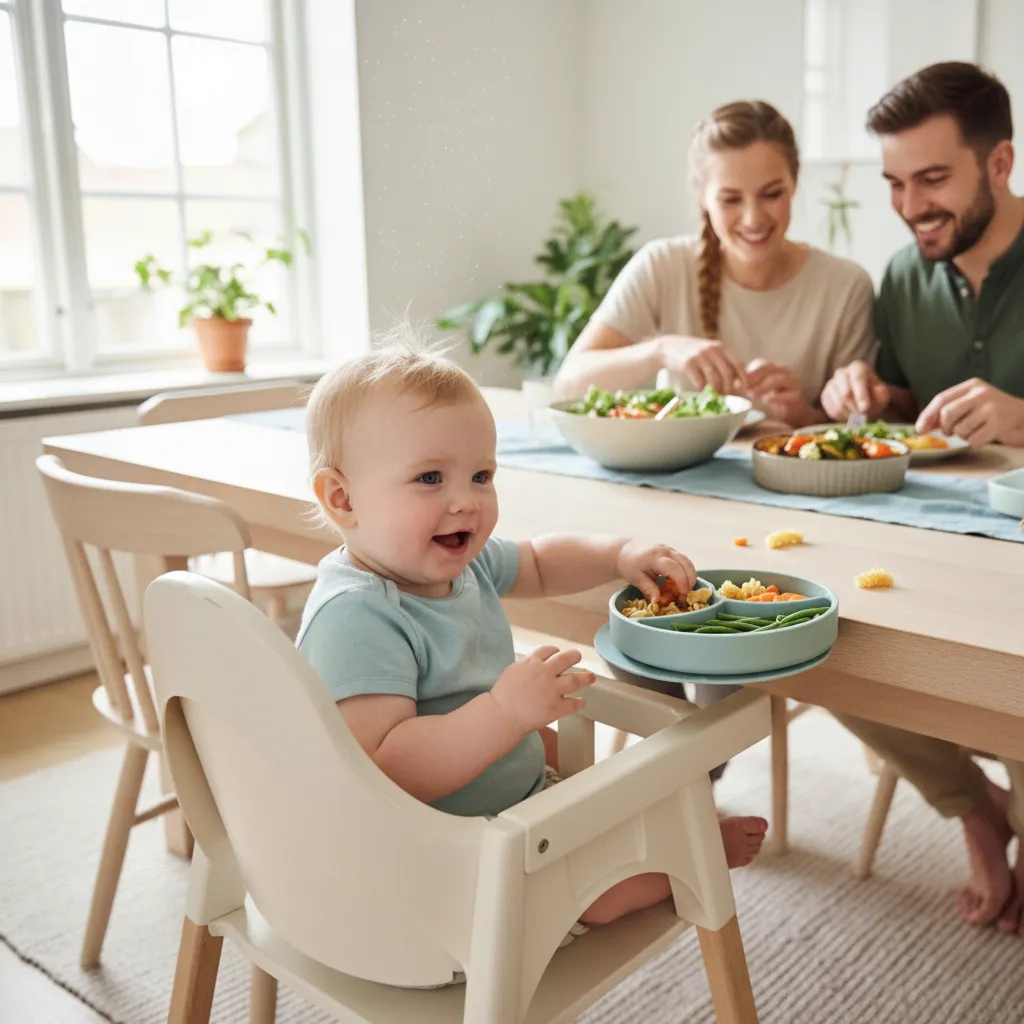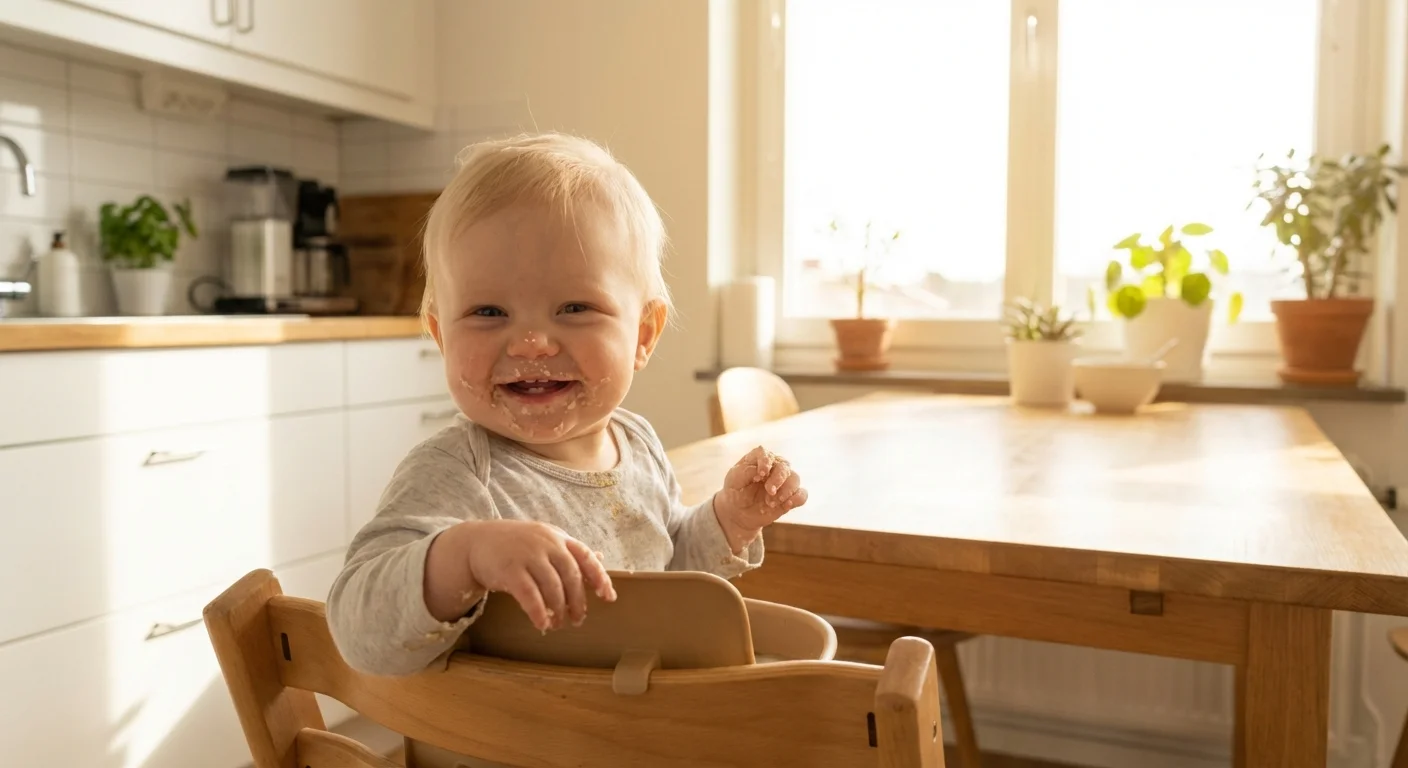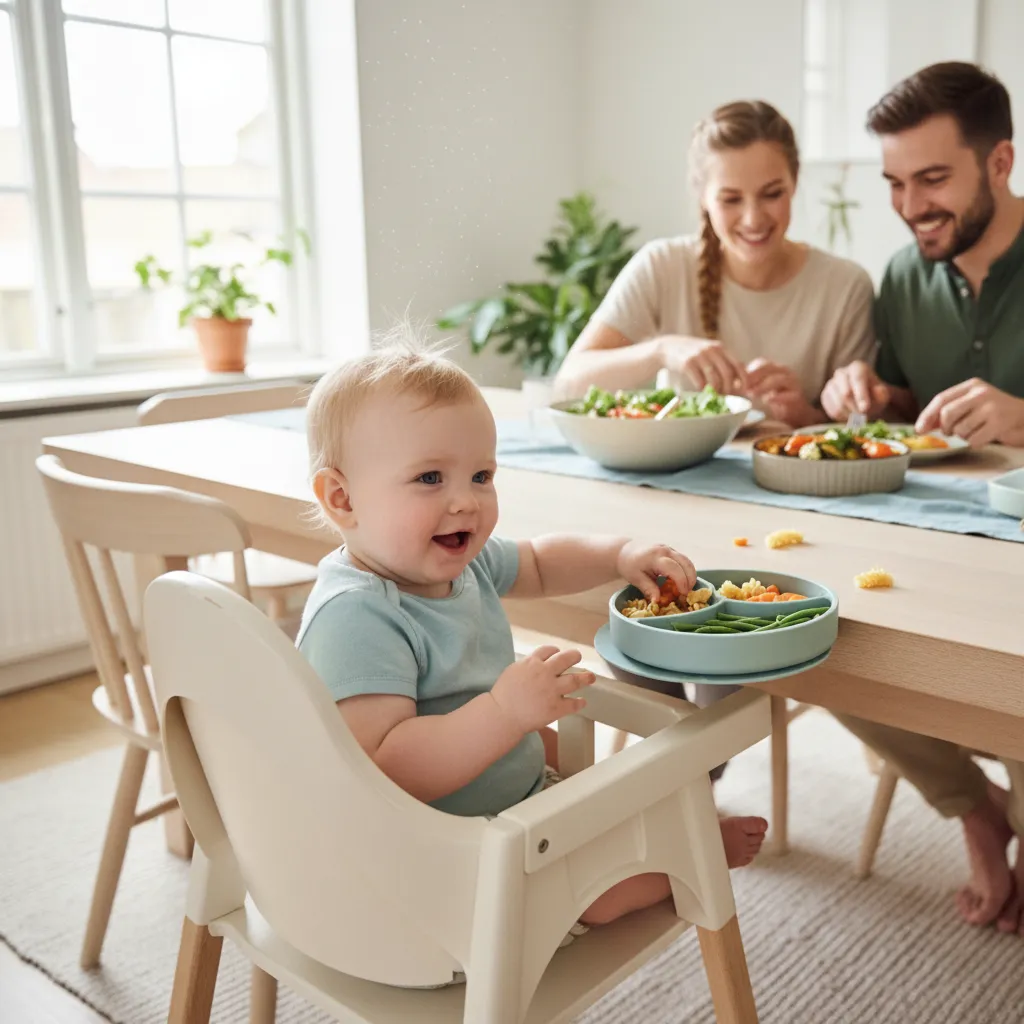
At 10 months, your baby eats much of what the family eats, just in adapted form. Most babies now have experience with a variety of flavors and textures, and many want to feed themselves with their fingers and try a spoon.
Here is the guide to food for babies around 10–12 months, based on recommendations from the WHO and the American Academy of Pediatrics (AAP).
What's New at 10 Months?
Between 10 and 12 months, major changes happen in your baby's eating:
- Chewing with the gums, baby can mash food effectively without teeth
- Pincer grasp established, picks up small pieces with precision
- Spoon interest, baby often wants to hold the spoon themselves
- Flavor range, baby accepts many flavors and textures
- 3 meals, most babies have 3 set meals plus snacks
From 10 months, your baby can start eating more of what the family eats, just without added salt and sugar. Set aside the baby's portion before salting the family's food. Cut or mash food to appropriate-sized pieces.
Texture at 10–12 Months
From Purée to Pieces
At 10 months, most babies no longer need puréed food. They can eat:
- Soft pieces, cut to appropriate size
- Fork-mashed, roughly mashed with a fork
- Finger foods, baby feeds themselves
- Bread slices, with thin toppings
Still Important
- All food should be soft enough to mash between fingers
- Cut round foods in half or quarters (grapes, cherry tomatoes, sausage pieces)
- Hard foods (raw carrots, nuts, popcorn) are still choking hazards
Meal Routines at 10 Months
Typical Daily Schedule
According to the AAP, your baby should have 3 solid food meals plus breast milk or formula:
| Time | Meal | Example |
|---|---|---|
| Morning (7–8 AM) | Breakfast | Bread with liver pâté + fruit |
| Mid-morning (9–10 AM) | Nursing/bottle | Breast milk or formula |
| Lunch (11 AM–12 PM) | Lunch | Family dinner leftovers in adapted form |
| Afternoon (2–3 PM) | Snack | Fruit + bread with cheese |
| Dinner (5–6 PM) | Dinner | Fish + vegetables + rice |
| Evening (7–8 PM) | Nursing/bottle + porridge | Breast milk + iron-fortified cereal |
Amount: Baby eats 4–8 tablespoons per meal, plus finger foods. Let baby decide how much they want.
Breast Milk at 10 Months
- Breast milk is still important for nutrition and immune support
- Most babies nurse 3–5 times per day
- Solid food is gradually taking over as the primary source of nutrition
- Don't cut back on nursing, baby regulates this themselves
New Foods from 10 Months
According to the AAP, you can expand the range of foods from 10 months:
Dairy Products (from 10 Months)
| Food | Amount | Notes |
|---|---|---|
| Yogurt (plain) | Max 2 oz/day | Taste portions, can become a regular part of the diet |
| Cottage cheese | Max 2 oz/day | Good protein source |
| Cheese (mild) | Thin layer on bread | Mild varieties, string cheese, cream cheese |
Maximum 2 oz of dairy products per day at 10 months (not counting breast milk/formula). Cow's milk as a drink is not recommended until 12 months. Too many dairy products can inhibit iron absorption.
Family Food in Adapted Form
| Family Dish | Adaptation for Baby |
|---|---|
| Pasta Bolognese | Cut pasta, roughly mash the meat sauce |
| Fish casserole | Serve without salt, cut into pieces |
| Chicken stew | Cut chicken and vegetables into pieces |
| Pancakes | Without sugar, cut into strips |
| Risotto | Serve as is (soft texture) |
| Soup | Roughly mash or serve with bread |
Tip: Make the family's dinner without salt, set aside baby's portion, then season for the rest of the family.
Self-Feeding at 10 Months
Spoon and Fingers
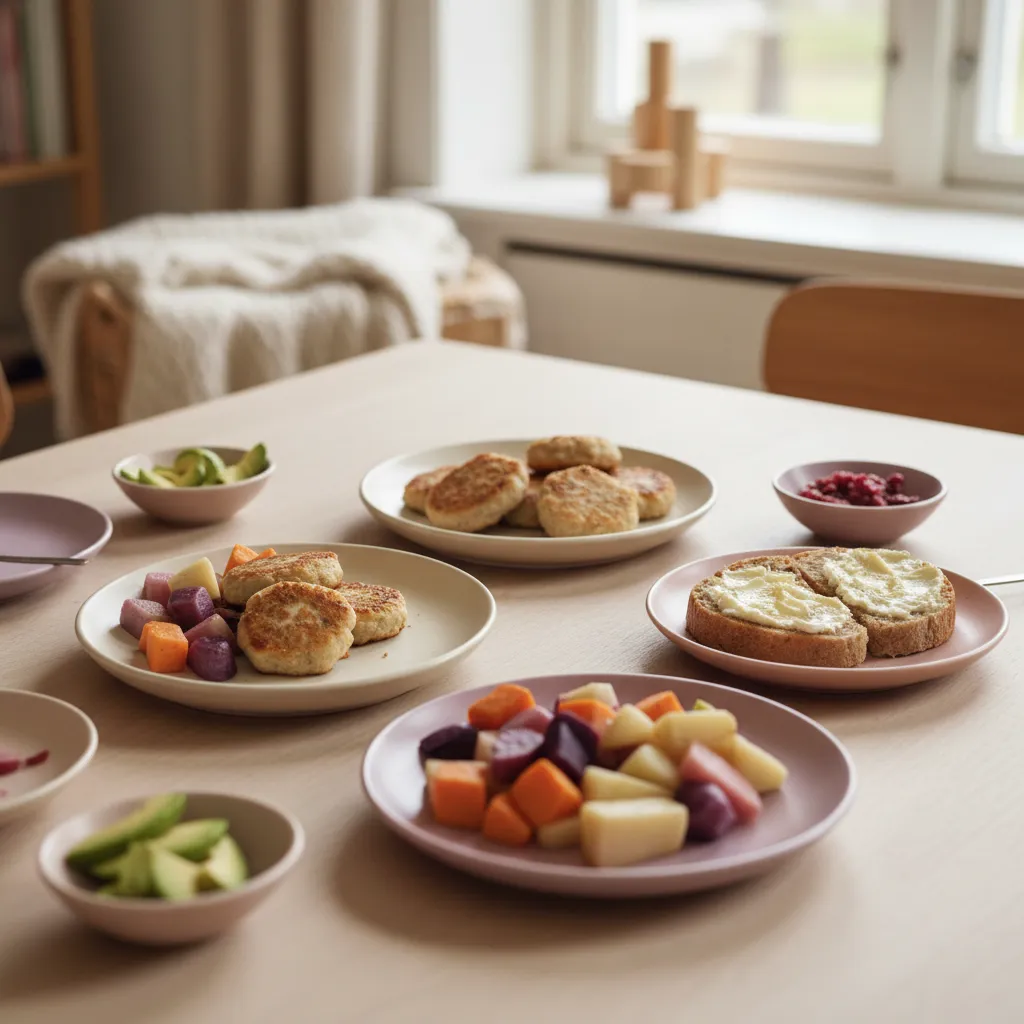
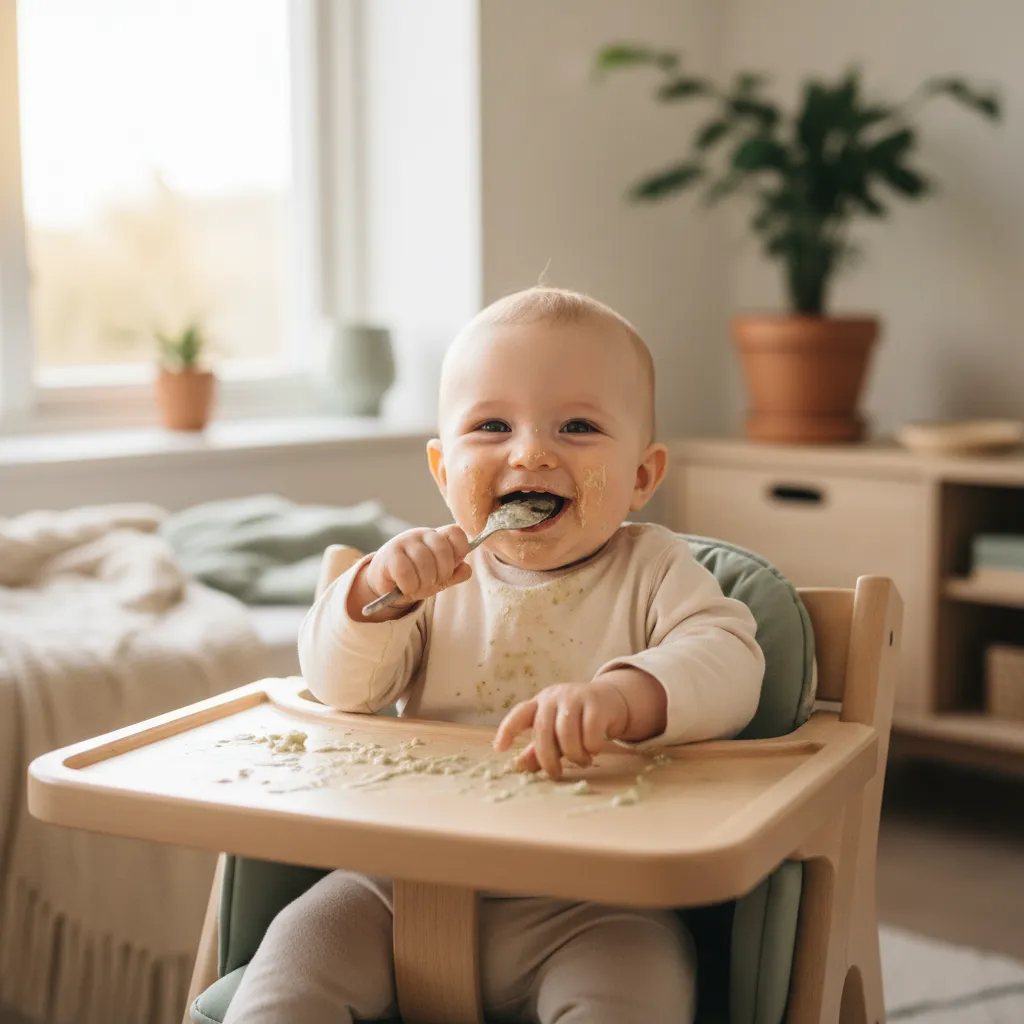
Most babies want to feed themselves from 10 months. Let baby try:
- Pre-loaded spoon, give baby a soft spoon to practice with
- Finger foods at every meal, bread strips, vegetables, fruit
- Dipping, baby loves dipping bread in hummus, guacamole, or yogurt
- Drinking from a cup, continue offering water in an open cup
Expect Mess
Self-feeding is messy. It's an important part of the learning process:
- Place plastic or newspaper under the chair
- Use a bib with a catch pocket
- Give small portions at a time
- Let baby explore food with their hands
Babies who practice self-feeding from early on develop better fine motor skills and become more independent at the table. Let it take time, the skill comes gradually.
Iron-Rich Food Is Still Important
According to the AAP, babies between 6 and 12 months need extra iron. Iron stores from birth are depleted, and breast milk contains little iron.
Good Iron Sources for 10-Month-Olds
- Iron-fortified baby cereal, continue daily
- Red meat, beef, lamb (well cooked, cut into pieces)
- Liver pâté, on bread (max 1–2 slices per day)
- Beans and lentils, in stews and as finger food
- Eggs, omelet, scrambled eggs, boiled egg
Iron absorption tip: Combine iron-rich food with vitamin C (fruit, vegetables) for better absorption. Avoid milk with iron-rich meals, calcium inhibits iron absorption.
Allergies and New Foods
Has Your Baby Tried These?
According to the AAP, all common allergens should be introduced during the first year of life:
| Allergen | Introduced? | Examples |
|---|---|---|
| Eggs | Should have been tried | Scrambled eggs, omelet |
| Milk (in food) | Should have been tried | Porridge, pancakes |
| Gluten | Should have been tried | Bread, pasta, oats |
| Fish | Should have been tried | Cod, salmon |
| Peanuts | Should have been tried | Peanut butter (thin layer) |
| Sesame | Should have been tried | Hummus, tahini |
If baby hasn't tried any of these, introduce them now, one new food at a time, 2–3 days apart.
3 Simple Recipes for 10 Months
1. Mini Fish Cakes (Finger Food)
- 7 oz cod fillet (raw, boneless)
- 1 egg
- 2 tbsp breadcrumbs
- 1 tbsp finely chopped dill
Roughly process the fish in a food processor. Mix with egg, breadcrumbs, and dill. Shape small flat cakes. Pan-fry in a little oil over medium heat, about 3 minutes per side. Cool. Perfect finger food.
2. Banana Pancakes with Blueberries
- 1 ripe banana
- 1 egg
- 3 tbsp oat flour
Mash the banana. Mix with egg and oat flour. Fry small pancakes. Top with crushed blueberries. Serve in strips as finger food.
3. Chicken and Root Vegetables
- 1 chicken fillet, cut into small pieces
- 1 carrot, cut into sticks
- 1 parsnip, cut into sticks
- 1 tsp olive oil
Spread everything on a parchment-lined baking sheet. Drizzle with olive oil. Roast at 400°F (200°C) for 25 minutes until everything is soft and golden. Cool to a comfortable temperature. Serve as finger food.
Common Challenges at 10 Months
Baby Refuses New Foods
- Offer new foods repeatedly (up to 10–15 times)
- Mix the new with something familiar
- Eat the same things yourself, baby imitates
- Never force or pressure
Baby Eats Less Than Before
Normal. Appetite varies from day to day. Baby can have periods of eating a lot and periods of eating little. Look at the weekly total intake, not individual meals.
Baby Only Wants Bread
Many babies prefer bread. Vary the toppings (liver pâté, cheese, avocado, hummus) and always offer vegetables and fruit on the side. Bread is a fine part of the diet, but shouldn't make up the entire meal.
Frequently Asked Questions
What can a 10-month-old baby eat?
At 10 months, baby can eat most family food in adapted form: bread with toppings, pasta, rice, meat, fish, vegetables, fruit, eggs, and dairy products. Avoid added salt and sugar. Cut food into appropriate-sized pieces.
How much food does a 10-month-old need?
Most babies eat 3 set meals plus 1–2 snacks per day. The amount varies, but approximately 4–8 tablespoons per meal plus finger foods. Breast milk or formula 3–5 times per day.
Can a 10-month-old eat yogurt?
Yes. From 10 months, baby can eat plain yogurt as taste portions, up to 2 oz per day. Choose plain yogurt without added sugar. From 12 months, yogurt can become a regular part of the diet.
Can a 10-month-old drink cow's milk?
Cow's milk as a drink and in porridge is not recommended until 12 months. In cooking (sauces, pancakes, baking), cow's milk can be used in small amounts from 10 months. At 10 months: max 2 oz yogurt per day. From 12 months: max 24 oz dairy products total per day.
Does a 10-month-old still need iron-fortified cereal?
Yes. Iron-fortified baby cereal is still important as an iron source until 12 months. Combine with other iron-rich foods (meat, liver pâté, lentils) and vitamin C (fruit) for best absorption.
Summary
At 10 months, baby eats much of the family's food in adapted form. 3 meals per day plus breast milk. Let baby self-feed. Vary the food. Continue with iron-fortified cereal. Cut food into soft pieces. Avoid salt and sugar. Set aside baby's portion before seasoning.
Use Babysential's food database to check age recommendations for all foods and plan meals for your 10-month-old.
Read More
- Baby Food at 8 Months: Chunkier Textures and Finger Foods
- Baby Food from 6 Months
- Introduction to Solids: Complete Guide
- Iron-Rich Foods for Baby
- Choking Hazards: How to Make Food Safe
Sources
- AAP. American Academy of Pediatrics: Starting Solid Foods
- WHO. Complementary Feeding: Family Foods for Breastfed Children
- AAP. Infant Food and Feeding Guidelines
🔧 Helpful Tools
- Baby Food Guide. Safe foods and introduction schedule for your baby
- Breastfeeding Tracker. Log feeds, track supply, and monitor nursing sessions
- All Baby Tools. Browse all free tools for pregnancy and baby care
📖 Related Articles
- Food for Baby at 10 Months: Family Meals in Adapted Form. What can your baby eat at 10 months? Guide to meals, portions, self-feeding, and transitioning to family food based on WHO/AAP guidelines.
- Food for Baby at 1 Year: Transitioning to Family Meals. What can your child eat at 1 year? Guide to family food, cow's milk, portions, and nutrition for your one-year-old based on WHO/AAP guidelines.
- Baby Allergens: A Safe Guide to Introducing Allergenic Foods. How to safely introduce allergens to your baby. Eggs, nuts, milk and gluten - when, how and what to look for. Based on current guidelines.