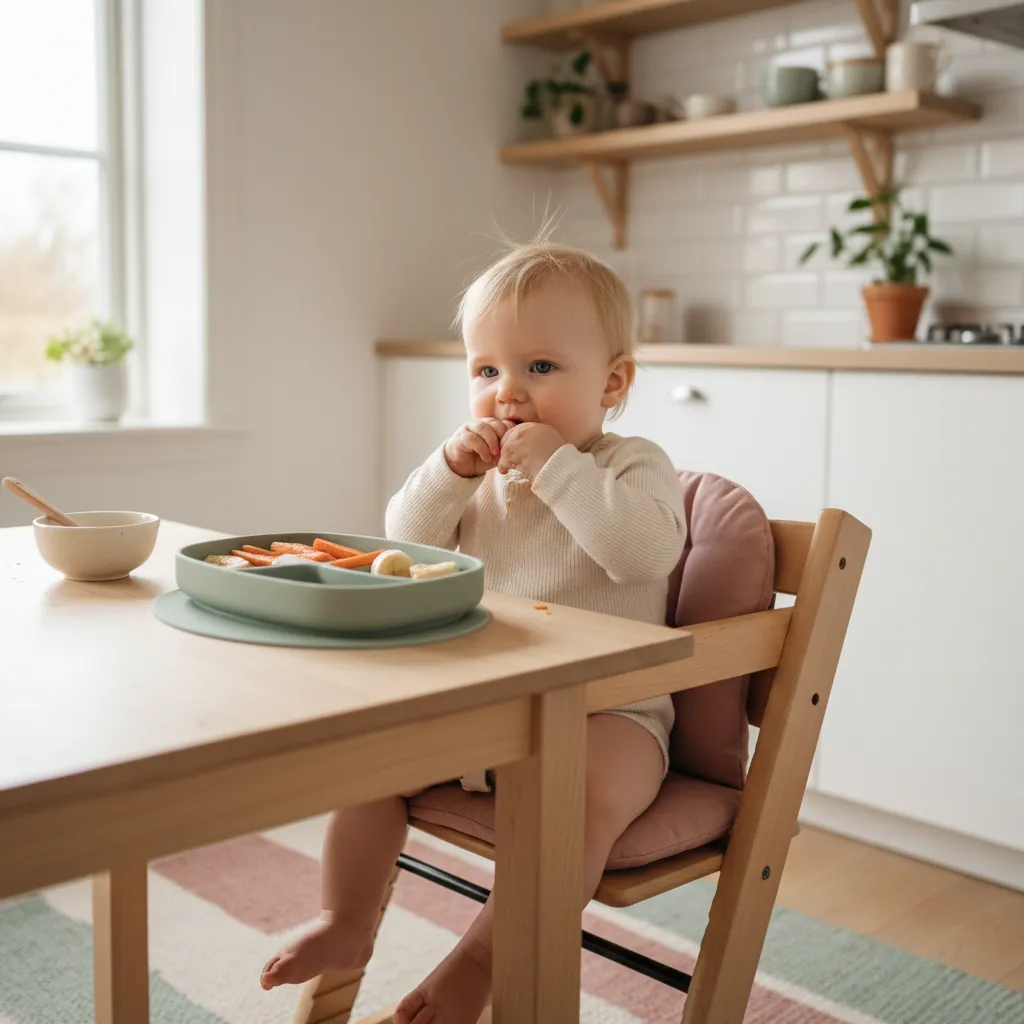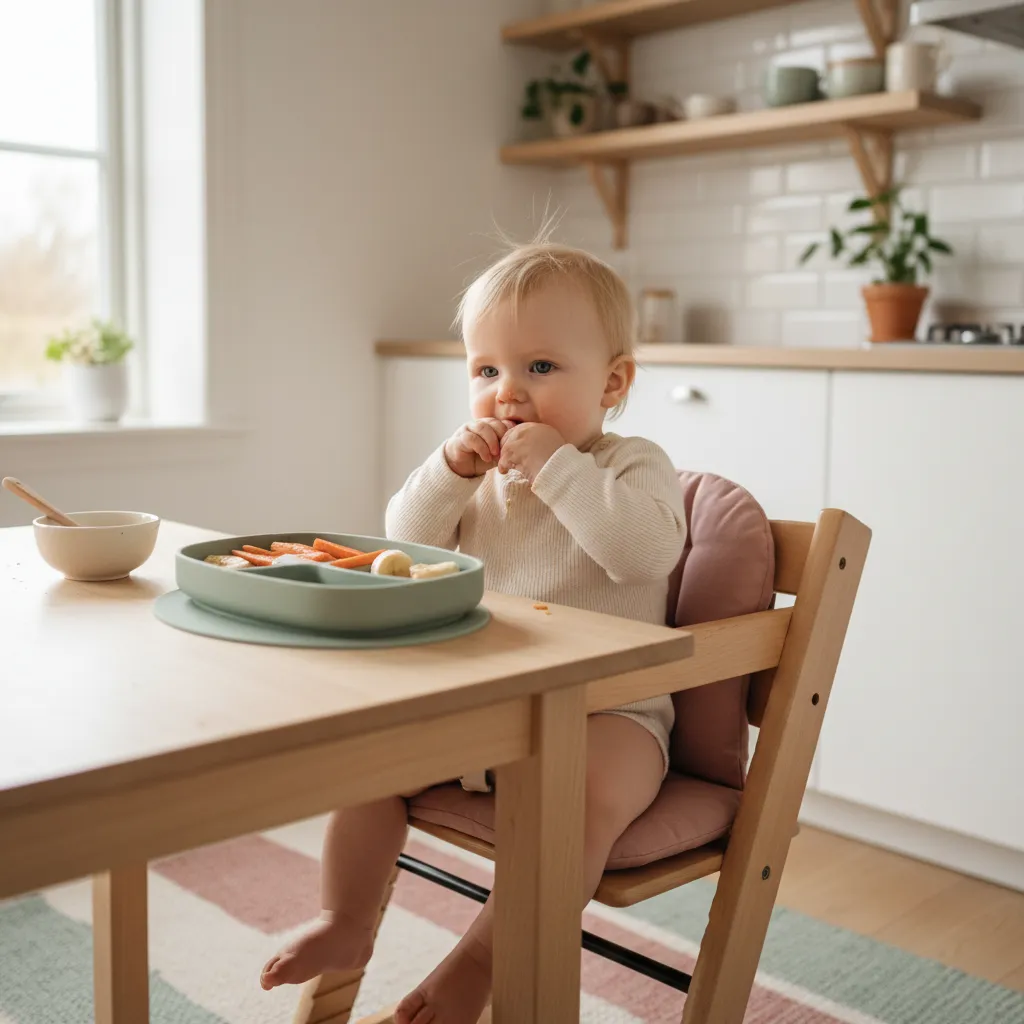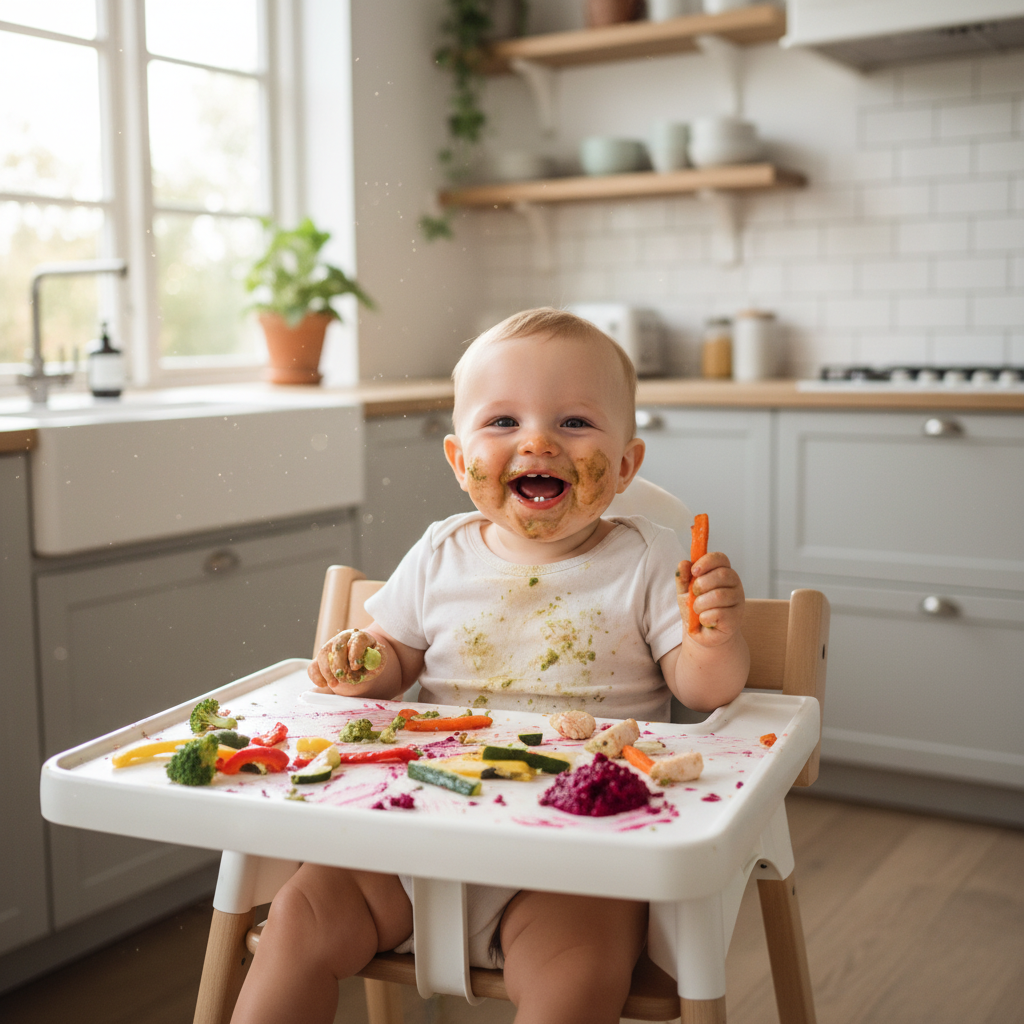
Your baby is 8 months old and fully engaged in exploring the world of food. A lot is happening now, your baby has mastered swallowing mashed foods, and many babies are ready for more texture and finger foods.
This is an exciting age for food introduction. Your baby can eat an ever-wider variety of foods, and you can start moving toward regular family meals.
Here's a complete guide to what your 8-month-old baby can eat, based on recommendations from the AAP and WHO.
How Much Should an 8-Month-Old Eat?
At 8 months, breast milk or formula is still the primary nutrition, but solid food is becoming increasingly important.
General overview:
- Breast milk / formula: Around 500–600 ml (17–20 oz) per day (4–5 nursing or bottle feeds)
- Solid food: 2–3 meals per day, plus optionally 1–2 snacks
- Portion size: Start with 2–4 tablespoons and let your baby guide how much they want
Don't stress over exact amounts. Some days your baby eats a lot; other days barely anything. That's completely normal. Let your baby regulate themselves.
What do the AAP and WHO recommend? From 6 months, solid foods should be gradually increased. By 8–9 months, your baby should be having 2–3 meals per day in addition to breast milk or formula. Breastfeeding is recommended throughout the entire first year.
Textures at 8 Months
Now is the time to challenge your baby a little more with texture. Most 8-month-old babies are ready for:
- Coarser mash, no longer completely smooth, but with small lumps
- Fork-mashed food, mashed with a fork rather than a blender
- Finger foods, soft pieces the baby can hold
- Strips and chunks, avocado, banana, cooked carrot in finger-sized pieces
Offering more texture is important for developing chewing skills and the oral muscles involved in speech. Don't wait too long to move beyond completely smooth purée.
Great Finger Food Options
Finger food is food the baby can grip and put in their mouth themselves. It stimulates fine motor skills and makes mealtimes an exploration activity.
- Banana pieces or strips
- Avocado slices
- Cooked carrots in sticks (soft enough to mash with the gums)
- Steamed broccoli florets
- Cooked sweet potato sticks
- Bread strips or toasted bread cut into strips
- Cooked pasta in large shapes (fusilli, penne)
- Cooked fish in flakes (cod, salmon)
Never give food that is hard, round, or slippery. Grapes, whole nuts, cherry tomatoes, raw carrots, and round sausage slices are choking hazards. Always cut into elongated pieces, and halve or quarter grapes and tomatoes.
What Can an 8-Month-Old Baby Eat?
At 8 months, babies can eat the vast majority of foods. Here's an overview:
Vegetables (from 6 months)
All vegetables are fine except spinach, beets, and arugula/rocket (due to nitrate content). Cook and mash, or serve as finger food.
- Carrot, broccoli, cauliflower, sweet potato, zucchini/courgette
- Peas, beans, avocado, cooked bell pepper
- Corn, potato, squash/pumpkin, parsnip
Fruit (from 6 months)
All fruit is permitted from the start of food introduction, including citrus fruits like oranges.
- Banana, cooked or grated apple, pear
- Mango, blueberries (mashed), strawberries
- Orange, melon, plum
Proteins (from 6 months)
Meat, fish, egg, and legumes are all permitted from 6 months.
- Meat: Chicken, pork, beef, lamb, cooked and cut into pieces or shredded
- Fish: Cod, salmon, tilapia, haddock, cooked and flaked
- Egg: Well-cooked or fried, omelet cut into strips
- Legumes: Lentils, chickpeas, beans, well-cooked and mashed
Iron-rich food is extra important! From 6 months, the iron stores a baby builds up during pregnancy begin to deplete. Offer iron-rich foods like meat, fish, egg, lentils, and iron-fortified cereal daily. Pair with vitamin C-rich foods (fruit, bell pepper) for better iron absorption.
Grains (from 6 months)
- Oatmeal, rice porridge, barley porridge
- Bread (preferably whole grain), crispbread
- Pasta, couscous, rice
- Pancakes and waffles (without added sugar)
Dairy Products (from around 10 months)
At 8 months, your baby is not yet ready for dairy products as a standalone food. Wait until around 10 months for cheese, yogurt, and cow's milk in cooking. From 12 months, cow's milk can be used as a drink.

Sample Daily Menus for 8 Months
Sample Day 1
| Meal | Food |
|---|---|
| Morning (7:00) | Breastfeed / bottle |
| Breakfast (8:30) | Oatmeal with grated apple and cinnamon |
| Lunch (11:30) | Mashed potato and carrot with flaked salmon |
| Feed (2:00) | Breast milk / formula |
| Dinner (4:30) | Chicken with broccoli and pasta, fork-mashed |
| Evening feed (6:00) | Breastfeed / bottle |
Sample Day 2
| Meal | Food |
|---|---|
| Morning (7:00) | Breastfeed / bottle |
| Breakfast (8:30) | Soft bread with iron-rich spread and avocado slices |
| Lunch (11:30) | Lentil soup with carrot and potato |
| Feed (2:00) | Breast milk / formula |
| Dinner (4:30) | Cooked cod with sweet potato mash and peas |
| Evening feed (6:00) | Breastfeed / bottle |
Use a food introduction tracker to plan weekly menus and keep track of what your baby has tried. It makes variety easy and helps you spot any patterns.
Iron-Rich Foods. Extra Important at 8 Months
Iron is the most important nutrient to prioritize from 6 months. Babies who receive only breast milk without iron-rich solid foods can develop iron deficiency.
The best iron sources for babies:
- Meat, especially darker meats (beef, lamb) and liver (as a spread, max 1–2 portions per week)
- Fish, salmon and other oily fish
- Egg, egg yolk is rich in iron
- Lentils and beans, well-cooked and mashed
- Iron-fortified cereal, oatmeal or infant cereal
- Green vegetables, broccoli, peas, kale (cooked)
Tips for better iron absorption:
- Give vitamin C-rich food alongside iron-rich food (orange, bell pepper, tomato, strawberries)
- Avoid cow's milk as a drink until 12 months (it inhibits iron absorption)
- Soak grains overnight before cooking for better mineral absorption
What to Avoid at 8 Months
Even though the food list is long, there are some important exceptions:
- Honey, risk of botulism in children under 1 year
- Cow's milk as a drink, wait until 12 months
- Spinach, beets, arugula/rocket, high nitrate content, wait until after 12 months
- Salt and sugar, avoid added salt and sugar in the first year
- Rice cakes and rice drinks, may contain arsenic; check local guidance
- Whole nuts, choking hazard; offer as nut butter or finely ground
- Processed foods, avoid sausages, nuggets, and ready meals with high salt content
Allergies? Introduce allergens one at a time with 2–3 days in between. Read our allergen introduction guide for safe methods.
Practical Tips for Mealtimes
Equipment You'll Need
- High chair where the baby sits upright with support
- Bib with a food catcher
- Soft-tipped spoon (or let the baby use their hands)
- Plates / bowls with suction cups
- Sippy cup or open cup for water
Make Mealtimes Positive
- Eat together with your baby, they learn by watching you
- Never force food. Your baby decides how much
- Let your baby explore with their hands, it's messy, but important
- Offer a new food at least 10–15 times before giving up
- Don't react negatively to funny faces, they don't always mean "no"
Frequently Asked Questions
My baby refuses to eat, what do I do?
Appetite fluctuations are normal. Don't stress. Offer food without pressure, and remember that breast milk or formula still meets most nutritional needs.
Can an 8-month-old eat what we eat?
Yes, largely! Set aside a portion of the family dinner before adding salt. Mash or cut into appropriate pieces. Eating the same food as the family is best for building a healthy relationship with food.
How much water does my baby need?
Offer small sips of water from an open cup at mealtimes. Your baby doesn't need large amounts of water as long as they're receiving breast milk or formula.
Can my baby have liver or liver pâté?
Yes, liver pâté is an excellent iron-rich topping from 6 months. Limit to 1–2 slices of bread per day. Avoid serving whole liver as a main meal due to high vitamin A content.
When can my baby start having yogurt?
Dairy products including yogurt are typically recommended from around 9–10 months. Offer small taste amounts first, then increase gradually. Regular yogurt portions are fine from 12 months.

Summary
At 8 months, your baby is ready for a wide variety of foods with more texture and finger foods. Prioritize iron-rich foods, offer a varied diet, and let your baby explore at their own pace.
The most important thing is to make mealtimes a positive experience. Mess and hands-on exploration are a natural part of the process, and a sign that your baby is learning.
Sources
- American Academy of Pediatrics (AAP). "Starting Solid Foods." healthychildren.org
- WHO. "Complementary feeding." who.int
- USDA Dietary Guidelines for Americans. dietaryguidelines.gov
Last updated: March 2026
🔧 Helpful Tools
- Baby Food Guide. Safe foods and introduction schedule for your baby
- Breastfeeding Tracker. Log feeds, track supply, and monitor nursing sessions
- All Baby Tools. Browse all free tools for pregnancy and baby care
📖 Related Articles
- Baby Food at 8 Months: Chunkier Textures and Finger Foods. What can your baby eat at 8 months? Guide to textures, portions, finger foods, and meal routines for babies 8–10 months based on WHO and AAP recommendations.
- Food for Baby at 8 Months: Coarser Textures and Finger Foods. What can your baby eat at 8 months? Guide to textures, portions, finger foods, and meal routines for babies 8-10 months based on WHO/AAP guidelines.
- Baby Food at 10 Months: Transitioning to Family Meals. What can your baby eat at 10 months? A guide to family foods, dairy products, finger foods, and sample daily menus for a 10-month-old baby.