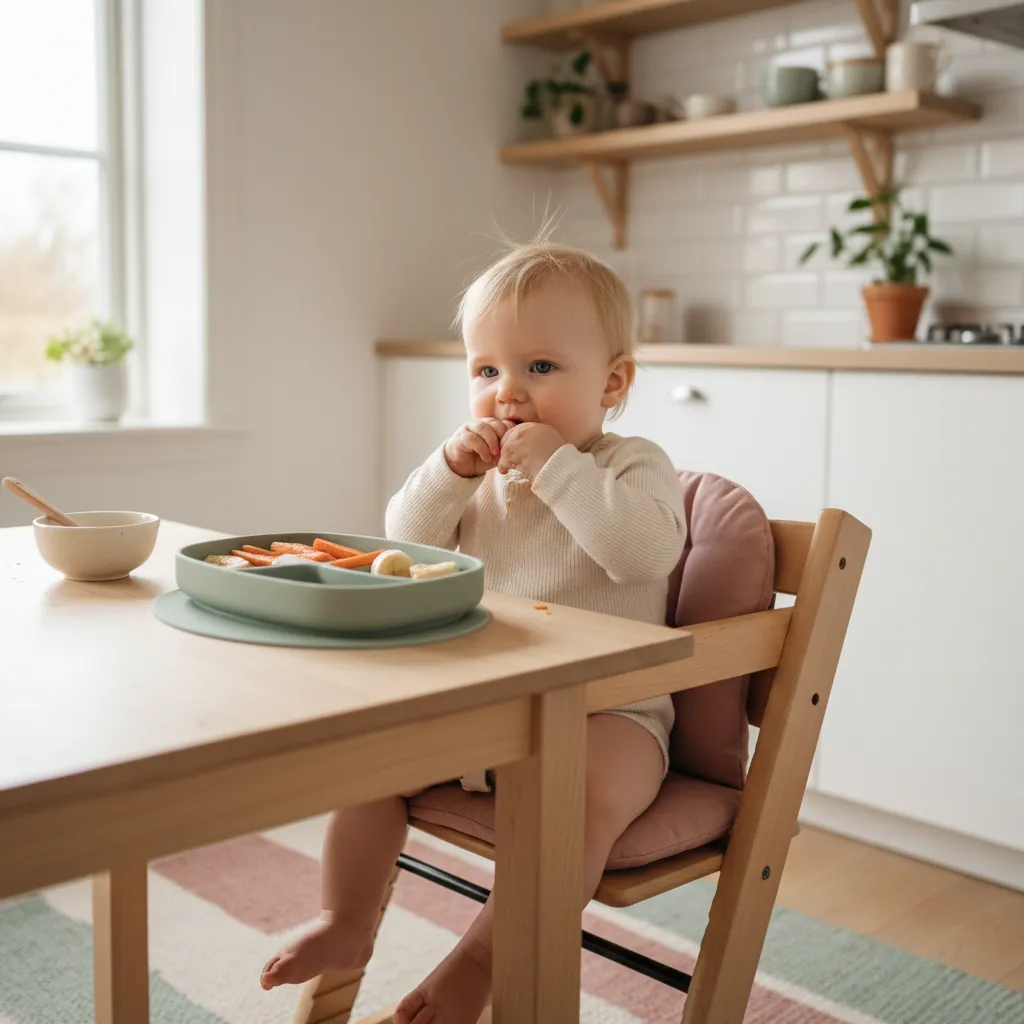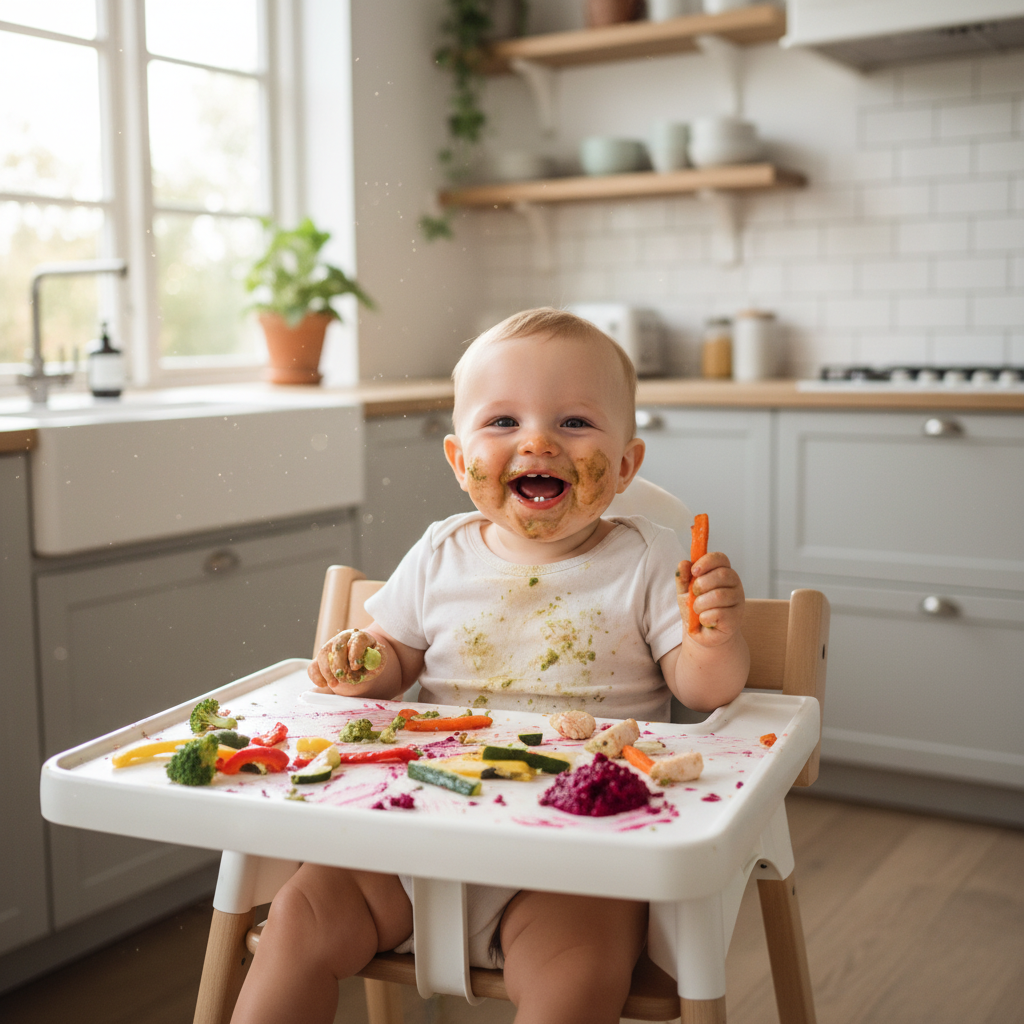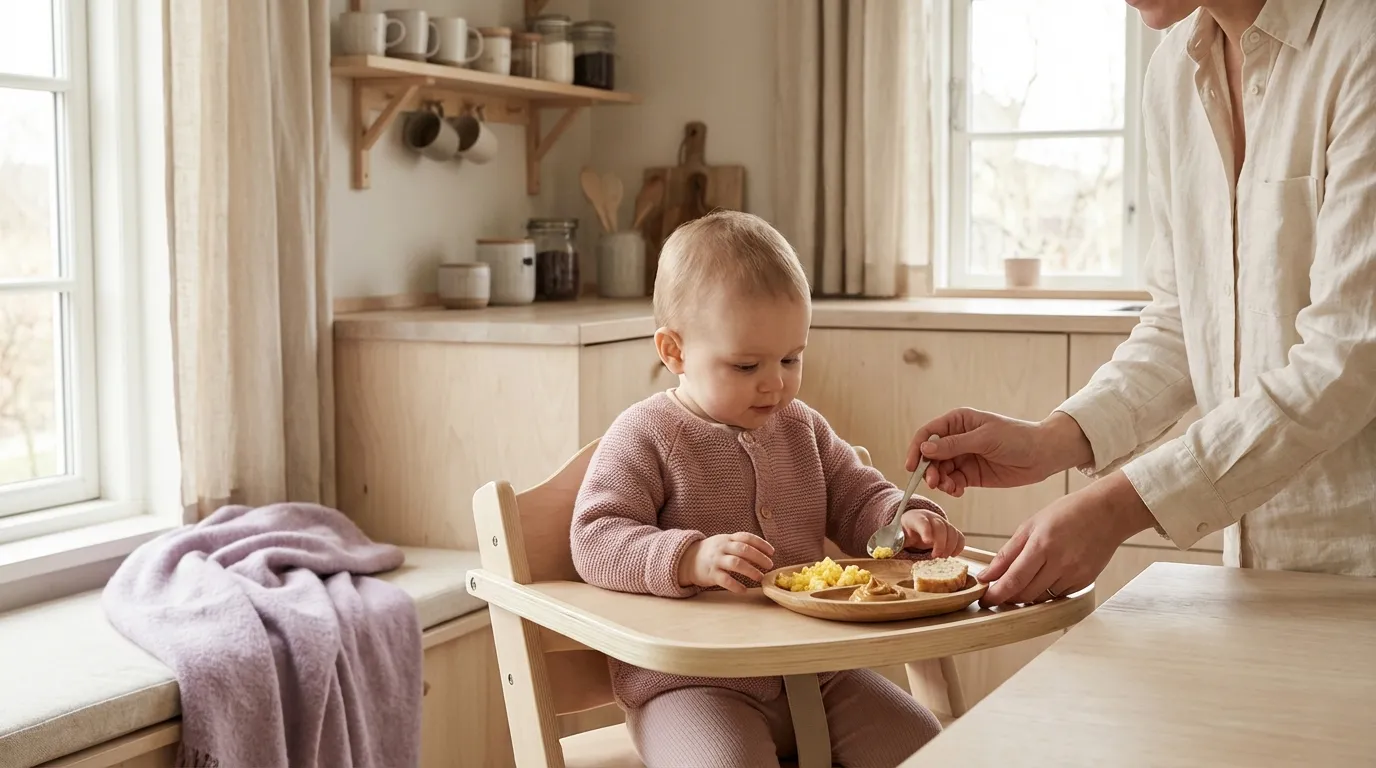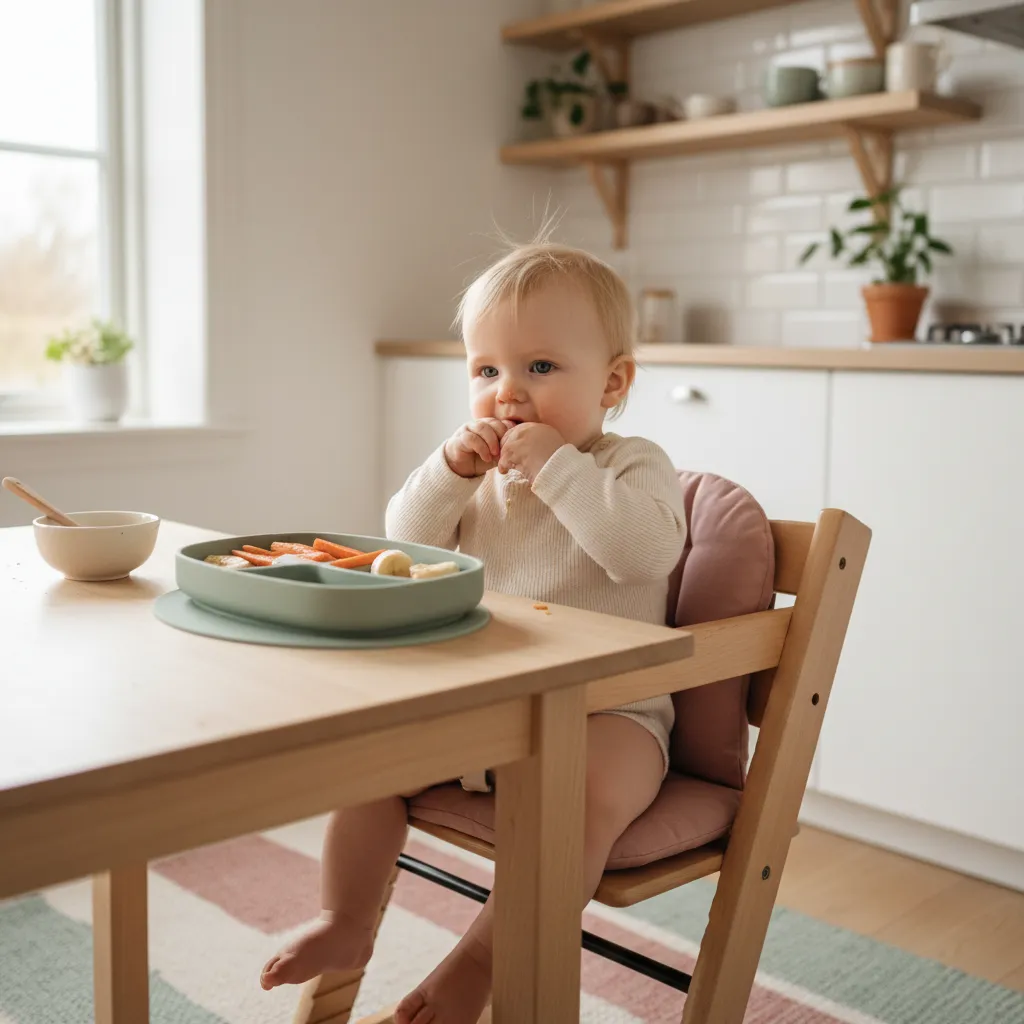
Eight months is a turning point in the solids journey. Your baby has been eating for a couple of months now, and it's time to start moving away from smooth purées toward coarser textures and real finger foods. This can feel like a big step, but most babies are ready and enthusiastic.
Here's everything you need to know about food at 8 months.
What's Happening Developmentally at 8 Months
The Pincer Grasp is Emerging
Around 7–9 months, babies begin developing the pincer grasp, picking up objects between thumb and forefinger. You might notice your baby trying to pick up small pieces of food or items from the floor. This is the motor skill that makes self-feeding possible, and you can encourage it by offering appropriately sized finger foods.
Chewing Movements
Even without teeth (many babies have few or none at 8 months), your baby's jaw and tongue movements are becoming more sophisticated. They can manage lumps and small soft pieces, not just smooth purées. The munching motion is different from swallowing, and practicing it now is important for the development of chewing skills.
More Confident with Textures
If you've been introducing solids since around 6 months, your baby has had two months to get used to eating. Most 8-month-olds are ready for a significant texture upgrade. Some babies who were initially cautious about solids often become more interested when they can explore food with their hands.
Sitting with Support
Most 8-month-olds can sit with some support. Ensure your baby is in a properly fitting high chair with foot support for safe, relaxed eating.
From Purée to Mashed with Lumps
The texture progression at this age:
Smooth purée (6–7 months) → Coarsely mashed with soft lumps (8–9 months) → Soft pieces and finger food (9–10 months)
At 8 months, aim for mashed food that still has some texture, not completely smooth, but not full pieces yet. Think of the texture of fork-mashed banana or well-cooked oatmeal with soft lumps.
Test: Take a small piece of the food and press it between your thumb and index finger with gentle pressure. If it crushes easily, it's appropriate for an 8-month-old. If it stays firm, cook it longer or cut it smaller.
Practical examples:
- Mashed potato with some lumps left in (not fully smooth)
- Fork-mashed cooked carrot
- Flaked fish (well-checked for bones)
- Soft-cooked pasta, lightly mashed or in small pieces
- Mashed avocado
- Soft fruit mashed or in very small pieces (ripe banana, ripe peach)
- Scrambled egg
Finger Food Guide
Introducing finger food alongside spoon-fed meals is one of the best things you can do at this stage. It builds independence, fine motor skills, and a positive relationship with food.
Principles for safe finger food at 8 months:
- Soft enough to crush easily between your fingers
- No larger than 1–1.5 cm in most dimensions
- Nothing round and firm that could slip into the airway whole (grapes, blueberries, cherry tomatoes must be cut; whole nuts are not appropriate at this age)
- Always supervise
Good first finger foods:
- Soft-cooked broccoli florets (baby can hold the stem and gnaw the top)
- Soft-cooked carrot sticks
- Ripe banana pieces
- Avocado pieces
- Soft-cooked sweet potato cubes
- Toast fingers with spread
- Soft cooked pasta
- Pieces of soft cheese (mozzarella, ricotta, cream cheese on toast)
- Soft-cooked chicken pieces, shredded
- Ripe mango or peach pieces
Lightly steamed broccoli florets are an excellent early finger food, they're easy for baby to hold, soft enough to be safe, and pack excellent nutrition. Many babies love them.
Meal Routine at 8 Months
At 8 months, most babies are eating 2–3 solid meals per day, with breast milk or formula as the main nutrition source.
Sample daily structure:
- Morning breast milk or formula
- Breakfast (solid meal)
- Mid-morning breast milk or formula
- Lunch (main solid meal, often the most nutritious of the day)
- Afternoon breast milk or formula
- Dinner (solid meal, can be lighter)
- Evening breast milk or formula
How much? Portions are still small, 2–4 tablespoons per meal is common, though some babies eat more. Follow your baby's hunger and fullness cues rather than aiming for a set amount. Never force-feed.
Breast milk or formula remains the primary nutrition source through 12 months, solid food is complementary at this stage. Aim for approximately 600–900 ml (20–30 oz) of breast milk or formula per day.
New Foods to Introduce at 8 Months
By 8 months, you can offer almost all foods except honey (wait until 12 months), whole cow's milk as a main drink (wait until 12 months), and clear choking hazards.
Focus on introducing:
- More variety of protein: meat, fish, eggs, legumes
- Dairy in food: full-fat yogurt, soft cheese, cream cheese
- A wider range of vegetables, including slightly bitter ones (broccoli, kale, courgette)
- Mixed flavors and herbs: mild herbs like parsley, basil, dill are fine
- Allergenic foods if not yet introduced (follow pediatrician guidance)
Continue introducing allergens: If you haven't already, 8 months is a good time to ensure you've introduced the major allergens: wheat/gluten, egg, dairy, peanut (as thinned peanut butter), fish, and soy. Introduce one at a time with 2–3 days between to monitor for reactions.
What About Salt and Sugar?
No added salt and no added sugar for babies under 12 months. Their kidneys are not mature enough to handle excess salt, and there is no nutritional benefit to sugar at this age.
Flavor food with:
- Mild herbs: parsley, dill, basil, coriander/cilantro
- Mild spices: cinnamon, mild curry powder, cumin (very small amounts)
- Garlic and onion (cooked into food)
- Lemon juice
- The natural flavors of good ingredients
Babies who eat varied, well-seasoned (but unsalted) food from early on tend to be more adventurous eaters later. Don't assume your baby needs bland food, they just need unsalted food.
Three Simple Recipes
Vegetable Pasta with Ground Beef
A family meal you can adapt for baby
- 100g (3.5 oz) lean ground beef
- ½ small zucchini (courgette), finely grated
- ½ small carrot, finely grated
- ¼ tin (100g) crushed tomatoes
- Cooked small pasta (stars, orzo, or small fusilli)
- A little olive oil
- ½ clove garlic, minced
Sauté garlic in oil. Add beef and cook through. Add grated vegetables and tomatoes. Simmer 10 minutes. Serve over soft pasta. For baby: mash slightly or serve as is if pasta is soft enough. No added salt.
Oat Pancakes
Quick breakfast, can be made ahead
- 4 tablespoons rolled oats (blended to a rough flour, or use oat flour)
- 1 egg
- 3 tablespoons full-fat milk or formula
- ½ ripe banana, mashed
Mix all ingredients. Cook small, thin pancakes in a lightly buttered pan over medium-low heat, about 2 minutes per side. Cool slightly before serving. Cut into strips for baby to pick up. No added sugar or salt.
Fish Stew
Comforting, nutritious, and easy to adapt
- 150g (5 oz) white fish fillet (cod, haddock, pollock) or salmon
- 1 small potato, diced
- ½ small leek, sliced
- ½ small carrot, diced
- 150 ml (⅔ cup) full-fat milk
- A little butter
- Pinch of dill (optional)
Sauté leek in butter until soft. Add potato and carrot, cover with water. Simmer 10 minutes until vegetables are tender. Add fish and milk. Simmer gently 5–7 minutes until fish is cooked through. Mash to a rough texture or leave in soft pieces. Check carefully for bones before serving. No added salt.
Common Challenges at 8 Months
Gagging on New Textures
Introducing coarser textures often triggers more gagging. This is completely normal, gagging is a protective reflex, not a sign something is wrong. As long as your baby is making noise (coughing, sputtering), their airway is not blocked. Stay calm, let them work through it, and don't rush to intervene unless there are signs of actual choking (silence, no breathing, blue color).
Many parents mistake gagging for choking and pull back on texture too quickly. Continuing to offer varied textures is how babies develop the skills to manage them.
Refusing the Spoon
Some babies at this stage show strong preference for feeding themselves. If your baby pushes the spoon away and grabs for food with their hands, lean into it. Offer preloaded spoons and plenty of finger foods. Self-feeding is a valuable skill, there's no harm in encouraging it.
Showing Strong Preferences
It's normal for 8-month-olds to start showing clear food preferences, enthusiastically accepting some things and refusing others. Continue offering rejected foods repeatedly over days and weeks. Research consistently shows it can take 10–15 exposures before a child accepts a new food. Consistent, pressure-free exposure is the most effective approach.
Constipation with More Solids
As solids increase, some babies become constipated, harder stools, straining, discomfort. Ensure your baby is still getting adequate milk feeds. Offer water with meals (small amounts in an open cup or straw cup). Foods that help: pears, prunes, peaches, peas. Foods that can contribute to constipation if overused: banana, rice, cooked carrot. If constipation persists, speak with your pediatrician.
Based on WHO/AAP guidelines, breast milk or formula should remain the primary nutrition source until 12 months. If you have concerns about your baby's intake of either solids or milk, your pediatrician can help assess whether things are on track.
Safety Reminders
- Always sit with your baby during meals
- Baby must be upright in a fitted high chair, never reclined
- Remove food from the high chair tray when the meal is over
- No screens during meals, mealtime is a time for presence and connection
- Never leave your baby alone while eating
The Goal at 8 Months
The primary goal at this stage isn't nutrition, breast milk or formula handles that. The goal is exploration, skill-building, and positive associations with food.
Let your baby touch, squish, and examine food before eating it. Let them be messy. Let them participate. The habits and attitudes toward food that develop in the first two years have lasting effects. Make mealtimes enjoyable, and the nutrition piece takes care of itself.
Sources
- AAP. Infant and toddler nutrition guidelines
- WHO. Global infant feeding recommendations
- CDC. Infant and toddler nutrition resources
🔧 Helpful Tools
- Baby Food Guide. Safe foods and introduction schedule for your baby
- Breastfeeding Tracker. Log feeds, track supply, and monitor nursing sessions
- All Baby Tools. Browse all free tools for pregnancy and baby care
📖 Related Articles
- Baby Food at 8 Months: Chunkier Textures and Finger Foods. What can your baby eat at 8 months? Guide to textures, portions, finger foods, and meal routines for babies 8–10 months based on WHO and AAP recommendations.
- Introducing Allergens to Your Baby: A Safe Step-by-Step Guide. How to safely introduce allergens to your baby. Eggs, peanuts, dairy, and gluten, when, how, and what to watch for. Based on current AAP and WHO guidelines.
- Baby Food Introduction: Complete Guide from 6 to 12 Months. When is your baby ready for solid food? How do you start, and what should they eat each month? Complete guide to food introduction from 6 to 12 months.