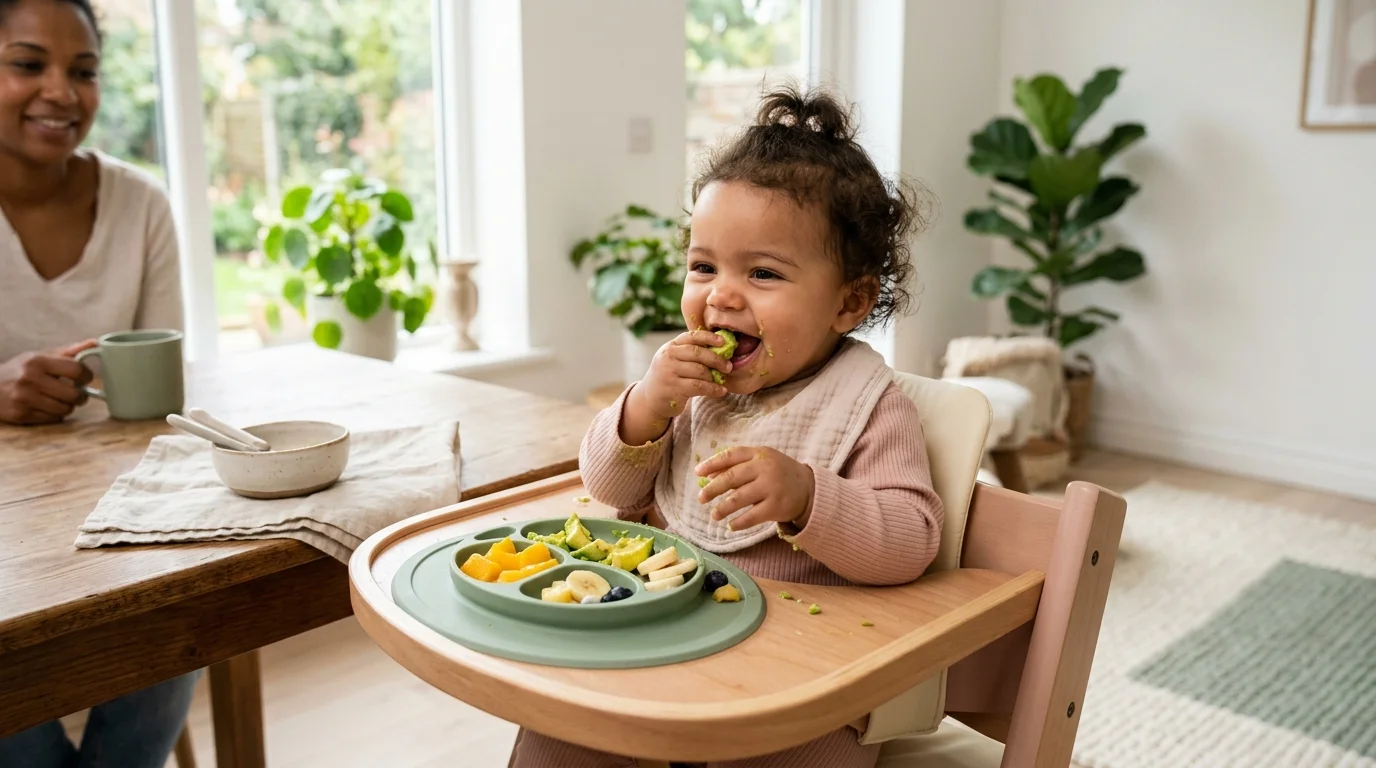
The day your baby tastes something other than milk for the very first time is a genuine milestone. Maybe a dollop of sweet potato puree ends up more on the chin than in the mouth, and that is perfectly fine.
Starting solids is not about filling a tummy. It is about exploration, new flavors, and the joy of sharing a meal with the family. Here is a reassuring guide based on WHO and AAP recommendations, so you can relax and focus on the experience.
When Is Your Baby Ready for Solid Foods?
The short answer: around 6 months for most babies. But let us look a little deeper.
Official Recommendations
The WHO and the American Academy of Pediatrics (AAP) are clear:
- Breastfed babies who are growing well can wait until around 6 months. Breast milk meets all nutritional needs (plus vitamin D) for the first six months.
- Formula-fed babies can also generally wait until around 6 months. Your pediatrician can give individual guidance based on your baby's growth and development.
- Never before 4 months, the digestive system is simply not ready.
Your pediatrician will give personalized guidance tailored to your specific baby. Bring up the topic at your 4-month well-child visit!
Signs Your Baby Is Ready
Look for these signals, ideally they should all be present at the same time:
- Good head control and can sit with some support
- Reaches for food and tries to bring it to their mouth
- Opens mouth when food approaches
- Tongue thrust reflex is gone: no longer pushes food straight back out
It is natural for babies to be curious about what you are eating, all babies study their surroundings! Curiosity alone does not mean the baby is ready for solid foods.
What Should You Start With?
There is no fixed rule about which food should come first. Whether you choose oatmeal, sweet potato, avocado, or banana, what matters most is that the food is finely pureed and that you start small.
Good First Foods
- Oatmeal or rice cereal: Mixed with breast milk or formula. A familiar taste that is easy to accept.
- Root vegetables: Sweet potato, carrot, parsnip, cooked and pureed.
- Fruit: Banana, pear, apple, pureed or cooked until soft.
- Avocado: Nutritious and mild in flavor, a perfect first taste.
How to Do It in Practice
- Begin with 1–2 teaspoons of one food at a time.
- Offer after a nursing session or bottle, so the baby is not too hungry.
- Introduce one new food at a time and wait 2–3 days before introducing the next.
- Increase the amount gradually, let the baby set the pace.
According to the AAP, all infants should be introduced to allergenic foods such as eggs, wheat, and dairy products during the first year of life. Early introduction may actually reduce the risk of allergies!
Meal Plan for the First Month: Week by Week
Many parents wonder what the baby should eat during that very first month of solid foods. Here is a simple plan you can use as a starting point. Adapt it to your baby's pace and interest.
Week 1: First Taste
- Goal: Let the baby get acquainted with the spoon and the taste of food.
- What: Choose one food, for example, oatmeal with breast milk or sweet potato puree.
- Amount: 1–2 teaspoons, once daily.
- Timing: Midday, after nursing or a bottle.
- Tip: Do not expect the baby to eat much. Exploration matters more than quantity.
Week 2: A New Flavor
- Goal: Introduce one new food.
- What: Add a new vegetable (carrot, parsnip) or fruit (banana, pear) in addition to the oatmeal.
- Amount: 1–3 teaspoons, once or twice daily.
- Tip: Wait 2–3 days between new foods to catch any potential reactions.
Week 3: Building Up
- Goal: Gradually increase variety and amount.
- What: Introduce one more new food. Feel free to combine what the baby has already tried (for example, carrot puree with some oatmeal).
- Amount: 2–4 teaspoons, twice daily.
- Tip: The baby is beginning to understand that food is something that comes regularly.
Week 4: Expanding the Repertoire
- Goal: The baby should now have tried 3–5 different foods.
- What: Introduce meat (well-cooked and pureed), eggs, or fish this week. Iron-rich foods are important from 6 months onward.
- Amount: Up to a small baby-sized portion, two to three times daily.
- Tip: Offer vitamin C–rich fruit alongside iron-rich foods for better absorption.
Remember: Breast milk or formula is still the most important source of nutrition throughout the entire first year. Solid foods are in addition to, not instead of, milk.
Month-by-Month Food Introduction
4–6 Months: First Tastes
This is the adjustment phase. The baby learns to accept food from a spoon and the digestive system adapts.
- Texture: Completely smooth, thin puree.
- Amount: 1–2 teaspoons, once daily.
- Foods: Cereal, root vegetables, fruit.
- Milk: Still the most important source of nutrition.
6–8 Months: New Flavors and Textures
You can pick up the pace now. The baby is ready for more variety and slightly chunkier textures.
- Texture: Thicker mash, soft lumps.
- Amount: 2–3 meals daily in addition to milk.
- New foods: Meat, fish, eggs, legumes.
- Finger foods: Soft vegetables in sticks, small bread pieces.
Iron becomes especially important now. The baby's iron stores from birth begin to run low around 6 months. Offer iron-rich foods such as meat, eggs, lentils, and iron-fortified cereals.
8–10 Months: Family Food in Sight
The baby is mastering more textures and can eat more of what the family eats, just adapted.
- Texture: Minced, ground, soft finger foods.
- Amount: 3 meals plus possibly 1 snack.
- New foods: Most foods can be introduced.
- Drinks: Offer water from a cup at mealtimes.
Wait until 12 months before offering cow's milk as a drink or in cereal. Cow's milk is too low in iron. Small amounts of cow's milk can be used in cooking (sauces, baked goods) from 10 months. Use breast milk or formula in cereal during the first year.
10–12 Months: Toward Family Meals
Almost there! The baby can eat most of what the family eats, just in appropriately sized pieces and without too much salt.
- Texture: Chopped family food, soft pieces.
- Amount: 3–4 meals plus 1–2 snacks.
- Cow's milk: From 12 months the baby can have whole milk as a drink and in cereal, maximum about 16 oz (500 ml) per day including yogurt.
- Yogurt/soured milk: Small tastes from 10 months (max about 2 tablespoons per day), freely from 12 months.
- Cheese: Cheddar, cream cheese, and other mild cheeses can be given from 10 months.
How Much Should the Baby Eat?
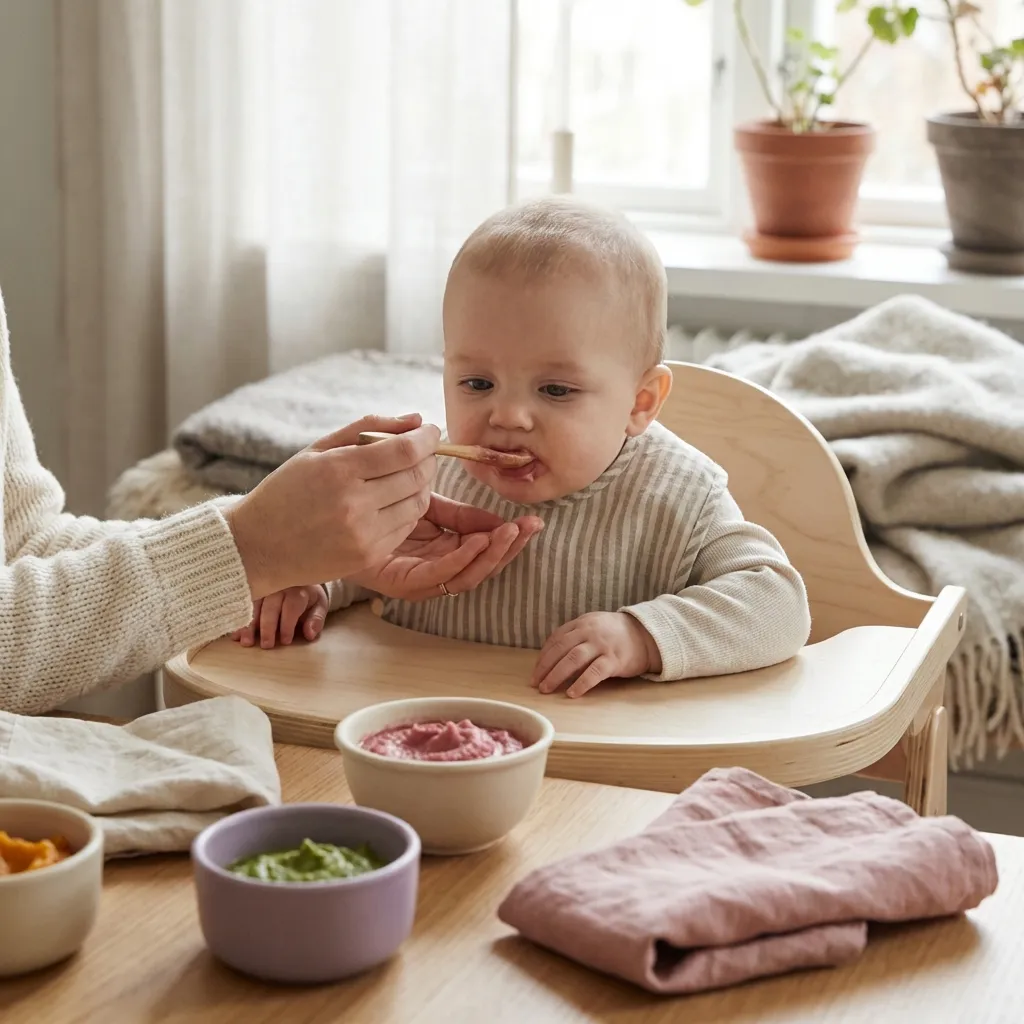
The most important thing: let the baby decide. Some days they eat a lot, other days almost nothing. That is completely normal.
General guidelines:
| Age | Meals | Amount per meal |
|---|---|---|
| 4–6 months | 1 | 1–2 teaspoons |
| 6–8 months | 2–3 | Gradually increasing |
| 8–10 months | 3 (+1 snack) | Baby-sized portion |
| 10–12 months | 3–4 (+1–2 snacks) | Larger portion |
Breast milk or formula is still the most important source of nutrition throughout the entire first year.
Common Worries
"The baby spits everything out!"
Completely normal in the beginning! The baby is learning to coordinate the tongue, and it takes time. It does not mean the baby dislikes the food.
"The baby refuses to eat"
Do not push. Offer the food again another day. Children may need up to 10–15 exposures to a new flavor before accepting it.
"Can the baby have an allergic reaction?"
Introduce one new food at a time and wait a couple of days. That way you quickly notice if something does not agree. Current guidelines say you should not delay allergenic foods, on the contrary, early introduction (4–6 months) may protect against allergies.
"Is baby-led weaning better than purees?"
Both baby-led weaning (BLW) and traditional purees work well. Many parents combine both. Choose what works for your family.
Foods to Avoid in the First Year
- Honey, risk of infant botulism in children under 1 year.
- Cow's milk as a drink or in cereal, too low in iron. Small amounts in cooking from 10 months, as a drink from 12 months.
- Spinach, beets, and arugula, contain high levels of nitrates that can be harmful to infants. Wait until the child is over 12 months.
- Salt, the baby's kidneys cannot handle much salt.
- Whole nuts and peanuts, choking hazard (nut butters are fine).
- Rice cakes and rice drinks, may contain too much arsenic.
- Added sugar, unnecessary and builds poor habits.
Track Your Baby's Food Journey
Want help keeping track? Babysential's SmartStart guides you week by week through the entire process. You get:
- Personalized recommendations based on your baby's age.
- An overview of which foods the baby has tried.
- A progress report showing development.
- Tips and recipes tailored to each phase.
You can also use our food introduction checklist to keep track of which foods the baby has tasted.

Frequently Asked Questions
When should the baby start solid foods?
It depends on individual development, but most babies are ready around 6 months. Never before 4 months. Your pediatrician will give individualized guidance. Look for signs such as good head control and the baby reaching for food.
What food should the baby have first?
There is no set rule. Oatmeal, sweet potato, carrot, banana, and avocado are all good first foods. Start with 1–2 teaspoons of one food and introduce new foods one at a time with 2–3 days in between.
Should I delay allergenic foods like eggs and fish?
No. Current AAP guidelines recommend introducing allergenic foods such as eggs, wheat, fish, and dairy products during the first year of life. Early introduction may actually reduce the risk of allergy.
When can the baby have cow's milk?
Cow's milk as a drink and in cereal is recommended from 12 months. Small amounts can be used in cooking from 10 months. Cheese and small tastes of yogurt can be offered from 10 months. Maximum about 16 oz (500 ml) of cow's milk per day including yogurt for toddlers.
What should a 6-month-old baby eat?
At 6 months the baby needs iron-rich foods because the innate iron stores are beginning to run low. Prioritize iron-fortified cereals, well-cooked meat or fish, eggs, lentils, and beans. Offer vitamin C–rich fruit alongside iron-rich foods for better absorption. Start with oatmeal and vegetables, and expand gradually.
How many meals should a 6-month-old baby have?
Start with one meal daily in the first week and gradually increase to 2–3 meals over the first month. Breast milk or formula is still the most important source of nutrition. Solid foods come in addition to, not instead of, milk.
Can babies have spices?
Yes, mild spices such as cinnamon (in small amounts), cardamom, cumin, and basil can be added to food from 6 months. Avoid salt, chili, and strong spices. Spices introduce the baby to new flavors and can contribute to a more varied diet later on.
Summary
Starting solids is an adventure, not an exam. Your baby needs time to explore, and mess is allowed. Here is what matters most:
- Most babies are ready around 6 months, never before 4.
- Breast milk or formula is most important throughout the first year.
- Introduce allergens early, it protects against allergies.
- Let the baby set the pace, never force.
- Eat together, babies learn from watching you.
And remember: a little puree in the hair and mash on the floor are signs of a baby exploring their world. That is exactly how it should be.
Read also: Baby-led weaning guide | Baby food from 6 months | Allergens, complete guide
Sources
🔧 Helpful Tools
- Baby Food Guide. Safe foods and introduction schedule for your baby
- Breastfeeding Tracker. Log feeds, track supply, and monitor nursing sessions
- All Baby Tools. Browse all free tools for pregnancy and baby care
📖 Related Articles
- How Much Should Your Baby Eat? Portion Sizes by Age. How much should your baby eat? A guide to portion sizes from 6 months to 3 years. Amounts per meal, signs of hunger and fullness, and when to talk to your pediatrician.
- Baby Formula: Everything You Need to Know. Complete guide to infant formula. Types, step-by-step preparation, storage, transitioning from breastfeeding, cost, and reassurance. Safe guidance for formula-feeding parents.
- Baby-Led Weaning: A Complete Starter Guide. Complete guide to baby-led weaning: when to start, safe first foods, choking vs gagging, and practical tips for parents.