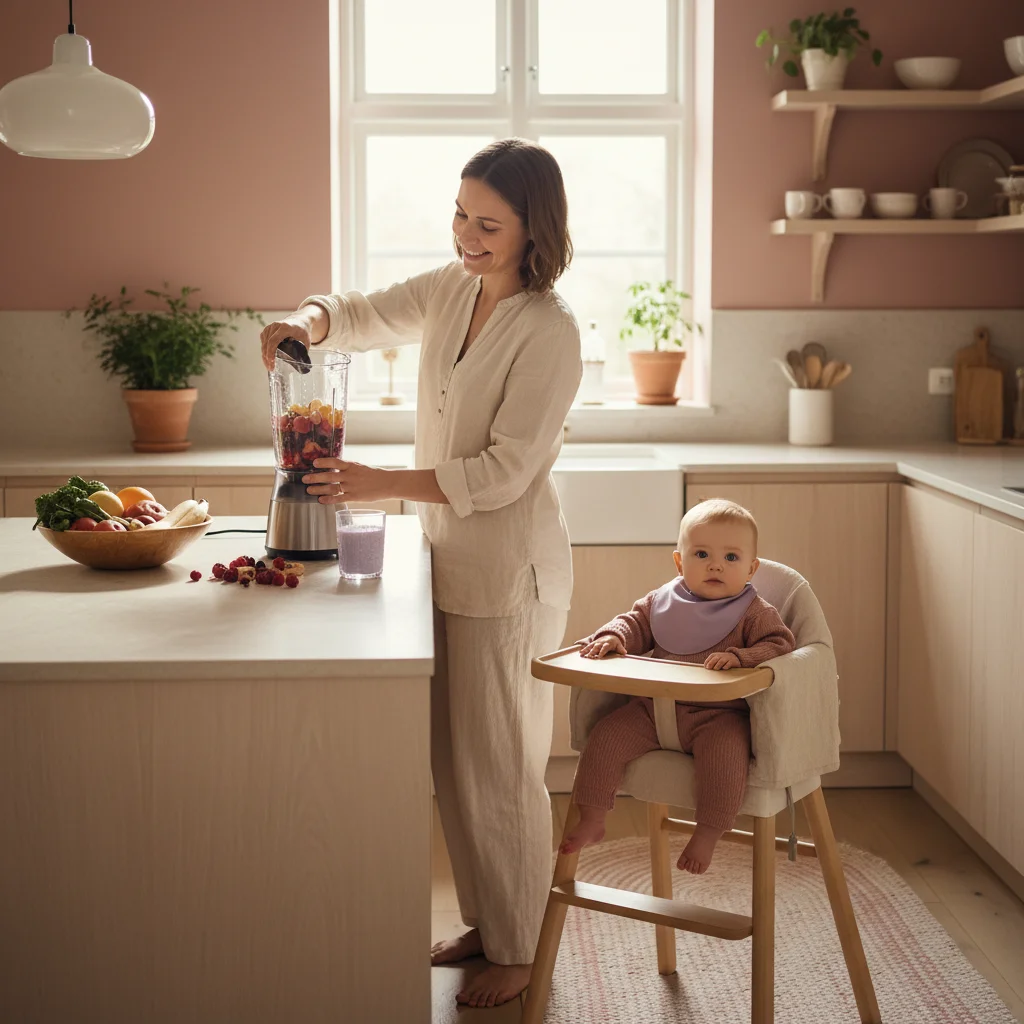
Congratulations, your baby is 1 year old! Now begins a new phase where your child gradually eats more and more of the family's food. Breast milk or formula is no longer the primary source of nutrition, and solid foods take over.
Here is the guide to food for one-year-olds, based on recommendations from the WHO and the American Academy of Pediatrics (AAP).
What Changes at 1 Year?
According to the AAP, several important changes happen around 12 months:
- Solid food becomes the main source of nutrition, breast milk/formula supplements but is no longer primary
- Cow's milk as a drink, whole milk can be given from 12 months (max 16–24 oz / 480–720 ml per day)
- Salt in small amounts, the child can eat family meals with moderate salting
- Honey is safe, appropriate from 12 months (risk of botulism is gone)
- 3 meals + 2–3 snacks, a consistent daily structure
The transition from baby food to family food is gradual. Most children need time to get used to new textures and flavors. Keep offering varied food even if the child refuses something. It can take 10–15 tries before a child accepts a new food.
Diet for a One-Year-Old
Nutritional Needs
According to the AAP, a one-year-old needs approximately 900–1000 kcal per day, distributed across:
| Food Group | Daily Amount | Examples |
|---|---|---|
| Grains and bread | 3–4 bread slices + porridge/pasta | Whole grain bread, oatmeal, pasta |
| Vegetables | 2–3 servings | Carrots, broccoli, peas |
| Fruit and berries | 2–3 servings | Banana, apple, blueberries |
| Meat/fish/eggs | 1–2 servings | Ground beef, cod, scrambled eggs |
| Dairy products | Max 16–24 oz total | Whole milk, yogurt, cheese |
| Fats | A little with each meal | Butter, olive oil, avocado |
Typical Daily Schedule
| Time | Meal | Example |
|---|---|---|
| 7:00 AM | Breakfast | Oatmeal with banana and cinnamon |
| 9:30 AM | Snack | Fruit + slice of bread with cheese |
| 11:30 AM | Lunch | Family dinner: meatballs + vegetables |
| 2:00 PM | Snack | Yogurt + fruit |
| 5:00 PM | Dinner | Salmon pasta with broccoli |
| 7:00 PM | Evening snack | Bread with liver pâté + milk |
Cow's Milk from 12 Months
What Do AAP and WHO Say?
- Use whole milk (not low-fat for healthy children under 2)
- Max 16–24 oz (480–720 ml) of dairy products per day (including yogurt and cheese)
- Cow's milk can be given as a drink with meals
- Don't give cow's milk as a thirst quencher between meals, use water
Too much cow's milk (over 24 oz per day) is a common cause of iron deficiency in toddlers. Cow's milk contains almost no iron, and the calcium in milk inhibits iron absorption from other foods. Stick to a maximum of 24 oz of dairy products total per day.
Weaning from Breast Milk/Formula
According to the WHO, breastfeeding is recommended for at least 12 months, and ideally longer:
- Breast milk can continue as long as both mother and child wish
- Formula is not needed after 12 months, use whole milk instead
- Gradual weaning, cut one feeding at a time over several weeks
- Bottles should be weaned around 12 months, use a cup
Foods That Are New from 12 Months
| Food | Notes |
|---|---|
| Honey | Safe from 12 months |
| Cow's milk as a drink | Whole milk, max 24 oz/day |
| Salt (moderate) | Family food with normal seasoning |
| Juice (very little) | Max 4 oz diluted, rarely |
| Chocolate/cakes | Unnecessary, delay as long as possible |
| Nuts (crushed/ground) | Whole nuts are a choking hazard until age 4 |
| Raw vegetables | Soft varieties (tomato, cucumber), cut in strips |
Foods to Still Avoid
| Food | Reason | Alternative |
|---|---|---|
| Whole nuts | Choking hazard | Nut butter, ground nuts |
| Whole grapes | Choking hazard | Halve or quarter lengthwise |
| Popcorn | Choking hazard | Oat crackers, soft bread |
| Raw carrots (whole sticks) | Choking hazard | Cooked carrot sticks |
| Rice milk/rice drink | Inorganic arsenic | Cow's milk, fortified oat milk |
| Sugary drinks | Unnecessary sugar | Water, milk |
Iron Is Still Important
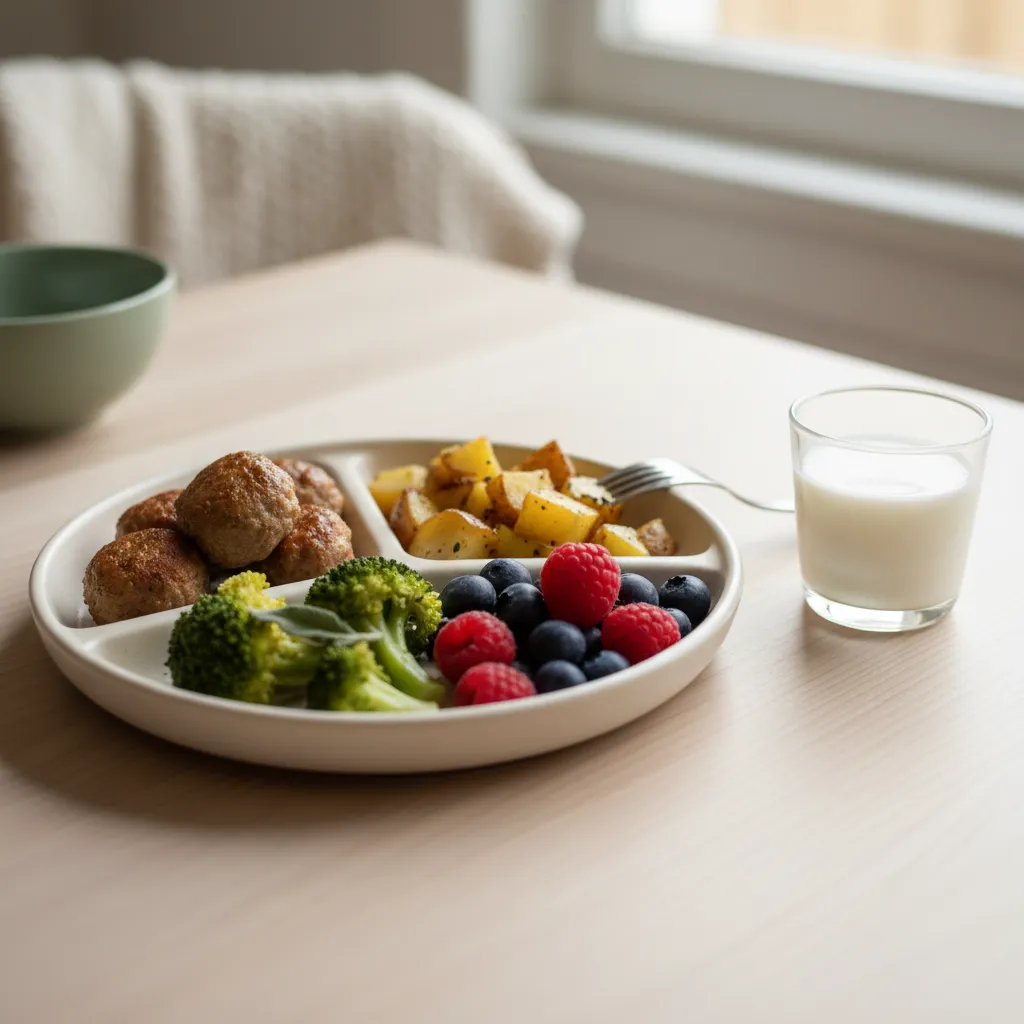
Iron deficiency is the most common nutritional deficiency in young children, according to the AAP. After 12 months, the child no longer needs iron-fortified baby cereal, but should still eat iron-rich foods daily.
Good Iron Sources for a One-Year-Old
- Red meat, beef, lamb (2–3 times per week)
- Liver pâté, on bread (a good iron source)
- Eggs, boiled egg, scrambled eggs, omelet
- Beans and lentils, in stews, soup, hummus
- Iron-fortified breakfast cereal, check the ingredient list
- Whole grain products, whole grain bread, rolled oats
Tip: Combine iron-rich foods with vitamin C-rich foods (fruit, bell peppers, tomato) for better iron absorption. Avoid giving milk with iron-rich meals.
A simple trick: serve fruit or vegetables with dinner and wait until snack time for the milk. This gives the body the best iron absorption from meat and vegetables.
Fish 2–3 Times Per Week
According to the AAP, children should eat fish 2–3 times per week:
- Fatty fish (salmon, mackerel, trout), 1–2 times per week for omega-3
- Lean fish (cod, pollock, haddock), 1–2 times per week
- Avoid shark, swordfish, and king mackerel (mercury)
- Sushi with raw fish is not recommended for toddlers
Vitamin D Supplement
According to the AAP, children need a vitamin D supplement:
| Age | Vitamin D | Source |
|---|---|---|
| 0–12 months | 400 IU/day | Vitamin D drops |
| 1–4 years | 600 IU/day | Vitamin D drops or cod liver oil |
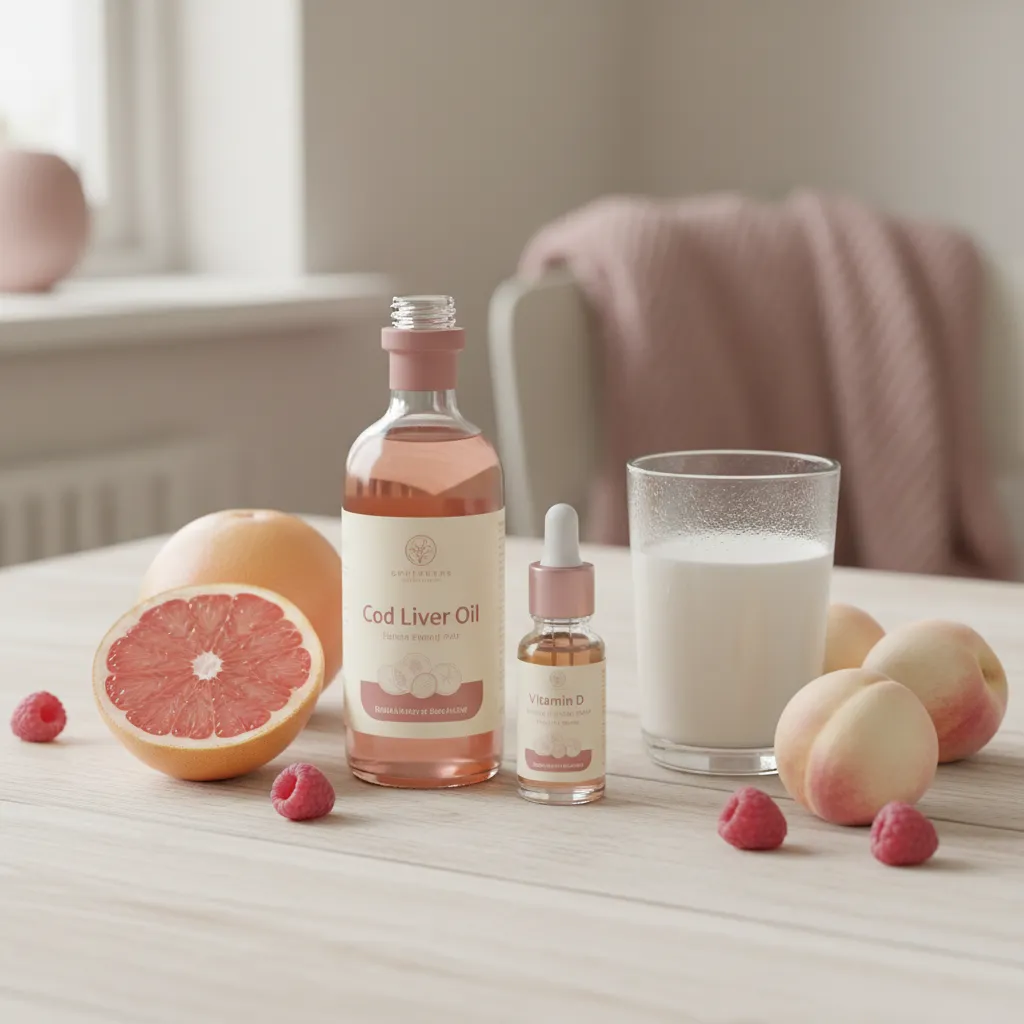
Give vitamin D year-round, not only in winter. 1 teaspoon of cod liver oil (5 ml) covers the daily requirement.
3 Simple Recipes for a One-Year-Old
1. Family Meatballs (Batch)
- 1 lb lean ground beef
- 1 egg
- 3 tbsp breadcrumbs
- 1 tbsp finely chopped onion
- Salt for the family's portion only
Mix everything. Shape small balls (about 3/4 inch for the child). Pan-fry or bake at 400°F (200°C) for 15 minutes. Freeze leftovers in portions. Serve with pasta, vegetables, and simple tomato sauce.
2. Salmon Pasta with Broccoli
- 5 oz salmon fillet
- 7 oz pasta (cooked)
- 1 handful broccoli
- 1/3 cup cream (or oat milk)
- 1 tsp butter
Pan-fry the salmon in butter. Flake with a fork. Cook broccoli. Combine pasta, flaked salmon, broccoli, and cream. Heat through and serve.
3. Oatmeal with Berry Mash
- 1/3 cup rolled oats
- 1 cup whole milk
- 1 banana, mashed
- A handful of frozen blueberries
Cook oats in milk to desired consistency. Stir in mashed banana. Top with thawed blueberries. Add cinnamon to taste.
Common Challenges at 1 Year
Picky Eating
Many one-year-olds become pickier than they were as babies. This is normal:
- Keep offering varied food
- Don't make separate food for the child, offer family meals
- Let the child see you eating the same things
- Don't pressure, the child decides how much to eat
- New foods may need 10–15 tries
Eating Less
Around 1 year, the growth rate slows. The child needs relatively less food than as a baby. Look at the weekly total intake, not individual meals.
Refusing Vegetables
- Offer vegetables in all forms: raw, cooked, baked, in sauce, in soup
- Let the child dip vegetables in hummus or yogurt
- Mix vegetables into meat sauce, soup, or pancakes
- Be patient, it takes time
Frequently Asked Questions
What can a one-year-old eat?
At 1 year, the child can eat most family foods, just in appropriate-sized pieces. Whole milk as a drink, max 24 oz per day. Honey is now safe. Moderate salt is OK. Avoid whole nuts (choking hazard) and sugary drinks.
How many meals does a one-year-old need?
A one-year-old needs 3 main meals (breakfast, lunch, dinner) plus 2–3 snacks. Snacks are important because the child's stomach is small and needs frequent refueling. Bread, fruit, yogurt, and vegetables are good snacks.
Does a one-year-old still need breast milk?
Breast milk is no longer the child's most important source of nutrition after 12 months, but breastfeeding can continue as long as both mother and child wish. The WHO recommends breastfeeding until 2 years and beyond. Breast milk still provides immune factors and comfort.
Should a one-year-old take vitamin D?
Yes. The AAP recommends vitamin D supplements for all children. 1 teaspoon of cod liver oil (5 ml) daily covers the need. Alternatively, give vitamin D drops. Give vitamin D year-round, not only in winter.
Whole milk or low-fat milk for a one-year-old?
The AAP recommends whole milk for healthy children from 12 months through age 2. Low-fat milk is only recommended for children with obesity risk or a family history of cardiovascular disease, after consulting a doctor.
Summary
At 1 year, the child eats family food with moderate seasoning. Whole milk as a drink, max 24 oz per day. 3 meals + 2–3 snacks. Iron-rich foods daily. Fish 2–3 times per week. Vitamin D daily. Water as a thirst quencher. Avoid whole nuts and sugary drinks.
Use Babysential's food database to check age recommendations for all foods and plan meals for your one-year-old.
Read More
- Baby Food at 10 Months: Family Food in Adapted Form
- Baby Food at 8 Months: Chunkier Textures and Finger Foods
- Introduction to Solids: Complete Guide
- Iron-Rich Foods for Baby
- Choking Hazards: How to Make Food Safe
Sources
- AAP. American Academy of Pediatrics: Infant Food and Feeding
- WHO. Complementary Feeding: Family Foods for Breastfed Children
- AAP. Vitamin D Supplementation Guidelines
🔧 Helpful Tools
- Baby Food Guide. Safe foods and introduction schedule for your baby
- Breastfeeding Tracker. Log feeds, track supply, and monitor nursing sessions
- All Baby Tools. Browse all free tools for pregnancy and baby care
📖 Related Articles
- Food for Baby at 1 Year: Transitioning to Family Meals. What can your child eat at 1 year? Guide to family food, cow's milk, portions, and nutrition for your one-year-old based on WHO/AAP guidelines.
- Omega-3 for Children. Why Fish Is So Important. Why omega-3 and DHA are important for your child's brain development. Recommendations for fish for babies and children, with safe fish types and supplement tips.
- Nutritious Smoothies for Babies and Toddlers. Healthy smoothie recipes for babies from 6 months and toddlers. Age-appropriate recipes with fruit, vegetables, and the right milk.