Many children don't eat enough fish. That's a shame, because fish is one of the best things you can give your child. The omega-3 fatty acids in fish are essential for brain development, vision, and immune function.
Here's the overview: why omega-3 is so important, which fish is safe at which age, and how to get your child to enjoy fish.
What Is Omega-3, and Why Do Children Need It?
Omega-3 is a type of polyunsaturated fatty acid that the body cannot produce on its own. We must get it through food. The three most important types are:
- DHA (docosahexaenoic acid), a building block for the brain and retina
- EPA (eicosapentaenoic acid), important for immune function and reducing inflammation
- ALA (alpha-linolenic acid), found in plant sources, but the body converts only a small fraction to DHA and EPA
DHA makes up about 25 percent of the fatty acids in the brain. In the first two years of life, the brain grows faster than ever, and the need for DHA is especially high in babies and toddlers.
Breast milk contains DHA, especially if the mother eats fish. Formula is supplemented with DHA. After starting solids around 6 months, you should introduce fish as one of the first foods.
Recommendations for Fish for Children
The AAP and WHO recommend that children eat fish 2-3 times per week from 6 months. This includes both dinner portions and as a spread/topping.
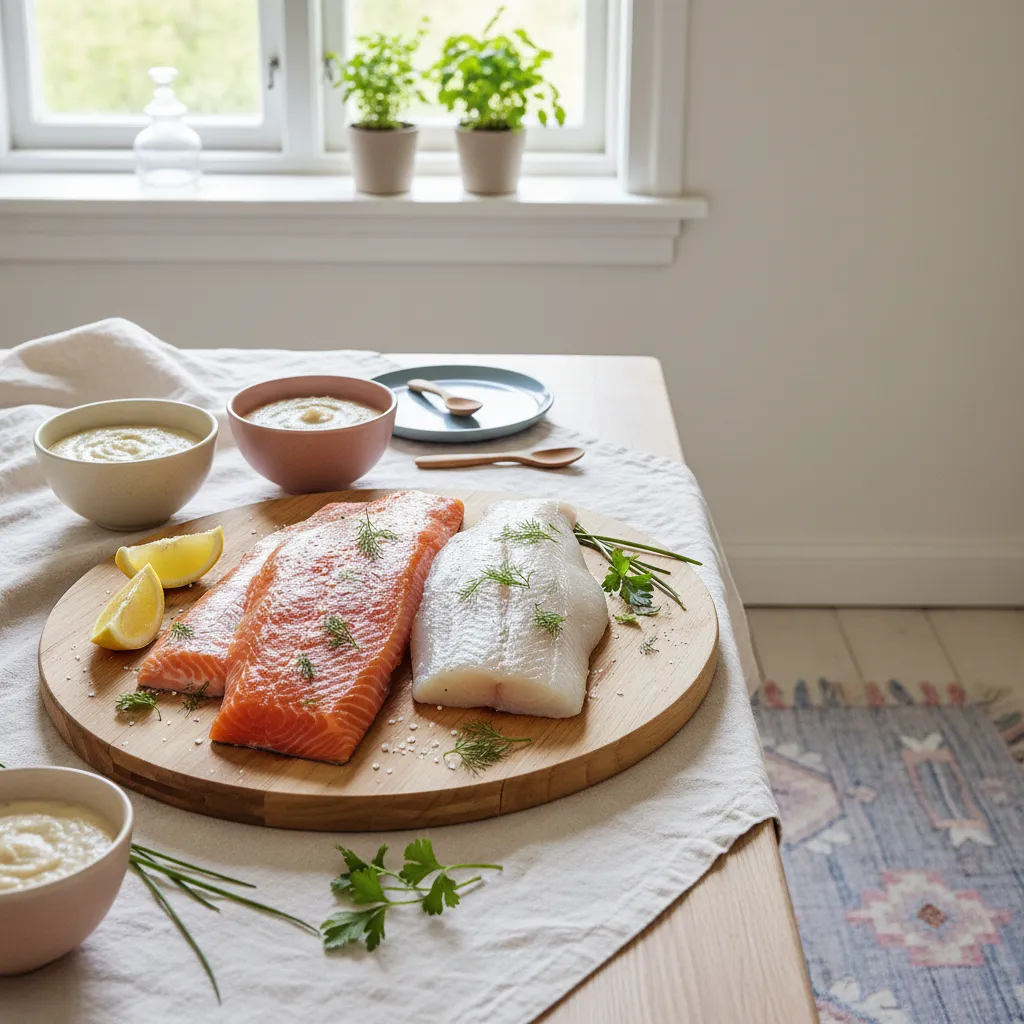
Fish can be introduced from the start of solids (6 months). Begin with mild fish like cod, pollock, or salmon, well-cooked and mashed or finely chopped.
Safe Fish Types for Children
White fish (mild flavor, great for beginners):
- Cod
- Pollock
- Haddock
- Flounder
Fatty fish (rich in omega-3):
- Salmon
- Mackerel
- Trout
- Herring
Fish products:
- Fish cakes (low sodium)
- Fish sticks (choose varieties with more fish and less breading)
- Canned fish (mackerel, salmon)
Fish Children Should Avoid or Limit
Some fish types contain too much mercury or other environmental toxins:
- Pike, avoid completely for children
- Large fresh tuna, limit to rarely
- Canned tuna, max once a week for children
- Freshwater perch, walleye, may have high levels, check local advisories
The FDA recommends that pregnant women, nursing mothers, and children under 5 avoid high-mercury fish like king mackerel, shark, swordfish, and tilefish. Regular salmon and trout are safe.
How Much Omega-3 Do Children Need?
There's no single official recommendation for exact omega-3 amounts for children, but health authorities recommend that about 1 percent of energy intake comes from omega-3. In practice, this means:
- Fish for dinner 2-3 times per week, with at least one serving of fatty fish (salmon, mackerel, trout)
- Fish as a topping a few times a week (canned salmon, smoked mackerel)
- Fish oil or DHA supplement as a daily supplement, especially if the child eats little fish
A serving of salmon (40-60 g for a 1-year-old) provides about 1-2 g of omega-3. That covers the need for several days.
Fish Oil and Vitamin D Supplements
Fish oil has been a tradition in many cultures for good reason. It provides:
- Omega-3 (DHA and EPA), for brain and vision
- Vitamin D, all children need supplementation, especially in winter
- Vitamin A, important for immune function and vision
The AAP recommends vitamin D drops (400 IU daily) for breastfed babies starting soon after birth. Babies receiving 32 oz or more of formula daily don't need extra supplementation. Fish oil is a good way to cover vitamin D and omega-3 from 12 months.
Fish Oil from What Age?
- From about 1 week old: Vitamin D drops (not fish oil yet)
- From 1 year: Fish oil can be introduced. Start with a small amount (2.5 ml) and gradually increase to 5 ml
Many children accept fish oil more easily if you give it on a spoon right before breakfast, or mix it in a smoothie. Flavored varieties can also help.
How to Make Fish Your Child Will Eat
Many children are skeptical of fish. Here are some strategies that work:
Start Mild
Begin with white fish like cod or pollock. Mild flavor is easier to accept for new palates.
Hide the Fish
Fish cakes, fish balls, and fish casserole are child-friendly. The child eats fish without thinking about it.
Make Your Own Fish Sticks
Cut cod fillet into strips, dip in egg and breadcrumbs, and bake in the oven. Healthier than store-bought and popular with kids.
Salmon with Sweet Sides
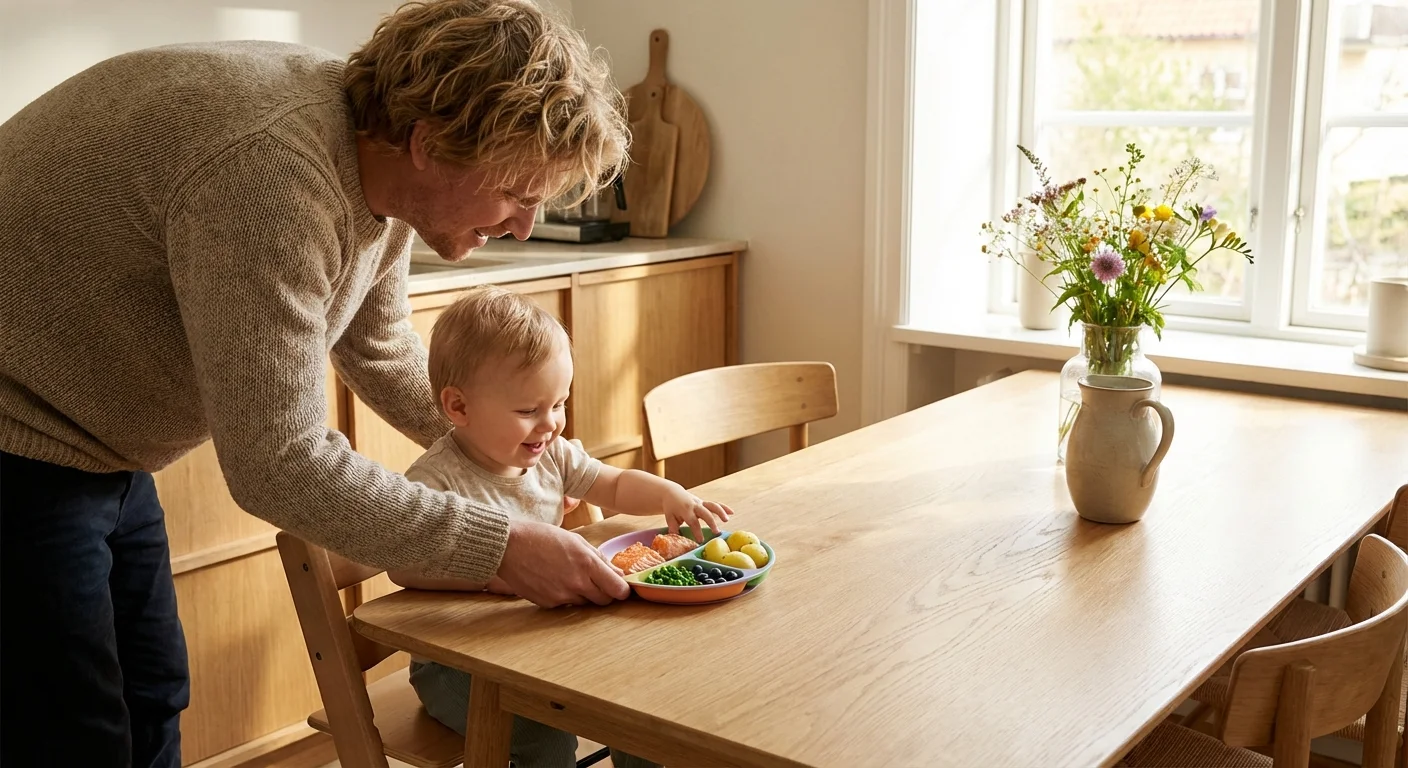
Oven-baked salmon with sweet potato mash and broccoli is a combination most children enjoy. The sweet potato balances the strong salmon flavor.
Fish Pasta
Mix cooked cod or salmon into pasta sauce. The fish disappears in the sauce, but the nutrients are there.
Fish Tacos
Shredded fish in soft tortillas with avocado and cucumber. Kids love food they can hold themselves.
Plant-Based Omega-3 Sources
If your child doesn't eat fish, there are some plant alternatives. But be aware that plant-based omega-3 (ALA) converts poorly to DHA in the body.
Plant sources with ALA:
- Flaxseed and flaxseed oil
- Chia seeds
- Walnuts (as nut butter, not whole nuts for children under 4)
- Canola oil
Supplements: If your child eats neither fish nor takes fish oil, algae-based omega-3 supplements with DHA are available. Talk to your pediatrician about proper dosing.
Plant-based omega-3 (ALA) is not the same as DHA from fish. The body converts only 5-10 percent of ALA to DHA. Fish, fish oil, or algae-based DHA supplements are necessary to meet your child's needs.
Preparation by Age
| Age | Preparation |
|---|---|
| 6-8 months | Cooked, mashed or finely chopped fish mixed with vegetables |
| 8-10 months | Soft pieces, fish cakes, fish balls |
| 10-12 months | Larger pieces, fish sticks, fish in pasta sauce |
| From 1 year | Family portions adjusted in size, fish tacos, casserole |
Frequently Asked Questions
Is farmed salmon safe for babies?
Yes. Food safety authorities confirm that farmed salmon is safe for babies from 6 months. Levels of contaminants are well below safety limits. Salmon is an excellent source of omega-3 and vitamin D.
Does my child need omega-3 supplements if they eat fish 2-3 times a week?
No, 2-3 fish meals per week covers the omega-3 need. Your child still needs vitamin D supplementation (drops or fish oil), but extra omega-3 capsules are unnecessary if they eat enough fish.
From what age can children take fish oil?
Fish oil can be given from 1 year. Before that, use vitamin D drops. Start with a small amount (2.5 ml) and increase gradually.
Sources
- AAP - Healthy Fish Choices for Children
- FDA - Advice About Eating Fish
- WHO - Infant and Young Child Feeding
🔧 Helpful Tools
- Baby Food Guide. Safe foods and introduction schedule for your baby
- Breastfeeding Tracker. Log feeds, track supply, and monitor nursing sessions
- All Baby Tools. Browse all free tools for pregnancy and baby care
📖 Related Articles
- Fish for Baby: Which Types Are Safe from 6 Months?. Which fish can your baby eat? Complete guide to safe fish types, amounts, and preparation for babies from 6 months, based on international dietary guidelines.
- Baby Food at 1 Year: Transitioning to Family Meals. What can your child eat at 1 year old? Guide to family foods, cow's milk, portions, and diet for one-year-olds based on WHO and AAP recommendations.
- Breakfast Ideas for Toddlers 1–3 Years, 12 simple and nutritious breakfast ideas for children aged 1 to 3. Quick everyday breakfasts the whole family will enjoy.