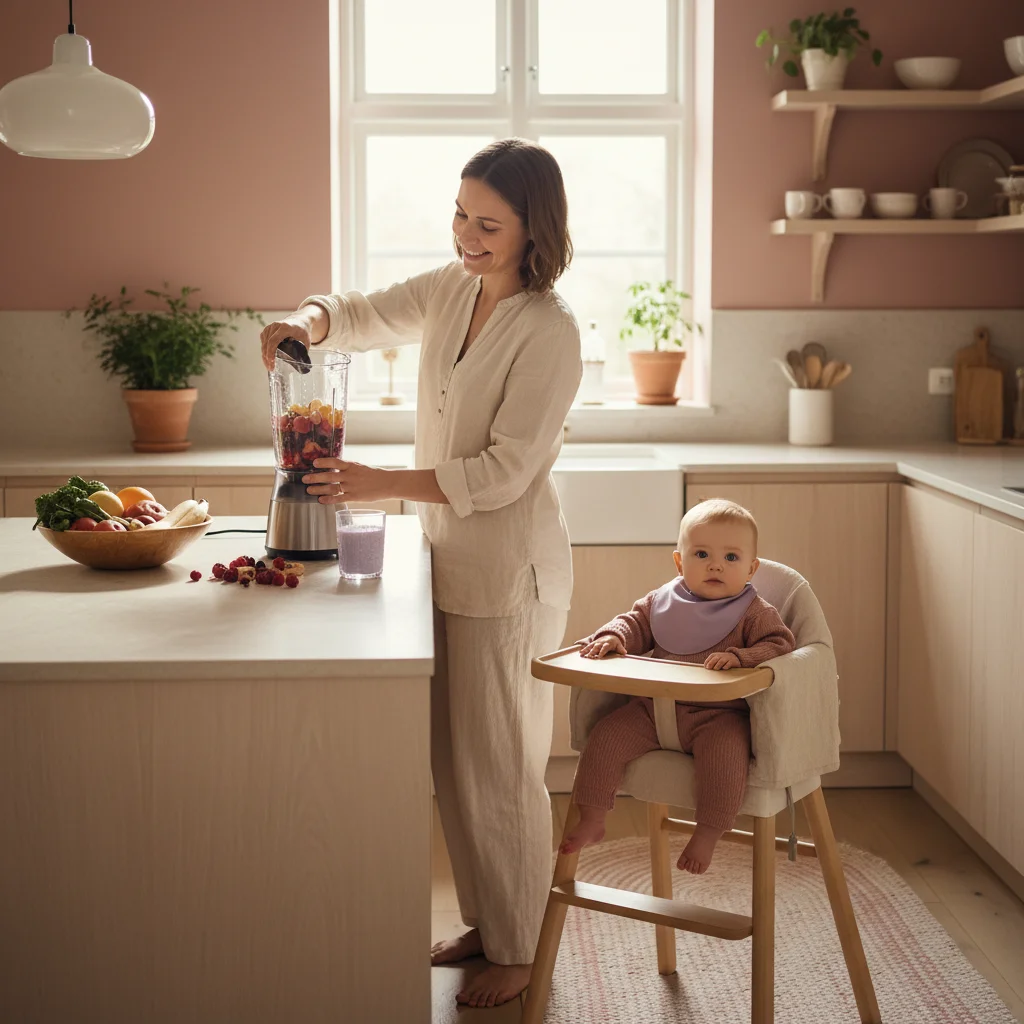
At one year old, a significant milestone arrives: your child can now eat most of what the rest of the family eats. This transition from baby food to family meals is exciting, but also comes with plenty of questions. How much? How often? What about milk? And what do you do when they suddenly refuse everything?
This guide walks through the key nutritional needs, practical meal planning, and common challenges at this stage.
What Changes at 12 Months
The first year of life is a period of enormous growth, and your child's nutritional needs shift considerably around their first birthday.
From formula/breast milk to cow's milk At 12 months, whole cow's milk can replace formula as the primary milk source. Breast milk remains excellent if you're still nursing and want to continue. WHO recommends breastfeeding alongside solid foods for as long as mother and child wish.
From purée to pieces Most one-year-olds have enough teeth (or strong enough gums) to handle soft pieces of food. The texture should still be soft and easy to mash with the tongue, but purées are generally no longer necessary unless your child has specific developmental needs.
From baby food to family food This is the big shift. Your child doesn't need separate "baby food" anymore, they can eat adapted versions of whatever you're cooking for the family. This simplifies mealtimes considerably once you adjust to the concept.
Cow's Milk at 12 Months
Cow's milk is introduced as a drink at 12 months. Before this age, it's not suitable as a main drink (though dairy products like yogurt and cheese can be introduced earlier).
Guidelines from WHO/AAP:
- Offer whole (full-fat) milk, not reduced-fat or skim milk, which don't provide enough fat for brain development
- Maximum 500 ml (about 2 cups) per day, more than this can displace other important foods, especially iron-rich ones
- Offer milk with meals, not as a constant snack throughout the day
- Continue vitamin D supplementation unless your child drinks sufficient vitamin D-fortified milk and gets regular sun exposure
If your child was drinking formula until now, you can switch directly to whole cow's milk at 12 months. No gradual transition is required unless your child has a known dairy sensitivity, in which case, discuss alternatives with your pediatrician.
Key Nutrients at 12 Months
Iron
Iron is particularly important to watch at this age. The reserves your baby was born with begin to run low around 6 months, and by 12 months, dietary iron is the primary source.
Good iron sources:
- Meat (beef, lamb, pork, poultry), heme iron, which is most easily absorbed
- Fish and shellfish
- Eggs
- Legumes (lentils, beans, chickpeas)
- Iron-fortified cereals and oatmeal
- Leafy greens (spinach, kale)
Tip: Serve iron-rich foods alongside vitamin C (bell peppers, tomatoes, citrus, broccoli) to enhance absorption. Avoid serving large amounts of cow's milk at the same meal as iron-rich foods, calcium can inhibit iron absorption.
Vitamin D
Vitamin D supports bone development and immune function. Most children need supplementation since dietary sources are limited and sun exposure in northern climates is insufficient for much of the year.
Sources:
- Fatty fish (salmon, mackerel, sardines)
- Vitamin D-fortified milk and cereals
- Cod liver oil or vitamin D drops
AAP recommends 400 IU vitamin D daily for children who are not consuming sufficient amounts through diet. Check with your pediatrician about whether supplementation is right for your child.
Fat
Full-fat dairy products and healthy fats from fish, avocado, and oils are important for brain development. Don't restrict fat in children under 2.
Omega-3 Fatty Acids
Fatty fish 2–3 times per week provides DHA and EPA, which support brain and eye development.
Meal Rhythm at 12 Months
A typical structure for a one-year-old:
- Breakfast, oatmeal, yogurt with fruit, scrambled egg, toast with avocado or mild cheese
- Morning snack, fruit pieces, cheese cubes, rice cakes
- Lunch, main meal with protein, vegetables, and a starchy carbohydrate
- Afternoon snack, yogurt, vegetable sticks with hummus, banana
- Dinner, family meal adapted to appropriate texture/seasoning
Aim for 3 main meals and 2 snacks per day. Regular meal times help regulate appetite and reduce the unpredictability of toddler eating.
Portions: At this age, a portion is roughly 1 tablespoon per year of age per food item, so about 1 tablespoon of each component on the plate. This seems tiny to adults but is appropriate for small stomachs. Offer seconds if your child shows interest.
Sample Meal Plan
Monday
- Breakfast: Oatmeal with mashed banana and a little cinnamon
- Lunch: Salmon with soft-boiled potato and broccoli
- Dinner: Chicken and vegetable soup with soft bread
Tuesday
- Breakfast: Scrambled eggs with toast strips
- Lunch: Lentil and vegetable stew
- Dinner: Mini meatballs with pasta and tomato sauce
Wednesday
- Breakfast: Yogurt with soft fruit pieces and baby oat cereal
- Lunch: Fish cakes with mashed sweet potato and peas
- Dinner: Chicken with rice and roasted root vegetables
Simple Recipes
Mini Meatballs
Great for freezing in batches
- 300g (10 oz) ground beef or a mix of beef and pork
- 1 small grated onion
- 1 egg
- 3 tablespoons breadcrumbs
- A little milk to bind
Mix together, roll into small balls (about 2 cm), bake at 200°C (400°F) for 12–15 minutes or pan-fry in a little butter. Serve with mashed potato and vegetables. No added salt for children under 2.
Salmon Pasta
Quick weeknight meal
- 150g (5 oz) cooked salmon (fresh or canned, check for bones)
- Cooked small pasta shapes (penne, fusilli)
- Soft-cooked peas or broccoli
- 2 tablespoons cream cheese or full-fat cream
Flake the salmon, mix with warm pasta and vegetables. Stir in cream cheese for a simple sauce. No added salt.
Oatmeal Porridge with Fruit
Classic nutritious breakfast
- 4 tablespoons rolled oats
- 180 ml (¾ cup) whole milk or water
- ½ ripe banana or a few tablespoons of soft fruit purée
Cook oats in milk over medium heat, stirring until thick and creamy (about 5 minutes). Mash in banana or stir through fruit. Cool before serving. Add a teaspoon of cod liver oil or vitamin D drops for extra nutrition.
Common Challenges
Picky Eating
Many children go through a phase of food refusal or neophobia (fear of new foods) around 12–18 months. This is developmentally normal, toddlers are wired to be cautious about unfamiliar things, including food.
What helps:
- Continue offering rejected foods alongside accepted ones, it can take 10–15 exposures before a child accepts a new food
- Don't make a big deal of refusals, keep the atmosphere neutral
- Let your child see you eating and enjoying the same foods
- Involve them in simple food preparation when possible
- Offer variety within their accepted foods while continuing to introduce new ones
Eating Less Than Before
It's very common for appetite to decrease around 12 months. Your baby's growth rate slows significantly after the first year, they simply need fewer calories relative to body weight. Trust your child's hunger and fullness cues rather than trying to ensure they finish a certain amount.
A useful frame: think about what your child eats over a week, not just a single meal or day. A child who eats very little at dinner may compensate at breakfast. Most children, given access to a variety of foods, consume what they need over time.
Refusing Vegetables
This is extremely common and rarely indicates a nutritional problem if your child eats a reasonable variety of other foods.
Strategies:
- Offer vegetables in different forms, raw carrot sticks might be refused while roasted carrots are accepted
- Mix finely chopped vegetables into sauces, soups, or meatballs
- Don't hide vegetables in a way that creates a pattern of deception, but blending them into familiar textures while also offering them separately is fine
- Keep offering without pressure. The goal is repeated neutral exposure, not forcing
Gagging vs. Choking
Gagging is a normal and protective reflex as toddlers learn to manage larger pieces of food. It sounds alarming but is not dangerous. True choking is silent, if your child can make sound (coughing, gagging, crying), their airway is not fully blocked.
Continue offering appropriately sized pieces (no larger than 1 cm for most foods), avoid round hard pieces (whole grapes, cherry tomatoes, whole nuts), and stay present at mealtimes.
Foods to Avoid Under 2
- Added salt, kidneys are still developing; use herbs and spices for flavor instead
- Added sugar, no nutritional benefit and sets up taste preferences for sweet foods
- Honey, risk of botulism until 12 months (after 12 months it is safe)
- Whole nuts, choking hazard; nut butters thinned with water are fine
- Whole grapes and cherry tomatoes, always cut into quarters
- Raw hard vegetables, carrot, apple, celery; cook until soft or grate finely
- High-mercury fish, limit tuna; avoid swordfish, shark, king mackerel
Eating Together
One of the most powerful things you can do for your child's relationship with food is to eat together as a family whenever possible. Children learn to eat by watching others. Seeing adults enjoy a variety of foods normalizes those foods in a way no amount of encouragement can replicate.
Shared mealtimes don't need to be elaborate, even simple weeknight dinners eaten at the same table build the foundation for healthy eating habits that last a lifetime.
Sources
- AAP. Infant and toddler nutrition guidelines
- WHO. Global infant feeding recommendations
- CDC. Infant and toddler nutrition resources
🔧 Helpful Tools
- Baby Food Guide. Safe foods and introduction schedule for your baby
- Breastfeeding Tracker. Log feeds, track supply, and monitor nursing sessions
- All Baby Tools. Browse all free tools for pregnancy and baby care
📖 Related Articles
- Baby Food at 1 Year: Transitioning to Family Meals. What can your child eat at 1 year old? Guide to family foods, cow's milk, portions, and diet for one-year-olds based on WHO and AAP recommendations.
- Baby Food at 10 Months: Family Food in Adapted Form. What can your baby eat at 10 months? Guide to meals, portions, self-feeding, and transitioning to family food based on WHO and AAP recommendations.
- Food for Baby at 10 Months: Family Meals in Adapted Form. What can your baby eat at 10 months? Guide to meals, portions, self-feeding, and transitioning to family food based on WHO/AAP guidelines.