
Breastfed babies need vitamin D supplementation from around 1 week of age. But what about other vitamins and minerals? Does your baby need iron? When can you introduce fish oil? And what about multivitamins?
Here is the complete guide to vitamins and supplements for babies, based on recommendations from the WHO and the American Academy of Pediatrics (AAP).
Vitamin D, the most important supplement
Why do all babies need vitamin D?
Breast milk contains too little vitamin D to meet a baby's needs. According to the AAP:
- Formula is fortified with vitamin D, and babies who receive 32+ oz (about 1 liter) of formula daily have their needs covered. Babies who receive less, or who combine formula with breast milk, need supplementation
- Vitamin D deficiency can lead to rickets, soft and deformed bones
- Breastfed babies need supplementation from around 1 week of age through at least the first year (babies receiving sufficient formula do not need extra supplementation)
Vitamin D deficiency is a real concern. The AAP recommends 400 IU (10 micrograms) of vitamin D daily for breastfed infants starting within the first few days of life. Deficiency can cause rickets, weakened immunity, and poor growth.
Dose and source
| Age | Vitamin D need | Recommended source |
|---|---|---|
| 1 week – 4 weeks | Vitamin D drops (breastfed) | 400 IU/day |
| 4 weeks – 12 months | 400 IU/day | Vitamin D drops |
| 1–4 years | 600 IU/day | Fish oil (1 tsp/day) or drops |
| 4+ years | 600 IU/day | Fish oil or vitamin D tablets |
Fish oil or vitamin D drops?
| Product | Age | Advantages | Disadvantages |
|---|---|---|---|
| Vitamin D drops | From ~1 week to 12 months | Precise dosing, no taste | Vitamin D only |
| Fish oil (liquid) | From 12 months | Vitamin D + A + omega-3 | Taste, can be tricky to give |
AAP recommendation: Vitamin D drops for the first year of life. From 12 months you can switch to fish oil, which provides vitamin D, vitamin A, and omega-3 in one dose.
How to give fish oil (from 12 months)
- Amount: 1 teaspoon (5 ml) per day
- Timing: With a meal (dietary fat helps absorption)
- Tips for reluctant toddlers:
- Mix into oatmeal or purée
- Give by syringe into the mouth (many children accept this)
- Try flavored fish oil (lemon, orange)
- Be consistent, children adjust over time
Vitamin D drops are recommended for the first year of life. From 12 months, fish oil can provide vitamin D (400–600 IU per teaspoon), plus vitamin A and omega-3s (DHA and EPA). Omega-3 is important for brain development.
Iron, the most common deficiency
Why is iron important?
Iron is essential for:
- Oxygen transport in the blood (hemoglobin)
- Brain development
- Immune function
- Energy metabolism
According to the AAP, iron deficiency is the most common nutritional deficiency in infants and toddlers.
Your baby's iron stores
| Period | Iron source |
|---|---|
| 0–6 months | Iron stores from birth (covers needs) |
| 6–12 months | Stores are depleted, iron from food is critical |
| 12+ months | Iron from a varied diet |
Does your baby need an iron supplement?
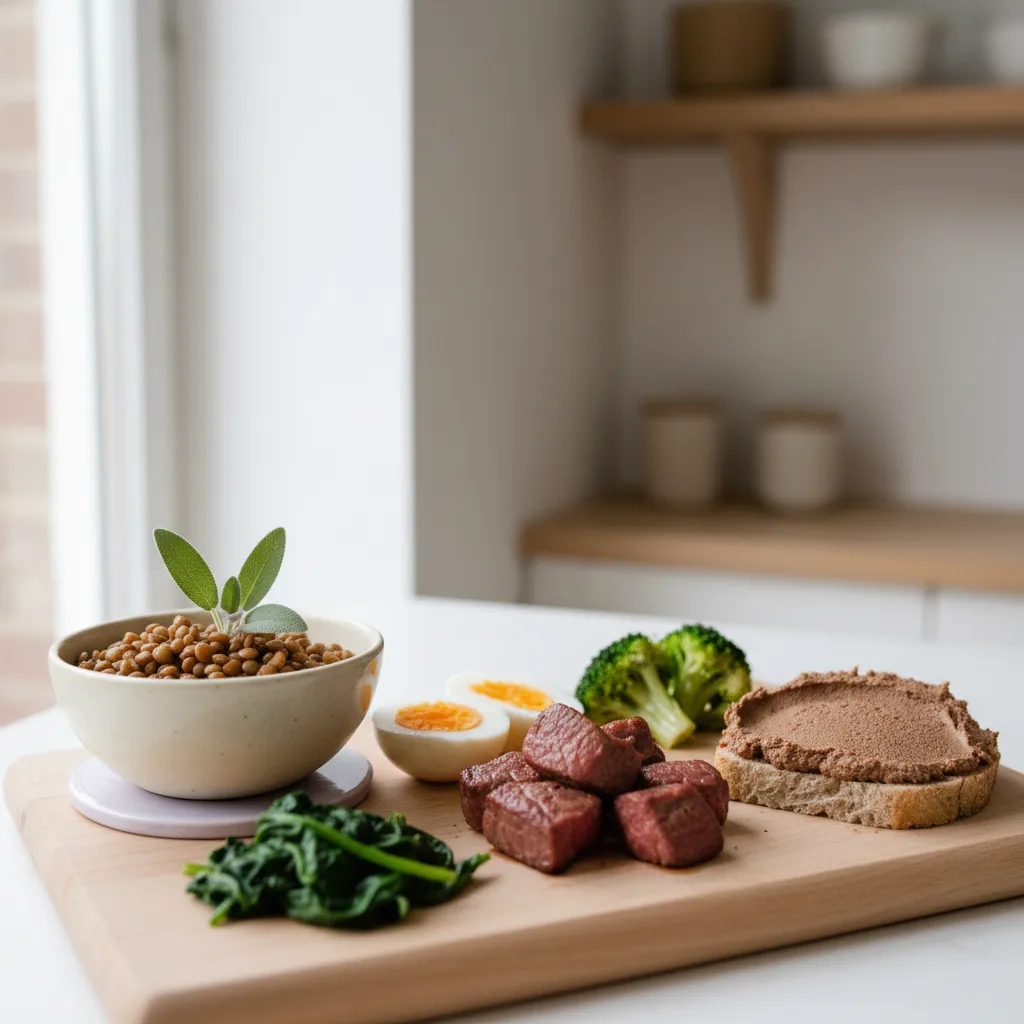
Most babies do NOT need iron supplements if they eat iron-rich foods from 6 months:
- Iron-fortified baby cereal daily
- Meat, fish, or eggs regularly
- Legumes (lentils, beans)
- Vitamin C-rich foods alongside iron-rich meals
Babies who may need supplementation:
- Premature babies (born with smaller iron stores)
- Babies with low birth weight
- Exclusively breastfed babies without iron-rich solids after 6 months
- Vegetarian babies with low iron intake
Never give your baby iron supplements without a blood test confirming iron deficiency. Too much iron can cause constipation, stomach pain, and in rare cases toxicity. Iron-rich foods are safe, iron supplements require medical guidance.
Iron-rich foods, the best sources
| Food | Iron content | Age |
|---|---|---|
| Iron-fortified baby cereal | Varies (see label) | From 6 months |
| Red meat (beef, lamb) | 2.5–3.5 mg / 3.5 oz | From 6 months |
| Liver pâté | 5–8 mg / 3.5 oz | From 6 months (spread) |
| Lentils (cooked) | 3.3 mg / 3.5 oz | From 6 months |
| Chickpeas | 2.9 mg / 3.5 oz | From 6 months |
| Egg | 1.8 mg / egg | From 6 months |
| Oats | 2.0 mg / 3.5 oz | From 6 months |
Iron absorption tips:
- Vitamin C (fruit, vegetables) roughly doubles iron absorption
- Milk and tea inhibit absorption, give between meals, not with them
- Heme iron from meat is better absorbed than plant-based iron
Blood test for iron
Your pediatrician can run a blood test to check iron status:
- Ferritin, iron stores in the body
- Hemoglobin (Hb), oxygen transport in the blood
- Common screening time: 9–12 months of age
Vitamin A
Does your baby need a vitamin A supplement?
Most babies get enough vitamin A through diet:
- Breast milk contains vitamin A
- Carrots, sweet potato are rich in beta-carotene (a vitamin A precursor). Note: Spinach is also rich in beta-carotene, but is best introduced after the first year due to nitrate content
- Fish oil (from 12 months) also provides vitamin A
Important: Do not give extra vitamin A supplements. Too much vitamin A can be harmful.
Vitamin C
Babies generally do not need vitamin C supplements. Vitamin C needs are covered through:
- Fruit (oranges, strawberries, kiwi, banana)
- Vegetables (broccoli, bell pepper, tomato)
- Potatoes
- Breast milk
Exception: In cases of very restricted diet or illness, a doctor may recommend supplementation.
Omega-3 (DHA and EPA)
Why is omega-3 important?
DHA is important for brain development, vision, and the nervous system. EPA has anti-inflammatory properties.
Omega-3 sources
| Source | DHA/EPA content | Age |
|---|---|---|
| Fish oil (1 tsp) | ~600 mg omega-3 | From 12 months |
| Fatty fish (salmon, mackerel) | 1000–2000 mg / 3.5 oz | From 6 months |
| Breast milk | Varies (depends on mother's diet) | From birth |
| Algae supplement | Varies | For vegetarian babies |
Recommendation: Fish oil plus fish 2–3 times per week covers omega-3 needs for most babies.
Vitamin K
Newborns and vitamin K
All newborns receive a vitamin K injection at birth (1 mg intramuscularly). This is standard hospital procedure to prevent vitamin K deficiency bleeding, which can be life-threatening.
After birth, healthy babies generally do not need additional vitamin K supplementation.
Multivitamins for babies
Does your baby need a multivitamin?
According to the AAP, healthy babies eating a varied diet generally need only vitamin D supplementation (drops in the first year, fish oil from 12 months). Multivitamins are not necessary for most babies.
When multivitamins may be considered:
- Very picky eaters with an extremely limited diet
- Babies with chronic illness or malabsorption
- Vegetarian or vegan babies (after medical evaluation)
More is not better. Too much of fat-soluble vitamins (A, D, E, K) can be harmful because they accumulate in the body. Never give double doses of fish oil or combine multiple supplements containing the same vitamins. Stick to recommended doses.
Summary by age
| Supplement | 0–4 weeks | 4 weeks – 6 months | 6–12 months | 1–4 years |
|---|---|---|---|---|
| Vitamin D | Drops 400 IU | Drops 400 IU | Drops 400 IU | Fish oil 1 tsp |
| Iron | No* | No* | Iron-rich foods** | Iron-rich foods |
| Omega-3 | Via breast milk | Via breast milk | Fish | Fish oil + fish |
| Vitamin K | Injection at birth | No | No | No |
| Multivitamin | No | No | Rarely | Rarely |
*Premature babies may need iron supplementation from birth, follow your doctor's guidance. **Iron-fortified baby cereal daily, meat/fish/eggs, legumes.
Common mistakes parents make
1. Skipping vitamin D in summer
Vitamin D supplementation should be given year-round, not just in winter. Babies should be protected from direct sun regardless of season.
2. Giving too much
Double doses or multiple supplements with overlapping ingredients can lead to excess fat-soluble vitamins. Always check the label and stick to one source per vitamin.
3. Giving iron supplements without a blood test
Iron supplements should only be given after a doctor has confirmed deficiency through a blood test. Iron-rich foods are always safe, but iron tablets or drops can cause side effects.
4. Replacing food with supplements
Supplements do not replace a varied diet. Food provides fiber, flavor, texture, and many nutrients that supplements cannot.

Frequently asked questions
Does my baby need fish oil?
For the first year, the AAP recommends vitamin D drops (400 IU daily). From 12 months, you can switch to fish oil (1 teaspoon daily), which provides vitamin D, vitamin A, and omega-3. Vitamin D supplementation is recommended through at least the first year, and often longer.
When should I start fish oil?
Vitamin D drops from around 1 week of age through the entire first year. Fish oil can be introduced from 12 months. Give 1 teaspoon (5 ml) daily with a meal. Mix into oatmeal or purée for children who dislike the taste.
Does my baby need iron supplements?
Most babies do not need iron supplements if they eat iron-rich foods from 6 months (iron-fortified cereal, meat, legumes). Never give iron supplements without a blood test from your doctor. Premature babies may need supplementation from birth.
Can my baby get too much vitamin D?
Yes, though it's uncommon at standard doses. Stick to the recommended amount (400 IU/day for infants). Do not combine fish oil, vitamin D drops, and vitamin D-fortified formula simultaneously without calculating total intake. Overdose can cause elevated calcium levels.
Does my baby need vitamin C supplements?
No. Most babies get enough vitamin C through fruit, vegetables, and breast milk. Vitamin C supplementation is generally not necessary for healthy babies eating a varied diet.
Summary
Breastfed babies need vitamin D supplementation (drops from around 1 week of age through the first year, fish oil from 12 months). Offer iron-rich foods from 6 months (iron-fortified cereal, meat, legumes). Iron supplements only after a confirmed blood test. Fish 2–3 times per week for omega-3. Multivitamins are rarely needed. More is not better, follow recommended doses.
Read more
- Iron-rich foods for baby
- Starting solids, complete guide
- Baby food from 6 months
- Fish for baby
- Vegetarian diet for baby
Sources
- AAP. Vitamin D Supplementation for Infants
- AAP. Iron Supplementation for Infants
- WHO. Infant and Young Child Feeding
🔧 Helpful Tools
- Baby Food Guide. Safe foods and introduction schedule for your baby
- Breastfeeding Tracker. Log feeds, track supply, and monitor nursing sessions
- All Baby Tools. Browse all free tools for pregnancy and baby care
📖 Related Articles
- Supplements During Pregnancy: What Do You Really Need?. Which supplements should you take during pregnancy? Folic acid, vitamin D, iron, and omega-3, here's the overview based on ACOG and AAP recommendations.
- Baby Formula: Everything You Need to Know. Complete guide to infant formula. Types, step-by-step preparation, storage, transitioning from breastfeeding, cost, and reassurance. Safe guidance for formula-feeding parents.
- Baby Porridge: Guide to Your Baby's First Cereal. Everything about introducing porridge and cereal to your baby. Which grains to start with, when to begin, and simple recipes. Based on WHO and AAP recommendations.