
Breast milk or formula is the only drink your baby needs for the first 6 months. But what about after that? When can your baby drink water? And what about juice and cow's milk?
Here is the complete guide to drinks for babies, based on current recommendations from the WHO and AAP.
When Can My Baby Drink Water?
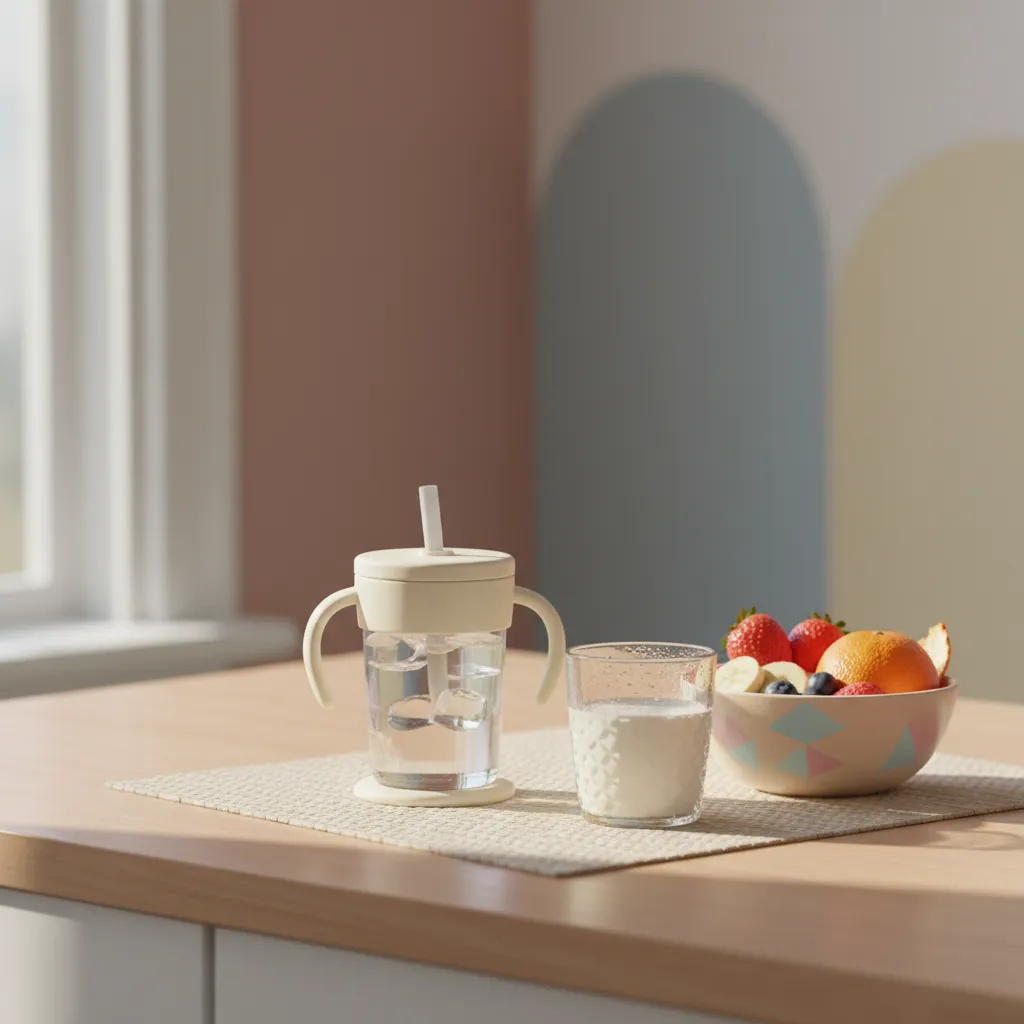
Babies can have water from 6 months, that is, once they start on solid foods. According to the AAP:
- Offer water at mealtimes from 6 months
- Use a small cup (not a bottle for water)
- Start with a few sips, baby doesn't need much
- Breast milk or formula remains the main drink
Babies under 6 months should NOT be given water. Breast milk and formula contain enough fluid. Too much water for young babies can disrupt nutrient absorption and in rare cases lead to water intoxication (hyponatremia).
Drinks by Age
0–6 Months: Breast Milk or Formula Only
- Breast milk meets all fluid needs
- Formula meets all fluid needs
- No other drink is necessary
- Not even water, juice, or tea
6–12 Months: Breast Milk + a Little Water
- Breast milk or formula remains the main drink
- Offer a few sips of water at mealtimes
- Use an open cup or sippy cup (not a bottle)
- Baby decides how much water they want
- Do not give juice, cordial, or soda
Amount of water: Baby doesn't need much extra water as long as they are breastfed or on formula. A couple of sips at each meal is enough. On warm days you can offer a little more.
12–24 Months: Water and Milk
- Water as the main drink (when thirsty, between meals)
- Cow's milk (whole or reduced-fat), maximum 16 oz (about 500 ml) per day
- No juice, cordial, or soda as everyday drinks
- Wean off the bottle, use a cup
Cow's Milk for Baby
Cow's milk is a topic many parents wonder about. Here are the guidelines from the AAP:
Cow's Milk in Cooking (from 10 months)
- In sauces, pancakes, and baking
- Small amounts are safe
- Cow's milk in porridge is best held off until 12 months (porridge uses more milk than a sauce)
Cow's Milk as a Drink (from 12 months)
- Use whole milk for children under 2
- Maximum 16 oz (about 500 ml) per day (including yogurt and cheese)
- Too much cow's milk leaves less room for other foods
- Cow's milk contains little iron and can inhibit iron absorption
Too much cow's milk (over 16 oz per day) is a common cause of iron deficiency in toddlers. Cow's milk contains almost no iron, and the calcium in milk inhibits iron absorption from other foods. Stick to a maximum of 16 oz of dairy products per day.
Whole Milk or Reduced-Fat?
According to the AAP, children aged 12–24 months should drink whole milk. After age 2, you can switch to reduced-fat or low-fat milk. Non-fat (skim) milk provides too little fat for toddlers under 2.
| Milk Type | Recommended Age | Notes |
|---|---|---|
| Breast milk | 0–24+ months | Recommended for at least 12 months |
| Formula | 0–12 months | When breastfeeding is not possible |
| Whole milk | From 12 months | Main drink, max 16 oz/day |
| Reduced-fat milk | From 24 months | After the second birthday |
| Skim milk | From 5 years | Too little fat for young children |
Plant-Based Drinks (Oat Milk, Soy Milk, etc.)
According to the AAP, plant-based drinks should be avoided before 12 months. This includes:
- Oat milk
- Soy drink
- Rice milk (contains inorganic arsenic, the FDA advises against it for children under 6)
- Almond milk
- Coconut milk (as a drink)
After 12 months: Plant-based drinks can be used in addition to cow's milk, but they do not replace cow's milk nutritionally. Choose varieties fortified with calcium and vitamin D. Plant-based drinks generally contain less protein than cow's milk.
Rice milk is not recommended for children under 6 years because it contains inorganic arsenic, according to the FDA. This also applies to rice cakes and rice-based products generally.
Juice and Fruit Drinks
Under 12 Months: No Juice
According to the AAP, babies under 12 months should not have juice or fruit drinks:
- Juice contains a lot of natural sugar
- Juice lacks fiber (which whole fruit contains)
- Juice can cause loose stools and diarrhea
- Juice displaces breast milk and nutritious food
- Baby gets more nutrition from eating fruit than drinking juice
After 12 Months: Very Limited
- Avoid juice and fruit drinks as everyday drinks
- Maximum 4 oz (about 120 ml) of 100% juice per day for children 1–3 years
- Whole fruit is always better than juice
- Fruit juice does not count as a serving of fruit
Other Drinks to Avoid
| Drink | Why to Avoid | When OK |
|---|---|---|
| Soda (sugary) | Sugar, no nutrition | Never for babies/toddlers |
| Soda (sugar-free) | Sweeteners, acid | Never for babies/toddlers |
| Fruit cordials | Sugar, no nutrition | Rarely after 12 months, heavily diluted |
| Iced tea | Caffeine, sugar | Never for babies/toddlers |
| Cocoa | Sugar, caffeine | From 12 months, low sugar |
| Tea and coffee | Caffeine, tannins inhibit iron | Never for babies/toddlers |
| Sports drinks | Sugar, electrolytes | Never for babies/toddlers |
| Flavored water | Sugar, additives | Never for babies/toddlers |
Tannins in tea inhibit iron absorption from food. Never give tea to babies or toddlers, including herbal tea. Caffeine in tea and coffee is also unsuitable for young children.
Tips for Teaching Baby to Drink from a Cup
From 6 Months: Open Cup
The AAP recommends an open cup rather than a bottle for water:
- Use a small cup with a wider rim
- Hold the cup for baby and tilt gently
- Baby will spill, that is completely normal
- A few sips at a time is enough
- Offer at every meal
From 8–10 Months: Sippy Cup
- Baby can start with a sippy cup
- Choose one without a valve (baby learns better drinking technique)
- Let baby try on their own
- Use a waterproof bib
From 12 Months: Wean Off the Bottle
According to the AAP, bottles should be phased out around 12 months:
- Bottle with milk increases the risk of tooth problems
- Baby should drink from a cup, not a bottle
- Weaning can take time, be patient
- Start by replacing one bottle at a time with a cup
Dehydration. Signs to Watch For
Babies can become dehydrated with fever, diarrhea, or vomiting. Watch for:
- Fewer wet diapers than usual (fewer than 4–6 per day)
- Dark urine
- Dry lips and mouth
- Lethargy or irritability
- Sunken fontanelle (the soft spot on the head)
If dehydrated: Offer breastfeeding or formula more frequently. Offer water (over 6 months). Contact your doctor if baby has persistent vomiting or diarrhea, or shows signs of serious dehydration.
Frequently Asked Questions
Can a 6-month-old baby drink water?
Yes. From 6 months, baby can have water in small amounts at mealtimes. Use a small cup. Breast milk or formula remains the main drink. Baby only needs a few sips.
Does baby need water in summer?
Babies under 6 months do not need water, even in the heat. Offer more frequent feeds instead. From 6 months, you can offer a little extra water on warm days, but breast milk or formula is still the most important.
Can baby drink tap water?
Yes. Tap water is safe for babies from 6 months. You do not need to boil the water or use bottled water. If you are unsure about the water quality where you live (for example, well water), check with your local authorities.
When can my child drink cow's milk?
Cow's milk as a drink is recommended from 12 months. In cooking (sauces, porridge, baking) cow's milk can be used from 10 months. Use whole milk for children under 2. Maximum 16 oz of dairy products per day.
Is oat milk OK for baby?
Not before 12 months. Plant-based drinks such as oat milk, soy drink, and almond milk are not recommended as a substitute for cow's milk in the first year of life. After 12 months, fortified oat milk can be used in addition to cow's milk, but it does not replace cow's milk nutritionally.
Summary
Babies under 6 months need only breast milk or formula. From 6 months, offer water at mealtimes in an open cup. Cow's milk (whole) as a drink from 12 months, maximum 16 oz per day. Avoid juice, fruit drinks, and soda. Plant-based drinks should be avoided before 12 months.
Read More
- Introducing Solids. Complete Guide
- Dairy Products for Baby
- Baby Food from 6 Months
- Iron-Rich Foods for Baby
- Choking Hazards: How to Make Food Safe
Sources
- AAP. Infant Food and Feeding
- WHO. Infant and Young Child Feeding
- AAP. Fruit Juice in Infants, Children, and Adolescents
- FDA. Advice About Eating Fish
🔧 Helpful Tools
- Baby Food Guide. Safe foods and introduction schedule for your baby
- Breastfeeding Tracker. Log feeds, track supply, and monitor nursing sessions
- All Baby Tools. Browse all free tools for pregnancy and baby care
📖 Related Articles
- Water and Drinks for Baby: What Can Your Baby Drink?. When can your baby drink water? A complete guide to water, juice, milk, and other drinks for babies from 6 months, based on pediatric guidelines.
- Baby Formula: Everything You Need to Know. Complete guide to infant formula. Types, step-by-step preparation, storage, transitioning from breastfeeding, cost, and reassurance. Safe guidance for formula-feeding parents.
- Baby Porridge: Guide to Your Baby's First Cereal. Everything about introducing porridge and cereal to your baby. Which grains to start with, when to begin, and simple recipes. Based on WHO and AAP recommendations.